
When Nintendo released the Switch OLED model in 2021, many fans welcomed it as a long-overdue refresh. With a larger, more vibrant screen, improved speakers, and enhanced internal storage, the updated hardware promised a better handheld experience. But for owners of the original Nintendo Switch, the central question remains: is the screen upgrade alone enough to justify upgrading?
The answer depends on how you use your console. While the OLED model brings meaningful improvements across several areas, the core gameplay experience—powered by the same processor and performance specs—remains unchanged. This deep dive compares both models across key categories to help you decide whether the visual leap justifies the cost.
Display Quality: The Most Noticeable Upgrade
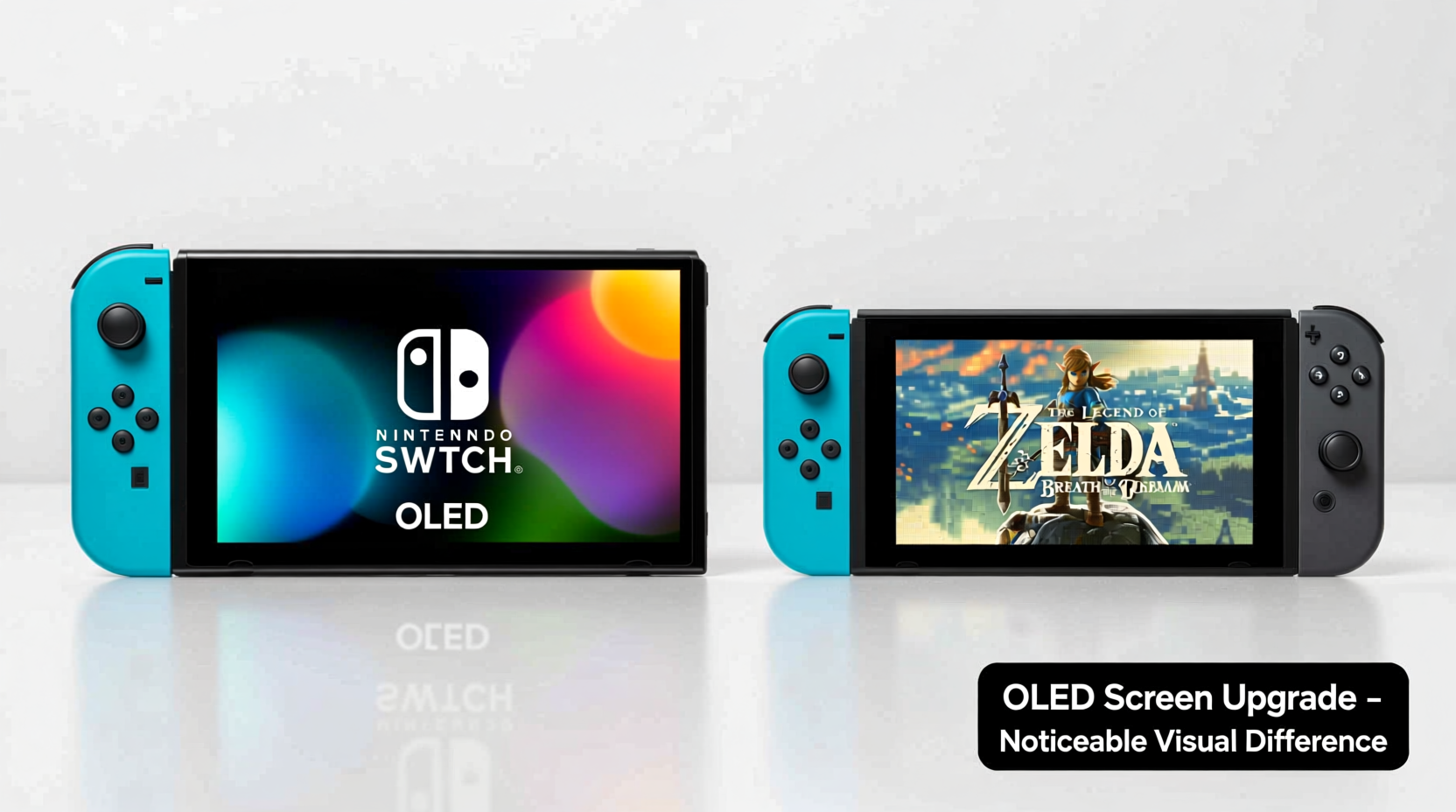
The most obvious difference between the original Switch and the OLED model is the screen. The original uses a 6.2-inch LCD panel with a 720p resolution, while the OLED version features a 7-inch OLED display, also at 720p. Though the resolution hasn’t increased, the shift to OLED technology delivers significant enhancements in contrast, color accuracy, and viewing angles.
OLED panels produce true blacks by turning off individual pixels, resulting in deeper contrast and richer visuals. Colors appear more vivid, and sunlight readability improves noticeably due to higher brightness levels and reduced glare. For games like The Legend of Zelda: Breath of the Wild or Super Mario Odyssey, this means more immersive skies, crisper shadows, and a generally more engaging handheld experience.
However, if you mostly dock your Switch and play on a TV, the screen upgrade matters far less. In docked mode, both models output identical video quality—1080p when connected to an HD or 4K display. The visual benefits of the OLED screen are only visible when playing in portable or tabletop mode.
Audio and Build Improvements
Beyond the screen, the OLED model introduces several subtle but welcome upgrades. The built-in speakers have been redesigned for clearer, louder audio. In side-by-side comparisons, dialogue and sound effects are more distinct, reducing the need to rely on headphones in quiet environments.
The kickstand has also been completely overhauled. The original Switch featured a flimsy, narrow hinge that limited positioning options and often failed on uneven surfaces. The OLED model replaces this with a wide, adjustable kickstand that supports horizontal positioning across multiple angles. This makes tabletop gaming more stable and comfortable, especially during multiplayer sessions or travel.
Additionally, the OLED model includes 64GB of internal storage, doubling the original’s 32GB. While serious users will still likely invest in a microSD card, the extra space helps accommodate larger game downloads and system updates without immediate expansion.
“While the OLED doesn’t boost performance, its refinements address longstanding pain points—especially the kickstand and audio.” — James Chen, Gaming Hardware Analyst at Digital Trends
Performance and Battery Life: No Change Under the Hood
Despite the cosmetic and functional upgrades, Nintendo kept the internal hardware identical between the original (post-2019 revised model) and the OLED version. Both use the same NVIDIA Tegra X1-based processor, deliver up to 720p in handheld mode, and offer similar battery life—approximately 4.5 to 9 hours depending on the game.
This means titles that struggled with frame rate drops or loading times on the original Switch—such as Dark Souls: Remastered or Xenoblade Chronicles: Definitive Edition—perform identically on the OLED model. There’s no improvement in load speeds, texture pop-in, or overall system responsiveness.
If you’re hoping for a performance boost akin to what the Switch Lite offered over the original, you’ll be disappointed. The OLED model isn’t a next-generation step—it’s a refinement. For players who prioritize smooth gameplay or faster transitions, this lack of internal upgrade may diminish the appeal of the new model.
Comparison Table: Key Differences at a Glance
| Feature | Nintendo Switch (Original) | Nintendo Switch OLED |
|---|---|---|
| Screen Size & Type | 6.2-inch LCD | 7-inch OLED |
| Resolution (Handheld) | 720p | 720p |
| Internal Storage | 32GB | 64GB |
| Kickstand | Narrow, fixed-angle | Wide, adjustable |
| Speakers | Basic stereo | Enhanced stereo |
| Battery Life | ~2.5–6.5 hrs (early), ~4.5–9 hrs (revised) | ~4.5–9 hrs |
| Docked Output | 1080p | 1080p |
| Price (MSRP at Launch) | $299 | $349 |
The table underscores that the OLED model improves user experience through comfort and aesthetics rather than raw capability. Unless you value the screen, speakers, or kickstand, there’s little functional incentive to upgrade.
Real-World Use Case: Traveling Parent’s Perspective
Consider Sarah, a parent who frequently travels with her two children. She bought the original Switch in 2018 and used it extensively on road trips and flights. By 2022, the screen had developed minor scratches, the kickstand broke after repeated use, and she often carried external speakers because the audio wasn’t loud enough for shared viewing.
When she upgraded to the OLED model, the changes immediately improved her family’s experience. The sturdier kickstand allowed stable gameplay on tray tables, the brighter screen was easier for kids to see in daylight, and the louder speakers eliminated the need for extra gear. Even though the games played the same, the overall usability felt modernized.
Sarah’s case illustrates that for users who rely heavily on handheld functionality, the OLED’s upgrades compound into a significantly better daily experience—even without performance gains.
Is the Screen Upgrade Enough? A Balanced Answer
Whether the screen upgrade is “enough” depends on your usage pattern:
- If you play mostly docked—on a TV using a Pro Controller—the OLED offers minimal benefit. You won’t see the screen improvements, and other upgrades like audio and kickstand matter less in a home setup.
- If you play primarily in handheld or tabletop mode, especially while traveling, the OLED model provides a noticeably better experience. The screen is easier on the eyes, the kickstand is reliable, and the audio is more immersive.
- If you own an older original Switch (pre-2019), upgrading to the OLED also means gaining the longer battery life introduced in the revised original model—making it a dual upgrade in endurance and display.
For casual players who already own a Switch, the OLED may feel like a luxury rather than a necessity. But for newcomers or those replacing a worn-out unit, the OLED model represents the best version of the standard Switch available.
Actionable Checklist: Should You Upgrade?
Use this checklist to evaluate whether switching to the OLED model makes sense for you:
- Do you play more than 50% of your games in handheld mode? ✅
- Have you been frustrated by the original kickstand breaking or slipping? ✅
- Do you want better screen clarity and contrast during outdoor or bright-room play? ✅
- Are you running out of internal storage regularly? ✅
- Do you value louder, clearer built-in audio? ✅
- Do you mostly play docked on a large TV? ❌ (OLED offers little advantage here)
If you checked mostly “yes,” the OLED model is a worthwhile investment. If “no” dominates, especially due to docked usage, sticking with your current setup—or considering a used original model—is financially smarter.
Frequently Asked Questions
Can the OLED model run games at a higher frame rate?
No. The OLED model uses the exact same processor and graphics chip as the original (post-2019 revision). Frame rates, load times, and graphical fidelity are identical in all games.
Is the OLED screen worth $50 more?
For handheld-focused players, yes. The combination of screen quality, improved audio, better kickstand, and doubled storage justifies the price increase. For docked-only users, the value is questionable.
Can I use my original Switch accessories with the OLED model?
Absolutely. All Joy-Con controllers, docks, charging grips, and cases are fully compatible with the OLED model. The design is nearly identical, with only slight refinements to the dock area and stand.
Final Verdict: Refinement Over Revolution
The Nintendo Switch OLED is not a next-gen console. It doesn’t fix performance limitations or introduce new gameplay capabilities. What it does offer is a more polished, enjoyable handheld experience. The screen upgrade is the headline feature, but it’s supported by meaningful quality-of-life improvements that collectively enhance usability.
For first-time buyers, the OLED model is the clear recommendation—it’s the definitive version of the standard Switch. For existing owners, especially those who play primarily on their TV, the upgrade is harder to justify unless your current unit is damaged or outdated.
In the end, the screen upgrade alone may not be enough for everyone—but when combined with better audio, storage, and build quality, it creates a compelling package for mobile gamers.




 浙公网安备
33010002000092号
浙公网安备
33010002000092号 浙B2-20120091-4
Comments
No comments yet. Why don't you start the discussion?