
When Nintendo released the Switch OLED model in 2021, it wasn’t a full redesign but a thoughtful upgrade to the original Switch that launched in 2017. Now, several years later, both models remain available—often at different price points—and consumers face a practical decision: Is the OLED version worth the extra cost, or does the original still offer enough to justify its lower price?
The answer isn’t always straightforward. While the OLED model brings noticeable improvements, the core gaming experience remains identical. The choice ultimately depends on how you use your Switch, your budget, and what aspects of the hardware matter most to you—portability, screen quality, or long-term usability.
Design and Build: Subtle But Meaningful Upgrades
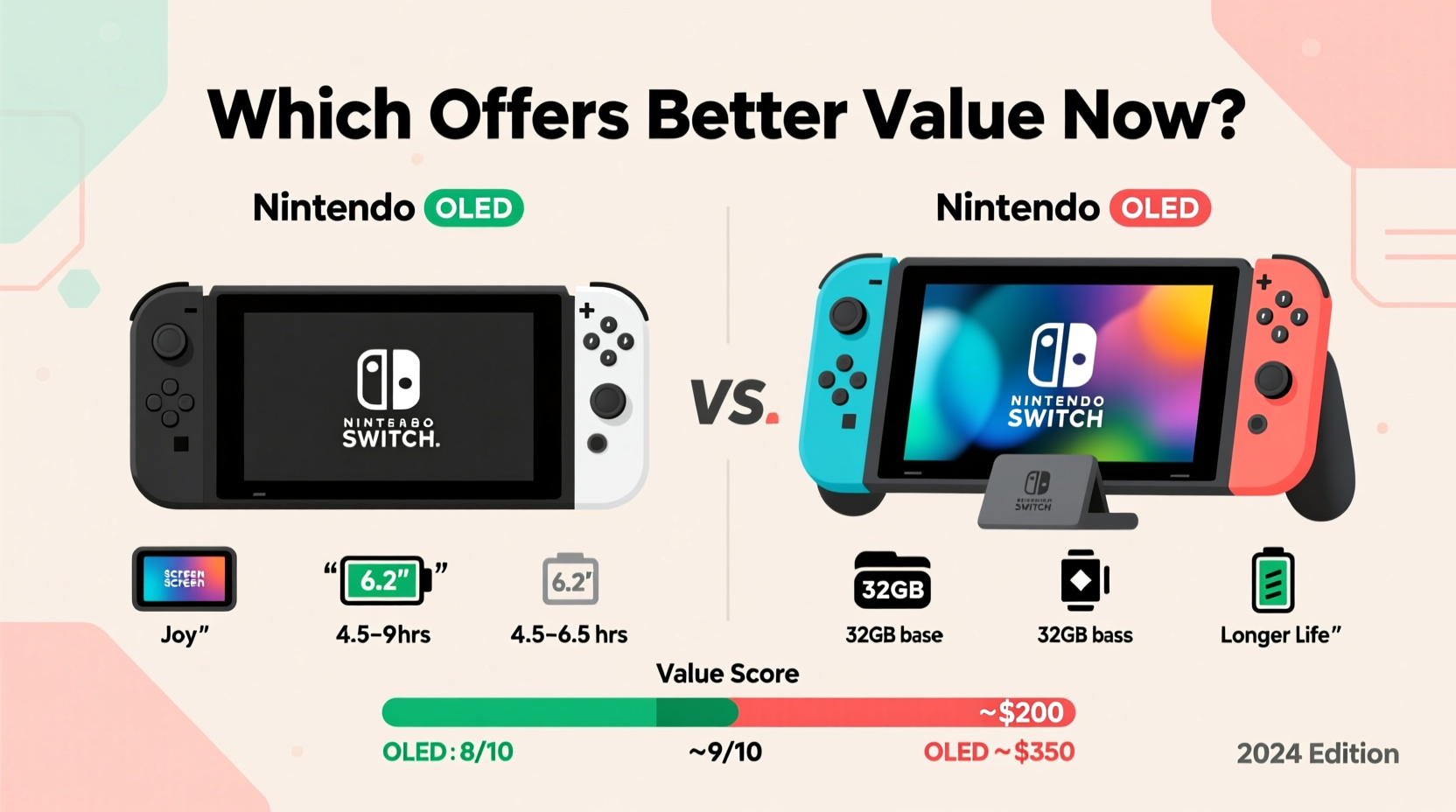
The most visible difference between the original Switch and the OLED model is the build quality and screen. The OLED device features a more premium feel with a matte-finish back, wider kickstand, and noticeably brighter, richer display. The screen size increased from 6.2 inches to 7 inches, and the switch to an OLED panel delivers deeper blacks, improved contrast, and more vibrant colors—especially evident in games like The Legend of Zelda: Breath of the Wild or Octopath Traveler.
But beyond the screen, the OLED model also improves ergonomics. The kickstand is now adjustable and spans the full width of the back, making tabletop play far more stable. This is a small change with significant impact during multiplayer sessions or travel.
The ports remain unchanged—USB-C for charging and video output, headphone jack, and microSD slot—so accessories are fully compatible. However, the OLED model includes double the internal storage: 64GB versus the original’s 32GB. Given that many AAA Switch titles exceed 10GB, this is a meaningful improvement, especially if you don’t own a high-capacity microSD card.
Performance: Identical Under the Hood
Despite the visual upgrades, there is no difference in processing power between the original Switch and the OLED model. Both use the same NVIDIA Tegra X1 chip, meaning frame rates, load times, and graphical fidelity when docked or in handheld mode are identical.
This is a crucial point: upgrading to the OLED does not mean smoother gameplay or higher resolution. When docked to a TV, both models output up to 1080p, and in handheld mode, both render at 720p. Any performance issues present in one—such as frame drops in demanding games like Bayonetta 2 or Resident Evil Village—are equally present in the other.
Battery life has seen a slight improvement in the OLED model, thanks to a newer revision of the Tegra chip. Nintendo lists battery life at approximately 4.5 to 9 hours depending on the game, compared to the original’s 2.5 to 6.5 hours (early models). However, later revisions of the original Switch also received this battery boost, so comparing current stock units, the difference may be negligible unless you’re buying used.
“Hardware performance hasn’t evolved across Switch iterations—the real differentiators are comfort, display, and durability.” — Lucas Park, Console Analyst at GameTech Weekly
Value Comparison: Price Versus Practical Benefits
As of 2024, the original Nintendo Switch typically retails for around $200–$250, while the OLED model is priced at $350. That $100 difference must be weighed against the tangible benefits the OLED provides.
To help break this down, here’s a direct comparison of key features:
| Feature | Original Switch | Switch OLED |
|---|---|---|
| Screen Size & Type | 6.2\" LCD | 7\" OLED |
| Internal Storage | 32GB | 64GB |
| Kickstand | Narrow, single-position | Wide, adjustable |
| Battery Life | 2.5–6.5 hrs (early), ~9 hrs (revised) | 4.5–9 hrs |
| Dock Features | No LAN port | LAN port included |
| Audio Output | Basic audio via USB-C or Bluetooth | Enhanced audio with improved speaker clarity |
| Retail Price (2024) | $200–$250 | $350 |
The inclusion of a wired LAN port on the OLED dock is particularly valuable for online multiplayer games requiring stable connections, such as Super Smash Bros. Ultimate or Fortnite. It eliminates reliance on often-unstable Wi-Fi when playing at home, reducing lag and disconnections.
Real-World Usage: Who Benefits Most From Each Model?
Understanding who each model suits best helps clarify where the real value lies. Consider the following scenario:
Mini Case Study: The College Student vs. The Family Gamer
Sophie, a college student, uses her Switch primarily on the go—during commutes, in dorm lounges, or at friends’ apartments. She values portability and screen clarity. For her, the OLED’s superior display and sturdier kickstand make a daily difference. She plays visually rich games like Hades and Fire Emblem: Three Houses, where color depth enhances immersion. The extra storage also means she can download multiple games without constantly managing space. Though the price is higher, the long-term usability justifies the investment.
On the other hand, Mike, a father of two, bought a Switch mainly for family game nights. He docks it every time, connecting it to his living room TV. His kids play Animal Crossing and Mario Kart 8 Deluxe mostly in shared modes. Since he rarely uses handheld mode, the screen upgrade and kickstand offer little benefit. He purchased the original Switch on sale for $220 and used the savings to buy extra Joy-Con controllers. For him, the original model delivered equal entertainment value at a lower cost.
This contrast illustrates a broader truth: the OLED adds the most value for portable and hybrid users. If you primarily play docked, the original Switch—with its proven reliability and lower price—is still an excellent option.
Expert Tips for Maximizing Value
Regardless of which model you choose, a few smart decisions can stretch your investment further and enhance longevity.
- Invest in a microSD card early. Even the OLED’s 64GB fills up quickly. A 128GB or 256GB card costs under $30 and future-proofs your system.
- Use the dock wisely. If you have the OLED, take advantage of the built-in LAN port for competitive online play.
- Consider refurbished units. Nintendo-certified refurbished OLED models occasionally appear at $50–$70 below retail, offering premium features at near-original pricing.
- Check bundle deals. Retailers sometimes include free games or accessories with the original Switch, effectively closing the value gap.
Frequently Asked Questions
Can I use my old accessories with the Switch OLED?
Yes. All Joy-Con, docks (except LAN functionality), cases, and charging accessories are fully compatible with the OLED model. The only limitation is that older docks lack the Ethernet port, but they work identically otherwise.
Does the OLED battery last significantly longer?
In real-world use, the difference is modest. Both modern OLED and revised original models offer up to 9 hours for less intensive games like Stardew Valley. For graphically heavy titles, expect closer to 4–5 hours on both. The OLED doesn’t offer a dramatic leap in endurance, but its efficiency is slightly better.
Is the original Switch being discontinued?
While Nintendo has reduced marketing for the original model, it remains officially sold in many regions, often bundled with popular games like Super Mario Odyssey. There’s no official end-of-life announcement, suggesting it will stay available as a budget-friendly option for the foreseeable future.
Step-by-Step Guide: Choosing the Right Model for You
- Assess your primary play style. Do you mostly play handheld, docked, or both? If handheld or hybrid, lean toward OLED.
- Evaluate your gaming environment. Frequent travelers or students benefit more from the OLED’s screen and kickstand.
- Check your internet setup. If you play competitive online games and have reliable Ethernet access, the OLED’s dock offers a tangible connectivity advantage.
- Review your budget. If saving $100 allows you to purchase additional games or accessories, the original may offer better overall value.
- Look for bundles or sales. Sometimes a discounted original Switch with a free game delivers more entertainment per dollar than a standalone OLED.
Final Verdict: Where True Value Lies
The Nintendo Switch OLED is objectively the better-built device. Its screen, kickstand, storage, and dock improvements address genuine pain points from the original design. For anyone who values handheld play, visual quality, or long-term durability, it’s the superior choice.
However, “better” doesn’t always mean “better value.” The original Switch continues to deliver the same library, performance, and versatility at a significantly lower entry point. For families, casual players, or those who almost exclusively play on a TV, the original remains a smart, cost-effective option.
If you're buying your first Switch and money is no object, the OLED is the clear recommendation. But if you're budget-conscious, purchasing for someone who won't use handheld mode much, or simply want to allocate funds toward games, the original still holds strong.
“The Switch OLED isn’t a next-gen console—it’s a refinement. And refinements matter most when they match how you actually use the device.” — TechRadar, Gaming Hardware Review (2023)
Conclusion: Make the Choice That Fits Your Lifestyle
At the end of the day, the decision between the Nintendo Switch OLED and the original comes down to personal usage patterns and priorities. The OLED offers tangible quality-of-life upgrades that enhance daily enjoyment, particularly for mobile gamers. But the original Switch remains a capable, affordable gateway to one of the strongest game libraries in modern console history.
Instead of chasing the newest model, focus on what matters most to you: immersive visuals, reliable multiplayer, or maximizing entertainment per dollar. By aligning your purchase with your habits, you’ll get the most value—regardless of which Switch you choose.




 浙公网安备
33010002000092号
浙公网安备
33010002000092号 浙B2-20120091-4
Comments
No comments yet. Why don't you start the discussion?