
When it comes to playing indie games, two platforms dominate the handheld space: the Nintendo Switch and the Steam Deck. Both have carved out loyal followings, but they approach game libraries—and particularly indie titles—in fundamentally different ways. The question isn’t just about quantity or performance; it’s about curation. Which platform makes you feel like you’re discovering something special, handpicked and meaningful, rather than drowning in an endless sea of options?
The answer depends on what you value: editorial oversight and polish, or freedom and breadth. The Nintendo Switch curates through gatekeeping and spotlighting. The Steam Deck embraces openness, letting players shape their own experience. For indie enthusiasts, this distinction is crucial.
The Philosophy of Curation: Gatekeeping vs. Open Access
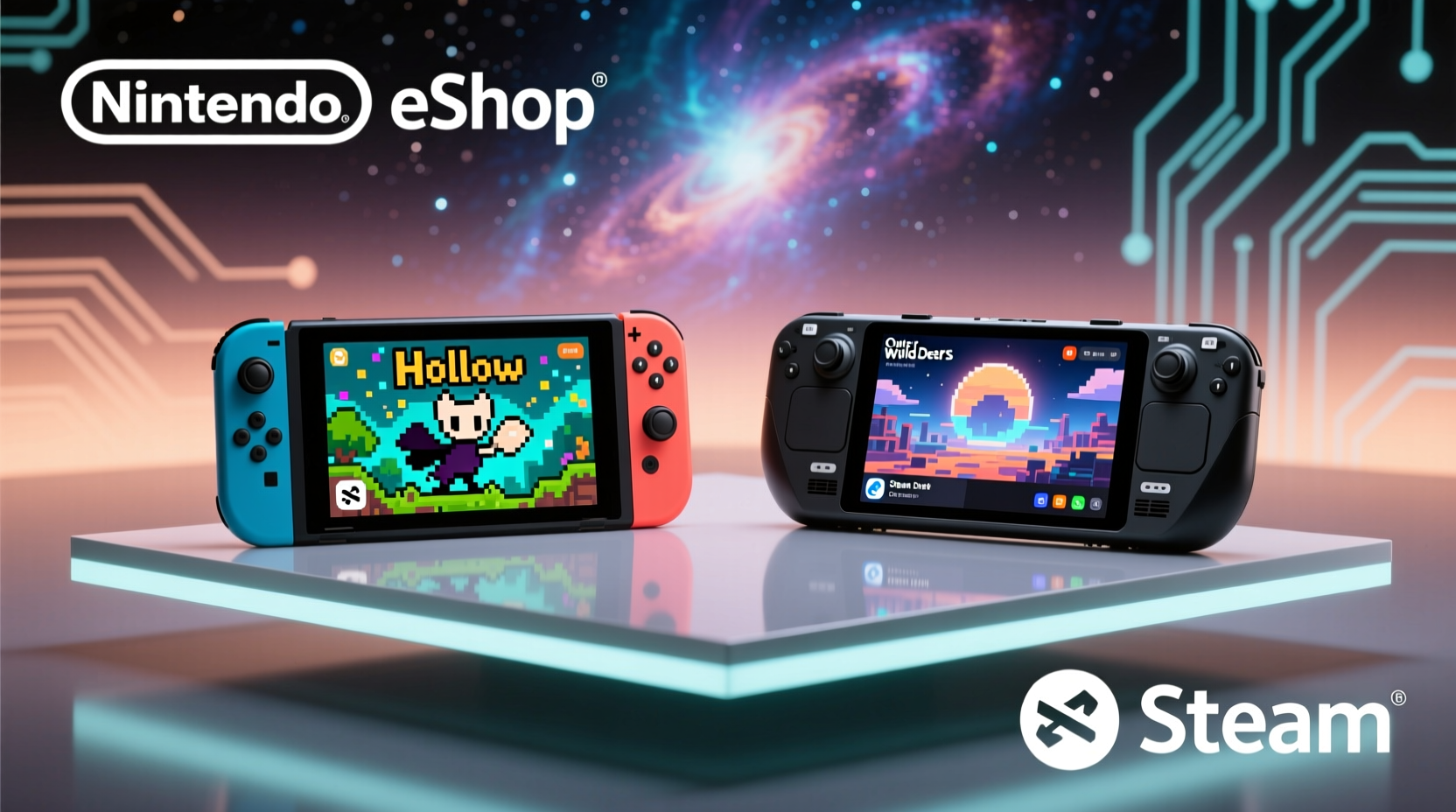
Curation isn’t just about selecting games—it’s about shaping an experience. Nintendo has always operated as a walled garden. Every game on the eShop must pass technical, design, and content standards before release. This model ensures quality control and a consistent user interface, but it also limits availability. Many experimental or niche indie titles never make it to the Switch due to cost, certification hurdles, or lack of publisher support.
In contrast, Steam operates on a largely open marketplace. While Valve introduced some review processes after the “asset flip” era of low-effort games, the Steam Deck runs on SteamOS, giving access to nearly the entire Steam catalog—over 50,000 titles, many of them indie. There’s no approval barrier beyond basic compliance, meaning more diversity but also more noise.
“Curation is not about limiting choice—it’s about reducing cognitive load so players can find joy without exhaustion.” — Lydia Cho, Game Design Researcher at NYU Game Center
This philosophical divide defines the player experience. On the Switch, you’re more likely to encounter games that have been refined, localized, and tested. On the Steam Deck, you might uncover a raw, ambitious prototype made by a solo developer in Finland—but you’ll need to sift through hundreds of similar titles to find it.
Discoverability: How Each Platform Surfaces Indie Gems
Nintendo takes an editorial approach to discovery. The eShop features curated sections like “Nindies Spotlight,” “Indie Highlights,” and seasonal sales with themed collections. These are often accompanied by short trailers and developer interviews, giving context and personality to each title. When a game like Hades, Tunic, or Eastward appears in these spotlights, it gains visibility quickly.
Steam, on the other hand, relies heavily on algorithms, user tags, reviews, and community hubs. You can filter by “indie,” “metacritic score,” “controller support,” or “recently updated,” but the results are vast and often overwhelming. Steam does offer curated lists—such as “Labor of Love” badges for long-supported games or “Popular Among Critics”—but these are subtle signals compared to Nintendo’s bold banners.
For players who want guidance, the Switch feels more welcoming. Its interface is clean, intuitive, and designed for browsing in handheld mode. The Steam Deck’s desktop-like environment rewards tech-savviness. Power users thrive here, but casual explorers may feel lost.
A Comparative Look at Library Quality and Presentation
To understand curation, we need to examine not just what’s available, but how it’s presented and maintained.
| Feature | Nintendo Switch | Steam Deck |
|---|---|---|
| Library Size (Indie Titles) | ~1,500–2,000 notable indie releases | 30,000+ indie games on Steam |
| Approval Process | Rigorous certification (Nintendo QA) | Minimal barriers (Steam Direct) |
| UI for Discovery | Editorial banners, scheduled showcases | Search filters, tags, community hubs |
| Performance Optimization | Games tailored for hardware | Proton compatibility varies per title |
| Update Reliability | High (centralized patch management) | Varies by developer commitment |
| User Reviews | Limited (no visible ratings on eShop) | Extensive (ratings, playtime, written feedback) |
The table reveals a clear trade-off: the Switch sacrifices breadth for reliability and polish. The Steam Deck offers unparalleled depth but demands effort to navigate. If you value a seamless, guided journey, the Switch’s tighter library feels more curated. If you enjoy digging, tinkering, and finding hidden masterpieces, the Steam Deck’s chaos becomes part of the charm.
Real Example: Finding Crab Champions on Both Platforms
Take the fast-paced roguelike shooter Crab Champions. It began as a viral hit in PC gaming circles, praised for its addictive loop and quirky aesthetic. On the Steam Deck, it’s easily accessible, runs smoothly via Proton, and benefits from frequent updates and mod support. Players discover it through trending lists, Let’s Plays, or Discord communities.
On the Nintendo Switch? It’s not available—at least not yet. Despite fan demand, there’s no official port. This is common: many rising indie stars skip the Switch due to development costs, competition for devkit resources, or delays in certification.
Now consider Witchbrook, a cozy RPG that received a glowing preview in a Nintendo Indie World showcase. Even though it hasn’t launched, its presence in a Nintendo-branded video gave it instant credibility and anticipation. That kind of spotlight rarely happens on Steam unless a game goes viral organically.
This contrast illustrates the core difference: the Switch builds trust through endorsement. The Steam Deck builds opportunity through access.
Expert Insight: What Developers Say About Curation
From the creator’s side, being featured on the Switch eShop can be career-changing. But getting there isn’t easy.
“Getting into a Nintendo Indie World presentation was surreal. Overnight, our wishlist count jumped from 12,000 to over 200,000. But the certification process took six months—we had to optimize for lower RAM and rework save files.” — Rafael Silva, Co-Founder of Moonstorm Studios ( Witchbrook)
Meanwhile, developers on Steam face a different challenge: standing out.
“On Steam, you launch into a hurricane. Even if your game is great, you need marketing, press kits, influencer outreach. Valve doesn’t push you—you push yourself.” — Naomi Park, Solo Developer of Memory Parachute
These quotes highlight a key truth: Nintendo’s curation acts as a quality stamp and amplifier. Steam’s openness democratizes publishing but shifts the burden of visibility onto the developer—or the player searching for them.
Practical Checklist: Choosing the Right Platform for Your Indie Experience
Still unsure which device suits your indie gaming style? Ask yourself the following:
- Do I prefer a streamlined interface with handpicked recommendations?
- Am I willing to pay a premium for polished, console-ready ports?
- Do I value system stability and consistent controller integration?
- Am I comfortable managing updates, compatibility layers, and storage?
- Do I enjoy exploring obscure or experimental games others might overlook?
- Do I already own many Steam games I’d like to play on the go?
If the first three resonate, the Nintendo Switch is likely your best fit. If the latter three do, the Steam Deck will feel more empowering.
Step-by-Step: Optimizing Your Indie Game Experience on Either Device
- Start with your goals: Are you looking for comfort, nostalgia, and ease? Or exploration, variety, and customization?
- Assess your current library: Check which indie games you already own or wish to play. Are they on Switch? On Steam? Available on both?
- Test real-world performance: Look up specific titles on sites like HowLongToBeat or PCGamingWiki to see how well they run on each platform.
- Consider portability and battery: The Switch typically lasts longer per charge. The Steam Deck’s battery varies greatly depending on game intensity.
- Factor in post-purchase support: Does the developer actively update the game? Is cross-save available? Are patches timely on both platforms?
- Make your decision: Choose based on alignment with your values—curation or freedom—not just specs.
Frequently Asked Questions
Can the Steam Deck run all indie games perfectly?
No. While most indie games run well thanks to Valve’s Proton compatibility layer, some titles—especially those using anti-cheat software or niche engines—may not launch or perform poorly. Always check community reports before purchasing.
Are Switch indie games cheaper than on Steam?
Not consistently. Some indie titles are priced higher on Switch due to porting and licensing costs. However, Nintendo frequently runs sales like “Nintendo Selects” or “eShop Discounts,” making timed purchases advantageous.
Does the Steam Deck feel less curated because it has more bad games?
It has more games, period—good, bad, and experimental. But curation isn’t just about filtering out the bad; it’s about highlighting the good. Steam leaves that job to algorithms and users, while Nintendo assigns it to human editors. Neither is inherently better—just different.
Conclusion: Curation as a Reflection of Values
The Nintendo Switch and Steam Deck represent two visions of gaming culture. The Switch treats curation as a service—a promise that what you see is worth your time. It’s ideal for players who want to relax, explore, and trust the system to guide them toward quality experiences.
The Steam Deck treats curation as a collaboration. It gives you the tools—filters, community input, mods, and raw access—and says: “You decide what matters.” It’s perfect for tinkerers, completists, and those who find joy in the hunt.
Neither library is objectively better. But if you’re asking which feels more curated, the answer leans toward the Nintendo Switch. Its intentional design, selective publishing, and editorial voice create a sense of care and cohesion that Steam, by design, cannot replicate.
That said, the future may blur these lines. With Steam’s growing use of curator accounts, algorithmic refinement, and Deck-specific optimization tags, it’s building structure within openness. Meanwhile, Nintendo continues to expand its indie offerings, albeit slowly.
Ultimately, your choice should reflect not just what games you want to play, but how you want to discover them.




 浙公网安备
33010002000092号
浙公网安备
33010002000092号 浙B2-20120091-4
Comments
No comments yet. Why don't you start the discussion?