
In an increasingly noisy world, personal audio devices have become essential. But as we rely more on earbuds for music, calls, and focus, a critical question arises: how do we protect our hearing while enjoying sound in loud environments? Two popular technologies—active noise canceling (ANC) and passive noise isolation—are often presented as solutions. While both reduce unwanted sound, they work differently and offer varying levels of hearing protection. Understanding the distinction is key to making a safer, smarter choice for your long-term auditory health.
How Noise Affects Hearing
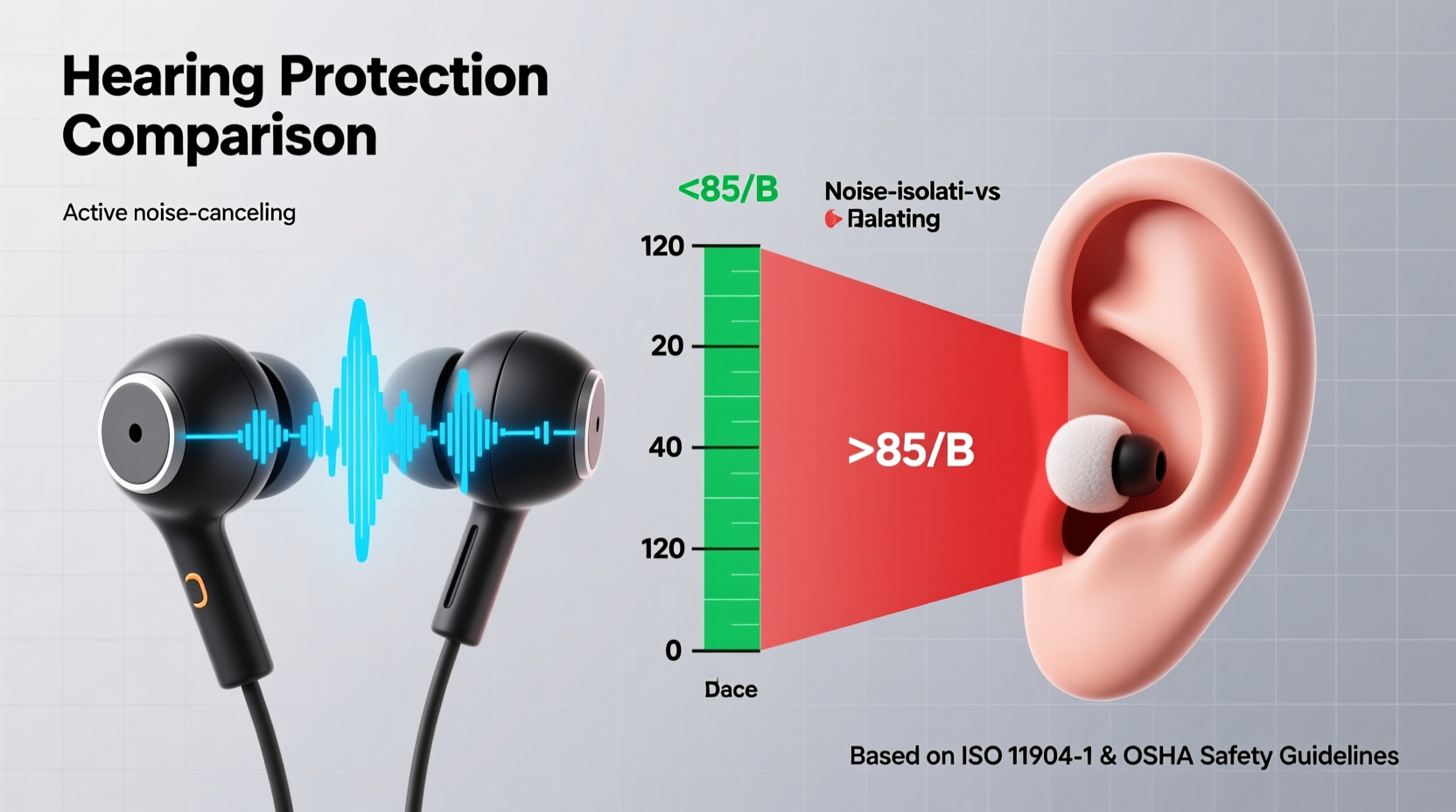
Prolonged exposure to high sound levels is one of the leading causes of preventable hearing loss. According to the World Health Organization, over 1 billion young people are at risk of hearing damage due to unsafe listening practices, including extended use of personal audio devices at high volumes. The danger isn’t just from sudden loud noises—it’s also from chronic exposure to moderate noise in daily environments like subways, offices, or airplanes.
The human ear can tolerate sounds up to 70–80 decibels (dB) for extended periods. However, many urban environments exceed this threshold. For example:
- A busy street: 80–85 dB
- A subway train: 90–100 dB
- A rock concert: 110–120 dB
When background noise is high, users tend to increase the volume of their earbuds to compensate. This behavior significantly increases the risk of noise-induced hearing loss (NIHL), a permanent condition caused by damage to the hair cells in the inner ear.
“Every time you turn up the volume to overcome ambient noise, you’re adding stress to your auditory system. The quieter your listening environment, the safer your ears.” — Dr. Lena Torres, Audiologist and Hearing Researcher, Johns Hopkins Medical Center
Active Noise Canceling: How It Works and Its Benefits
Active noise canceling (ANC) uses built-in microphones and digital signal processing to detect external sounds and generate opposing sound waves—essentially “canceling” the noise before it reaches your ear. This technology is particularly effective against low-frequency, consistent sounds like airplane engines, air conditioning hums, or traffic rumble.
Modern ANC earbuds process thousands of sound samples per second, adjusting in real time to maintain a quiet acoustic environment. Because ANC reduces the need to raise volume in noisy settings, it indirectly supports hearing protection by enabling safe listening levels even in loud surroundings.
However, ANC has limitations:
- Less effective against high-frequency or sudden noises (e.g., conversations, horns)
- Battery-dependent; performance degrades when power is low
- Can create a slight pressure sensation in some users’ ears
Noise Isolation: The Power of Physical Barriers
Noise isolation, also known as passive noise reduction, relies entirely on physical design. Earbuds with well-fitted silicone, foam, or custom-molded tips create an airtight seal in the ear canal, blocking external sound through mechanical insulation. Unlike ANC, this method doesn’t require power or electronics.
The effectiveness of noise isolation depends heavily on fit. A proper seal can reduce ambient noise by 15–30 dB, especially in the mid-to-high frequency range—exactly where voices and sharp environmental sounds reside. This makes isolation particularly useful in office settings, city streets, or public transit.
Because noise isolation works by physically blocking sound, it provides consistent attenuation across all frequencies without introducing electronic artifacts. It also requires no additional power, making it ideal for long listening sessions or backup use when ANC batteries run out.
Fit Matters: Why One Size Doesn’t Fit All
Many users overlook the importance of ear tip selection. Stock silicone tips may not suit everyone’s ear anatomy, leading to poor seals and reduced isolation. High-end models often include multiple tip sizes and materials (e.g., memory foam) to improve comfort and performance.
Custom-molded earbuds take this further, offering superior isolation by conforming precisely to the user’s ear canal. Though more expensive, they are favored by audiophiles and professionals who demand maximum sound clarity and hearing protection.
Comparing Hearing Protection: ANC vs Isolation
While both technologies aim to reduce external noise, their impact on hearing safety differs based on context, implementation, and user behavior. The table below summarizes key differences:
| Feature | Active Noise Canceling (ANC) | Noise Isolation (Passive) |
|---|---|---|
| Mechanism | Digital sound wave cancellation via microphones and processors | Physical barrier using ear tips to block sound |
| Best Against | Low-frequency continuous noise (e.g., engines, HVAC) | Mid-to-high frequency sounds (e.g., voices, traffic) |
| Hearing Protection Benefit | Reduces need to increase volume in noisy environments | Physically lowers incoming sound pressure levels |
| Power Required | Yes (battery-dependent) | No |
| Consistency | Varies with battery and software updates | Stable, as long as fit remains secure |
| Cost | Typically higher due to advanced tech | Generally lower, especially basic models |
Neither technology is inherently “better” for hearing protection—they serve complementary roles. ANC excels in reducing constant background drone, allowing safer volume levels. Isolation provides reliable, always-on sound blocking that doesn’t depend on software or charge.
Real-World Example: Commuting with Safety in Mind
Consider Maria, a graphic designer who commutes daily on a crowded subway. Without ear protection, she finds herself turning her earbud volume to 80% just to hear her podcast over train noise. Over time, this habit puts her at risk for early hearing fatigue and potential damage.
She switches to a pair of hybrid earbuds combining ANC and memory foam tips. On her next commute, she activates ANC and selects the largest foam tips for a snug fit. Now, ambient noise drops significantly. She listens at just 45% volume and still hears every detail clearly. After three months, she reports less ear strain and improved focus during her day.
This scenario illustrates the combined benefit: ANC handles the rumbling train engine, while the foam tips block higher-pitched chatter and announcements. Together, they create a quieter internal environment, reducing the temptation to crank up the volume.
Maximizing Hearing Protection: A Step-by-Step Guide
To get the most out of either technology while safeguarding your hearing, follow this actionable sequence:
- Assess your environment: Identify the types of noise you encounter most (e.g., low-frequency hums vs. speech). This helps determine whether ANC or isolation will be more effective.
- Choose the right ear tips: Test different sizes and materials. Foam tips generally provide better isolation than silicone. Ensure a tight but comfortable seal.
- Enable ANC selectively: Use ANC in consistently noisy settings (flights, trains). Disable it in quiet areas to save battery and avoid artificial pressure effects.
- Set volume limits: Use your device’s built-in volume limiter (e.g., iOS “Reduce Loud Sounds” or Android “Sound Amplifier”) to cap maximum output.
- Follow the 60/60 rule: Listen at no more than 60% volume for no longer than 60 minutes at a time. Take breaks to let your ears recover.
- Monitor listening habits: Some apps (like Apple’s Headphone Notifications) track weekly sound exposure. Review these regularly to stay within safe thresholds.
Expert Recommendations for Long-Term Hearing Health
Dr. Alan Reyes, an otolaryngologist specializing in occupational hearing loss, emphasizes prevention: “The best hearing protection isn’t reactive—it’s built into your daily habits. Whether you choose ANC or isolation, the goal should be minimizing cumulative sound exposure.”
He recommends combining technological tools with behavioral strategies:
- Use dual-mode earbuds that offer both ANC and strong passive isolation.
- Avoid using earbuds in extremely loud environments (e.g., construction sites) where even protected listening may exceed safe limits.
- Get annual hearing check-ups if you frequently use earbuds in noisy conditions.
“The safest earbud is the one that lets you listen quietly. That could be ANC, isolation, or ideally—both working together.” — Dr. Alan Reyes, MD, ENT Specialist
Frequently Asked Questions
Do noise canceling earbuds damage hearing?
No, properly used ANC earbuds do not damage hearing. In fact, they help protect it by reducing the need to increase volume in noisy environments. However, like any earbud, they can cause harm if used at excessively high volumes for prolonged periods.
Can noise isolation replace hearing protection in loud workplaces?
No. While noise-isolating earbuds reduce ambient sound, they are not certified hearing protection devices (HPDs). For industrial or construction settings with noise above 85 dB, OSHA-approved earmuffs or earplugs with known Noise Reduction Ratings (NRR) should be used instead.
Which is better for sleeping: ANC or isolation?
Noise isolation is typically better for sleep. Many ANC earbuds produce a faint hiss or pressure sensation that can disrupt rest. Foam-tipped isolating earbuds, especially low-profile models designed for side sleeping, offer silent, passive blocking without electronic side effects.
Checklist: Choosing Earbuds for Hearing Safety
Before purchasing, ask yourself the following:
- ✅ Does the model offer both ANC and high-quality passive isolation?
- ✅ Are multiple ear tip sizes included for a secure fit?
- ✅ Can I set volume limits via the companion app or device settings?
- ✅ Does it support transparency mode for situational awareness?
- ✅ Is sound exposure tracking available through my smartphone OS?
- ✅ Is the battery life sufficient for full-day use with ANC enabled?
Conclusion
When it comes to protecting your hearing, the choice between noise canceling and noise isolating earbuds isn’t about picking one over the other—it’s about understanding how each contributes to safer listening. Active noise canceling reduces the need to boost volume in loud settings, while noise isolation physically blocks harmful sound pressure. The most effective hearing protection comes from combining both technologies with mindful usage habits.
Ultimately, the best earbuds for your hearing are those that allow you to enjoy audio at moderate levels, consistently and comfortably. By choosing well-designed products, optimizing fit, and respecting your ears’ limits, you invest in lifelong auditory health. Don’t wait for symptoms to act. Start protecting your hearing today—one quiet moment at a time.




 浙公网安备
33010002000092号
浙公网安备
33010002000092号 浙B2-20120091-4
Comments
No comments yet. Why don't you start the discussion?