
Flying can be one of the noisiest travel experiences—jet engines, crying babies, chatty passengers, and overhead announcements create a constant sonic backdrop. For travelers seeking peace at 35,000 feet, choosing the right audio gear is critical. Two technologies dominate the conversation: noise-canceling earbuds and sound-isolating earbuds. While both aim to reduce unwanted noise, they work in fundamentally different ways—and their performance on flights varies significantly.
Understanding the distinction between active noise cancellation (ANC) and passive sound isolation isn’t just technical jargon—it’s the key to comfort, clarity, and even hearing protection during long-haul journeys. This guide breaks down how each technology functions, compares their real-world performance in flight environments, and helps you decide which solution delivers the best experience based on your priorities.
How Noise Canceling Earbuds Work
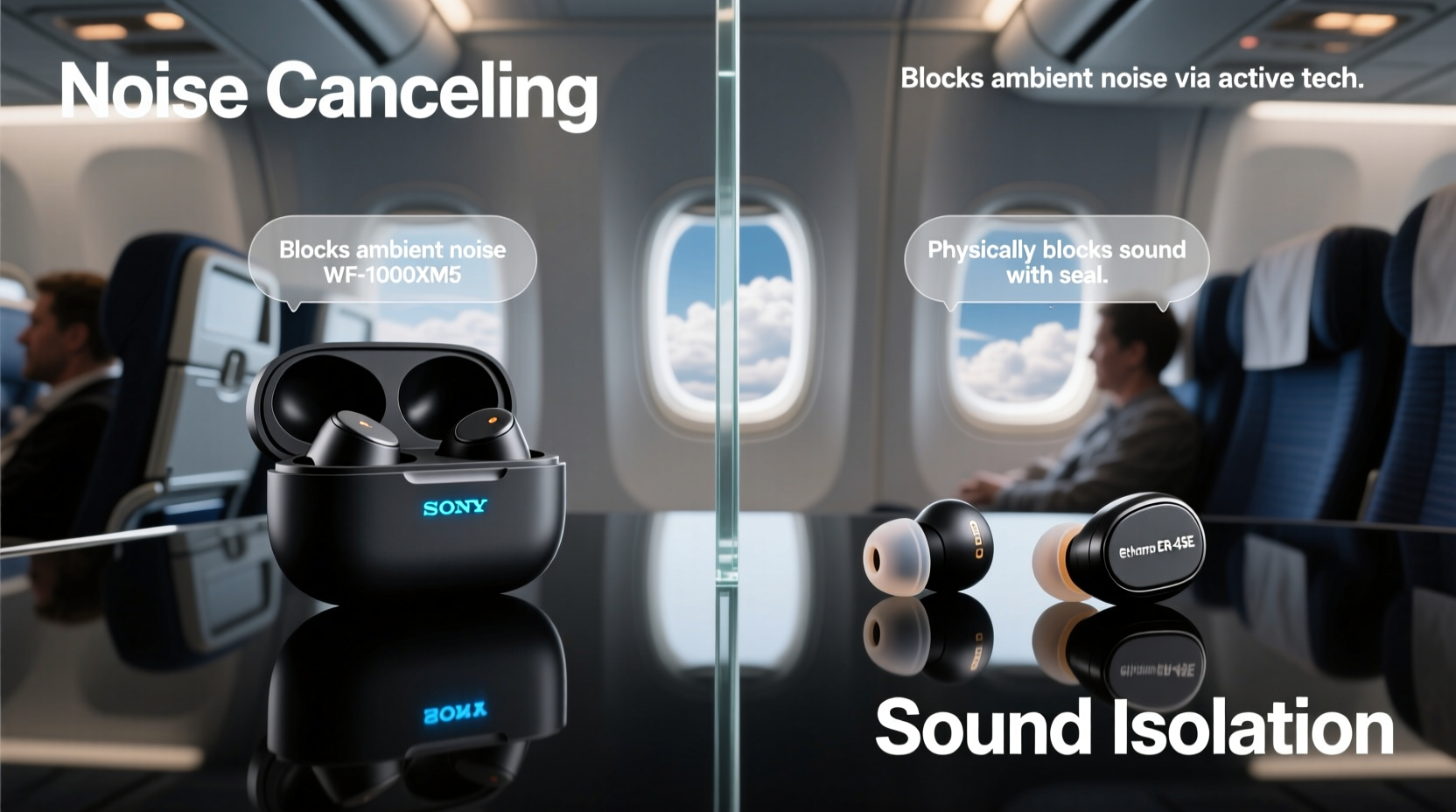
Noise-canceling earbuds use active noise cancellation (ANC), a technology that electronically reduces ambient sound. Microphones on the earbuds detect external noise, particularly low-frequency sounds like engine rumble or cabin airflow. The earbuds then generate an “anti-noise” signal—a sound wave with the same amplitude but opposite phase—to cancel out the incoming noise through destructive interference.
This process is most effective against continuous, predictable low-frequency sounds—the very kind that dominate airplane cabins. ANC doesn’t eliminate all noise, but it dramatically reduces the droning hum of jet engines, making it easier to focus, sleep, or enjoy music without cranking up the volume.
Modern ANC earbuds often feature adaptive systems that adjust cancellation strength based on the environment. Some models also offer transparency modes, allowing users to temporarily hear announcements or conversations without removing the earbuds.
The Science Behind Sound Isolation
Sound-isolating earbuds rely on passive noise reduction, achieved purely through physical design. These earbuds use snug-fitting silicone, foam, or custom-molded tips to create an airtight seal in the ear canal. By blocking sound waves from entering the ear, they attenuate external noise across a broad frequency range—especially mid- and high-frequency sounds like voices, clinking trays, or crying infants.
Passive isolation doesn’t require batteries or electronics. Its effectiveness depends on fit: a poor seal drastically reduces performance. High-quality memory foam tips, such as those made from Comply™ material, often provide superior comfort and noise attenuation over long periods compared to standard silicone.
Because sound isolation blocks noise physically, it works immediately and consistently. It doesn’t degrade with battery life and performs equally well whether you're listening to music or sitting in silence.
“Passive isolation is often underrated. A well-sealed earbud can block up to 30dB of noise—comparable to many entry-level ANC models.” — Dr. Lena Torres, Acoustic Engineer, AudioLab Research Group
Comparing Performance During Flights
To determine which option is better for air travel, consider the types of noise encountered during a typical flight:
- Low-frequency drone: Engine noise (70–200 Hz)
- Mid-frequency chatter: Passenger conversations (500–2000 Hz)
- High-frequency spikes: Crying babies, service carts, PA announcements (2000+ Hz)
ANC excels at suppressing the persistent low-end rumble of aircraft engines, reducing listener fatigue and enabling lower media volumes. However, it struggles with sudden, irregular sounds like a baby’s cry or a dropped tray. Passive isolation, meanwhile, offers broad-spectrum attenuation, particularly effective in the mid-to-high frequencies where ANC is weakest.
In practice, the ideal solution combines both technologies. Many premium earbuds now integrate ANC with excellent passive sealing, offering layered defense against cabin noise. But when forced to choose one, the decision hinges on flight duration, sensitivity to specific noises, and personal comfort preferences.
Real-World Example: A Transatlantic Flight Test
A frequent business traveler flying from New York to London tested two pairs of earbuds on back-to-back trips:
- Trip 1: Sony WF-1000XM5 (ANC-focused)
- Trip 2: Etymotic ER6i (passive isolation, no ANC)
During both flights, engine noise was reduced effectively—by ANC in the first case, by tight foam tips in the second. However, the Sony model made the cabin feel “quieter overall,” especially during cruise altitude. The Etymotics blocked more voice chatter and sudden noises, but required higher music volume to overcome the residual engine drone.
The traveler reported better sleep with the ANC earbuds despite slightly heavier fit, citing reduced mental fatigue from the absence of constant low-frequency vibration.
Key Differences: ANC vs. Sound Isolation
| Feature | Noise Canceling (ANC) | Sound Isolating (Passive) |
|---|---|---|
| Mechanism | Electronic anti-noise generation | Physical ear canal seal |
| Best At Reducing | Low-frequency continuous noise (e.g., engine hum) | Mid- to high-frequency intermittent sounds (e.g., voices, crying) |
| Battery Required? | Yes – affects performance when drained | No – works indefinitely |
| Comfort Over Long Periods | Varies – some cause ear pressure | Generally high with foam tips |
| Effectiveness Without Music | Good (with ANC on) | Excellent (physical barrier) |
| Price Range | $150–$300+ | $50–$150 |
| Maintenance | Regular charging, firmware updates | Cleaning ear tips, replacing worn seals |
Which Is Better for Flights? A Practical Decision Framework
There’s no universal answer—but the following checklist helps match your needs to the right technology:
Choose Noise-Canceling Earbuds If You:
- Take long-haul or red-eye flights regularly
- Want to reduce engine drone for better sleep
- Listen to music, podcasts, or audiobooks during flights
- Can manage charging and don’t mind higher cost
- Prefer a “silent cabin” feeling without complete sound blockage
Choose Sound-Isolating Earbuds If You:
- Prioritize reliability and simplicity
- Are sensitive to ANC-induced ear pressure
- Want maximum noise reduction without electronics
- Travel frequently but avoid long international routes
- Need a budget-friendly, durable option
Step-by-Step Guide to Maximizing In-Flight Audio Comfort
- Test Fit Before Flying: Try different ear tip sizes at home. A proper seal is essential for both ANC and passive isolation.
- Charge Fully: Ensure ANC earbuds are fully charged. Consider a portable charger for flights over six hours.
- Enable ANC Early: Turn on noise cancellation before boarding to acclimate to the sensation and preserve battery.
- Use Foam Tips When Possible: Replace silicone with memory foam tips for improved comfort and isolation during extended wear.
- Adjust Volume Wisely: Keep audio levels below 60% to protect hearing, especially during long flights.
- Switch to Transparency Mode for Announcements: Use this feature to hear boarding updates without removing earbuds.
- Clean After Travel: Wipe ear tips with alcohol-free wipes to prevent wax buildup and maintain hygiene.
Hybrid Approach: The Best of Both Worlds
The most effective in-flight audio solution combines ANC with strong passive isolation. Top-tier models like the Apple AirPods Pro (2nd gen), Bose QuietComfort Ultra Earbuds, and Sennheiser Momentum True Wireless 3 use advanced ANC algorithms alongside ergonomic designs that naturally seal the ear canal.
This dual-layer approach suppresses engine noise electronically while physically blocking higher-pitched disturbances. As a result, users report deeper immersion, less auditory fatigue, and greater flexibility in noisy environments.
If budget allows, investing in hybrid earbuds provides the most comprehensive noise management for frequent flyers. Look for models with:
- Adaptive ANC with aircraft mode
- Multiple ear tip options (including foam)
- Long battery life (8+ hours with ANC)
- IPX4 or higher water resistance (for sweat and humidity)
- Transparency or awareness mode
Frequently Asked Questions
Do noise-canceling earbuds work on all types of planes?
Yes, ANC works on all commercial aircraft. It’s most effective on larger jets with consistent engine frequencies, such as Boeing 787s or Airbus A350s. Smaller regional planes with variable engine loads may see slightly reduced ANC performance due to fluctuating noise patterns.
Can I use sound-isolating earbuds if I have small ear canals?
Absolutely. Many sound-isolating models come with ultra-small silicone or foam tips designed for smaller ears. Brands like Westone and ACS Custom offer custom-molded options for optimal fit and comfort.
Is ANC safe for long-term use during flights?
Yes. ANC is safe for extended use. Some users report mild ear pressure, similar to what’s felt during cabin pressurization. This sensation usually subsides after acclimation. If discomfort persists, switch to passive-only mode or take periodic breaks.
Final Recommendation
For most travelers, especially those on long-haul or overnight flights, noise-canceling earbuds deliver superior comfort and fatigue reduction. Their ability to neutralize the pervasive engine drone makes them a worthwhile investment. However, sound-isolating earbuds remain a powerful, reliable alternative—particularly for short-haul travelers, budget-conscious flyers, or those who dislike the sensation of active cancellation.
The future of in-flight audio lies in integration: combining intelligent ANC with anatomical sealing and user-centric features like automatic flight mode detection. Until then, the best choice depends on your travel habits, sensitivity to noise, and willingness to manage tech dependencies.




 浙公网安备
33010002000092号
浙公网安备
33010002000092号 浙B2-20120091-4
Comments
No comments yet. Why don't you start the discussion?