
Living in an apartment near a busy street often means enduring constant traffic noise—honking horns, rumbling engines, and late-night sirens. For city dwellers seeking peace and quiet, noise-canceling windows have emerged as a promising solution. But do they really deliver on their promise? While the term “noise canceling” might evoke images of high-tech headphones using active sound suppression, most noise-reducing windows rely on passive acoustic engineering rather than electronic cancellation. Understanding the difference—and knowing what truly works—is essential for making an informed decision.
Urban noise pollution isn’t just annoying; it’s a documented health risk. The World Health Organization links chronic exposure to traffic noise with sleep disturbances, cardiovascular issues, and reduced cognitive performance. For apartment residents without control over building infrastructure, upgrading windows is one of the few effective ways to reclaim indoor tranquility. This article breaks down how noise-canceling windows function, evaluates their real-world performance against traffic noise, and offers practical guidance for choosing the right solution.
How Noise Canceling Windows Work: Passive vs. Active Sound Reduction
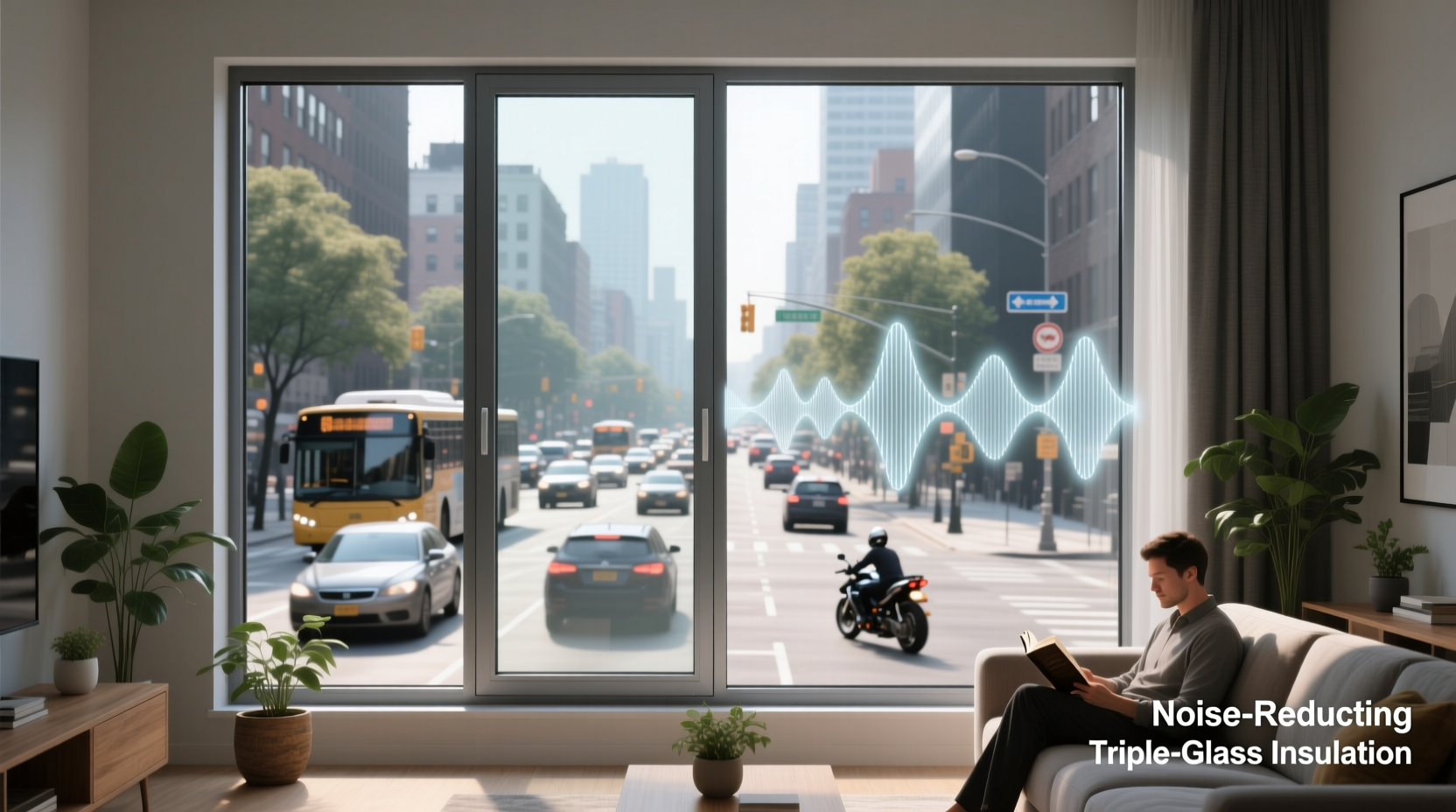
The term “noise canceling” can be misleading when applied to windows. Unlike noise-canceling headphones that use microphones and speakers to generate anti-noise waves (a process called active noise control), windows primarily reduce sound through passive methods. These include mass, air gaps, damping materials, and multi-layered glass configurations—all designed to block or absorb sound energy before it enters your space.
Passive noise reduction relies on three core principles:
- Mass: Heavier materials like thick glass or laminated panes resist sound wave transmission better than thin ones.
- Decoupling: Separating window layers with air or gas-filled gaps disrupts sound vibrations. Double- or triple-glazed units excel here.
- Damping: Interlayers such as polyvinyl butyral (PVB) in laminated glass convert sound energy into heat, reducing resonance.
True active noise-canceling windows exist only in experimental or commercial settings and are not widely available for residential use due to cost, complexity, and limited scalability. Therefore, when shopping for “noise canceling” windows, consumers are typically selecting from advanced passive designs optimized for sound insulation.
“Most so-called ‘noise canceling’ windows are highly engineered acoustic barriers, not electronic systems. Their effectiveness depends on proper installation and material quality.” — Dr. Alan Reeves, Acoustic Engineer at Urban Sound Dynamics
Effectiveness Against Traffic Noise: What the Data Shows
Traffic noise ranges between 60 and 85 decibels (dB) depending on proximity and time of day. It’s dominated by low-frequency sounds—engine rumbles, tire friction, and diesel trucks—which are notoriously difficult to block because they penetrate walls and windows more easily than high-pitched noises.
The performance of noise-reducing windows is measured using the Sound Transmission Class (STC) rating. This standardized scale indicates how well a building partition attenuates airborne sound. Here’s how common window types compare:
| Window Type | Average STC Rating | Noise Reduction (Approx.) | Suitability for Traffic Noise |
|---|---|---|---|
| Single-pane aluminum frame | 25–27 | Minimal (20–30 dB perceived) | Poor |
| Double-pane vinyl (standard) | 30–34 | Moderate improvement | Fair |
| Laminated double-pane (acoustic grade) | 38–42 | Significant (up to 75% noise reduction) | Good |
| Triple-pane with laminated glass & argon fill | 43–48 | High attenuation, especially in mid-high frequencies | Very Good |
| Custom acoustic windows (asymmetric panes, specialized seals) | 50+ | Up to 90% reduction in perceived traffic noise | Excellent |
An STC rating of 40 or higher is generally recommended for apartments facing heavy traffic. At this level, loud street noise drops to background hum levels indoors—comparable to a quiet library. However, even high-STC windows may struggle with very low-frequency bass from large vehicles unless paired with additional sealing and wall treatments.
Real-World Performance: A Case Study in Brooklyn
Jessica M., a resident of a fourth-floor apartment in Williamsburg, Brooklyn, faced relentless noise from Bedford Avenue—a major thoroughfare with constant bus traffic and nightlife activity. Her bedroom registered 78 dB during evening rush hour. After installing custom laminated double-pane windows with reinforced uPVC frames and compression seals, indoor noise dropped to 35 dB at night.
“It felt like someone had turned down the volume on the city,” she said. “I could finally hear my thoughts. I didn’t realize how much the noise was affecting my sleep until it was gone.”
Her contractor used 6mm laminated outer glass, 4mm inner pane, and a 16mm air gap filled with argon. Crucially, the installation included perimeter acoustic sealant and shims to eliminate air leaks—common weak points that undermine even high-performance windows.
This case illustrates two key truths: first, properly specified acoustic windows can dramatically improve livability; second, installation quality is as important as product choice. Gaps around the frame can reduce sound insulation by up to 50%, rendering premium glass ineffective.
Choosing the Right Solution: A Step-by-Step Guide
Selecting noise-reducing windows involves more than picking the highest STC rating. Consider your budget, building regulations, and whether you rent or own. Follow this sequence to make an optimal decision:
- Assess your current noise level. Use a smartphone decibel meter app to measure indoor and outdoor sound during peak traffic hours. Note frequency patterns—low rumble versus high-pitched braking sounds.
- Determine your target STC. If outside noise exceeds 75 dB, aim for STC 45+ windows. For moderate noise (65–70 dB), STC 38–42 may suffice.
- Evaluate window construction options. Prioritize laminated glass (even in one pane), asymmetric glazing (different thicknesses per pane), and gas-filled cavities. Avoid standard double-glazing marketed solely for thermal efficiency.
- Inspect the frame and seals. Vinyl or wood-clad frames offer better sound dampening than aluminum. Compression seals and thermal breaks enhance performance.
- Hire a certified installer. Improper fit is the leading cause of underperformance. Demand full perimeter sealing and caulking with acoustically rated materials.
- Consider secondary measures if needed. Add interior storm windows, heavy curtains, or acoustic panels for incremental gains, especially in rental units where window replacement isn’t allowed.
Common Myths and Misconceptions
Several myths persist about noise-canceling windows that can lead to poor decisions:
- Myth: All double-pane windows block traffic noise. Reality: Many double-glazed units are designed for thermal insulation, not acoustics. Without lamination or proper spacing, their STC remains low.
- Myth: Thicker glass always equals better sound blocking. Reality: While mass helps, asymmetrical layering (e.g., 6mm + 4mm) disrupts sound waves more effectively than two identical thick panes.
- Myth: You can retrofit any window with noise-canceling film. Reality: Window films may slightly improve UV protection or privacy but offer negligible sound reduction.
Another misconception is that closing windows fully eliminates noise. In reality, older or poorly sealed units allow significant sound leakage through tiny gaps. Even a 1/8-inch gap can reduce sound insulation by 20 dB.
Alternatives for Renters and Budget-Conscious Residents
If replacing windows isn’t feasible, several alternatives provide meaningful relief:
- Interior secondary glazing: Installing an additional acrylic or glass panel inside the existing window frame adds mass and an air gap. Can boost STC by 10–15 points.
- Acoustic window inserts: Custom-fit panels made of laminated glass or acrylic, mounted with magnetic or compression seals. Brands like Indow offer removable solutions ideal for rentals.
- Heavy soundproof curtains: While less effective than structural changes, dense, layered curtains with mass-loaded vinyl cores can reduce mid-to-high frequency noise by 5–10 dB.
- Weatherstripping and sealants: Applying adhesive foam tape or silicone caulk around window edges closes air leaks, improving both thermal and acoustic performance.
FAQ: Common Questions About Noise Canceling Windows
Can noise canceling windows completely eliminate traffic noise?
No window can block 100% of traffic noise, especially low-frequency sounds. However, high-performance acoustic windows can reduce perceived noise by 75–90%, transforming a disruptive environment into a peaceful one. Complete silence is unrealistic, but functional quiet is achievable.
Are noise canceling windows worth the investment?
For homeowners, yes—especially in high-noise urban areas. Benefits include improved sleep, increased property value, and enhanced comfort. ROI manifests in well-being as much as resale price. Renters should consider removable alternatives like inserts or secondary glazing to avoid upfront costs.
Do noise canceling windows also improve energy efficiency?
Most do. Acoustic windows often use double- or triple-glazing with insulating gas fills, which also reduce heat transfer. This dual benefit lowers HVAC costs and improves indoor climate stability—making them a smart upgrade on multiple fronts.
Final Checklist Before Buying
Before committing to new windows, verify the following:
- ✅ Manufacturer provides verified STC and OITC ratings (not estimates)
- ✅ Glass includes at least one laminated pane for damping
- ✅ Frame material is non-conductive (vinyl, wood, or composite)
- ✅ Air gap between panes is ½ inch or wider (optimal at ⅝–¾ inch)
- ✅ Installation includes continuous perimeter sealing with acoustic-grade materials
- ✅ Product is compatible with your building’s structure and local codes
Conclusion: Reclaim Your Quiet Space
Traffic noise doesn’t have to be an unavoidable part of apartment living. Modern acoustic window technology offers a powerful defense against urban din, restoring calm and improving quality of life. While no solution is perfect, strategically chosen and professionally installed noise-reducing windows can transform a noisy apartment into a serene retreat. Whether you own your unit or rent, there are viable paths to quieter living—from full replacements to non-invasive retrofits.
The key is understanding that “noise canceling” in windows means intelligent design, not magic. By focusing on proven acoustic principles—mass, isolation, and sealing—you can make a lasting impact on your home environment. Don’t let another night pass with the sound of sirens dictating your peace. Take action today, evaluate your options, and invest in the silence you deserve.




 浙公网安备
33010002000092号
浙公网安备
33010002000092号 浙B2-20120091-4
Comments
No comments yet. Why don't you start the discussion?