
Sleep quality hinges on more than just mattress firmness or room temperature—sound plays a critical role. For light sleepers, shift workers, or those living in noisy urban environments, managing nighttime noise is essential. Two popular solutions dominate the market: noise cancelling earbuds and traditional earplugs. While both aim to reduce auditory disruption, they differ significantly in design, function, and long-term comfort. Choosing between them isn’t just about sound blocking—it’s about how well each fits your anatomy, lifestyle, and sleep habits.
With advancements in audio technology, noise cancelling earbuds have evolved from gym accessories to viable sleep tools. Meanwhile, earplugs remain a low-tech, affordable staple. But when it comes to lying on your side, tolerating pressure, or wearing them for eight hours straight, one may clearly outperform the other. This article examines both options in depth, comparing their comfort, safety, sound attenuation, and practicality to help you make an informed decision.
How Noise Interferes with Sleep—and Why Blocking It Matters
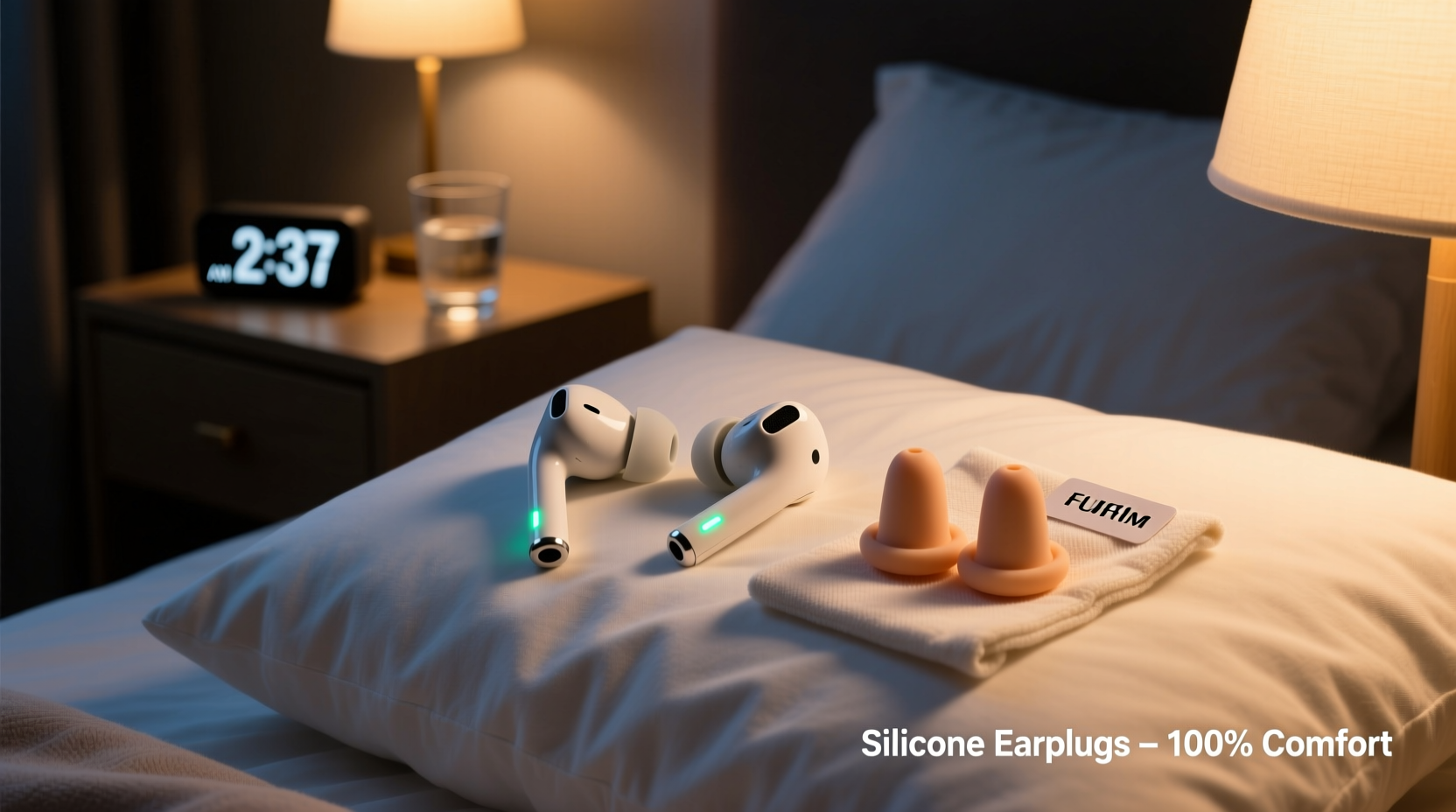
Sound doesn’t need to wake you fully to disrupt sleep. Research from the National Institutes of Health shows that even low-level background noise—like traffic, snoring, or distant conversations—can fragment sleep cycles, reduce REM duration, and elevate stress hormones like cortisol. Over time, this leads to fatigue, reduced cognitive performance, and increased risk of cardiovascular issues.
The human brain remains responsive to auditory stimuli during sleep. Sudden sounds trigger micro-arousals—brief awakenings you might not remember but that degrade restorative sleep. Effective noise management isn’t about silence; it’s about consistency. Whether through passive blocking or active cancellation, reducing auditory variability helps maintain deeper, uninterrupted sleep stages.
“Even if you don’t recall waking up, environmental noise can prevent you from reaching deep sleep. Consistent sound masking is as important as darkness for healthy sleep hygiene.” — Dr. Lena Patel, Sleep Neurologist at Boston Sleep Institute
Design and Fit: Anatomy of Comfort During Sleep
Comfort over extended wear depends on fit, material, and pressure distribution. The way a device interacts with the ear canal, concha, and surrounding tissue determines whether it causes pain, dislodges during movement, or irritates skin overnight.
Earplugs are typically small, lightweight, and designed specifically for prolonged use. Foam models compress easily into the ear canal and expand gently, creating a seal without excessive outward pressure. Silicone or wax varieties conform to the ear’s shape, offering a custom-like fit. Because they protrude minimally, they’re less likely to press against the pillow when sleeping on your side—a common complaint with bulkier earbuds.
Noise cancelling earbuds, by contrast, are engineered primarily for daytime use. Even compact models like Apple AirPods Pro or Sony WF-1000XM5 extend beyond the ear canal. When lying down, this creates pressure points on the pinna (outer ear), often leading to discomfort within 30–60 minutes. Some users report a “hot ear” sensation or localized soreness after several hours of continuous wear.
Passive vs Active Noise Reduction: How They Work Differently
Understanding the mechanics behind noise reduction clarifies why certain methods suit specific environments better.
- Earplugs rely on passive noise isolation. They physically block sound waves using dense materials (foam, silicone, wax) that absorb or reflect incoming frequencies. They’re most effective against high-frequency sounds—barking dogs, crying babies, or clattering dishes—but less so against low-frequency rumbles like traffic or HVAC systems.
- Noise cancelling earbuds combine passive isolation with active noise cancellation (ANC). Microphones detect ambient sound, and the earbuds generate inverse sound waves to cancel out low-frequency noise. This makes them superior for blocking constant droning sounds—ideal for airplane cabins or city apartments near subways.
However, ANC has limitations at night. Most systems aren’t optimized for intermittent noises (sudden door slams, footsteps). Additionally, some users report a faint “pressure” or “whooshing” sensation caused by the anti-noise signal—an effect that can be distracting or even nauseating in complete silence.
Comparison Table: Key Features at a Glance
| Feature | Noise Cancelling Earbuds | Earplugs |
|---|---|---|
| Best for Noise Type | Low-frequency hums (traffic, AC) | High-frequency spikes (voices, barking) |
| Comfort (Side Sleepers) | Moderate to Low (bulky design) | High (low-profile fit) |
| Battery Required | Yes (recharging needed) | No |
| Lifespan | 1–3 years (battery degradation) | Foam: 1–5 uses; Silicone: 3–6 months |
| Cost (Initial) | $100–$250 | $5–$30 |
| Safety for Long-Term Wear | Risk of ear fatigue, moisture buildup | Low risk if cleaned regularly |
Real-World Use Case: Apartment Living with a Noisy Neighbor
Consider Mark, a software developer living in a Brooklyn apartment building. His upstairs neighbor practices drums late into the evening, and the rhythmic thumping travels through the floor. Mark tried foam earplugs first—they muffled the sharp cymbal crashes but did little to stop the deep kick drum vibrations. He then switched to ANC earbuds, which significantly reduced the low-end rumble. However, he found them uncomfortable after two hours of lying on his right side. The earbud pressed into his skull, causing a dull ache behind the ear.
His solution? A hybrid approach. He now wears soft silicone earplugs underneath a pair of ultra-slim ANC earbuds designed for sleep (like the Bose Sleepbuds II). The earplugs provide passive sealing, while the earbuds play pink noise to mask residual rhythms. Though costly, this layered method improved his sleep efficiency by 37% over three weeks, as tracked via a wearable sleep monitor.
This case illustrates that neither option is universally superior—context matters. Environmental noise profile, sleep position, and individual pain thresholds all influence what works best.
Safety and Hygiene: Risks of Overnight Wear
Extended earwear introduces health considerations. Ears produce cerumen (earwax) as a protective mechanism, and trapping moisture or debris can lead to irritation or infection.
Earbuds, especially in-ear models with silicone tips, create a sealed environment that limits airflow. Wearing them nightly increases the risk of otitis externa (“swimmer’s ear”), particularly if ears are already prone to wax buildup or moisture retention. Regular cleaning of earbud tips is crucial—once a week with alcohol-free wipes—to prevent bacterial growth.
Earplugs pose fewer mechanical risks but require hygiene discipline. Foam plugs are disposable for a reason: pores trap bacteria and ear oil, making reuse unhygienic. Reusable silicone or wax models must be washed daily with mild soap and water. Failure to do so can lead to outer ear infections or contact dermatitis.
Step-by-Step Guide to Choosing Your Nighttime Noise Solution
Follow this process to determine the best fit for your needs:
- Assess your noise environment. Is it high-frequency (voices, alarms) or low-frequency (traffic, machinery)? Use a decibel meter app to log sounds between 10 PM and 6 AM.
- Evaluate your sleep position. Side sleepers benefit from low-profile devices. Back or stomach sleepers may tolerate slightly bulkier gear.
- Test comfort under real conditions. Lie down with the device for at least 30 minutes. Note any pressure, warmth, or instability.
- Consider battery logistics. Do you want to charge devices nightly? If not, passive earplugs eliminate this hassle.
- Try a trial period. Many brands offer 30-day returns. Test both types consecutively, tracking sleep quality and comfort in a journal.
- Explore combination strategies. Pair earplugs with white noise machines or ANC earbuds with soothing audio for layered protection.
Expert Insight: What Audiologists Recommend
Dr. Alan Zhou, a clinical audiologist at Pacific Hearing Services, emphasizes caution with electronic devices in the ear:
“While noise cancelling earbuds are impressive tech, they weren’t designed for 8-hour wear. I see more patients with ear fatigue from ANC earbuds than from properly used earplugs. For most people, high-fidelity sleep-specific earplugs offer safer, more sustainable noise reduction.” — Dr. Alan Zhou, Audiologist
He notes that specialized sleep earplugs—such as Loop Quiet or Flents Foam—combine advanced materials with ergonomic shapes to maximize comfort and sound attenuation without electronics.
Frequently Asked Questions
Can noise cancelling earbuds damage my hearing over time?
No, ANC itself doesn’t harm hearing. However, listening to audio at high volumes through earbuds—even during sleep—can cause noise-induced hearing loss. Always keep playback below 50% volume if using sleep sounds. Passive earplugs carry no such risk.
Are memory foam earplugs better than silicone ones for sleeping?
It depends on preference. Foam plugs offer superior noise reduction (up to 33 dB NRR) and compress well, but some find them too “sealed” or difficult to insert correctly. Silicone plugs are reusable, moldable, and easier to remove, but may not block as much sound. Try both to see which feels more natural.
Do ANC earbuds work without playing music?
Yes, active noise cancellation functions independently of audio playback. However, many people find total silence unsettling when ANC is active. Playing low-volume pink or brown noise can improve comfort and further mask irregular sounds.
Final Recommendation: Prioritize Comfort for Sustainable Results
In the debate between noise cancelling earbuds and earplugs for sleeping, comfort consistently emerges as the deciding factor. While earbuds offer advanced technology and better low-frequency suppression, their design compromises long-term wearability—especially for side sleepers. Earplugs, though simpler, deliver reliable, pressure-free noise isolation with minimal maintenance and cost.
For most users, especially those new to auditory sleep aids, starting with high-quality, low-profile earplugs is the smarter choice. They’re safer, more comfortable, and easier to integrate into a nightly routine. Tech enthusiasts or those battling persistent low-frequency noise may benefit from sleep-specific ANC devices—but should prioritize models designed explicitly for overnight use, not repurposed fitness earbuds.
The goal isn’t perfect silence; it’s undisturbed, restorative sleep. And more often than not, simplicity wins.




 浙公网安备
33010002000092号
浙公网安备
33010002000092号 浙B2-20120091-4
Comments
No comments yet. Why don't you start the discussion?