
For millions of city dwellers, the daily commute is a sensory overload—screeching train brakes, overlapping conversations, honking horns, and the low-frequency rumble of engines. In this environment, a good pair of earbuds isn’t just a luxury; it’s essential for mental clarity, focus, and even hearing health. But when it comes to blocking out urban chaos, two technologies dominate: active noise cancelling (ANC) earbuds and sound-isolating ear tips. While both aim to reduce unwanted noise, they work in fundamentally different ways—and their effectiveness varies dramatically depending on your commute type, budget, and personal preferences.
Understanding the strengths and limitations of each can help you make an informed decision that enhances comfort, concentration, and audio quality during travel. This guide dives deep into how these technologies function, compares their real-world performance, and provides actionable recommendations based on commuting scenarios from subway rides to long-haul flights.
How Active Noise Cancelling Works
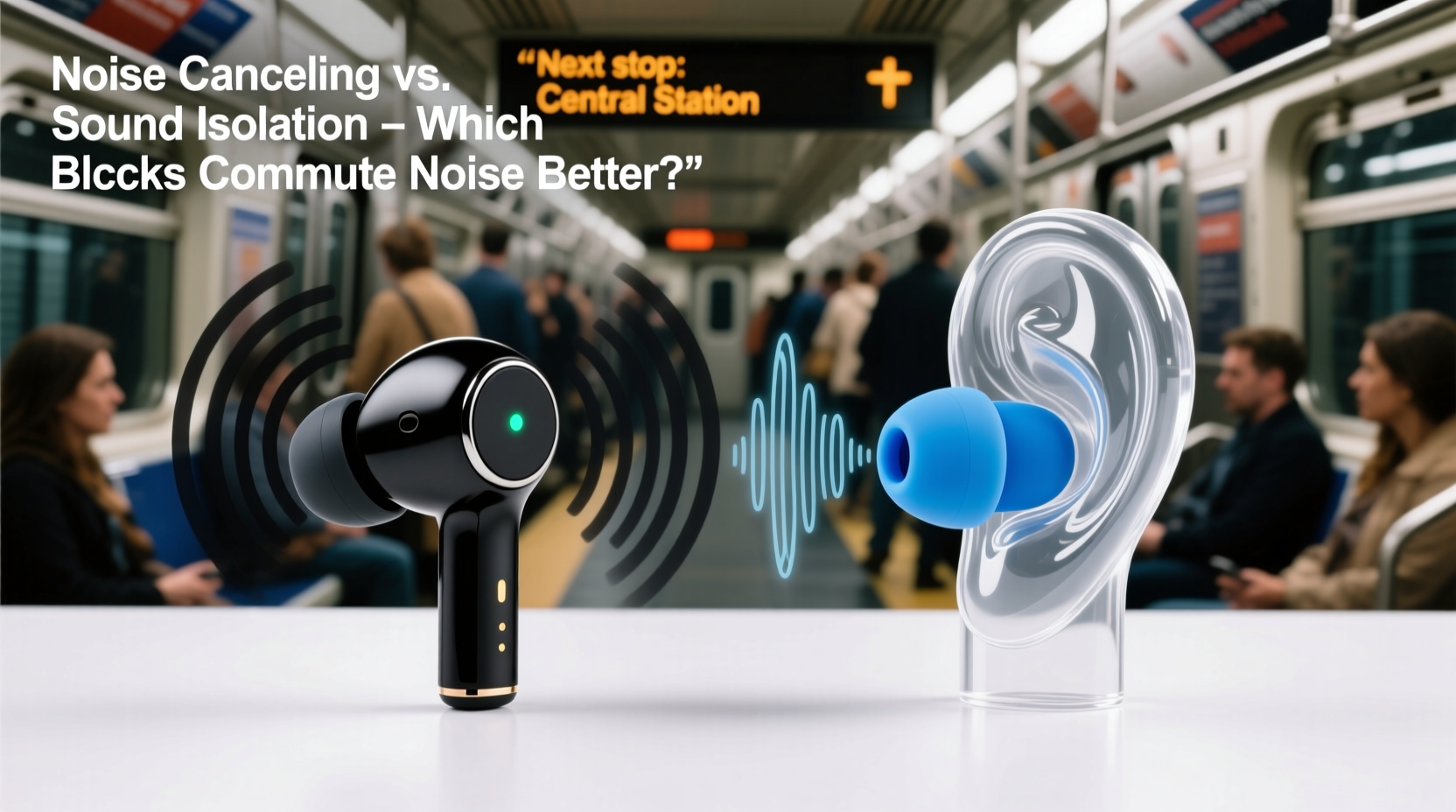
Active noise cancelling is a technological solution that uses microphones, digital signal processing, and inverse sound waves to neutralize ambient noise. ANC earbuds continuously monitor external sounds through built-in microphones. The system then generates a “phase-inverted” version of the detected noise and plays it through the earbud drivers. When the original noise and the inverted wave meet, they cancel each other out—a principle known as destructive interference.
This method is particularly effective against consistent, low-frequency sounds such as airplane cabin hum, train engine rumbles, or HVAC systems. These predictable waveforms are easier for the ANC processor to analyze and counteract in real time. However, ANC struggles with sudden, high-pitched noises like sirens, baby cries, or clattering dishes, which change too quickly for the system to adapt.
Modern ANC has improved significantly over the past decade. High-end models now feature adaptive algorithms that adjust cancellation strength based on the environment, multiple microphones for spatial accuracy, and transparency modes that allow selective sound passage when needed.
The Science Behind Sound Isolation
Sound isolation, sometimes called passive noise reduction, relies entirely on physical barriers. Instead of electronic processing, it depends on the seal created between the earbud tip and the ear canal. High-quality silicone, foam, or hybrid tips expand gently inside the ear to block external sound waves before they reach the eardrum.
The effectiveness of sound isolation hinges on fit. A poor seal allows sound leakage, especially at mid-to-high frequencies like voices and traffic chatter. Custom-molded tips offer the best isolation but come at a premium. Off-the-shelf foam tips—like those from Comply—often provide superior sealing compared to standard silicone domes due to their memory foam properties.
Unlike ANC, sound isolation works across all frequencies, though it excels at blocking higher-pitched sounds. It requires no power, adds no latency, and introduces zero audio artifacts. Because it’s purely mechanical, there’s no risk of system failure or battery drain compromising performance mid-commute.
“Passive isolation can achieve up to 30dB of attenuation when properly fitted—comparable to many mid-tier ANC systems.” — Dr. Lena Torres, Audio Acoustics Researcher, MIT Media Lab
Direct Comparison: ANC vs. Isolation in Real Commuting Scenarios
To evaluate which technology performs better in real-world conditions, consider four common urban transit environments. Each presents unique acoustic challenges that favor one approach over the other—or, ideally, a combination of both.
| Commute Type | Noise Profile | ANC Effectiveness | Isolation Effectiveness | Best Solution |
|---|---|---|---|---|
| Subway Train | Low rumble + screeching brakes + crowd chatter | High (for rumble), Low (for sudden sounds) | Moderate-High (with foam tips) | ANC earbuds with foam tips |
| City Bus | Engine drone + road noise + passenger voices | Moderate (engine only) | High (blocks voices effectively) | Isolating tips or hybrid setup |
| Airplane | Consistent low-frequency cabin noise | Very High | Moderate | ANC earbuds (top priority) |
| Walking/Cycling | Traffic, wind, intermittent alerts | Poor (wind disrupts mics) | High (if sealed well) | Foam tips with transparency mode optional |
The table reveals a critical insight: neither technology alone dominates across all contexts. ANC shines in stable, low-frequency environments, while isolation excels at blocking unpredictable, mid-to-high frequency sounds. The most effective strategy often combines both—using ANC earbuds equipped with high-performance sound-isolating tips.
Mini Case Study: The Hybrid Approach in Action
Sophie, a project manager in Chicago, commutes 90 minutes daily via the ‘L’ train and步行 six blocks to her office. She initially used basic silicone-tipped earbuds with ANC but found chatter and screeching tracks still disrupted her podcasts. After switching to Sony WF-1000XM5 earbuds paired with Comply Foam TIPS, her experience transformed. The ANC handled the train’s engine drone, while the foam tips blocked abrupt noises and improved bass response. “It’s not silence,” she says, “but it’s control. I arrive focused instead of frazzled.”
When to Choose Which: A Practical Decision Framework
Selecting between ANC and isolation isn’t about picking a winner—it’s about matching the tool to your environment, lifestyle, and priorities. Use the following checklist to guide your decision.
✅ Noise Cancelling Earbuds Are Best If You:
- Ride airplanes or long-distance trains regularly
- Work in open offices with constant background hum
- Prioritize convenience and don’t mind charging earbuds daily
- Want adjustable noise control (e.g., transparency mode for announcements)
- Are willing to invest $150+
✅ Sound Isolating Tips Are Better If You:
- Have inconsistent ear canal shapes that make sealing difficult
- Seek maximum battery-free noise reduction
- Use older or non-ANC earbuds and want better performance
- Are sensitive to the “pressure” feeling some ANC creates
- Want affordable upgrades (foam tips cost $20–$40)
Step-by-Step Guide to Maximizing Noise Reduction
Whether you use ANC, isolation, or both, follow this sequence to get the most effective noise blocking from your earbuds.
- Choose the Right Tip Size: Insert each earbud and gently wiggle. If sound leaks or it feels loose, try a larger size. If painful, go smaller.
- Test the Seal: Play a low-frequency tone or pink noise. A good seal will make your voice sound deeper and muffled. If outside noise remains loud, reinsert or change tips.
- Enable ANC (if available): Turn on noise cancellation and let it calibrate. Some models auto-adjust based on fit.
- Optimize Fit: Try the “over-ear” cable routing (on wired or semi-wired models) to stabilize the bud and improve seal.
- Use ANC Presets: Set location-based profiles (e.g., “Train,” “Office”) if your app supports them.
- Maintain Regularly: Clean ear tips weekly with mild soap and water. Wax buildup reduces seal efficiency by up to 40%.
This process takes under ten minutes but can dramatically improve performance. Many users report a 30–50% increase in perceived quietness simply by optimizing fit and seal.
Common Misconceptions Debunked
Several myths persist about noise reduction technologies. Addressing them helps set realistic expectations.
- Myth: ANC eliminates all noise. Reality: ANC reduces specific frequencies but cannot block sudden or high-pitched sounds completely.
- Myth: Bigger earbuds isolate better. Reality: Size matters less than tip design and canal conformity. Small buds with foam tips often outperform large ones with poor seals.
- Myth: Isolation causes ear fatigue. Reality: Properly fitted tips should feel secure, not painful. Discomfort usually indicates wrong size or material.
- Myth: ANC damages hearing. Reality: No evidence supports this. ANC lowers volume needs, potentially reducing hearing strain.
FAQ
Can I use sound isolating tips with any earbuds?
Most universal earbuds with standard nozzle diameters (around 5–7mm) are compatible with third-party tips like Comply, SpinFit, or Azla. Check manufacturer specs for fit compatibility. Custom-fit earbuds require molded tips and aren’t interchangeable.
Do ANC earbuds drain battery faster when noise cancelling is on?
Yes. Enabling ANC typically reduces battery life by 30–50%. For example, earbuds rated for 8 hours may last 4–6 hours with ANC active. Disable it when not needed to extend usage.
Why do my ears feel “pressurized” with ANC?
This sensation, often called “eardrum suck,” occurs when the ANC system overcompensates for low frequencies. Some brands (e.g., Bose, Apple) minimize this with pressure-relief vents or adaptive algorithms. Trying different tips or disabling ANC briefly can relieve discomfort.
Expert Insight: The Future of Commute Audio
Audio engineers are moving toward hybrid solutions that merge the best of both worlds. “The next generation isn’t ANC versus isolation—it’s ANC plus intelligent isolation,” says Raj Mehta, senior product designer at a leading audio brand. “We’re seeing AI-driven fit detection that adjusts ANC strength based on real-time seal quality. The earbud knows when the tip is poorly seated and boosts cancellation accordingly.”
“The ideal commute earbud won’t just block noise—it’ll adapt to your movement, environment, and even stress levels.” — Raj Mehta, Audio Product Innovator
Future developments may include biometric feedback, where heart rate variability influences noise filtering, or spatial awareness features that amplify only important sounds like station announcements.
Final Recommendation: Combine Both for Optimal Results
For most commuters, relying solely on ANC or isolation limits potential. The most effective solution combines active noise cancelling with high-performance sound-isolating tips. This dual-layer approach blocks low-frequency drones electronically while physically sealing out mid and high-frequency disruptions.
If budget allows, invest in premium ANC earbuds known for excellent tip selection—such as the Sony WF-1000XM5, Bose QuietComfort Ultra, or Apple AirPods Pro 2—and upgrade to memory foam tips. If minimizing cost is key, start with isolating tips on existing earbuds; they often deliver 70% of the benefit at 20% of the price.
Ultimately, the best noise control system is one that fits comfortably, functions reliably, and integrates seamlessly into your routine. Noise doesn’t just distract—it depletes focus and increases stress. Taking control of your auditory environment isn’t indulgence; it’s self-care.




 浙公网安备
33010002000092号
浙公网安备
33010002000092号 浙B2-20120091-4
Comments
No comments yet. Why don't you start the discussion?