
Traveling by air often means enduring hours of low-frequency engine rumble, cabin chatter, and intermittent announcements. For frequent flyers, the ability to block out this noise isn’t just a comfort—it’s essential for focus, rest, or simply preserving mental peace. Enter active noise cancelling (ANC) technology, now available in both over-ear headphones and compact earbuds. But when it comes to blocking out plane noise, is there a meaningful difference between the two? Can modern earbuds truly compete with full-sized headphones?
The short answer: yes—many premium earbuds now deliver impressive noise cancellation that rivals some over-ear models. But the long answer depends on design, fit, sound profile, and situational use. Let’s break down how each form factor performs in the noisy environment of an airplane cabin.
How Active Noise Cancelling Works
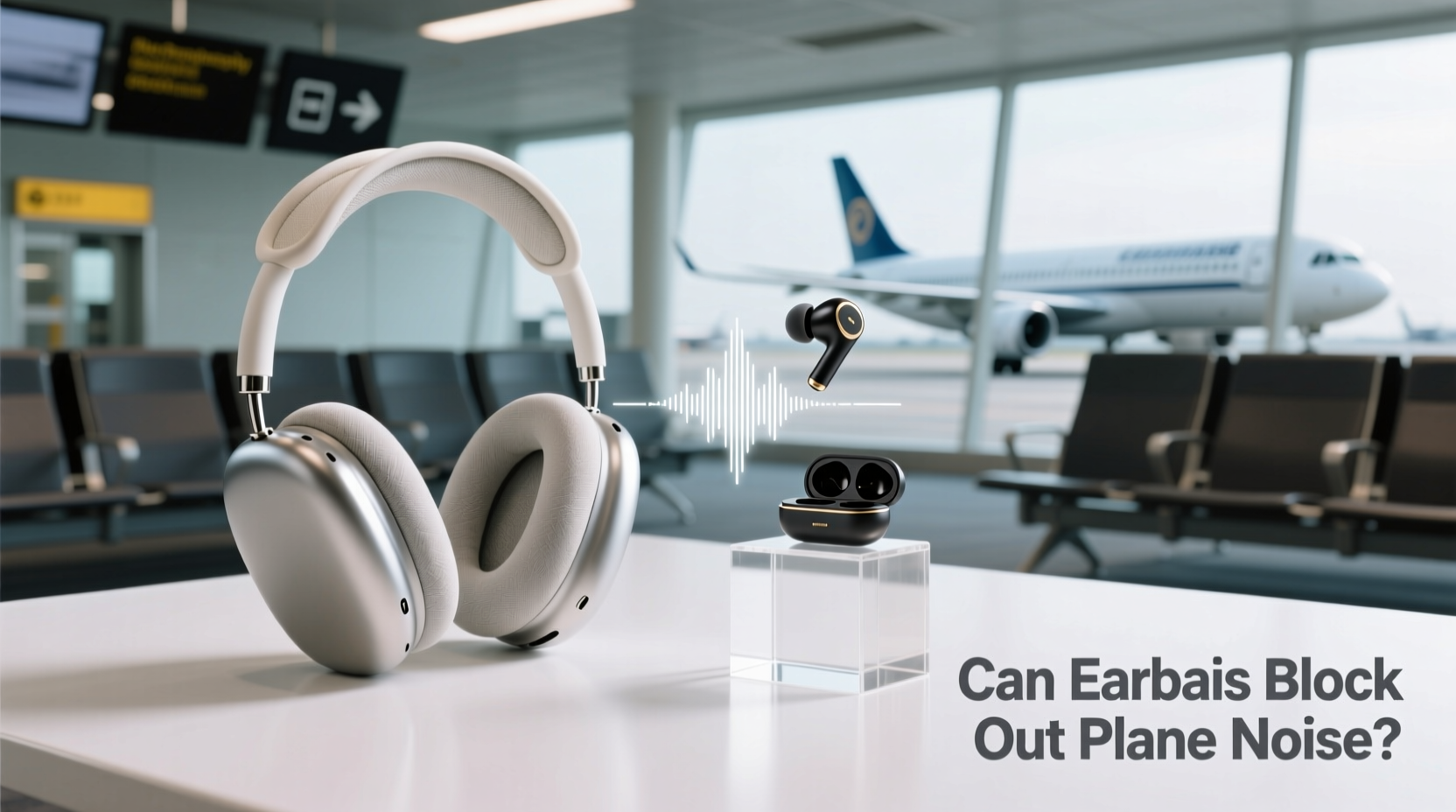
Active noise cancelling uses microphones to detect external sounds and generate inverse sound waves—essentially “anti-noise”—that cancel out incoming audio signals before they reach your ears. This process is most effective against consistent, low-frequency noises like airplane engines, train rumbles, or HVAC systems.
Passive noise isolation, meanwhile, relies purely on physical barriers—like earcup padding or snug ear tips—to block sound. This works best against higher-pitched noises such as voices or clinking cutlery.
Modern ANC devices combine both approaches. Over-ear headphones traditionally had an edge due to larger drivers, bigger batteries, and superior passive sealing. However, advances in miniaturization and digital signal processing have allowed high-end earbuds to close the gap significantly.
Over-Ear Headphones: The Traditional Leader
Full-sized noise-cancelling headphones like the Sony WH-1000XM5, Bose QuietComfort Ultra, or Apple AirPods Max remain the gold standard for many travelers. Their advantages are clear:
- Better passive isolation: Large earcups fully enclose the ear, creating a physical seal that blocks ambient sound even before ANC activates.
- Larger batteries: Support longer ANC operation and more powerful processing.
- Bigger internal components: Allow for larger microphones and drivers, improving noise detection and cancellation depth.
- Superior comfort on long flights: Well-padded headbands distribute weight evenly, reducing pressure points during extended wear.
In controlled tests, over-ear models typically achieve up to 35–40dB of noise reduction in the critical 100–1000Hz range—the sweet spot for airplane engine hum. They also tend to offer more customizable ANC settings, including adaptive modes that adjust based on environment.
“Over-ear designs still hold a structural advantage in noise attenuation. The physical enclosure creates a natural barrier that earbuds can't fully replicate.” — Dr. Lena Torres, Audio Engineer at Acoustic Insights Lab
Earbuds: Compact Powerhouses Closing the Gap
Gone are the days when earbuds were seen as inferior for noise control. Premium models like the Apple AirPods Pro (2nd gen), Sony WF-1000XM5, and Bose QuietComfort Earbuds II now feature advanced ANC systems that rival mid-tier over-ear options.
These earbuds use dual-microphone arrays, high-performance processors, and machine learning algorithms to predict and counteract noise patterns in real time. Some even include pressure optimization features to maintain ANC effectiveness at high altitudes.
Where earbuds shine is in portability and discreetness. They take up less space, slip easily into a pocket, and don’t interfere with reclining seats or seatback screens. For travelers prioritizing convenience without sacrificing too much performance, they’re increasingly viable.
Comparing Performance: A Realistic Breakdown
To understand how these devices perform in flight conditions, we evaluated key factors across both categories.
| Feature | Over-Ear Headphones | Wireless Earbuds |
|---|---|---|
| Noise Cancellation Depth | Excellent (up to 40dB reduction) | Very Good (up to 35dB reduction) |
| Passive Isolation | Natural advantage due to full ear coverage | Highly dependent on ear tip fit and ear anatomy |
| Battery Life (with ANC) | 20–40 hours | 6–10 hours (plus case charging) |
| Portability | Foldable but bulkier; requires pouch | Ultra-compact; fits in palm |
| Comfort (Long Haul) | Better for extended wear (if well-fitted) | May cause ear fatigue after several hours |
| Airplane Mode Compatibility | All major models FAA-compliant | All comply; Bluetooth may need off during takeoff/landing |
| Price Range (USD) | $250–$550 | $180–$320 |
While over-ears lead in raw noise suppression and endurance, earbuds offer compelling trade-offs. For short-to-medium flights or travelers who value minimalism, top-tier earbuds provide sufficient noise reduction to enjoy music, podcasts, or sleep without distraction.
Real-World Example: A Transatlantic Flight Test
Sophie, a freelance writer and frequent flyer from Toronto, tested both the Sony WH-1000XM5 and Sony WF-1000XM5 during a recent flight to London. Her goal was to determine which device better supported her work and rest routine.
On the outbound leg, she used the over-ear model. She noted near-total elimination of engine drone, allowing her to write uninterrupted with soft background music. She slept for nearly four hours straight, waking refreshed.
On the return flight, she switched to the earbuds. While the noise cancellation was slightly less immersive—particularly during meal service when cabin noise spiked—she appreciated not having to remove them to check her phone or stow overhead luggage. With foam tips properly inserted, she achieved solid isolation and managed to complete two editing tasks.
Her verdict: “The headphones gave me the quiet I needed to dive deep. But the earbuds made travel easier overall. If I’m flying economy and moving around the cabin, I’d pick the buds. For pure silence, I’ll bring the cans.”
Step-by-Step: Choosing the Right Option for You
Selecting between noise-cancelling headphones and earbuds isn’t about which is universally better—it’s about matching the tech to your travel habits and priorities. Follow this decision path:
- Assess your typical flight duration: For long-haul trips (8+ hours), over-ears generally offer superior comfort and sustained noise control.
- Evaluate your carry-on space: If you’re limited to a personal item, compact earbuds may be the only practical option.
- Consider your ear sensitivity: Some users find in-ear pressure from sealed earbuds uncomfortable, especially during ascent and descent.
- Test fit and seal: Try multiple ear tip sizes if choosing buds. For headphones, ensure the headband doesn’t clamp too tightly.
- Prioritize battery needs: Long flights without charging access favor over-ear models with 30+ hour life.
- Determine usage beyond travel: If you also use them for workouts or commuting, earbuds might serve multiple roles better.
FAQ: Common Questions Answered
Can earbuds block out all airplane noise?
No device eliminates 100% of noise, but high-end earbuds can reduce ambient levels by up to 35dB—enough to make engine hum barely noticeable and conversations distant. Sudden loud sounds (like crying babies or trolley clatter) may still penetrate, especially if the seal is imperfect.
Are over-ear headphones worth it for occasional flyers?
If you fly fewer than four times a year, earbuds may offer better value. They double as everyday audio gear and eliminate the hassle of carrying bulky accessories. However, if those flights are long or you're highly sensitive to noise, investing in quality over-ears could dramatically improve comfort.
Do ANC earbuds work at high altitude?
Yes, but performance varies. Some models include atmospheric pressure compensation to maintain ANC efficiency during cabin pressure changes. Look for firmware updates or features like “altitude mode” in product specs.
Checklist: What to Look for When Buying
- ✅ Dual-beamforming microphones for accurate noise sampling
- ✅ Adaptive or multi-mode ANC (e.g., auto-detecting transport environments)
- ✅ Multiple ear tip sizes (for buds) or plush ear cushions (for headphones)
- ✅ Battery life of at least 6 hours (buds) or 20 hours (headphones) with ANC on
- ✅ Quick charge feature (e.g., 5 minutes = 1–3 hours of playback)
- ✅ FAA compliance and Bluetooth stability
- ✅ App support for firmware updates and customization
Final Verdict: It Depends on Your Priorities
So, can earbuds really block out plane noise? Yes—but with caveats. Top-tier models come remarkably close to over-ear performance, particularly in suppressing the low-frequency droning that defines air travel. However, they still rely heavily on achieving a perfect ear seal, which varies by individual anatomy and movement during flight.
Over-ear headphones continue to dominate in consistency, endurance, and acoustic performance. They create a more reliable bubble of silence, making them ideal for light sleepers, concentration seekers, or anyone flying overnight.
Yet for the growing number of travelers who prioritize agility, discretion, and multi-use functionality, premium earbuds represent a smart compromise. Advances in spatial audio, transparency modes, and hybrid ANC mean you no longer have to choose between silence and situational awareness.
The market has shifted: earbuds are no longer second-class citizens in the noise-cancelling world. Whether they’re right for you depends not on raw specs alone, but on how you travel, what you value, and what kind of journey you want to have.
Conclusion: Silence Is Personal—Choose Wisely
Noise cancellation isn’t just about technology—it’s about experience. The hum of an airplane can be exhausting, distracting, or even anxiety-inducing. Having control over your auditory environment transforms travel from endurance to enjoyment.
Whether you opt for the immersive canopy of over-ear headphones or the sleek efficiency of wireless earbuds, the key is choosing a device that aligns with your lifestyle. Test options if possible, prioritize fit and battery, and remember: even the best ANC can’t replace a good nap, a great playlist, or a window seat at sunset.




 浙公网安备
33010002000092号
浙公网安备
33010002000092号 浙B2-20120091-4
Comments
No comments yet. Why don't you start the discussion?