
In today’s world of constant auditory distractions—whether from city traffic, office chatter, or airplane engines—high-quality sound has become more than a luxury. It's a necessity. Headphones have evolved beyond simple audio delivery devices; they now serve as personal sanctuaries of sound. Two of the most commonly discussed features in this evolution are noise cancelling and noise isolating technologies. While often used interchangeably, they are fundamentally different in design, function, and performance. Understanding these distinctions is essential for choosing the right pair of headphones based on lifestyle, environment, and listening preferences.
What Is Noise Isolation?
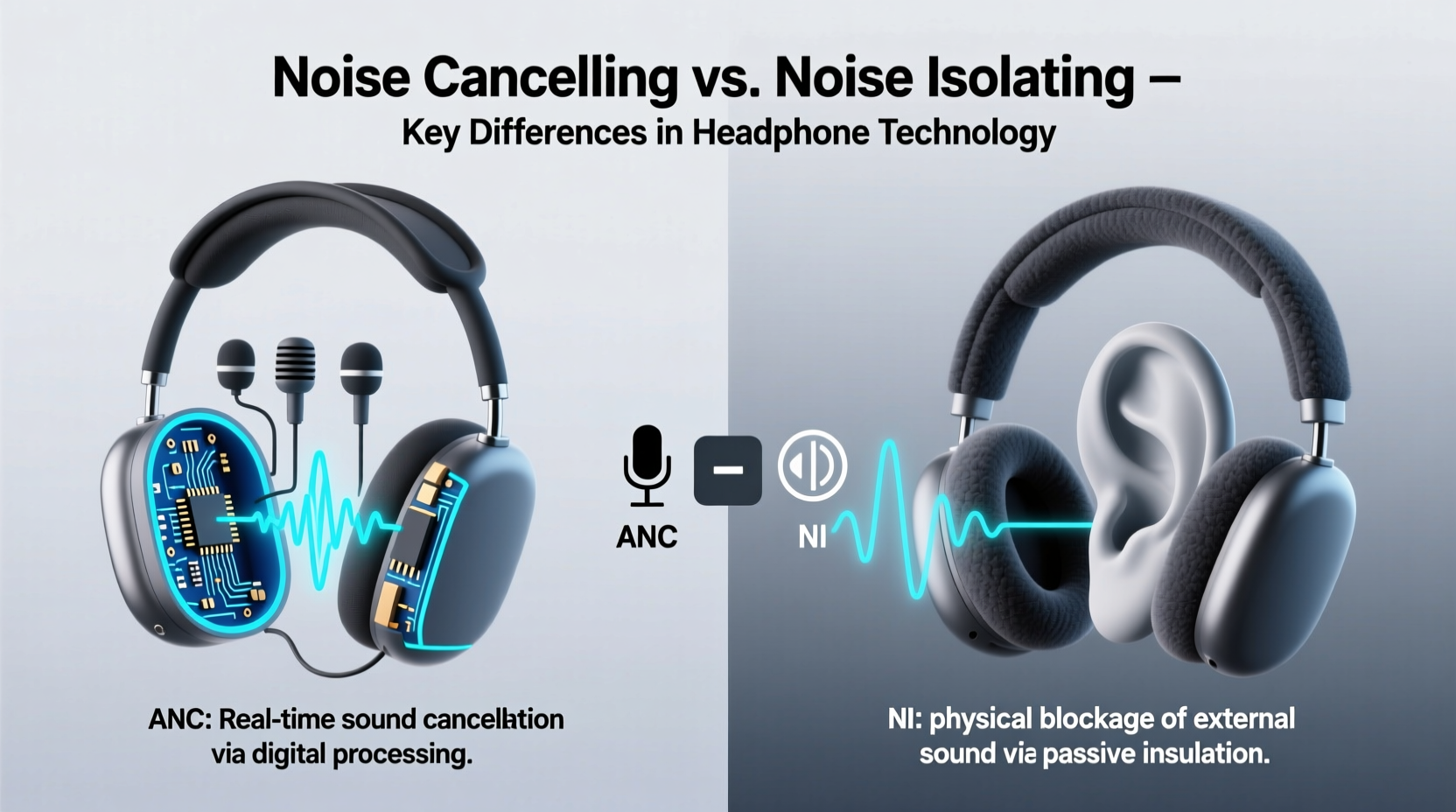
Noise isolation, sometimes referred to as passive noise reduction, relies entirely on physical barriers to block external sounds. This method does not involve any electronic components or power sources. Instead, it depends on the materials and structure of the earcups or earbuds to create a seal around or within the ear canal. Over-ear headphones with thick memory foam padding and tightly sealed earcups can significantly reduce ambient noise by physically preventing sound waves from reaching the eardrum.
In-ear monitors (IEMs) are particularly effective at noise isolation because they insert directly into the ear canal. When properly fitted with silicone or foam tips, they form an airtight seal that blocks out mid- to high-frequency sounds such as voices, keyboard clicks, or nearby conversations. The effectiveness of noise isolation hinges largely on fit and material quality. A poorly fitting earbud, no matter how advanced its driver technology, will fail to isolate sound effectively.
How Active Noise Cancelling Works
Active noise cancelling (ANC), also known as active noise control, takes a technological approach to reducing unwanted sound. Unlike noise isolation, ANC requires power—usually supplied by a built-in battery—and uses microphones, processors, and speakers to actively counteract incoming noise.
Here’s how it works: tiny microphones on the exterior of the headphones pick up ambient low-frequency sounds like engine hums, HVAC systems, or distant traffic. The onboard processor then generates a \"counter-sound\"—a waveform that is the exact inverse (anti-phase) of the detected noise. When this inverted wave combines with the original sound wave, they cancel each other out through destructive interference, resulting in silence or near-silence.
ANC excels at neutralizing consistent, low-frequency noises but is less effective against sudden, sharp, or high-pitched sounds like alarms, barking dogs, or human speech. Most modern ANC systems also offer adjustable levels—such as “low,” “medium,” and “high”—allowing users to balance noise suppression with situational awareness, especially important when walking in urban areas.
“Active noise cancellation doesn’t eliminate all sound, but it transforms environments. On long-haul flights, it reduces fatigue by removing the subconscious strain of constant engine drone.” — Dr. Lena Patel, Audio Ergonomics Researcher at MIT Media Lab
Key Differences Between the Two Technologies
The distinction between noise cancelling and noise isolating isn't just technical—it affects real-world usability, comfort, cost, and even hearing health. Below is a detailed breakdown of their core differences:
| Feature | Noise Isolating | Noise Cancelling (ANC) |
|---|---|---|
| Mechanism | Physical barrier using materials and fit | Electronic signal processing with anti-noise waves |
| Power Required | No | Yes (battery or internal power) |
| Best Against | Mid- to high-frequency sounds (voices, clatter) | Low-frequency, continuous noise (engines, fans) |
| Effectiveness Without Power | Always effective | Limited; reverts to passive isolation only |
| Soundscape Impact | Natural; no artificial processing | May introduce slight hiss or pressure sensation |
| Cost | Generally lower | Higher due to added electronics |
| Durability | High (no moving/electronic parts) | Moderate (sensitive components may degrade) |
It’s worth noting that many premium headphones combine both technologies. For example, a pair of over-ear ANC headphones will use active cancellation for low-end rumble while relying on well-padded earcups to passively block higher frequencies. This hybrid approach delivers superior overall quietness compared to either method alone.
When to Choose Which Technology
Selecting between noise isolating and noise cancelling headphones should depend on your primary use case, environment, and personal sensitivity to sound. Consider the following scenarios:
- Frequent travelers benefit most from ANC, especially on planes or trains where engine noise dominates. The ability to cancel out constant low-frequency droning enhances comfort and reduces auditory fatigue over long durations.
- Office workers in open-plan environments may prefer high-isolation in-ears. Keyboard taps, phone calls, and coworker chatter are typically mid-range frequencies that passive sealing handles efficiently without needing batteries.
- Fitness enthusiasts often opt for secure-fit noise isolating earbuds. Since workouts don’t usually occur in extremely noisy settings, and sweat exposure risks damaging ANC circuitry, simplicity and reliability win here.
- Audiophiles who prioritize sound purity might lean toward high-fidelity isolating models. Some argue that ANC introduces subtle distortions or phase shifts, which can affect the accuracy of music reproduction.
Mini Case Study: Commuter in a Major City
Jamal commutes daily via subway and bus in Chicago. His ride includes 15 minutes of loud train screeching, followed by a crowded bus with constant engine vibration and overlapping conversations. He initially bought budget earbuds with minimal isolation but found himself turning the volume dangerously high to drown out noise. After experiencing mild ear fatigue, he upgraded to over-ear ANC headphones. With active cancellation handling the rumbling train motors and good seal blocking nearby voices, he now listens at safer volumes and arrives at work feeling less drained. His experience illustrates how combining ANC with decent passive isolation creates a more sustainable listening environment.
Step-by-Step Guide to Testing Headphone Noise Performance
Before purchasing, assess how well a headphone performs in both isolation and cancellation. Follow this practical evaluation process:
- Check the Fit: Try different ear tips or headband adjustments. A proper seal is critical for isolation.
- Test in a Noisy Environment: Use public transit, a café, or a busy street to gauge real-world performance.
- Compare With and Without ANC: If applicable, toggle the ANC feature on and off. Notice changes in low-frequency hums.
- Listen for Pressure Sensation: Some ANC models create a feeling of “ear suck” or pressure. If uncomfortable, look for newer models with adaptive pressure relief.
- Assess Sound Quality: Play familiar tracks. Does ANC color the audio? Do vocals remain clear under noise suppression?
- Evaluate Battery Life Impact: ANC can reduce playback time by 30–50%. Check if the trade-off suits your usage patterns.
Common Misconceptions About Noise Reduction
Despite growing awareness, several myths persist about how these technologies work:
- Myth: ANC blocks all noise. Reality: It primarily targets predictable, low-frequency sounds. Sudden or high-pitched noises still penetrate.
- Myth: Noise isolating means total silence. Reality: Even the best seals reduce rather than eliminate sound—typically by 15–30 dB.
- Myth: All noise-cancelling headphones are bulky. Reality: Advances in chip miniaturization now allow compact true-wireless earbuds with effective ANC.
- Myth: Higher price guarantees better noise reduction. Reality: Fit and design matter more than cost. Some mid-tier models outperform premium ones in specific environments.
Frequently Asked Questions
Can I use noise isolating headphones for sleeping?
Yes, especially low-profile in-ears with soft foam tips. They’re lightweight and don’t require charging. Just ensure the cable or earbud shape doesn’t cause discomfort when lying down.
Does ANC damage hearing over time?
No direct evidence suggests ANC harms hearing. In fact, by allowing lower listening volumes in noisy places, it may help protect hearing. However, prolonged use at high volumes—even with ANC—can still cause damage.
Do noise isolating earbuds work for people with small ear canals?
Yes, but fit is crucial. Look for brands offering multiple tip sizes, including ultra-small options. Custom-molded tips are another solution for challenging anatomies.
Checklist: Choosing the Right Noise Reduction Type
- ✅ Identify your main noise environment (office, travel, gym, home)
- ✅ Determine whether low-frequency hum or mid/high-frequency chatter is dominant
- ✅ Decide if you need portability or extended battery life
- ✅ Prioritize fit and comfort for long-term wear
- ✅ Test ANC models for pressure discomfort
- ✅ Confirm whether wired or wireless operation fits your routine
- ✅ Set a realistic budget that balances features and durability
Conclusion
Understanding the difference between noise cancelling and noise isolating isn’t just about technical curiosity—it’s about making smarter choices for your ears, your environment, and your daily well-being. Noise isolation offers a reliable, power-free way to enhance focus and audio clarity through physical design. Active noise cancelling adds intelligent, adaptive suppression of persistent background sounds, transforming chaotic spaces into calm zones. The best solution often lies in combining both: leveraging a snug fit to block higher frequencies while using ANC to erase the rest.
Whether you're seeking peace during a cross-country flight, concentration in a bustling café, or simply a purer music experience at home, knowing how these technologies differ empowers you to invest wisely. Don’t assume more features mean better performance—your ideal headphone depends on how you live, listen, and move through the world.




 浙公网安备
33010002000092号
浙公网安备
33010002000092号 浙B2-20120091-4
Comments
No comments yet. Why don't you start the discussion?