
City noise is relentless—honking horns, rumbling subways, chatter in crowded stations, and the constant hum of traffic. For commuters, travelers, or anyone navigating urban environments, finding earbuds that effectively block this auditory chaos is essential for focus, relaxation, and hearing protection. Two technologies dominate the market: active noise cancelling (ANC) and passive noise isolation. While often used interchangeably, they work in fundamentally different ways and deliver varying results when it comes to taming city soundscapes.
Understanding the distinction between noise cancelling and noise isolating earbuds is key to choosing the right pair. One relies on physics and fit; the other on microphones, algorithms, and anti-sound waves. But which actually blocks more city noise? The answer depends on the type of noise, your environment, and how you use the earbuds.
How Noise Cancelling Works: The Science of Silence
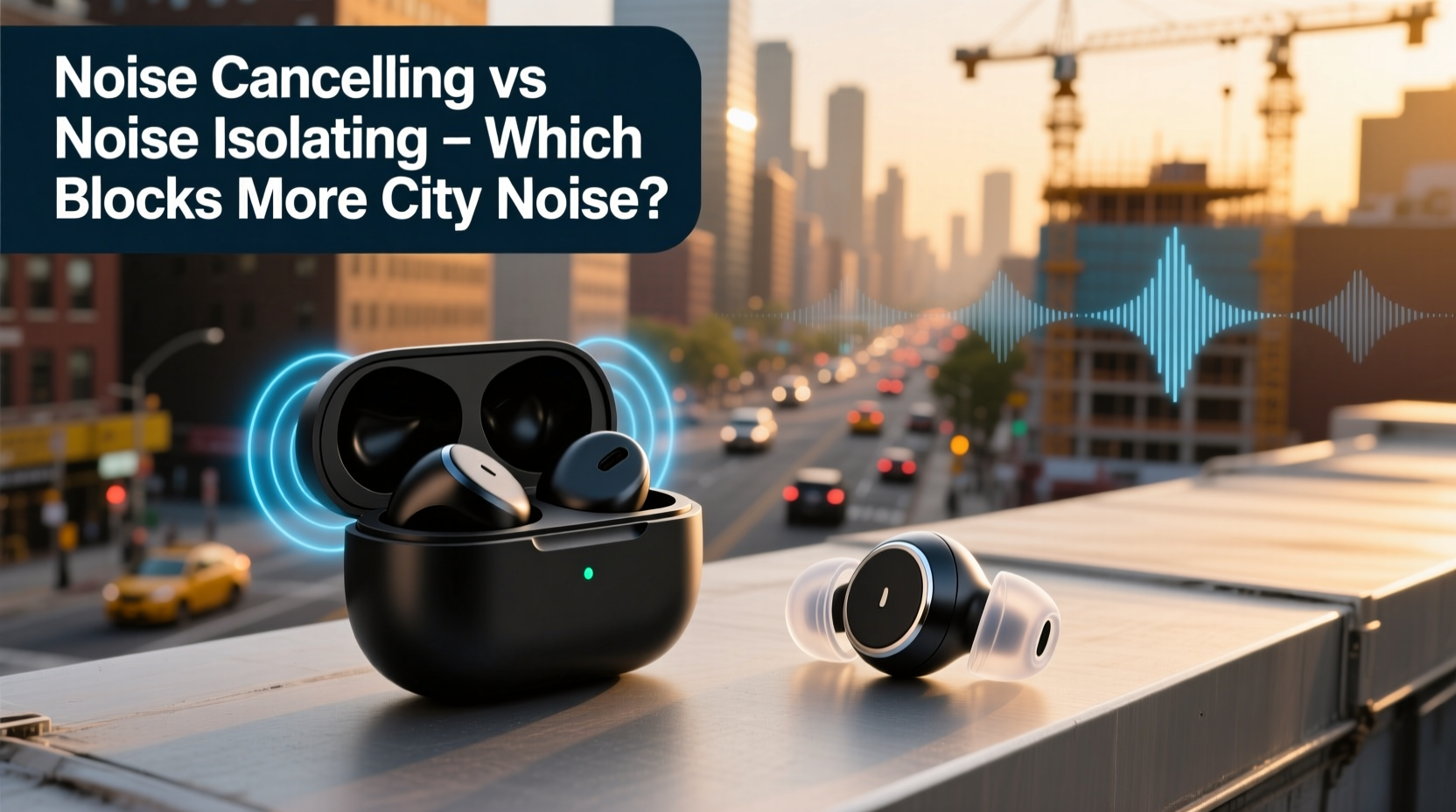
Active noise cancelling (ANC) is a technological solution designed to reduce unwanted ambient sounds using electro-acoustic principles. ANC earbuds are equipped with tiny microphones on the outer surface that pick up external noise in real time. A built-in processor analyzes the incoming sound wave and generates a “counter-signal”—a sound wave with the same amplitude but opposite phase. When these two waves meet, they cancel each other out through destructive interference, resulting in reduced perceived noise.
This process is particularly effective against low-frequency, continuous sounds—the kind commonly found in city environments. Examples include:
- Engine rumbles from buses and trains
- Air conditioning units
- Traffic drone on highways
- Aircraft cabin noise during flights
Because ANC targets predictable, steady-state noises, it excels in smoothing out the background hum of urban life. However, it struggles with sudden, sharp, or high-pitched sounds such as sirens, construction hammering, or human voices, which change too quickly for the system to respond effectively.
“Active noise cancellation can reduce low-frequency environmental noise by up to 30–40 decibels, making a significant difference in daily commutes.” — Dr. Lena Torres, Audio Acoustics Researcher, MIT Media Lab
How Noise Isolation Works: The Power of Physical Barriers
Noise isolation, also known as passive noise reduction, doesn’t involve electronics. Instead, it relies entirely on physical design—specifically, how well the earbud seals the ear canal. This seal acts as a barrier, blocking external sound waves from entering the ear. Materials, shape, size, and ear tip design all influence how much noise is blocked.
High-quality silicone, foam, or memory gel tips create a tighter acoustic seal than basic rubber tips. Earbuds with deep-insertion designs (like in-ear monitors) generally offer better isolation because they sit deeper in the ear canal, reducing sound leakage.
Passive isolation is most effective at blocking mid- to high-frequency sounds—exactly the range where ANC tends to underperform. This includes:
- Human speech
- Keyboard typing
- Sirens and horns
- Coffee shop clatter
Unlike ANC, noise isolation works without batteries or processing power. It’s always “on,” requires no activation, and doesn’t introduce any audio latency. However, its effectiveness varies greatly depending on individual ear anatomy. What fits perfectly for one person may leak sound for another.
Direct Comparison: ANC vs Isolation in City Environments
To determine which technology blocks more city noise, consider the composition of typical urban sound. City noise is a mix of frequencies:
- Low-frequency: Traffic engines, subway trains, HVAC systems
- Mid-frequency: Conversations, footsteps, general crowd noise
- High-frequency: Sirens, car horns, construction tools
ANC dominates in suppressing the low-end rumble, while isolation handles higher-pitched interruptions better. In practice, the best city-blocking earbuds combine both technologies—a strategy adopted by premium models like the Sony WF-1000XM5, Apple AirPods Pro (2nd gen), and Bose QuietComfort Ultra Earbuds.
| Feature | Active Noise Cancelling (ANC) | Noise Isolation (Passive) |
|---|---|---|
| Technology Type | Electronic (microphones + processors) | Physical (ear tip seal) |
| Best At Blocking | Low-frequency, continuous noise | Mid- to high-frequency, intermittent noise |
| Battery Required? | Yes | No |
| Effectiveness Varies By Fit? | Moderately (affects overall performance) | Significantly (depends entirely on seal) |
| Works Without Power? | No | Yes |
| Audio Quality Impact | May introduce slight hiss or pressure sensation | No inherent sound alteration |
| Cost Factor | Higher (due to tech complexity) | Lower to moderate |
The table illustrates a clear trade-off: ANC offers advanced, adaptive noise suppression but adds cost and complexity. Isolation is simpler and always functional but highly dependent on user-specific fit.
Real-World Example: Commuting Through New York City
Consider Maria, a graphic designer who commutes daily from Brooklyn to Midtown Manhattan via subway. Her route includes walking through busy streets, waiting on open platforms, and riding underground trains. She tested two pairs of earbuds: one with strong ANC (Sony WF-1000XM5) and another with excellent passive isolation but no ANC (1MORE Triple Driver In-Ear Monitors).
On the street, the 1MORE earbuds reduced conversations and footstep noise well due to their foam tips creating a tight seal. However, the low-frequency growl of idling delivery trucks was still noticeable. On the subway platform, sudden train announcements cut through clearly—again, isolation struggled with abrupt mid-range sounds.
When she switched to the Sony ANC earbuds, the rumble of approaching trains was dramatically reduced. The constant engine noise faded into a distant murmur, allowing her to listen to music at lower volumes. Voices were still audible, but less intrusive. During the ride, the ANC maintained a calm sonic environment, even as the train accelerated.
Maria concluded that while isolation helped, ANC made a far greater impact on her overall stress and listening comfort. The combination of both technologies in the Sony model provided the quietest experience.
Step-by-Step Guide to Maximizing Noise Reduction
You can significantly improve noise blocking regardless of which type of earbuds you own. Follow this sequence to get the best possible performance:
- Choose the Right Ear Tips: Test multiple sizes and materials. Foam tips (like Comply) expand in the ear canal for superior sealing.
- Ensure Proper Insertion: Twist the earbud slightly as you insert it to form a secure seal. You should feel slight pressure and hear your voice echo slightly if sealed correctly.
- Enable ANC (if available): Turn on noise cancelling and select the appropriate mode—commute, airplane, or transparency—as needed.
- Use Wind Guards: In windy conditions, wind can disrupt ANC microphones. Use furry covers or choose earbuds with built-in wind noise reduction.
- Check Fit Regularly: Sweat, movement, or improper placement can break the seal. Reinsert periodically during long use.
- Update Firmware: Manufacturers often release updates that improve ANC algorithms and microphone sensitivity.
Which Blocks More City Noise? The Verdict
When it comes to blocking more city noise, **active noise cancelling earbuds generally outperform purely isolating models**, especially in environments dominated by low-frequency sounds. The persistent drone of traffic, subway vibrations, and engine noise—all staples of city life—are precisely the types of sounds ANC is engineered to eliminate.
However, the most effective solutions don’t rely on ANC alone. Top-tier earbuds integrate both technologies: powerful ANC processors combined with ergonomic designs and premium ear tips that maximize passive isolation. This hybrid approach delivers comprehensive noise attenuation across the entire frequency spectrum.
For example, the latest generation of ANC earbuds achieves up to 40dB of noise reduction below 1kHz, while also attenuating 15–25dB in the mid-to-high ranges through physical sealing. This dual-layer defense creates a noticeably quieter experience compared to isolation-only models, which typically max out at around 20–25dB across frequencies.
If your primary goal is to minimize city noise, prioritize earbuds with advanced ANC and good passive sealing. Look for features like:
- Multipoint microphones for feedforward and feedback ANC
- Adaptive noise control that adjusts to surroundings
- Included foam or customizable ear tips
- Transparency mode for situational awareness
Frequently Asked Questions
Can noise isolating earbuds block as much noise as ANC models?
Purely isolating earbuds can achieve decent noise reduction, especially with foam tips, but they rarely match the low-frequency suppression of ANC. They excel at blocking higher-pitched sounds but fall short against constant rumble, making them less effective for full city noise coverage.
Do I need ANC if I have good noise isolation?
It depends on your environment. If you’re mostly in offices or cafes, strong isolation may suffice. But for commuting, travel, or noisy public transit, ANC provides a significant upgrade by neutralizing deep, penetrating sounds that physical barriers can’t stop.
Does ANC affect sound quality?
Early ANC models sometimes introduced audio artifacts like hissing or a “pressure” feeling. Modern versions have minimized these issues. High-end earbuds now maintain excellent sound fidelity while cancelling noise, though some listeners still prefer the purity of non-ANC audio.
Final Checklist Before Buying
Before purchasing earbuds for city noise reduction, verify the following:
- ✅ Includes active noise cancelling (not just ambient mode)
- ✅ Offers multiple ear tip sizes, preferably with foam options
- ✅ Has positive reviews specifically mentioning commute or subway use
- ✅ Features adaptive ANC that responds to environment changes
- ✅ Provides long battery life with ANC enabled (at least 5–6 hours)
- ✅ Supports firmware updates for ongoing performance improvements
Conclusion
While both noise cancelling and noise isolating earbuds play important roles in managing urban sound pollution, active noise cancelling emerges as the superior solution for blocking the full spectrum of city noise—particularly the pervasive low-frequency rumble that defines metropolitan environments. However, the best results come not from choosing one over the other, but from leveraging both. Modern high-performance earbuds combine sophisticated ANC with optimized physical sealing to deliver an unprecedented level of auditory peace in chaotic settings.
Your ears spend hours exposed to urban noise every day. Investing in earbuds that truly protect your hearing and mental focus isn’t just about convenience—it’s about long-term well-being. Choose wisely, test thoroughly, and take control of your sonic environment.




 浙公网安备
33010002000092号
浙公网安备
33010002000092号 浙B2-20120091-4
Comments
No comments yet. Why don't you start the discussion?