
For daily commuters, a good pair of headphones is more than a luxury—it’s a necessity. Whether you're navigating the rumble of subway trains, enduring the constant hum of bus engines, or trying to focus during a packed morning commute, controlling your auditory environment can make all the difference. Two terms frequently come up in this context: noise cancelling and noise isolating. While they sound similar and both aim to reduce unwanted sound, their mechanisms, effectiveness, and ideal use cases differ significantly. Understanding these distinctions helps commuters make informed decisions based on comfort, budget, and acoustic needs.
How Noise Isolation Works: The Physical Barrier
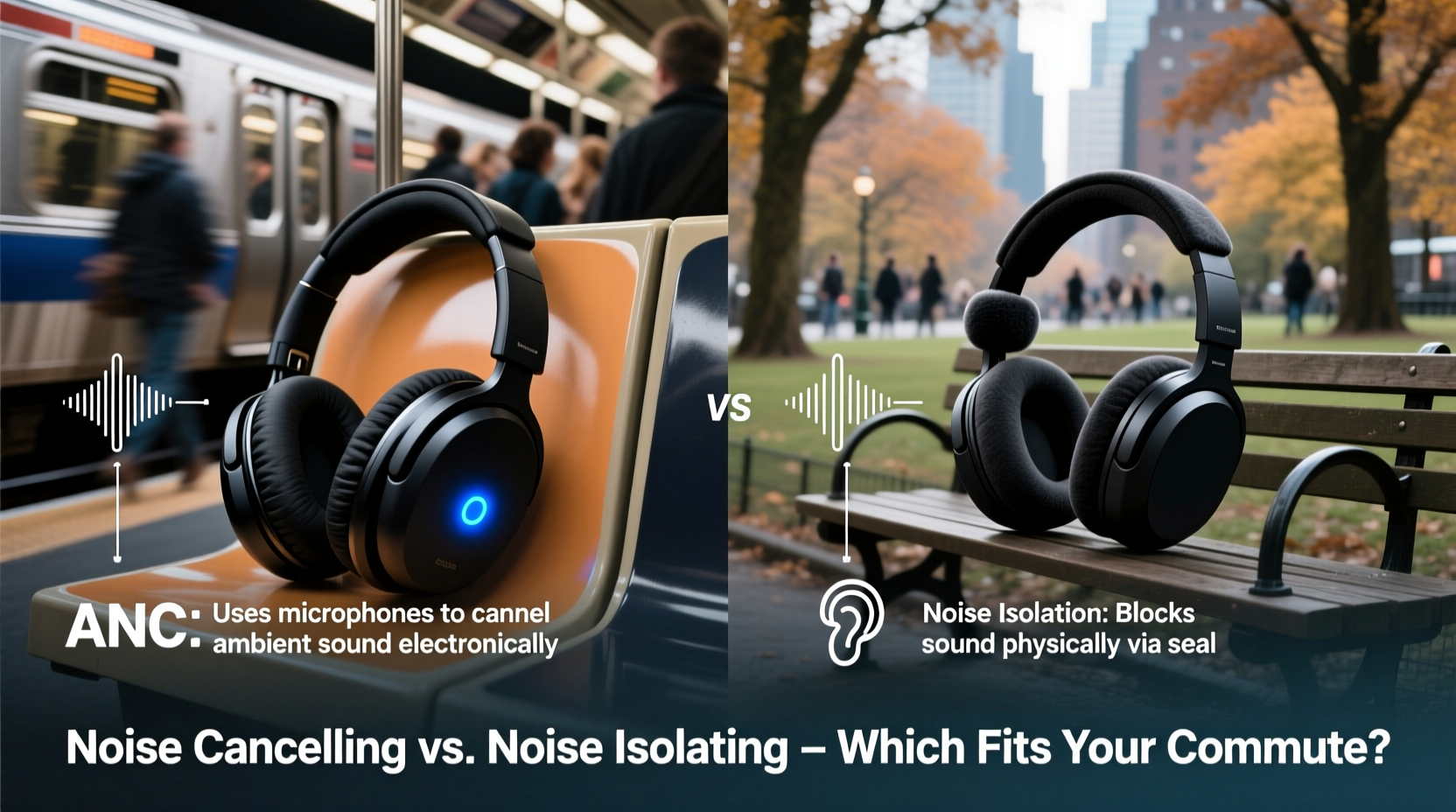
Noise isolation relies purely on physical design to block external sound. Also known as passive noise reduction, it functions by creating a tight seal between the ear and the surrounding environment. This seal prevents sound waves from reaching the eardrum, especially mid- to high-frequency noises such as human voices, announcements, or traffic chatter.
The effectiveness of noise isolation depends on several factors:
- Cup design: Over-ear (circumaural) models generally offer better isolation than on-ear (supra-aural) ones because they fully enclose the ears.
- Ear pad material: Memory foam, protein leather, or velour pads with high density improve the seal.
- Fit and pressure: A snug fit is crucial; loose headphones allow sound leakage.
- In-ear fit: For earbuds, silicone or foam tips that conform to the ear canal provide superior isolation.
This method requires no power, electronics, or batteries. As long as the seal remains intact, noise isolation works consistently. However, it struggles most with low-frequency sounds—like the drone of an airplane engine or train vibration—which easily penetrate physical barriers due to their long wavelengths.
How Active Noise Cancelling Works: Technology Against Sound
Active noise cancelling (ANC) goes beyond physical barriers by using advanced electronics to neutralize incoming sound. It works through a process called destructive interference. Microphones on the exterior of the headphones pick up ambient noise, and the internal circuitry generates a sound wave that is the exact inverse (anti-noise) of the detected sound. When the two waves meet, they cancel each other out.
ANC is particularly effective against continuous, predictable low-frequency sounds—the very types that passive isolation fails to block. This makes it ideal for environments like:
- Airplanes (cabin roar)
- Trains (engine rumble)
- Buses (diesel engine hum)
- Offices (HVAC systems)
However, ANC has limitations. It's less effective against sudden, irregular noises like a baby crying, loud conversations, or honking horns. Additionally, the technology requires power, meaning ANC headphones need batteries or regular charging. Some models also introduce a faint hiss or pressure-like sensation in the ears, which some users find uncomfortable over long periods.
“Active noise cancellation excels at removing consistent background noise, making it a game-changer for frequent travelers and urban commuters.” — Dr. Lena Patel, Audio Engineer and Acoustics Researcher at MIT Media Lab
Key Differences: A Practical Comparison
To help commuters evaluate which option suits their lifestyle, here's a detailed comparison of noise cancelling and noise isolating headphones across essential criteria:
| Feature | Noise Isolating (Passive) | Noise Cancelling (Active) |
|---|---|---|
| Mechanism | Physical seal blocks sound | Microphones + anti-noise signal |
| Power Required | No | Yes (battery/charging) |
| Best At Blocking | Mid- to high-frequency sounds (voices, alarms) | Low-frequency droning (engines, HVAC) |
| Effectiveness on Sudden Noises | Moderate (depends on seal) | Poor to moderate |
| Audio Quality Impact | Minimal; may slightly boost bass perception | Can affect clarity; some models alter sound signature |
| Cost Range | $20–$200 | $100–$400+ |
| Durability & Maintenance | High; fewer components to fail | Lower; sensitive electronics require care |
| Portability | Generally compact (especially earbuds) | Larger designs often needed for battery and tech |
The table illustrates a fundamental trade-off: passive isolation is simpler, cheaper, and more reliable, while active noise cancelling offers superior performance in specific environments but at higher cost and complexity.
Real-World Example: A Commuter’s Dilemma
Consider Sarah, a software developer who commutes 90 minutes each way via subway and city bus. Her morning ride includes crowded platforms, screeching train brakes, and overlapping conversations. She uses her time to listen to podcasts and sometimes catch up on sleep.
Initially, Sarah bought affordable in-ear headphones with standard silicone tips. They blocked some noise but failed to mute the persistent low-end rumble of the subway. Voices still pierced through, disrupting her focus. After research, she upgraded to over-ear ANC headphones.
The difference was immediate. The deep-frequency train noise faded into near silence. Podcasts became clearer without cranking volume. Even better, she found herself less fatigued at the end of the day. However, she noticed downsides: the headphones were bulkier, required nightly charging, and occasionally produced a faint static buzz when ANC was active.
Eventually, Sarah adopted a hybrid strategy. On days with heavy transit use, she wore her ANC headphones. On lighter days or when battery life was low, she switched to premium earbuds with foam tips offering strong passive isolation. This dual approach maximized flexibility, comfort, and auditory control.
Choosing the Right Option: A Step-by-Step Guide
Selecting between noise isolating and noise cancelling headphones isn’t one-size-fits-all. Follow this decision-making process tailored for commuters:
- Analyze Your Commute Environment
Identify dominant noise types. Is it constant engine hum (favoring ANC) or intermittent voices and alerts (where isolation helps more)? - Evaluate Your Daily Routine
Do you commute daily? How long? Frequent, lengthy commutes justify investing in ANC. Occasional use may not. - Assess Comfort Needs
Over-ear ANC models can feel warm or pressurized during extended wear. If you wear glasses or have sensitive skin, test fit carefully. - Check Battery and Charging Access
If you can't charge daily, consider whether relying on ANC is practical. Passive options never run out of power. - Set a Realistic Budget
Entry-level ANC headphones start around $100, while quality isolation-focused models begin under $50. Determine what you’re willing to spend for measurable gains. - Try Before You Buy (If Possible)
Visit a store to test seal quality, comfort, and ANC performance. Pay attention to how natural the sound feels—not all ANC systems are equal. - Read User Reviews from Commuters
Look for feedback mentioning real-world commuting scenarios, not just lab conditions. Long-term durability and sweat resistance matter in crowded transit.
Hybrid Solutions and Modern Trends
Today’s market increasingly blends both technologies. Many premium headphones—such as the Sony WH-1000XM5, Bose QuietComfort Ultra, and Apple AirPods Pro—feature strong passive seals *and* advanced ANC. These hybrid models deliver comprehensive noise reduction across frequencies.
Additionally, newer features enhance commuter usability:
- Transparency Mode: Lets in ambient sound so you can hear station announcements or conversations without removing headphones.
- Adaptive ANC: Automatically adjusts cancellation strength based on environment.
- Wear Detection: Pauses audio when headphones are removed—useful when boarding or exiting transit.
- Sweat and Dust Resistance: IP ratings (e.g., IPX4) protect against moisture and debris in crowded environments.
Even earbuds now offer impressive ANC, thanks to miniaturized microphones and efficient chips. While traditionally limited by smaller form factors, modern in-ear models like the Samsung Galaxy Buds2 Pro or Huawei FreeBuds Pro 3 challenge full-sized headphones in noise suppression capability.
FAQ: Common Questions from Commuters
Can I use noise isolating headphones for flying?
Yes, but with limitations. Passive isolation reduces mid- and high-frequency cabin noise effectively, but won’t eliminate the deep engine drone. For long flights, ANC headphones are strongly recommended to reduce fatigue and improve listening comfort.
Do noise cancelling headphones work without music playing?
Yes. ANC operates independently of audio playback. You can wear them silently and still benefit from reduced ambient noise. However, many models turn off ANC when idle to save battery unless manually activated.
Are there health risks associated with noise cancelling?
No direct health risks exist, but some users report mild ear pressure or dizziness, similar to ascending in an airplane. This \"eardrum suck\" effect usually subsides with acclimatization. If discomfort persists, take breaks or switch to passive-only modes.
Actionable Checklist: Choosing Your Commuter Headphones
Before purchasing, go through this checklist to ensure your choice aligns with your commuting needs:
- ✅ Identify primary noise sources in your commute (low-frequency hum vs. speech/clatter)
- ✅ Decide if you need ANC, passive isolation, or both
- ✅ Confirm battery life meets your usage (aim for at least 20 hours for daily ANC use)
- ✅ Test comfort for extended wear (over-ear padding, clamp force, weight)
- ✅ Ensure secure fit (important on bumpy rides)
- ✅ Check for transparency/ambient mode for safety and awareness
- ✅ Verify compatibility with your devices (Bluetooth codecs, app support)
- ✅ Consider backup options (carrying compact earbuds as secondary)
Conclusion: Make Your Commute Work for You
Your daily commute doesn’t have to be an assault on the senses. By understanding the real differences between noise cancelling and noise isolating headphones, you gain the power to transform transit time into productive, peaceful, or enjoyable moments. Noise isolation offers a simple, reliable defense against everyday distractions, while active noise cancelling delivers technological relief from the low-frequency grind of urban transport.
The best choice isn’t always the most expensive or feature-packed—it’s the one that fits your routine, comfort level, and acoustic environment. Whether you opt for sealed earbuds, sleek ANC earphones, or over-ear quiet zones, the goal remains the same: reclaim your focus, protect your hearing, and arrive at your destination feeling calmer and more in control.




 浙公网安备
33010002000092号
浙公网安备
33010002000092号 浙B2-20120091-4
Comments
No comments yet. Why don't you start the discussion?