
Sleep is foundational to health, yet millions struggle to fall or stay asleep due to environmental noise. Traffic, snoring partners, barking dogs, or even the silence that amplifies internal thoughts can disrupt rest. In response, both noise masking apps and dedicated white noise machines have gained popularity as tools to improve sleep hygiene. But which option offers better results for long-term sleep quality? The answer depends on personal needs, lifestyle, and how each solution delivers sound.
This article examines the science behind auditory masking, compares the practical benefits and drawbacks of apps versus machines, and provides actionable insights to help you make an informed decision.
How Sound Influences Sleep Quality
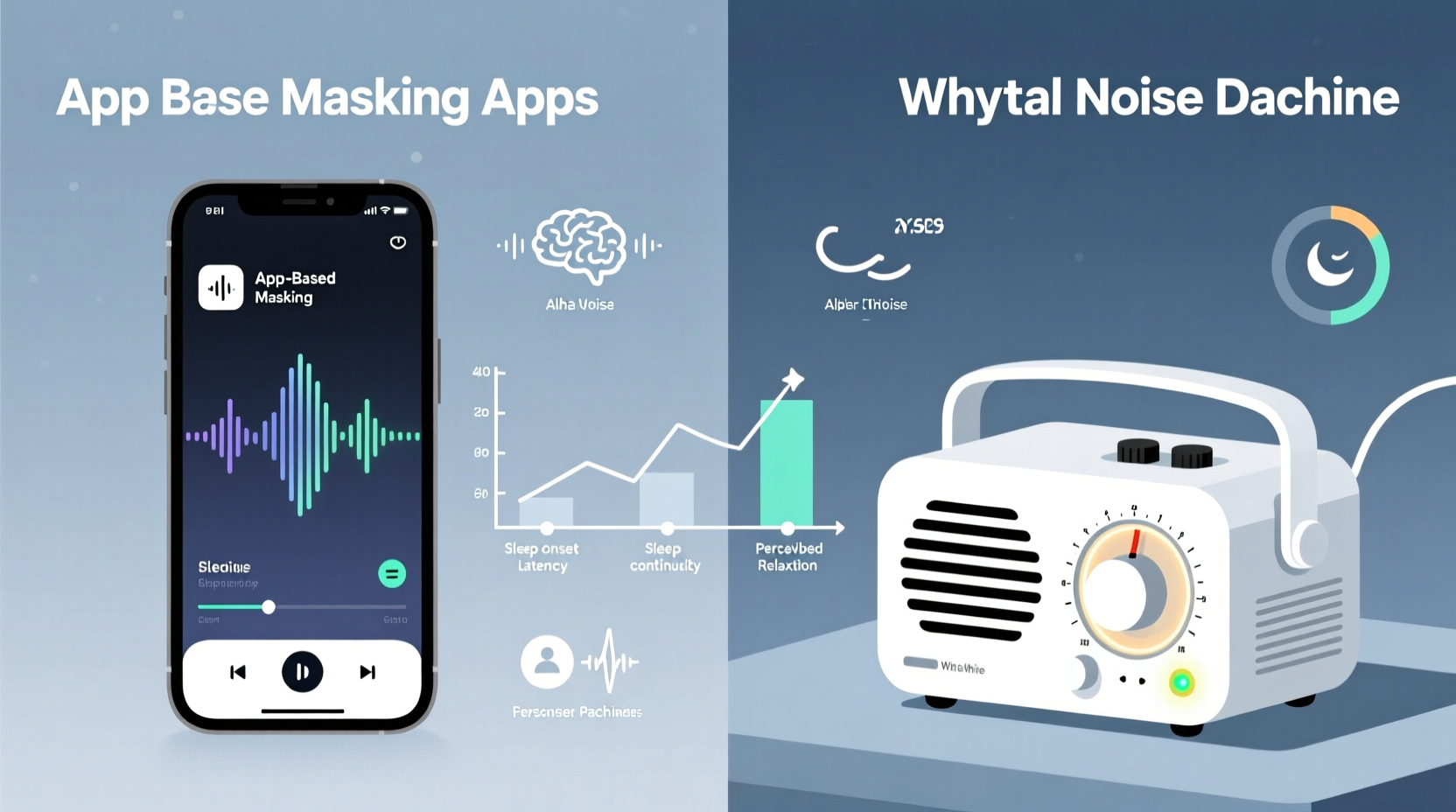
The human brain remains responsive to auditory stimuli during sleep. Sudden noises—like a slamming door or a phone alert—can trigger micro-arousals, briefly disrupting deep sleep cycles without fully waking you. Over time, these interruptions reduce overall sleep efficiency and impair cognitive function, mood, and physical recovery.
Noise masking works by introducing consistent background sound that \"covers\" disruptive noises. This isn't about volume but frequency overlap. For example, white noise contains all audible frequencies at equal intensity, creating a steady sonic blanket. Pink noise emphasizes lower frequencies, resembling rainfall, while brown noise dives even deeper into rumbles akin to thunder or ocean waves. These sounds reduce the contrast between ambient disturbances and silence, making sudden noises less jarring.
“Consistent low-level sound environments help stabilize sleep architecture, particularly in light sleepers exposed to unpredictable noise.” — Dr. Lena Patel, Sleep Neurologist at Boston Sleep Institute
White Noise Machines: Simplicity and Reliability
White noise machines are standalone devices designed specifically to emit masking sounds. Most models offer multiple preset options—white, pink, and brown noise—along with nature sounds like rain, forest, or ocean. They typically feature simple controls, volume adjustment, timers, and automatic shut-off functions.
One key advantage is reliability. Unlike smartphones, these devices don’t require charging mid-night or risk app crashes. Many are built for bedroom use with soft LED displays, non-distracting designs, and AC power options, eliminating battery anxiety.
High-end models like the LectroFan or Marpac Dohm include fan-based sound generation, producing authentic mechanical airflow rather than digital recordings. Users often report a more natural, immersive experience compared to synthesized tones from apps.
Noise Masking Apps: Flexibility and Customization
Smartphone apps such as myNoise, White Noise Lite, or Calm offer extensive libraries of masking sounds, customizable layers, and dynamic features like sleep tracking and smart alarms. Their strength lies in adaptability: users can blend rain with wind, adjust frequency bands, or create personalized mixes tailored to their sensitivity.
Apps also integrate seamlessly into existing routines. You might already use your phone for bedtime reading, meditation, or journaling—adding a noise app requires no extra device. Some even sync with smart home systems or wearables to adjust sound based on room noise or sleep stage data.
However, trade-offs exist. Phones emit blue light, which suppresses melatonin if used right before sleep. Even when placed face-down, notifications or software updates can interrupt playback. Battery life is another concern; playing audio overnight may drain your phone unless connected to power, potentially creating a tripping hazard or limiting placement options.
Comparative Analysis: Apps vs Machines
| Feature | Noise Masking Apps | White Noise Machines |
|---|---|---|
| Sound Quality | Varies by app; some use high-fidelity recordings | Often superior, especially fan-based models |
| Customization | High—layered sounds, EQ settings, user profiles | Limited to presets (except premium models) |
| Portability | Excellent—already on your phone | Good, but adds another item to carry |
| Battery Dependency | High—requires charging, risks shutdown | Low—many plug into wall outlets |
| Cost Over Time | Low upfront; some apps have subscriptions | Higher initial cost ($50–$150), no recurring fees |
| Distraction Risk | High—notifications, screen glow, app errors | Negligible—dedicated device with minimal interface |
| Durability | Depends on phone lifespan and app support | Long-lasting; few moving parts in digital models |
While apps win in customization and convenience, machines excel in consistency and sleep-safe design. If your goal is uninterrupted, distraction-free sound every night, a dedicated machine may be worth the investment.
Real-World Example: Sarah’s Transition from App to Machine
Sarah, a 34-year-old graphic designer living near a busy intersection, struggled with falling asleep due to late-night traffic. She initially used a popular white noise app on her phone, setting it to play rain sounds with a 30-minute timer. While helpful at first, she noticed two issues: her phone would occasionally update in the middle of the night, stopping playback, and the screen’s faint glow disturbed her partner.
After three months of inconsistent results, she invested in a Marpac Dohm Classic. Plugged into an outlet across the room, it produced a continuous fan-based hum. Within a week, both she and her partner reported fewer nighttime awakenings and deeper morning rest. “It just works,” she said. “No decisions, no charging, no glitches. It’s always there.”
Sarah’s case illustrates how reliability and environmental integration can outweigh advanced features when optimizing for sleep.
Step-by-Step Guide to Choosing the Right Solution
Follow this sequence to determine whether an app or machine suits your sleep environment best:
- Assess Your Noise Sensitivity: Are you awakened by subtle sounds like a creaking floorboard or distant sirens? High sensitivity favors consistent, uninterrupted sources—leaning toward machines.
- Evaluate Your Bedroom Setup: Do you charge your phone next to your bed? Is space limited? If yes, an app may suffice. If not, a compact machine could be added easily.
- Test Both Options: Use a free app for one week, then borrow or trial a machine the next. Track sleep quality using a wearable or journal.
- Consider Long-Term Usability: Will you travel frequently? Apps are more portable. Do you dislike managing multiple devices? A plug-and-forget machine reduces clutter.
- Set a Budget: Apps typically cost $0–$15 one-time or via subscription. Machines range from $40 to $150. Factor in durability—machines often last 5+ years.
- Make Your Choice and Optimize Placement: Position the device so sound reaches your ears evenly but isn’t too loud. Ideal volume is just above background noise—around 50 dB.
Expert Recommendations and Common Pitfalls
Dr. Alan Reyes, an audiologist specializing in sleep environments, advises caution with volume levels: “Even soothing sounds can cause hearing fatigue or mask important alerts like smoke detectors if played too loudly. Keep output below 60 decibels—about the level of a quiet conversation.”
A common mistake is assuming all white noise is the same. Digital loops in low-quality apps can produce perceptible repetition, which the brain eventually detects, reducing effectiveness. Premium apps mitigate this with procedural generation or long-loop recordings, but many budget options do not.
Another issue is over-reliance. Some users find they cannot sleep without masking sound after prolonged use. Experts suggest gradually reducing usage once sleep stabilizes, or using intermittent schedules (e.g., only on noisy weekends) to maintain flexibility.
Frequently Asked Questions
Can noise masking damage hearing over time?
When used responsibly—at moderate volumes and not directly against the ear—both apps and machines pose minimal risk. However, prolonged exposure above 70 dB (comparable to a vacuum cleaner) may contribute to hearing stress. Stick to levels barely audible across the room.
Is pink noise better than white noise for sleep?
Research suggests pink noise may enhance deep sleep more effectively than white noise due to its emphasis on lower frequencies, which align closely with brainwave patterns during slow-wave sleep. A 2017 study published in Frontiers in Human Neuroscience found participants exposed to pink noise showed increased duration of deep sleep and improved memory recall.
Do I need Wi-Fi for noise masking apps or machines?
Most modern apps allow offline downloading of sounds, so Wi-Fi isn’t required during sleep. Similarly, standalone machines generate sound internally and operate independently of internet connectivity. Only cloud-synced features (e.g., saving custom presets) require online access.
Action Plan: Improving Sleep Through Smart Sound Choices
- Start with a free app to test if noise masking helps your sleep.
- If effective, consider upgrading to a high-quality app with offline mode or invest in a reputable machine.
- Place the device strategically—away from pillows, aimed toward the bed, not directly at ears.
- Use timers to avoid unnecessary runtime (e.g., 60–90 minutes).
- Reassess every few months; some people naturally develop greater noise resilience over time.
“The best sleep aid is the one you’ll use consistently without adding stress. Whether it’s an app or a machine, consistency and proper setup matter most.” — Dr. Naomi Chen, Behavioral Sleep Specialist
Final Thoughts
The debate between noise masking apps and white noise machines isn’t about declaring a universal winner—it’s about matching the tool to the user. Apps offer unmatched versatility and accessibility, ideal for tech-savvy individuals who value control and portability. Machines deliver peace of mind through simplicity, durability, and freedom from digital distractions, making them excellent choices for primary bedrooms or households with children.
Ultimately, improving sleep quality hinges on consistency, correct usage, and integration into a broader sleep-supportive environment. Whether you choose an app or a machine, the goal remains the same: to create a stable auditory backdrop that lets your mind disengage and your body enter restorative rest.




 浙公网安备
33010002000092号
浙公网安备
33010002000092号 浙B2-20120091-4
Comments
No comments yet. Why don't you start the discussion?