
When it comes to elevating the perceived value of your living space, few elements are as impactful—and as accessible—as throw cushions. Often overlooked, these small textile accents can dramatically shift the visual weight, sophistication, and overall luxury feel of your sofa. Two popular styles dominate modern interior trends: Nordic (Scandinavian) and Bohemian. While both are celebrated for their comfort and character, they send very different messages about taste, refinement, and investment.
The question isn’t just about personal preference—it’s about perception. Which cushion style makes your sofa look like it belongs in a high-end showroom rather than a bargain basement? The answer lies not in price tags, but in design principles, material quality, and spatial harmony.
The Psychology of Perceived Value in Home Decor
Luxury in interior design isn’t always defined by cost. It’s shaped by cues: symmetry, restraint, texture contrast, and intentional minimalism. A 2021 study from the Journal of Environmental Psychology found that environments with curated simplicity were consistently rated as “more upscale” than those filled with vibrant, eclectic decor—even when the actual furnishings were identical.
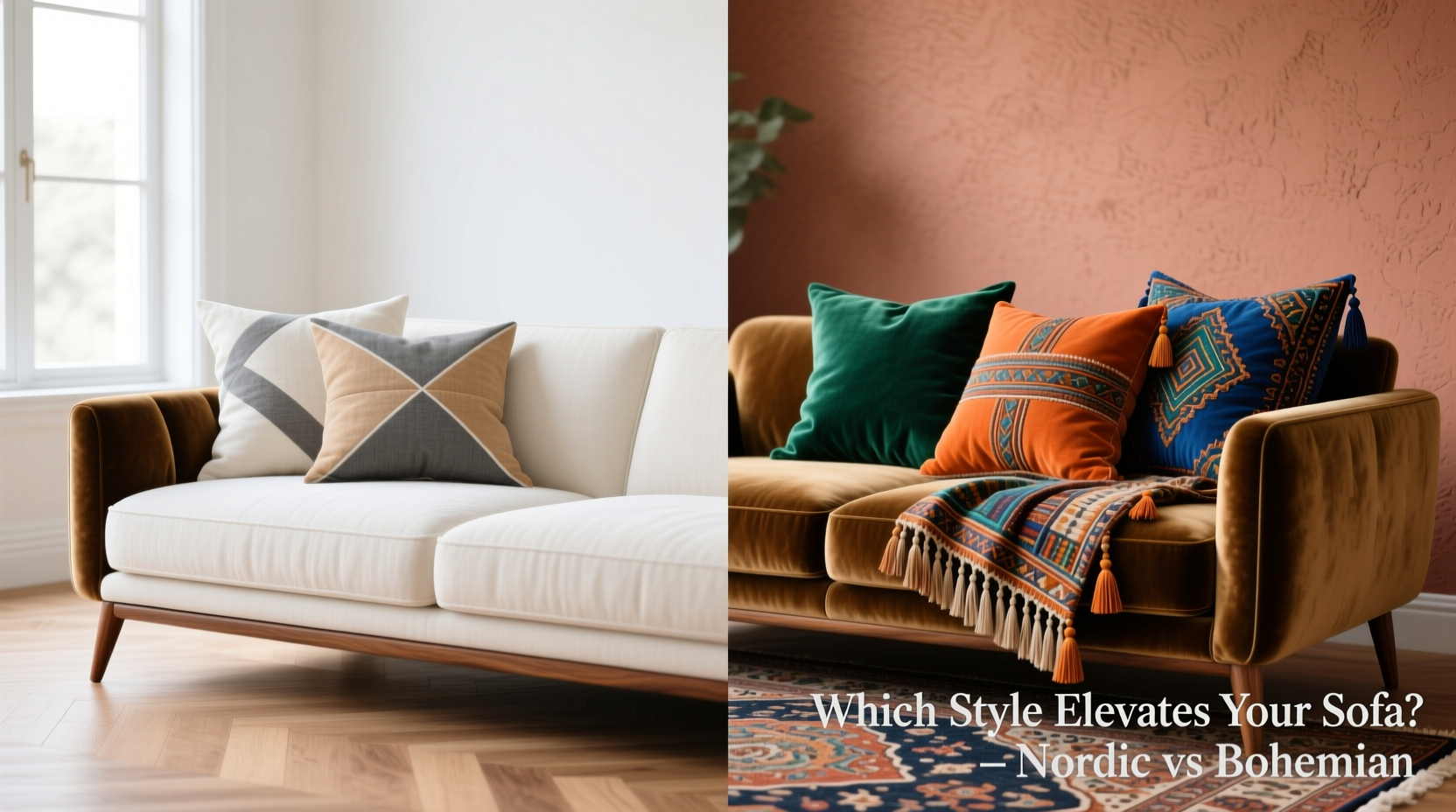
This is where Nordic design excels. Rooted in Scandinavian principles of functionality and calm elegance, it emphasizes light tones, natural fibers, and uncluttered arrangements. In contrast, Bohemian style embraces maximalism—rich colors, layered patterns, and global influences. While deeply expressive, this approach risks appearing chaotic if not executed with precision.
Perceived expense often correlates with control. A sofa dressed in Nordic cushions suggests intentionality; one draped in Bohemian textiles suggests spontaneity. Both have merit—but only one consistently signals quiet luxury.
Nordic Cushions: Understated Elegance That Speaks Volumes
Nordic cushions typically feature muted palettes—whites, taupes, soft grays, and earthy beiges. Fabrics include wool, linen, cotton, and sheepskin, all prized for their tactile authenticity and durability. Patterns, if present, are subtle: herringbone weaves, tonal geometrics, or hand-knitted textures.
What makes Nordic styling effective at enhancing perceived value?
- Visual spaciousness: Light colors reflect light, making rooms feel larger and sofas appear more prominent.
- Material honesty: Natural fibers suggest sustainability and craftsmanship, traits associated with premium goods.
- Restraint: Limited color variation creates cohesion, reducing visual noise and focusing attention on form and fabric quality.
Why Nordic Design Makes Sofas Look Expensive
Luxury brands like Muuto, Hay, and Menu build entire collections around this aesthetic because it mirrors high-end retail displays. Showroom sofas rarely overflow with color—they’re staged to highlight silhouette, upholstery, and proportion. Nordic cushions support this narrative by framing the furniture, not competing with it.
“Luxury isn’t loud. It’s in the silence between objects.” — Ingrid Bergman, Interior Stylist & Author of *Calm Spaces*
Bohemian Cushions: Bold Expression vs. Visual Overload
Bohemian cushions are storytellers. They feature tassels, embroidery, ikat prints, tribal motifs, and jewel tones like emerald, rust, and indigo. Materials range from velvet to kilim wool, often sourced globally. This style celebrates individuality and cultural fusion.
Yet, despite its vibrancy, Bohemian styling carries risks when aiming for an upscale appearance:
- Pattern clash: Mixing too many prints distracts from the sofa’s shape.
- Color saturation: Deep hues absorb light, making spaces feel smaller and furniture appear heavier.
- Sensory overload: Without grounding elements, the arrangement can seem haphazard rather than curated.
In expert hands, Bohemian cushions can elevate a space. But achieving that balance requires skill—a neutral base, strategic layering, and disciplined editing.
When Bohemian Works for Luxury Appeal
A real-world example: A designer in Portland transformed a mid-century sectional using three deep-blue velvet cushions with gold-thread embroidery, flanked by two plain oatmeal linen ones. The result? A focal point that felt opulent, not overwhelming.
The key was contrast and hierarchy—using bold cushions as accents, not the main event.
Side-by-Side Comparison: Nordic vs Bohemian Impact
| Feature | Nordic Cushions | Bohemian Cushions |
|---|---|---|
| Color Palette | Neutral, monochromatic | Vibrant, multi-tonal |
| Pattern Use | Minimal or geometric | Maximal, ethnic, floral |
| Material Focus | Linen, wool, cotton | Velvet, kilim, brocade |
| Visual Effect | Expands space, highlights sofa | Adds warmth, draws focus to textiles |
| Luxury Perception | High (when styled simply) | Moderate (requires careful balance) |
| Styling Difficulty | Low | High |
How to Style for Maximum Perceived Value: A Step-by-Step Guide
Regardless of your preferred aesthetic, you can make your sofa look more expensive with strategic cushion placement. Follow this timeline:
- Week 1: Neutral Base Layer
Create a foundation with 2–3 cushions in solid, light-toned natural fabrics (e.g., stone linen or ivory wool). - Week 2: Add Texture, Not Color
Introduce one textured piece—cable knit, bouclé, or shearling—to add depth without visual weight. - Week 3: Accent Sparingly
If using Bohemian cushions, add only one statement piece. Place it centrally or at one end for asymmetrical balance. - Week 4: Edit Ruthlessly
Remove any cushion that doesn’t contribute to harmony. Less is more when simulating luxury. - Ongoing: Rotate Seasonally
Swap in richer winter textures or lighter summer linens to maintain freshness without overstocking.
Checklist: Does Your Sofa Look Expensive?
- ✅ Cushions are no more than 1/3 of the sofa’s visual weight
- ✅ At least two-thirds are in neutral, natural-fiber covers
- ✅ There is a clear textural hierarchy (e.g., smooth + nubby)
- ✅ No more than one bold pattern or color accent
- ✅ Edges of the sofa remain visible (not buried under pillows)
- ✅ Arrangement feels intentional, not piled-on
Frequently Asked Questions
Can I mix Nordic and Bohemian cushions?
Yes, but follow the 70/30 rule: 70% Nordic base (neutral, textured), 30% Bohemian accent (colorful, patterned). This maintains balance while allowing personality to shine.
Do more expensive cushions always make a sofa look better?
Not necessarily. A $50 linen cushion styled well will elevate a sofa more than a $150 embroidered pillow placed haphazardly. Context and composition matter more than individual price.
How many cushions should I use?
For a standard 3-seater sofa, 3–4 cushions is ideal. Too few looks sparse; too many appears cluttered. Odd numbers (3 or 5) create more dynamic, professional styling.
Conclusion: The Winning Style for Sophisticated Appeal
While Bohemian cushions bring soul and storytelling to a room, Nordic styling consistently wins when the goal is to make a sofa look more expensive. Its emphasis on light, texture, and restraint aligns with the visual language of luxury retail and high-end interiors. That said, the most sophisticated spaces often blend both—using Nordic as the canvas and Bohemian as the brushstroke.
The true secret isn’t choosing one style over the other. It’s understanding that perceived value comes from curation, not accumulation. A single well-chosen cushion can do more for your sofa’s prestige than a mountain of mismatched pillows.




 浙公网安备
33010002000092号
浙公网安备
33010002000092号 浙B2-20120091-4
Comments
No comments yet. Why don't you start the discussion?