
Upgrading from one flagship Samsung phone to another can feel like a no-brainer—especially when both the Galaxy Note 10 and Galaxy S10 are still praised for their design, performance, and camera quality. But if you’re already on an S10 or considering jumping from an older model to either device, the real question isn’t just about specs. It’s whether the upgrade delivers meaningful improvements in daily use. For many users, the answer depends on how they use their phone, what features matter most, and whether the premium price tag brings proportional benefits.
Design and Display: Subtle Differences, Big Feel
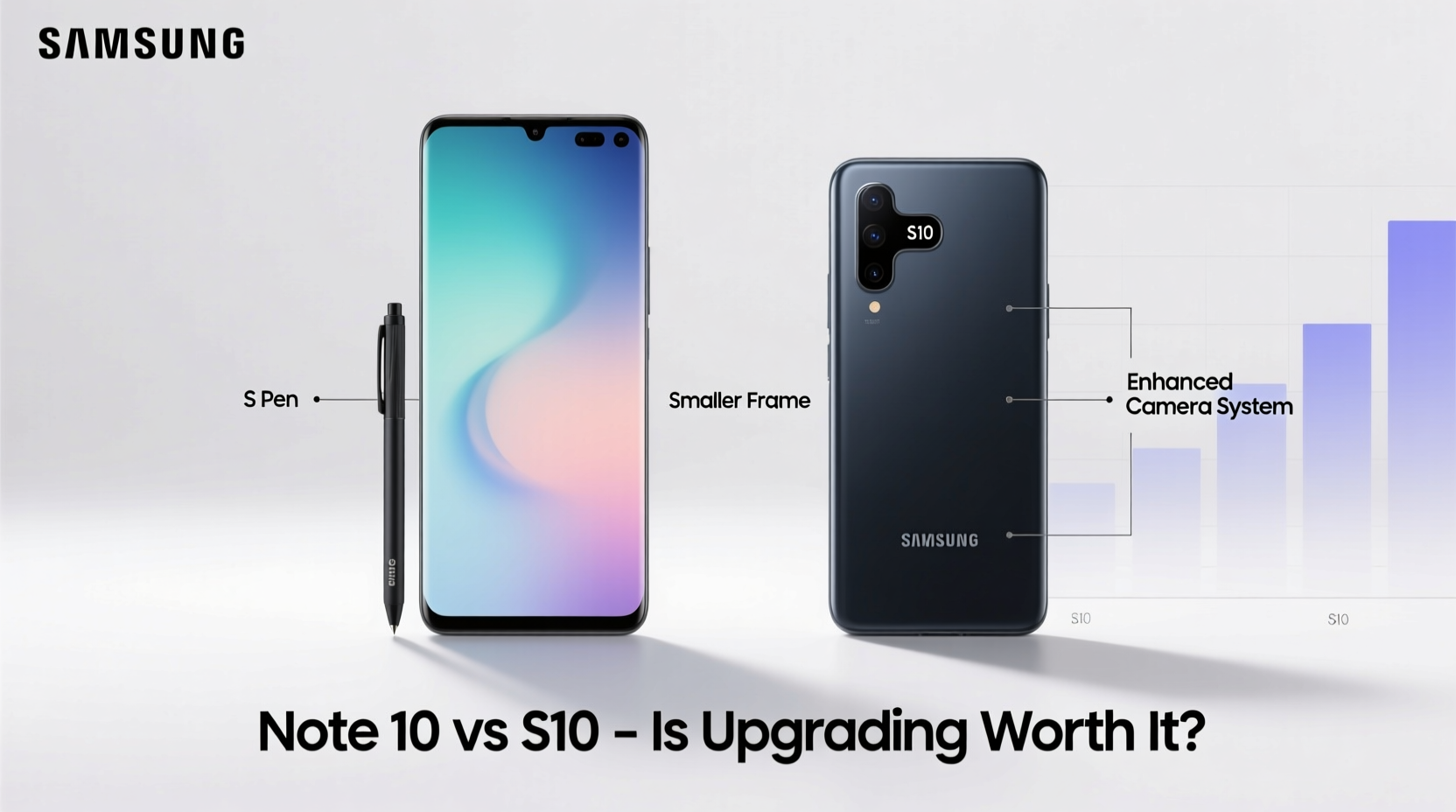
The Galaxy S10 and Note 10 share Samsung’s high-end build quality but differ in ergonomics and display layout. The S10 features a 6.1-inch Dynamic AMOLED display with a centered hole-punch front camera, giving it a more balanced look. In contrast, the Note 10 ups the ante with a 6.3-inch (Note 10) or 6.8-inch (Note 10+) screen and an off-center front camera cutout, optimized for stylus-first interaction.
The Note 10 is slightly taller and narrower, making it less pocket-friendly but better suited for productivity tasks. Its flat display (unlike the S10’s curved edges) reduces accidental touches and improves screen protector compatibility. Both phones are IP68-rated for dust and water resistance, but the Note 10 drops the headphone jack—a controversial move that may affect users reliant on wired audio.
Performance and Hardware: Nearly Identical Under the Hood
Both devices launched with top-tier hardware: the Exynos 9820 or Snapdragon 855 (depending on region), 8GB of RAM, and UFS 2.1 storage. In everyday use, there’s virtually no difference in app launch speed, gaming performance, or multitasking fluidity. Even under heavy loads—like editing 4K video or running multiple apps—the experience feels identical.
However, the Note 10+ offers a higher maximum storage option (up to 1TB with microSD expansion) compared to the S10’s 512GB cap. This matters only if you store large media libraries locally. Battery life is where distinctions emerge: the S10 packs a 3,400mAh cell, while the Note 10 and Note 10+ come with 3,500mAh and 4,300mAh batteries, respectively. Real-world usage shows the Note 10+ lasting up to 15% longer, especially with its adaptive 120Hz refresh rate disabled.
“From a pure performance standpoint, the Note 10 doesn’t outpace the S10—it refines the experience around productivity and precision.” — David Kim, Mobile Tech Analyst at GadgetInsight
Camera Comparison: Marginal Gains, Not Major Leaps
The S10 introduced a versatile triple rear setup: 12MP main, 12MP telephoto, and 16MP ultra-wide. The Note 10 matches this configuration, with nearly identical sensors and software processing. Photos in daylight are indistinguishable; low-light performance is also on par thanks to Samsung’s Smart HDR and Night Mode algorithms.
The key difference lies in video capabilities. The Note 10 supports 4K recording at 60fps across all rear cameras and includes advanced stabilization and background noise reduction—features favored by mobile videographers. It also has a dedicated “Video Bokeh” mode for real-time depth effects during filming, which the S10 lacks.
Front cameras differ slightly: the S10 uses a 10MP sensor with dual pixel autofocus, while the Note 10 opts for a 10MP fixed-focus camera. Autofocus gives the S10 a minor edge in dynamic selfie scenarios, though results are otherwise comparable.
Camera Feature Comparison
| Feature | S10 | Note 10 |
|---|---|---|
| Rear Cameras | 12MP + 12MP + 16MP | 12MP + 12MP + 16MP |
| Front Camera | 10MP (Dual Pixel AF) | 10MP (Fixed Focus) |
| 4K Video @ 60fps | Main camera only | All rear cameras |
| Video Bokeh | No | Yes |
| Audio Zoom | Yes | Yes |
The S Pen Factor: Is It Worth the Premium?
This is where the Note 10 diverges most meaningfully from the S10. The S Pen, once a niche tool, now supports Bluetooth LE, enabling remote control functions. You can use it to play/pause videos, advance slides, or take photos without touching the phone. Air actions let you gesture with the pen to scroll or zoom—novel, if not always practical.
For creatives and professionals, the S Pen’s 4,096 pressure levels and low latency make it excellent for note-taking and sketching. Samsung Notes syncs seamlessly with DeX, allowing handwritten meeting notes to be converted into editable text. If you rely on digital annotation, diagrams, or voice memos with visual context, the S Pen adds tangible value.
But for casual users, these features may go unused. The S10 offers robust functionality without them. Unless you actively use a stylus or plan to adopt one, the S Pen alone doesn’t justify the upgrade.
Real-World Example: Sarah’s Upgrade Dilemma
Sarah had used her S10 since launch—handling emails, social media, and occasional photography. When her company shifted to hybrid work, she began taking more handwritten notes during virtual meetings. She upgraded to the Note 10+ primarily for the S Pen and larger screen. Within weeks, she was using Samsung Notes to organize project ideas, sending annotated screenshots to colleagues, and controlling presentations remotely.
“I didn’t think I’d use the pen much,” she said. “But now I can’t imagine going back. The ability to highlight PDFs and convert handwriting to text saves me hours each week.”
For Sarah, the upgrade was worth it—not because of raw power or camera gains, but because the Note 10 aligned with her evolving workflow. Her experience underscores a key principle: upgrades should match your habits, not just specs.
Step-by-Step: Should You Upgrade?
Follow this decision timeline to evaluate whether moving from S10 to Note 10 makes sense for you:
- Assess current satisfaction: Are you frustrated with battery life, screen size, or missing features?
- List your top three phone uses: E.g., photography, multitasking, media consumption.
- Determine S Pen relevance: Will you use it weekly or more? If not, skip the Note line.
- Compare prices: Today, both phones are discontinued, but used/refurbished models vary. Is the Note 10 priced significantly higher?
- Test in person: Visit a retailer to compare weight, screen layout, and S Pen responsiveness.
- Decide: If only one or two advantages matter to you, stick with the S10. If three or more align, consider the upgrade.
Frequently Asked Questions
Is the Note 10 faster than the S10?
No. Both use the same processor and RAM configurations. Real-world performance is nearly identical. Any perceived speed difference comes from software optimization or user expectations.
Can I get the S Pen features on the S10?
No. The S Pen is exclusive to the Note series and newer Ultra models. While some third-party styluses work for basic input, they lack Bluetooth controls, air actions, and pressure sensitivity.
Does the Note 10 have better speakers than the S10?
They both feature stereo speakers tuned by AKG with Dolby Atmos support. Volume and clarity are almost identical. Neither has a significant audio advantage.
Final Verdict: Who Should Upgrade?
If you're currently on an S10, upgrading to the Note 10 is only worth it if you value the S Pen, prefer a larger flat display, or need extended battery life. For general users, the differences are too subtle to justify the cost or hassle. However, if you're coming from an older device (like the S8 or Note 9), both phones represent a substantial leap in display quality, camera flexibility, and software support.
The Note 10 isn’t a technical overhaul—it’s a purpose-built evolution for power users and professionals. The S10 remains one of Samsung’s best-balanced flagships, ideal for those who prioritize compact design and simplicity.




 浙公网安备
33010002000092号
浙公网安备
33010002000092号 浙B2-20120091-4
Comments
No comments yet. Why don't you start the discussion?