
The battle between Android and iOS has evolved from a simple platform rivalry into a deep comparison of ecosystems, hardware innovation, and user experience. The Samsung Galaxy Note 20 Ultra, released in 2020, represented the peak of Samsung’s Android flagship design—especially for professionals who valued the S Pen and multitasking. Meanwhile, Apple's iPhone lineup, particularly the iPhone 12 Pro and later models, brought significant upgrades in performance, camera systems, and ecosystem integration. So, years after their release, is the Note 20 Ultra still a compelling choice? Or has Apple truly closed the gap—and possibly taken the lead?
Display and Design: A Clash of Philosophies
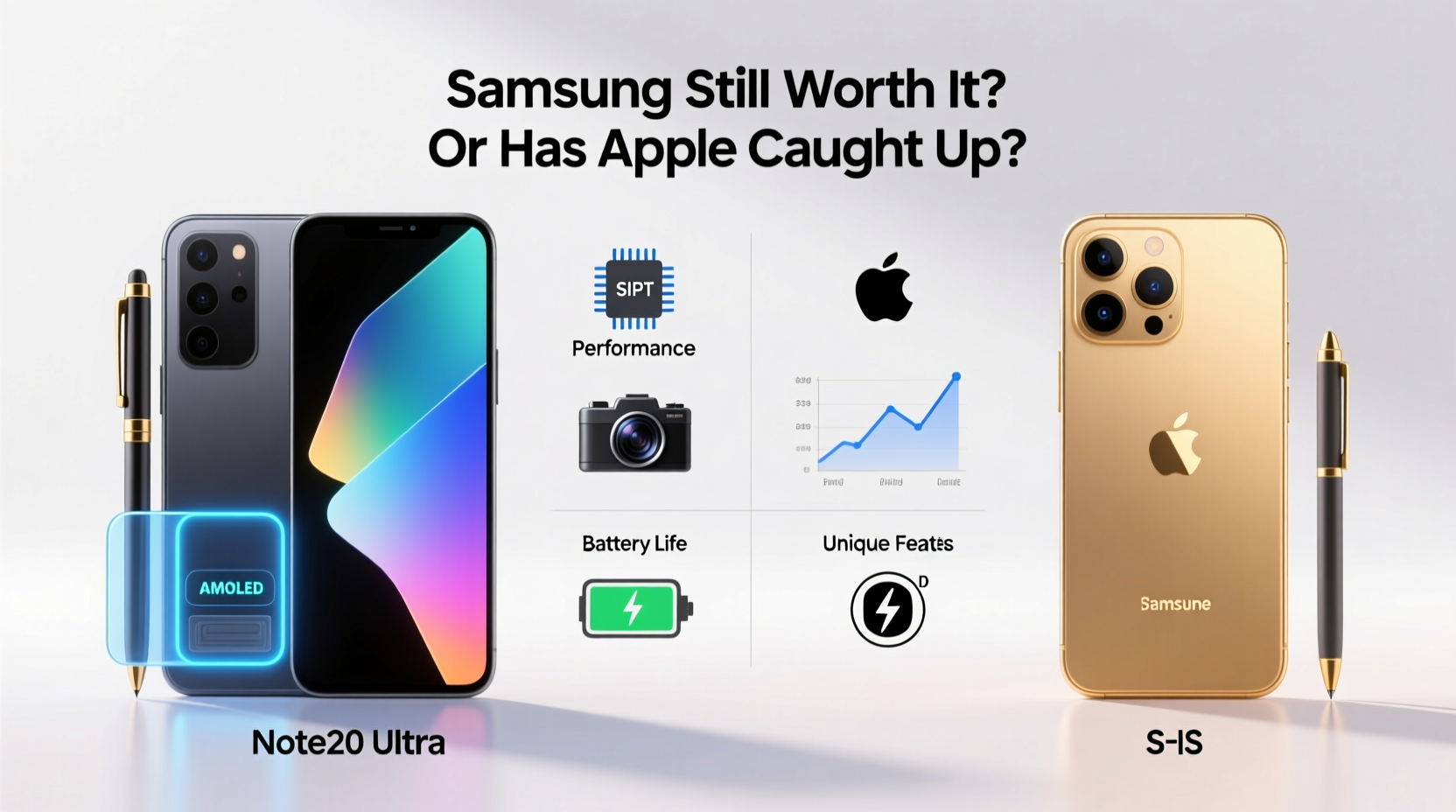
Samsung has long led in display technology, and the Note 20 Ultra exemplified that with its 6.9-inch Dynamic AMOLED 2X panel, 120Hz adaptive refresh rate, and QHD+ resolution. The curved edge display offered immersive visuals and vibrant colors calibrated for accuracy—ideal for creatives and media consumers.
In contrast, Apple introduced flat OLED displays starting with the iPhone 12 series. While the iPhone 12 Pro Max features a 6.7-inch Super Retina XDR display, it runs at a fixed 60Hz refresh rate—a noticeable step down when compared to Samsung’s fluid 120Hz experience. Apple improved brightness and color accuracy, but the lack of high refresh rate until the iPhone 13 Pro (with ProMotion at 120Hz) meant earlier models felt less responsive in daily scrolling and animation.
Design-wise, the Note 20 Ultra embraced bold angles, a metallic frame, and a large footprint optimized for landscape use. The iPhone favored compact ergonomics, surgical-grade stainless steel, and better one-handed usability. For users prioritizing portability, the iPhone wins. But if screen real estate and stylus functionality are key, Samsung still holds an edge.
Performance and Software: Raw Power vs Ecosystem Harmony
Under the hood, the Note 20 Ultra launched with either the Snapdragon 865+ (U.S.) or Exynos 990 (international), both powerful chips for their time. However, the Exynos variant faced criticism for thermal throttling and lower GPU efficiency. Apple’s A14 Bionic chip in the iPhone 12 series outperformed both in CPU and GPU benchmarks, thanks to Apple’s custom silicon architecture and 5nm process advantage.
More importantly, iOS offers tighter app optimization. Even with fewer raw specs, iPhones often deliver smoother long-term performance. Apps launch faster, animations are more consistent, and background management is more efficient. This is where Apple’s vertical integration shines—hardware and software designed in tandem.
On the other hand, Samsung’s One UI offers deeper customization, multi-window support, DeX desktop mode, and true file system access—features iOS still restricts. For power users managing documents, emails, and creative workflows, the Note 20 Ultra’s interface remains surprisingly capable even today.
“Android’s flexibility gives professionals tools Apple simply doesn’t allow. But iOS delivers unmatched consistency across devices.” — David Lin, Mobile Tech Analyst at TechPulse Weekly
Camera Comparison: Versatility vs Consistency
The Note 20 Ultra featured a triple rear setup: 108MP main sensor, 12MP ultrawide, and a 12MP periscope telephoto with 5x optical zoom (up to 50x digital). The high-resolution sensor allowed detailed cropping, while Space Zoom offered dramatic (if noisy) long-range shots.
Apple took a different approach. The iPhone 12 Pro used a 12MP main, 12MP ultrawide, and 12MP telephoto with 2x optical zoom. No gimmicky megapixel race—just well-tuned sensors, superior computational photography, and excellent dynamic range. Night mode, Deep Fusion, and Smart HDR produced reliable results across lighting conditions.
In real-world use, the iPhone delivers more consistent photos with natural color science. Samsung tends to oversharpen and oversaturate, which some find appealing but less authentic. Video recording is another area where Apple dominates: Dolby Vision HDR recording at 4K/60fps was a game-changer, while Samsung only recently matched this capability.
- Best in Photos:
- iPhone 12 Pro and later
- Best in Zoom & Flexibility:
- Note 20 Ultra
- Best in Video:
- iPhone 13 Pro and newer
S Pen vs Apple Pencil: Who Leads in Productivity?
This is where the Note 20 Ultra stands apart. The built-in S Pen offered low latency (26ms), pressure sensitivity, and gesture controls—all without pairing or charging. It transformed the phone into a sketchpad, note-taking device, or remote presenter.
Apple requires the separate $99 Apple Pencil (2nd gen) for iPad Pro—not supported on any iPhone. That means no native stylus functionality on iPhones, limiting their appeal for students, designers, or field professionals who rely on handwriting or markup.
If your workflow includes annotating PDFs, signing documents, or taking handwritten meeting notes directly on your phone, the Note 20 Ultra remains unmatched. Even in 2024, no iPhone supports stylus input natively. Samsung discontinued the Note line in favor of the foldable-focused Ultra series, but legacy Note users still miss the dedicated stylus slot and productivity-first design.
Longevity and Ecosystem: Where Will Your Device Last Longer?
Apple leads in software longevity. iPhones typically receive 5–6 years of iOS updates. An iPhone 12 from 2020 still runs iOS 17 smoothly and will likely get iOS 18. In contrast, the Note 20 Ultra received four major Android updates (up to Android 14 with One UI 6), which is strong for Android—but not quite matching Apple’s track record.
Ecosystem integration is another advantage for Apple. iMessage, FaceTime, AirDrop, Handoff, iCloud syncing, and Continuity features create a seamless experience across Mac, iPad, and Apple Watch. Samsung has made strides with Quick Share, Smart Switch, and Link to Windows, but these lack the polish and reliability of Apple’s ecosystem.
However, Samsung offers greater interoperability with non-Samsung devices. You can use the Note 20 Ultra with Windows PCs, Linux machines, or third-party cloud services without friction. Apple’s ecosystem works best when you’re fully invested in Apple products.
Checklist: Choosing Between Note 20 Ultra and iPhone
- ✅ Need a stylus for work? → Choose Note 20 Ultra
- ✅ Prioritize long-term software updates? → Choose iPhone
- ✅ Want the best video recording? → Choose iPhone 13 Pro or newer
- ✅ Value multitasking and DeX mode? → Choose Note 20 Ultra
- ✅ Prefer compact size and one-handed use? → Choose iPhone
- ✅ Already own Apple devices? → iPhone integrates better
- ✅ Want maximum resale value? → iPhone retains value longer
Frequently Asked Questions
Can the Note 20 Ultra still compete with current iPhones?
In raw speed, no—modern iPhones like the 15 Pro have far superior chips. But for stylus use, multitasking, and display quality, the Note 20 Ultra still holds relevance, especially if bought secondhand at a discount.
Why did Samsung discontinue the Note series?
Samsung shifted focus to foldables like the Galaxy Z Fold. Features like the S Pen were integrated into the Fold series, signaling a move toward larger, flexible screens rather than phablets.
Is the S Pen worth it over typing?
For certain tasks—brainstorming, diagramming, editing scanned documents—the S Pen offers precision and creativity that touch keyboards can’t match. It’s not for everyone, but for those who use it, it becomes indispensable.
Final Verdict: Has Apple Caught Up?
Yes—and in many ways, surpassed. Apple has closed the gap in hardware quality, camera performance, and processing power. With ProMotion displays, USB-C (on iPhone 15 and later), and stronger privacy controls, the iPhone now matches or exceeds Samsung in key areas.
But “caught up” doesn’t mean “won across the board.” The absence of a built-in stylus, limited multitasking, and constrained file management keep iPhones from being true productivity powerhouses. The Note 20 Ultra, despite its age, still serves a niche that Apple ignores: the mobile professional who wants pen input, desktop-like workflows, and expansive screen utility in a single device.
So is Samsung still worth it? If you value flexibility, customization, and active stylus support—yes. But if you want seamless ecosystem integration, longer software support, and consistently excellent cameras, Apple is now the safer, more future-proof choice.




 浙公网安备
33010002000092号
浙公网安备
33010002000092号 浙B2-20120091-4
Comments
No comments yet. Why don't you start the discussion?