
The Samsung Galaxy Note series has long been a favorite among power users who demand productivity, precision, and premium hardware. When comparing the Galaxy Note 20 Ultra and the Galaxy Note 10 Plus—two flagships separated by nearly two years—it’s natural to ask: does the newer model deliver enough meaningful improvements to justify an upgrade?
This isn’t just about specs on paper. It’s about real-world usability, longevity, and whether the enhancements translate into tangible benefits for daily tasks, creativity, and multitasking. Let’s break down the key differences and evaluate if moving from the Note 10 Plus to the Note 20 Ultra is a worthwhile investment.
Design and Build: Evolution of Premium Craftsmanship
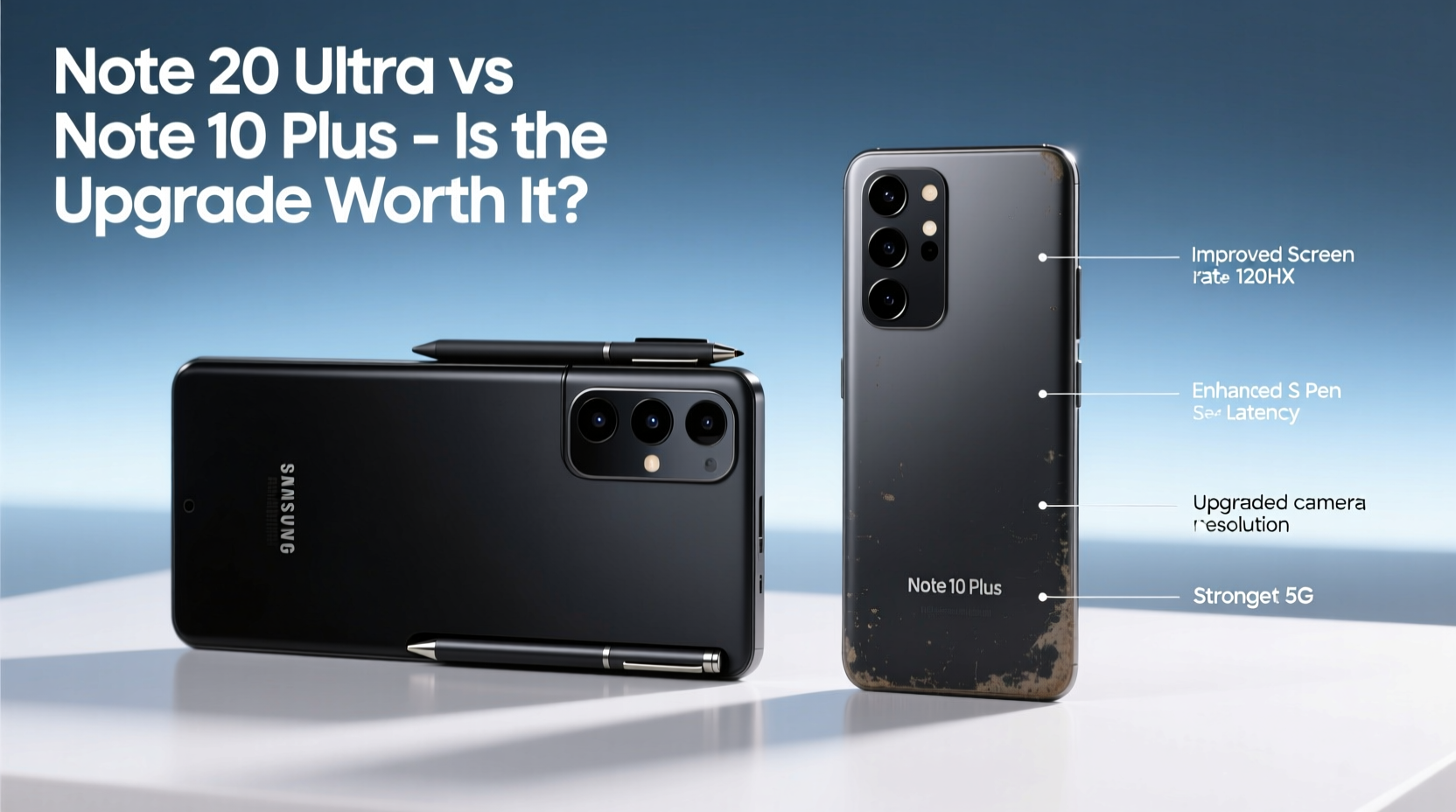
The Galaxy Note 10 Plus, released in 2019, featured a sleek, symmetrical design with curved glass and a hole-punch front camera centered at the top. It was one of the first Notes to abandon the physical home button and headphone jack, embracing a minimalist aesthetic. The device felt light for its size and offered excellent ergonomics despite its 6.8-inch display.
In contrast, the Note 20 Ultra (2020) adopted a more angular, refined look. Its flat aluminum frame and matte finish options improved grip and reduced fingerprint smudges. The rear camera housing became larger and more prominent, housing advanced sensors. While both phones are IP68-rated for dust and water resistance, the Note 20 Ultra uses stronger Gorilla Glass Victus, offering better scratch and drop resistance than the Note 10 Plus’s Gorilla Glass 5.
Display Technology: From Great to Exceptional
The Note 10 Plus came with a 6.8-inch Dynamic AMOLED display running at 3040 x 1440 pixels and a fixed 60Hz refresh rate. At the time, it was among the best screens available—vibrant, accurate, and HDR-ready.
The Note 20 Ultra upgraded significantly: same resolution but now adaptive 120Hz refresh rate, reducing to 60Hz or 10Hz depending on content. This results in smoother scrolling, faster touch response (240Hz touch sampling), and improved battery efficiency when lower rates are used. Samsung also introduced the \"Vision Booster\" tech, which dynamically adjusts brightness and color based on ambient lighting.
For creatives using the S Pen or professionals reading documents all day, the higher refresh rate reduces eye strain and makes interactions feel more responsive. The Ultra’s flatter screen edges also minimize accidental touches compared to the highly curved Note 10 Plus display.
Performance and Hardware: Generational Leap
Under the hood, the difference is stark. The Note 10 Plus launched with either the Exynos 9825 (international) or Snapdragon 855 (U.S.), both capable chips in their time. It offered up to 12GB RAM and 512GB storage, with support for microSD expansion.
The Note 20 Ultra stepped up to the Exynos 990 or Snapdragon 865+ (depending on region)—a faster, more efficient chipset that handles multitasking, gaming, and 8K video editing with ease. Combined with LPDDR5 RAM and UFS 3.1 storage, app launches are noticeably quicker, and file transfers happen in seconds.
Battery life remains similar—both have 4,300mAh cells—but the Note 20 Ultra benefits from smarter power management due to the 120Hz adaptive display and improved processor efficiency. Fast charging is slightly faster (25W vs 45W wired), though neither supports beyond 15W wireless charging.
“Moving from Snapdragon 855 to 865+ isn’t just about raw speed—it’s about sustained performance under load, especially during long creative sessions.” — David Kim, Mobile Performance Analyst at TechPulse Asia
Camera System: Professional-Grade Improvements
The Note 10 Plus had a solid triple-camera setup: 12MP wide, 12MP telephoto (2x optical zoom), and 16MP ultra-wide. Low-light performance was decent, but noise reduction could blur fine details.
The Note 20 Ultra redefined mobile photography with a 108MP main sensor (f/1.8), a 12MP periscope telephoto with 5x optical zoom (up to 50x digital), and a 12MP ultra-wide. Laser autofocus improves focusing speed in dim environments, and the addition of Space Zoom with AI enhancement delivers usable images even at high magnification.
Video capabilities saw major upgrades too. The Note 20 Ultra supports 8K recording at 24fps (vs 4K on the Note 10 Plus), stereo audio capture, and pro-grade controls via Pro Video mode. For content creators, vloggers, or anyone serious about mobile filmmaking, this is a game-changer.
Camera Comparison Table
| Feature | Note 10 Plus | Note 20 Ultra |
|---|---|---|
| Main Sensor | 12MP (f/1.5–2.4) | 108MP (f/1.8) |
| Telephoto Zoom | 2x optical | 5x optical, 50x digital |
| Ultra-Wide | 16MP (f/2.2) | 12MP (f/2.2) |
| Video Recording | 4K @ 60fps | 8K @ 24fps, 4K @ 60fps |
| Front Camera | 10MP (f/2.2) | 10MP (f/2.2) with AF |
S Pen and Productivity: Precision Meets Power
The S Pen experience evolved meaningfully between these models. On the Note 10 Plus, latency was already low at around 42ms. The Note 20 Ultra cut that to approximately 26ms, making writing and drawing feel almost instantaneous.
New gesture controls allowed air actions (e.g., flipping pages, taking photos remotely), though many users found them gimmicky. More impactful was the integration with Samsung Notes, enabling handwriting-to-text conversion, PDF annotation, and real-time collaboration—all enhanced by the faster processor and larger, smoother screen.
If you rely on note-taking during meetings, sketching ideas, or managing tasks across apps, the Note 20 Ultra offers a more fluid, reliable experience. DeX mode also improved, supporting wireless mirroring and multi-window layouts ideal for turning your phone into a desktop workstation.
Is the Upgrade Worth It? A Realistic Assessment
Consider Maria, a freelance architect who used her Note 10 Plus for three years. She sketched floor plans, edited client proposals, and managed emails daily. After upgrading to the Note 20 Ultra, she noticed immediate gains: smoother stylus input made hand-drawn annotations cleaner, 8K video helped document site visits in stunning detail, and multitasking between AutoCAD references and communication apps became seamless thanks to the faster chip.
However, if your usage is limited to calls, messaging, social media, and occasional photo-taking, the Note 10 Plus still performs admirably. Android updates may be ending soon (it maxed out at One UI 4), but core functions remain stable. The jump to Note 20 Ultra might not justify the cost unless you're pushing the limits of mobile productivity.
Upgrade Checklist: Ask Yourself These Questions
- Do I regularly use my phone for creative work (drawing, video, editing)?
- Am I frustrated by slow app switching or lag when using multiple windows?
- Do I want better zoom and low-light photography without carrying a separate camera?
- Is battery optimization and screen smoothness important for comfort during long use?
- Will I benefit from newer software features and longer update support?
If you answered “yes” to three or more, the upgrade holds clear value.
Frequently Asked Questions
Can the Note 20 Ultra still receive software updates?
Yes. The Note 20 Ultra received four major Android OS updates (up to Android 13) and ongoing security patches until at least 2024. In contrast, the Note 10 Plus stopped receiving updates after 2021.
Is the S Pen interchangeable between models?
Physically, yes—the S Pen fits both devices. However, certain air gesture features on the Note 20 Ultra won't function on the older model, and firmware optimizations are tailored per device.
Should I upgrade solely for the camera?
If photography is a priority, yes. The 108MP sensor, improved telephoto lens, and 8K video offer significant advantages, especially in professional or enthusiast scenarios.
Final Verdict
The Galaxy Note 20 Ultra is objectively better than the Note 10 Plus in every technical aspect: display, performance, camera, build quality, and stylus responsiveness. But “better” doesn’t always mean “necessary.”
For casual users, the Note 10 Plus remains functional and capable. But for professionals, creatives, or those seeking future-proof reliability and cutting-edge tools, the Note 20 Ultra delivers a meaningful leap forward—one that enhances workflow, creativity, and overall user satisfaction.




 浙公网安备
33010002000092号
浙公网安备
33010002000092号 浙B2-20120091-4
Comments
No comments yet. Why don't you start the discussion?