
Often overshadowed by their more pungent allium cousins—onions and garlic—leeks are a culinary and nutritional powerhouse in their own right. With a delicate, sweet onion-like flavor and a fibrous structure that holds up well in slow-cooked dishes, leeks bridge the gap between vegetable and aromatic. Increasingly recognized for their role in heart-healthy diets and anti-inflammatory regimens, leeks offer a unique combination of soluble fiber, antioxidants, and essential vitamins. Beyond their health profile, they serve as a foundational ingredient in classic soups, tarts, and braised preparations across European and Middle Eastern cuisines. Understanding how to select, prepare, and incorporate leeks can elevate everyday meals while contributing meaningful nutrients to the diet.
Definition & Overview
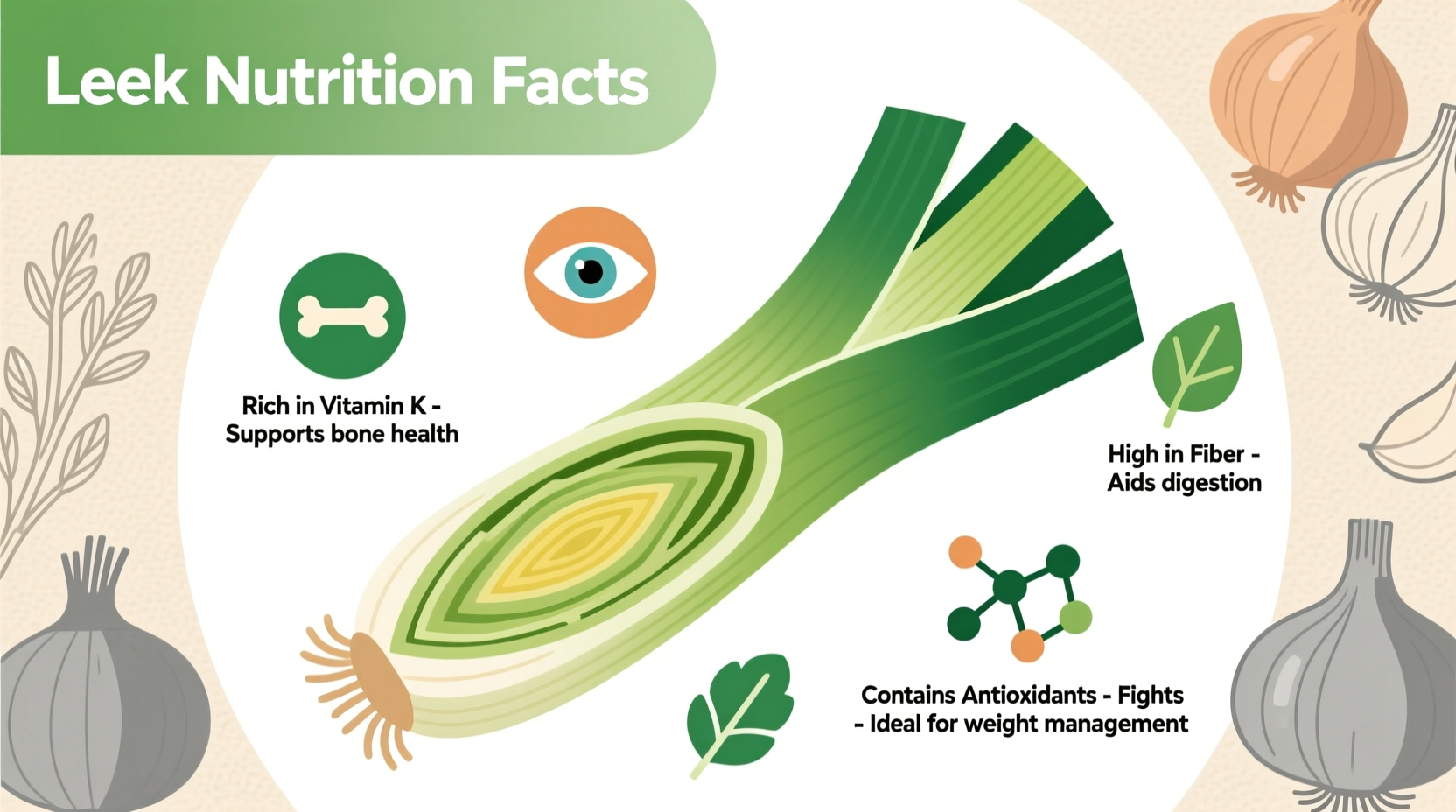
Leeks (Allium ampeloprasum var. porrum) are a cultivated member of the Alliaceae family, which includes onions, garlic, chives, and shallots. Unlike most alliums, leeks do not form a bulb; instead, they develop a thick, cylindrical stalk composed of tightly wrapped layers of leaf sheaths. The edible portion consists primarily of the white and light green base, though the darker green leaves can be used for stocks and infusions.
Native to the eastern Mediterranean and southern Asia, leeks have been cultivated for over 3,000 years. They were prized by ancient Egyptians, celebrated in Roman cuisine, and remain a national symbol of Wales. Today, leeks are grown globally, with peak seasonality in late fall through early spring in temperate climates.
Culinarily, leeks occupy a middle ground: milder than onions, less sharp than garlic, and more vegetal than scallions. Their subtle sweetness intensifies when cooked slowly, making them ideal for building complex flavor bases without overwhelming other ingredients. In raw applications, thinly sliced leeks add crunch and mild bite to salads and slaws.
Key Characteristics
| Attribute | Description |
|---|---|
| Flavor Profile | Mild, sweet, onion-like with grassy undertones; becomes richer and buttery when sautéed or braised. |
| Aroma | Subtle allium scent when raw; develops a warm, savory fragrance when heated. |
| Color & Form | Long cylindrical stalk; white base transitioning to light green, then dark green at the top. |
| Texture | Firm and fibrous when raw; softens significantly with cooking, especially when sliced thinly and simmered. |
| Culinary Function | Aromatic base (soffritto/mirepoix), standalone vegetable, soup thickener, garnish. |
| Shelf Life | 5–10 days refrigerated in crisper drawer, unwashed and wrapped in paper towel inside a produce bag. |
Practical Usage: How to Use Leeks in Cooking
Leeks require careful cleaning due to their layered structure, which traps soil between folds. To prepare:
- Trim off the roots and the tough, dark green tops (reserve for stock).
- Cut lengthwise from the white base up through the green section.
- Rinse thoroughly under running water, fanning out the layers to remove grit.
- Slice crosswise into half-moons or julienne, depending on the recipe.
Once cleaned, leeks can be used in a wide range of applications:
As an Aromatic Base
In French cuisine, leeks are part of *mirepoix* (with carrots and celery), particularly in dishes where a gentler flavor is desired. Sautéed slowly in butter or oil over medium-low heat, they form the foundation of velouté sauces, quiches, and stews. For optimal results, cook until translucent and soft—about 8–10 minutes—without browning unless specified.
In Soups and Stews
The classic Vichyssoise, a chilled potato-leek soup, showcases the vegetable’s ability to create creamy texture without dairy (though cream is often added). When puréed, leeks contribute body and a silky mouthfeel. In rustic stews like cassoulet or pot-au-feu, they add depth and absorb surrounding flavors while maintaining structural integrity during long simmers.
Braised and Roasted Preparations
Whole baby leeks or halved large ones respond beautifully to braising. Place cut-side down in a skillet with broth, white wine, thyme, and a knob of butter. Cover and simmer for 20–25 minutes until tender. Finish under the broiler for color if desired. Roasting at 400°F (200°C) after tossing with olive oil, salt, and herbs yields caramelized edges and concentrated sweetness—ideal for grain bowls or as a side dish.
Raw Applications
Thinly sliced raw leeks add a crisp, mildly pungent note to salads. Toss with lemon juice or vinegar to soften their bite slightly. They work particularly well in grain salads with farro, lentils, or quinoa, complementing roasted vegetables and soft cheeses like goat or feta.
Pies, Tarts, and Frittatas
Leeks pair exceptionally well with eggs and cheese. Sautéed first to remove moisture, they prevent sogginess in quiches and tarts. A traditional French *tarte aux poireaux* layers blanched leeks in a custard-filled pastry shell, baked until golden. Similarly, folded into frittatas or omelets, they provide flavor without overpowering delicate egg textures.
Pro Tip: Always sweat leeks before incorporating into custards or doughs. Skipping this step risks excess moisture release during baking, leading to a wet filling or collapsed crust.
Variants & Types
While all leeks share core characteristics, several cultivars differ in size, hardiness, and harvest time:
- Summer Leeks: Smaller, thinner stalks harvested early. More tender and suitable for grilling or quick sautés.
- Winter Leeks: Larger, thicker, and more cold-tolerant. Develop greater sweetness after frost exposure; best for braising and soups.
- Elephant Garlic-Leek Hybrids: Not true leeks, but bred for larger diameter and milder taste. Often mislabeled; use similarly but expect less intensity.
- Baby Leeks: Harvested young, about the thickness of a finger. Require minimal prep and can be cooked whole.
In markets, leeks are typically sold fresh, bundled, and unwrapped. Look for firm stalks with crisp, vibrant green tops and no signs of wilting or yellowing. Avoid those with flowering buds, which indicate age and toughness.
Processed forms include freeze-dried leeks (used in instant soups), powdered leek (a seasoning alternative), and canned varieties (less common and generally lower quality due to texture loss).
Comparison with Similar Ingredients
Leeks are frequently confused with scallions (green onions) and ramps (wild leeks). While related, each has distinct traits affecting substitution potential.
| Feature | Leeks | Scallions | Ramps |
|---|---|---|---|
| Size | Large, 1–2 inches in diameter at base | Slender, pencil-thick | Small, similar to scallion but broader leaf |
| Flavor Intensity | Mild, sweet when cooked | Sharper, more pungent raw | Strong garlicky-onion punch |
| Edible Parts | White + light green only (dark greens for stock) | Entire plant, including dark green tops | Bulb and leaves both edible |
| Seasonality | Fall to early spring | Year-round | Spring only (April–May) |
| Best Use | Braising, soups, custards | Garnishes, stir-fries, raw applications | Sautéed, pickled, grilled |
Substitutions:
- Replace 1 cup sliced leeks with ¾ cup chopped yellow onion + 1 tbsp water to mimic moisture content.
- Use 2–3 scallions per small leek in raw dishes, adjusting for sharper taste.
- Ramps cannot be directly substituted due to potency; use sparingly—one ramp bulb ≈ one teaspoon minced leek.
Practical Tips & FAQs
How do I store leeks properly?
Keep uncut leeks unwashed in the refrigerator’s high-humidity drawer. Wrap loosely in a paper towel to absorb moisture and place inside a perforated plastic bag. Do not trim or wash until ready to use. Cut leeks should be stored in an airtight container and used within two days.
Can I freeze leeks?
Yes, but only after blanching. Slice cleaned leeks into desired sizes, blanch in boiling water for 2 minutes, then plunge into ice water. Drain thoroughly and freeze on a tray before transferring to freezer bags. Frozen leeks last 10–12 months and are best used in cooked dishes like soups and casseroles. Texture will degrade, so avoid using frozen leeks raw.
Are leek greens edible?
The dark green tops are too fibrous to eat directly but contain intense flavor. Simmer them in stocks, broths, or bean pots for 30–60 minutes, then discard. Never compost them—extract their full culinary value first.
What are the key nutritional benefits of leeks?
Per 100g (raw), leeks provide:
- Calories: 61 kcal
- Dietary Fiber: 1.8 g (7% DV)
- Vitamin K: 47 µg (39% DV)
- Vitamin A: 38 µg RAE (4% DV), plus beta-carotene
- Vitamin C: 12 mg (13% DV)
- Folate (B9): 64 µg (16% DV)
- Manganese: 0.2 mg (9% DV)
- Iron: 2.1 mg (12% DV)
They also contain kaempferol, a flavonoid antioxidant linked to reduced risk of chronic diseases, including cardiovascular conditions and certain cancers. Kaempferol exhibits anti-inflammatory and vasoprotective properties, supporting endothelial function and reducing oxidative stress.
\"Leeks are underrated in modern kitchens. Their combination of prebiotic fiber and low glycemic impact makes them ideal for metabolic health, while their versatility spans from haute cuisine to humble peasant dishes.\" — Dr. Elena Torres, Nutritional Biochemist, Institut Paul Bocuse
Do leeks support gut health?
Yes. Leeks contain inulin, a type of soluble fiber classified as a prebiotic. Inulin passes undigested to the colon, where it feeds beneficial bacteria such as Bifidobacterium and Lactobacillus. Regular consumption may improve bowel regularity, enhance mineral absorption (particularly calcium), and strengthen immune response via gut microbiome modulation.
Are leeks safe for everyone?
Generally yes, but individuals with irritable bowel syndrome (IBS) following a low-FODMAP diet should limit intake, as inulin can trigger bloating and gas. Cooking reduces—but does not eliminate—FODMAP content. Those on blood thinners should monitor vitamin K intake, as high levels may interfere with anticoagulant medications like warfarin.
How much leek equals one onion?
Due to higher water content and milder flavor, use 1.5 cups of sliced leeks to replace one medium onion. Adjust seasoning accordingly, as leeks lack the sulfurous kick that onions provide.
Storage Checklist:
- Inspect for slime or mold—discard if present.
- Do not seal in non-breathable plastic without ventilation.
- Never store near ethylene-producing fruits (apples, bananas), which accelerate spoilage.
- For extended storage, slice and blanch before freezing.
Summary & Key Takeaways
Leeks are far more than a background note in the kitchen—they are a nutrient-dense, flavorful, and adaptable ingredient worthy of center stage. Their mild allium character allows seamless integration into diverse dishes, from elegant tarts to nourishing soups. Nutritionally, they deliver significant amounts of vitamin K, folate, antioxidants, and prebiotic fiber, contributing to cardiovascular, digestive, and immune health.
To maximize their potential:
- Always clean thoroughly to remove trapped soil.
- Sweat rather than sear when building flavor foundations.
- Use the dark greens for stocks—never waste them.
- Choose winter varieties for deeper flavor and better cooking performance.
- Pair with fats (butter, olive oil) and acids (lemon, vinegar) to balance richness and brightness.
Whether you're crafting a silky bisque, enriching a gratin, or exploring plant-forward cooking, leeks offer a bridge between nutrition and gastronomy. Incorporate them regularly—not just as a substitute, but as a deliberate choice for flavor refinement and dietary wellness.
Next time you're at the market, pick up a bunch of leeks and try roasting them whole with thyme and garlic. You might just discover your new favorite vegetable side dish.




 浙公网安备
33010002000092号
浙公网安备
33010002000092号 浙B2-20120091-4
Comments
No comments yet. Why don't you start the discussion?