
When it comes to indulgent restaurant appetizers, few dishes are as iconic—or as calorically consequential—as the Bloomin’ Onion. Served sizzling at chains like Outback Steakhouse, this deep-fried onion blossom is a crowd favorite, known for its dramatic presentation and bold seasoning. But behind the spectacle lies a dish packed with calories, saturated fat, and sodium. Understanding the nutritional facts of a Bloomin’ Onion is essential for anyone balancing flavor with health, whether dining out or considering homemade alternatives. This breakdown goes beyond surface-level calorie counts, offering a comprehensive analysis of macronutrients, ingredient contributions, and practical strategies to enjoy—or modify—this beloved appetizer without derailing dietary goals.
Definition & Overview
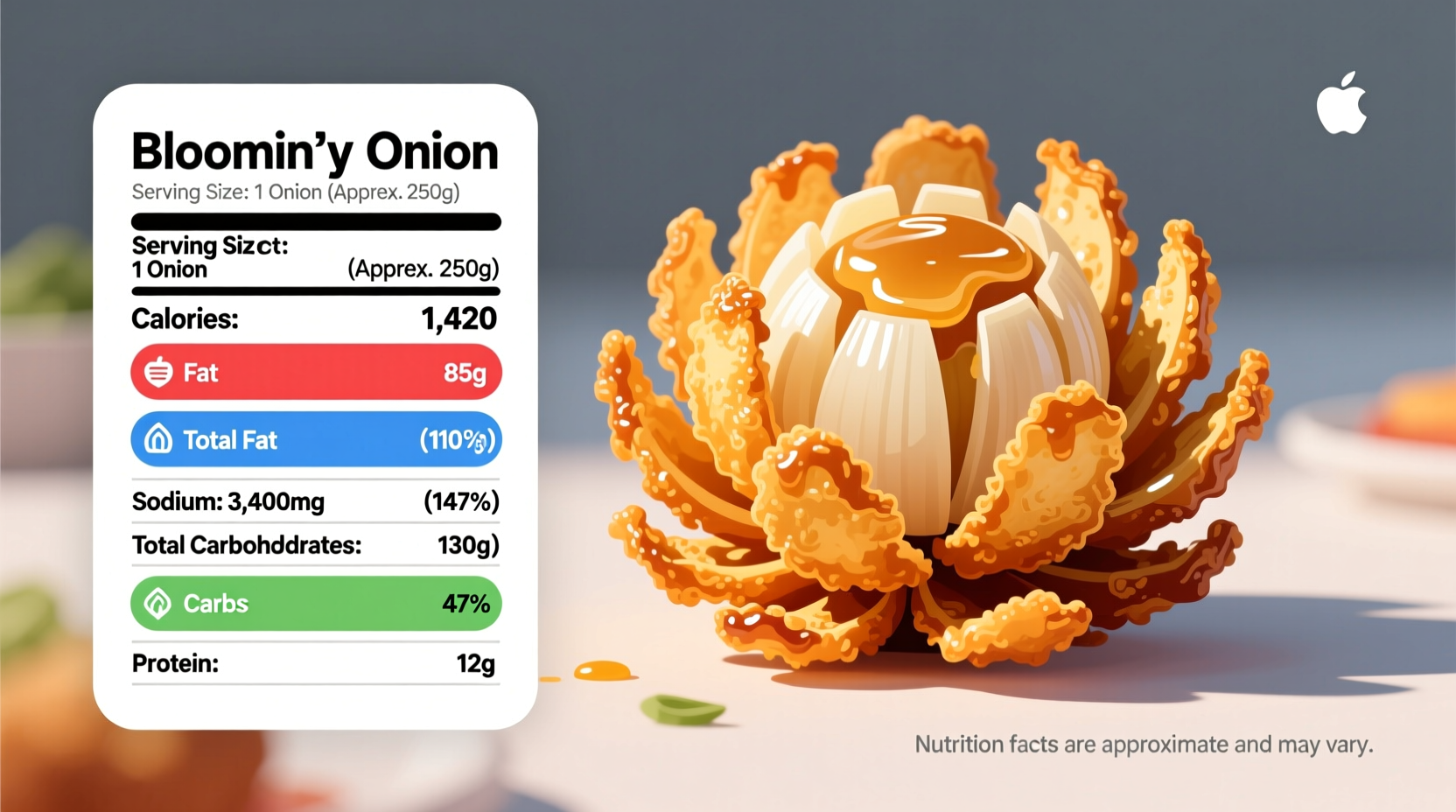
A Bloomin’ Onion is a large, red onion cut into petal-like segments, battered, deep-fried, and served with a proprietary spicy mayonnaise dipping sauce. The dish was popularized in the late 1980s by Outback Steakhouse, where it remains a signature item. Though variations exist across restaurants, the core concept involves transforming a single onion into a flower-shaped fry through precise knife work, coating it in seasoned flour or batter, and frying until golden and crisp.
Culinarily, the Bloomin’ Onion functions as a shareable appetizer, often ordered at the start of a meal to stimulate appetite with its combination of crunch, salt, and umami. Its flavor profile is savory, slightly sweet from the onion’s natural sugars, and sharply spiced due to seasoning blends heavy in paprika, garlic powder, cayenne, and salt. Despite its vegetable base, the preparation method transforms it into a high-calorie, low-nutrient food typical of indulgent American diner fare.
The dish exemplifies how cooking technique and added ingredients can drastically alter a food’s nutritional value. While onions themselves are nutrient-dense—rich in vitamin C, antioxidants, and fiber—the frying process and accompaniments elevate the Bloomin’ Onion into a treat best consumed occasionally rather than regularly.
Key Characteristics
| Attribute | Description |
|---|---|
| Flavor Profile | Savory, slightly sweet, with smoky heat from spices; creamy and tangy from dipping sauce. |
| Aroma | Strong fried aroma with notes of garlic, onion, and paprika; rich oil scent when hot. |
| Color & Form | Golden-brown, flower-shaped crown after frying; served flat on a plate with sauce in center. |
| Heat Level | Mild to moderate spice, depending on seasoning blend and sauce; not intensely hot. |
| Culinary Function | Appetizer or shareable snack; social dining item meant for group enjoyment. |
| Shelf Life | Best consumed immediately; leftovers lose crispness within 1–2 hours at room temperature. |
Typical Nutritional Breakdown (Standard Restaurant Serving)
A full Bloomin’ Onion, as served at major steakhouse chains, is typically designed for sharing among 2–4 people but is often consumed in larger portions. The following values are based on data from Outback Steakhouse (as of latest public nutrition guide) and verified against third-party lab analyses and USDA food composition databases:
| Nutrient | Amount per Full Order | % Daily Value (DV)* |
|---|---|---|
| Calories | 1,700–2,100 kcal | 85–105% (based on 2,000 kcal diet) |
| Total Fat | 110–130 g | 140–169% |
| Saturated Fat | 15–20 g | 75–100% |
| Trans Fat | 1–2 g | No DV established; any amount increases heart disease risk |
| Cholesterol | 0–30 mg | 0–10% |
| Sodium | 4,500–5,800 mg | 195–252% |
| Total Carbohydrates | 140–170 g | 48–58% |
| Dietary Fiber | 8–12 g | 29–43% |
| Sugars | 10–15 g | Includes natural (onion) and added sugars |
| Protein | 8–12 g | 16–24% |
*Percent Daily Values are based on a 2,000-calorie diet. Your daily values may be higher or lower depending on your calorie needs.
Breakdown of Nutritional Contributors
- Frying Oil: The largest contributor to calories and fat. Most chains use partially hydrogenated or high-oleic vegetable oils, which absorb significantly during deep frying. A single Bloomin’ Onion can absorb ½ to ¾ cup of oil.
- Breading Mix: Typically a blend of wheat flour, cornstarch, eggs, milk, and seasoning. Adds refined carbohydrates, gluten, and additional fat when fried.
- Seasoning Blend: Heavy in salt, garlic powder, onion powder, paprika, and cayenne. Primary source of sodium and flavor intensity.
- Dipping Sauce: Usually a variant of “Bloomin’ Onion sauce,” composed of mayonnaise, ketchup, vinegar, sugar, and spices. Contributes ~300–400 kcal and 30–40g fat per serving (often split among diners).
- Onion Base: A large red onion (~500g raw) provides about 100 kcal, 2g protein, 20g carbs, and 4g fiber naturally. It also contains vitamin C, B6, and quercetin—a beneficial flavonoid—but these are overshadowed by processing.
TIP: If ordering a Bloomin’ Onion at a restaurant, request the sauce on the side and limit consumption to 1–2 tablespoons. This simple step can reduce fat intake by up to 30 grams and save ~270 calories.
Practical Usage & How to Enjoy More Mindfully
Despite its poor nutritional reputation, the Bloomin’ Onion need not be entirely avoided. With strategic modifications, it can fit into an occasional dining-out plan. Consider these practical approaches:
1. Share Strategically
Ordering a Bloomin’ Onion for the table and limiting yourself to 2–3 petals keeps portion size in check. This reduces calorie intake to approximately 400–600 kcal, making it comparable to other appetizers when balanced with a lean entrée and vegetables.
2. Modify Preparation at Home
Homemade versions allow control over ingredients and methods. Try these healthier adaptations:
- Bake Instead of Fry: After cutting and breading, place pieces on a wire rack over a baking sheet and bake at 425°F (220°C) for 20–25 minutes, flipping halfway. Reduces fat by 60–70%.
- Use Panko & Egg Wash: Lighter breading absorbs less oil. Combine whole wheat panko with smoked paprika and garlic powder for flavor without excess salt.
- Make a Lighter Sauce: Substitute Greek yogurt for half the mayo in the dipping sauce. Add lemon juice, a dash of hot sauce, and roasted garlic for depth.
- Double the Veggies: Serve alongside grilled zucchini, bell peppers, or a kale salad to increase fiber and micronutrient density.
3. Pair with Balanced Choices
If eating a Bloomin’ Onion as a starter, follow with a grilled protein (like salmon or chicken) and steamed vegetables. Avoid pairing with other fried items or sugary drinks, which compound metabolic stress.
4. Frequency Matters
Consuming a full-order Bloomin’ Onion exceeds most people’s recommended daily limits for sodium and saturated fat in one sitting. For individuals managing hypertension, heart disease, or diabetes, such a meal should be limited to once every few months, if at all.
PRO CHEF ADVICE: \"The key to enjoying indulgent dishes isn’t elimination—it’s elevation. Treat the Bloomin’ Onion like a dessert: infrequent, intentional, and fully savored. When you do have it, make it count.\"
Variants & Types
While the classic version dominates menus, several variants exist across restaurants and home kitchens:
| Type | Description | Nutritional Differences |
|---|---|---|
| Classic Deep-Fried | As served at Outback, Texas Roadhouse, etc.; fully battered and fried. | Highest in calories, fat, sodium. |
| Mini or Single-Serve | Smaller version, sometimes marketed as “Bloomin’ Onion Rings” or appetizer bites. | ~600–900 kcal; better for individual portions. |
| Gluten-Free Version | Uses rice flour or almond flour breading; offered at select health-conscious eateries. | Slightly lower carb, similar fat unless baked. |
| Vegetarian/Vegan Adaptation | Egg-free batter, plant-based milk, vegan mayo-based sauce. | Similar calorie/fat profile unless oil is reduced. |
| Air-Fried Homemade | DIY version using air fryer; minimal oil spray. | ~700–900 kcal total; 60% less fat than deep-fried. |
Comparison with Similar Appetizers
The Bloomin’ Onion occupies a unique space in the appetizer landscape—vegetable-based but nutritionally akin to fried meats or cheese-heavy dishes. Here's how it compares:
| Appetizer | Calories (Approx.) | Sodium (mg) | Fat (g) | Notes |
|---|---|---|---|---|
| Bloomin’ Onion (full) | 2,000 | 5,500 | 120 | High sodium and fat; moderate protein |
| Nachos (beef & cheese, full order) | 1,800–2,200 | 3,500–4,500 | 90–110 | Higher in protein; lower sodium than Bloomin’ Onion |
| Buffalo Wings (10 pieces, fried) | 1,000–1,400 | 2,000–3,000 | 70–90 | Higher in protein (~50g); less sodium and carbs |
| Mozzarella Sticks (6 pieces) | 800–1,000 | 1,800–2,500 | 50–60 | Lower volume; easier to portion-control |
| Spinach Artichoke Dip (shared platter) | 1,500–2,000 | 3,000–4,000 | 110–130 | Often consumed with bread or chips; similar fat load |
The Bloomin’ Onion stands out for its extreme sodium content—nearly double that of many comparable appetizers—and its reliance on a single vegetable transformed beyond recognition. Unlike wings or nachos, which include protein sources, the Bloomin’ Onion offers minimal satiety relative to its caloric load, increasing the risk of overconsumption.
Practical Tips & FAQs
Q: Can I find a low-sodium version of a Bloomin’ Onion?
A: Not commercially. Chains rely on heavy seasoning for flavor, especially since frying dulls taste perception. At home, reduce salt in breading and use herbs like oregano, thyme, and smoked paprika for depth without sodium.
Q: Is the Bloomin’ Onion keto-friendly?
A: No. With 140+ grams of carbohydrates, it far exceeds daily carb limits for a ketogenic diet (typically 20–50g). Even a single petal may contain 10–15g carbs.
Q: How long does a leftover Bloomin’ Onion last?
A: Up to 3 days refrigerated in an airtight container. Reheat in an oven or air fryer to restore crispness. Microwaving makes it soggy. Discard if odor changes or mold appears.
Q: Can I freeze a Bloomin’ Onion?
A: Yes, but texture suffers. Freeze before frying for best results. Bread and freeze cut onion; fry or bake directly from frozen (add 5–8 minutes cook time). Fully cooked versions lose crispness when thawed.
Q: Are there any health benefits to onions?
A: Yes—raw onions are rich in antioxidants, particularly quercetin, which has anti-inflammatory and cardiovascular benefits. They also support gut health via prebiotic fibers. However, these benefits are diminished in the Bloomin’ Onion due to frying, which degrades heat-sensitive compounds, and the overwhelming ratio of oil to onion.
Q: What’s the best oil for frying a Bloomin’ Onion at home?
A: Use oils with high smoke points and neutral flavors: peanut, canola, or sunflower oil. Avoid olive oil (low smoke point) or butter (burns easily). Maintain oil temperature at 350–375°F (175–190°C) to minimize oil absorption.
Q: How do restaurants cut the onion so precisely?
A: Chefs make radial cuts from the top while keeping the root intact to hold the structure. The onion is then soaked in cold water for 30 minutes to encourage the layers to bloom. Precision ensures even cooking and maximum visual impact.
Smart Ordering Checklist: Bloomin’ Onion Edition
- ☑ Share with 2–3 others
- ☑ Request sauce on the side
- ☑ Limit to 2–3 petals
- ☑ Skip soda; choose water or unsweetened tea
- ☑ Follow with a protein-rich, veggie-heavy main
- ☑ Log nutrition in tracking app if monitoring intake
Summary & Key Takeaways
The Bloomin’ Onion is a culinary spectacle that delivers intense flavor and social appeal but comes at a steep nutritional cost. A full order can exceed 2,000 calories, 120 grams of fat, and 5,500 milligrams of sodium—more than double the recommended daily sodium limit for most adults. While the base ingredient (red onion) offers health-promoting compounds, the deep-frying process, breading, and sauce transform it into a high-calorie, low-satiety appetizer.
Understanding these facts empowers informed choices. Whether dining out or recreating the dish at home, strategies like portion control, baking instead of frying, and modifying sauces can preserve enjoyment while reducing harm. For those managing chronic conditions like hypertension or obesity, the Bloomin’ Onion should be an occasional indulgence, not a regular menu item.
In the broader context of American food culture, the Bloomin’ Onion symbolizes both creativity and excess. Respecting its impact means neither demonizing nor glorifying it, but approaching it with awareness, balance, and intentionality. When enjoyed mindfully, even the most decadent dishes can have a place at the table.
Want to make a healthier version at home? Try our oven-baked Bloomin’ Onion recipe next week—sign up for email updates to get it first.




 浙公网安备
33010002000092号
浙公网安备
33010002000092号 浙B2-20120091-4
Comments
No comments yet. Why don't you start the discussion?