
Baby spinach is more than just a salad green—it’s a powerhouse of essential nutrients packed into delicate, tender leaves. As consumers increasingly prioritize nutrient-dense foods, understanding what makes baby spinach a standout choice is critical for both health and culinary performance. With its mild flavor, soft texture, and impressive micronutrient profile, baby spinach has become a staple in kitchens from home cooks to professional chefs. This article breaks down the science-backed nutritional composition of baby spinach, explains how it differs from mature spinach, and provides practical guidance on incorporating it into balanced meals for optimal health outcomes.
Definition & Overview
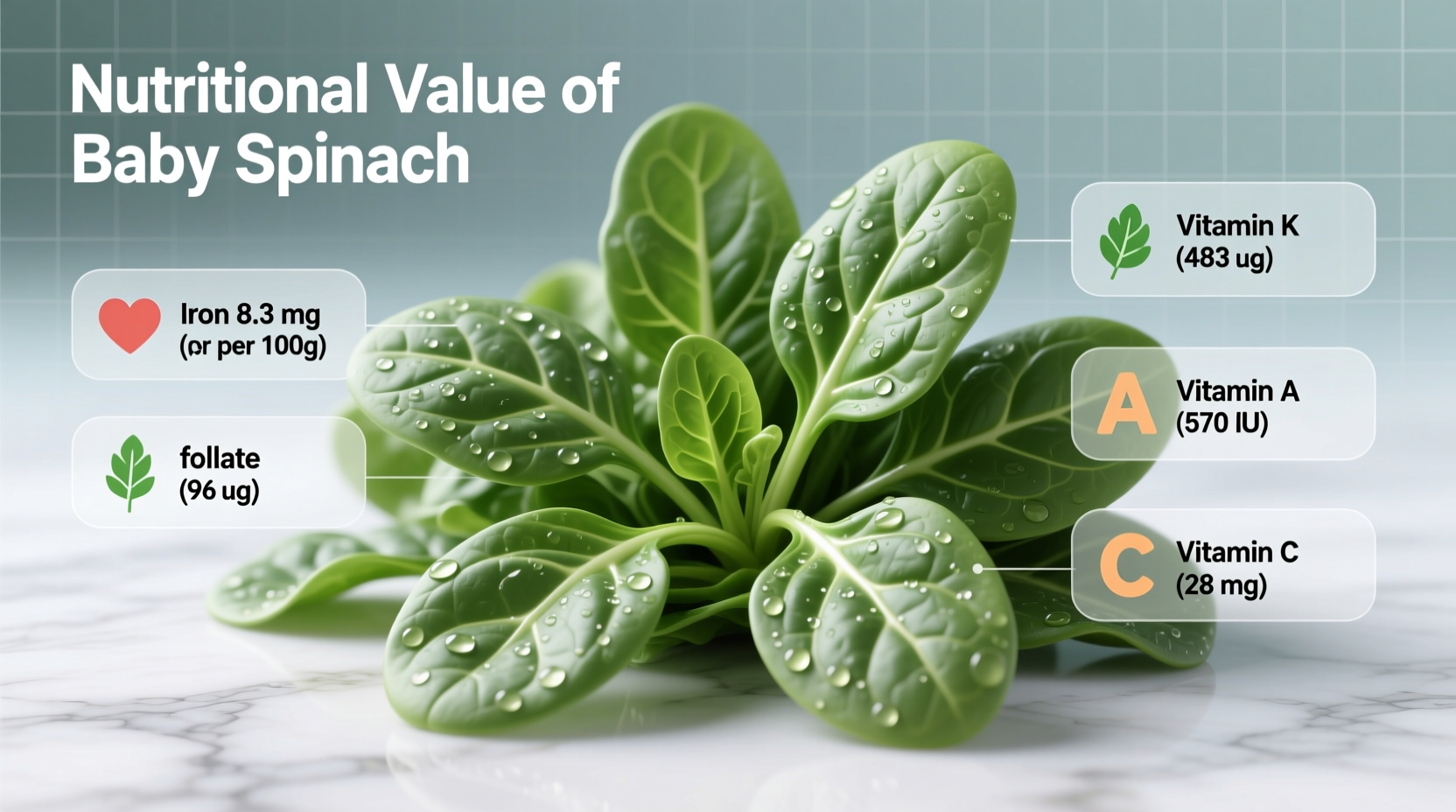
Baby spinach refers to young spinach (Spinacia oleracea) harvested between 15 and 35 days after planting, typically when the leaves are 2–4 inches long. Unlike mature spinach, which develops larger, coarser leaves with a stronger, slightly bitter taste, baby spinach offers a milder, sweeter flavor and tender texture that requires no stem trimming. It belongs to the Amaranthaceae family and originates from Persia (modern-day Iran), spreading through the Mediterranean and eventually becoming integral to European and global cuisines.
The term “baby” does not refer to a specific cultivar but rather to the harvest stage. Most commercial baby spinach is grown in controlled environments or cool seasons to preserve tenderness. Its popularity surged in the 1990s with the rise of pre-washed, ready-to-eat packaged greens, making it a convenient option for salads, smoothies, and quick-cooking applications.
Key Characteristics
Baby spinach stands out due to a combination of sensory and functional attributes that influence both nutrition and usability:
- Flavor: Mild, subtly sweet, with minimal bitterness—ideal for palates sensitive to strong greens.
- Aroma: Fresh, grassy, clean—lacking the earthy pungency of mature spinach.
- Color: Vibrant medium to dark green; deeper color often indicates higher chlorophyll and carotenoid content.
- Texture: Tender, delicate leaves with thin stems—edible raw or lightly cooked without wilting excessively.
- Culinary Function: Acts as a base for raw dishes, thickens soups and sauces when cooked, and blends seamlessly into smoothies.
- Shelf Life: 7–10 days when refrigerated at 32–36°F (0–2°C) in high-humidity crisper drawers. Pre-washed bags may degrade faster once opened.
- Oxalate Content: Lower than mature spinach, improving mineral bioavailability, especially calcium and iron absorption.
TIP: Store baby spinach in an airtight container lined with a dry paper towel to absorb excess moisture and extend freshness by up to 3 days.
Practical Usage: How to Use Baby Spinach in Cooking
Baby spinach's versatility allows seamless integration across meal types—from breakfast to dessert—with minimal prep. Its low fiber toughness means it cooks quickly and retains vibrant color even after brief exposure to heat.
Raw Applications
As a salad base, baby spinach pairs well with ingredients that complement its subtle sweetness:
- Fruits: Sliced strawberries, ripe pear, orange segments, or apple match its mildness while adding vitamin C.
- Nuts & Seeds: Toasted almonds, walnuts, pumpkin seeds, or sunflower seeds introduce crunch and healthy fats.
- Cheeses: Crumbled feta, goat cheese, or shaved Parmesan add saltiness and richness.
- Dressings: Light vinaigrettes (e.g., lemon-Dijon or balsamic) enhance flavor without overwhelming the leaves.
For grain bowls or wraps, layer baby spinach under proteins like grilled chicken, tofu, or salmon to prevent sogginess while contributing volume and nutrients.
Cooked Applications
When heated, baby spinach reduces significantly—about six cups raw yield one cup cooked—making it ideal for boosting nutrient density without altering texture dramatically.
- Sautéing: Heat olive oil over medium, add minced garlic, then stir in 4–6 cups baby spinach until wilted (1–2 minutes). Finish with lemon juice and sea salt. Serve alongside fish or whole grains.
- Blending: Add 1–2 cups to smoothies with banana, mango, Greek yogurt, and almond milk. The chlorophyll masks green appearance, and the flavor blends smoothly.
- Baking: Incorporate into frittatas, quiches, or lasagna layers. Mix with ricotta for stuffed pasta or manicotti fillings.
- Soups & Stews: Stir in during final minutes of cooking to preserve folate and vitamin C. Works exceptionally in lentil soup, minestrone, or cream-based chowders.
Professional Kitchen Techniques
In restaurant settings, chefs leverage baby spinach for both aesthetics and function:
- Purees: Blended with minimal liquid and strained for silky soups or vibrant sauce bases (e.g., spinach coulis under seared scallops).
- Infusions: Steeped in warm cream to impart color and nutrients into pasta sauces or risotto.
- Garnish: Used raw as a colorful, nutritious finish on plated dishes where texture contrast matters.
PRO TIP: To maximize nutrient retention, avoid boiling baby spinach. Steam or sauté briefly with a lid to preserve water-soluble vitamins like B9 (folate) and vitamin C.
Variants & Types
While all baby spinach shares core traits, several forms affect storage, preparation, and usage:
| Type | Description | Best Uses | Shelf Life |
|---|---|---|---|
| Fresh Loose | Unwashed or washed loose leaves sold in clamshells or bulk bins | Salads, quick sautés, blending | 7–10 days unopened |
| Premade Salad Kits | Pre-mixed with dressings, toppings, sometimes proteins | Convenience meals, lunches on-the-go | Use-by date only; shorter shelf life once opened |
| Frozen Chopped | Blanched, chopped, flash-frozen; often contains added salt | Casseroles, soups, baked dishes | Up to 12 months frozen |
| Dehydrated/Freeze-Dried | Water removed; powdered or flake form | Smoothie powders, seasoning blends, infant food | 6–12 months in cool, dark place |
Frozen baby spinach delivers nearly identical nutrition to fresh but loses structural integrity—making it unsuitable for raw use. However, it excels in cooked applications due to concentrated volume and year-round availability.
Comparison with Similar Ingredients
Baby spinach is often confused with other leafy greens. Understanding distinctions ensures proper substitution and optimal nutrition.
| Green | Flavor | Nutrition Highlights | Best Substitution For Baby Spinach? |
|---|---|---|---|
| Mature Spinach | Bolder, earthier, slightly bitter | Higher oxalates, similar vitamins but less bioavailable iron | Yes (use ⅔ volume after cooking) |
| Baby Kale | Pepery, more robust | Higher calcium, tougher texture, more glucosinolates | Limited—requires massaging or longer cooking |
| Arugula | Spicy, nutty, peppery | Richer in nitrates, lower in iron and folate | No—distinct flavor profile |
| Butter Lettuce | Very mild, buttery | Low nutrient density, mostly water and fiber | No—adds bulk but not nutrition |
“Baby spinach offers one of the highest nutrient-per-calorie ratios among common supermarket greens. Its low oxalate content compared to mature spinach makes it a smarter daily choice for mineral absorption.” — Dr. Lena Torres, Registered Dietitian and Plant-Based Nutrition Specialist
Practical Tips & FAQs
Should I wash pre-washed baby spinach?
Despite labels claiming “pre-washed” or “ready-to-eat,” rinsing under cold running water can reduce microbial risk, especially for immunocompromised individuals. A 2021 FDA study found residual coliforms in 5% of tested bags. Pat dry before use to maintain crispness.
How much baby spinach should I eat per day?
One 2-cup serving (about 60g raw) meets over 100% of the Daily Value for vitamin K and provides significant folate, vitamin A, and manganese. Two servings daily are safe and beneficial for most adults. Those on blood thinners (e.g., warfarin) should maintain consistent intake to avoid interfering with medication efficacy.
Can I eat baby spinach every day?
Yes. Regular consumption supports eye health (lutein and zeaxanthin), cardiovascular function (nitrates and potassium), and fetal development (folate). Rotate with other greens to ensure phytonutrient diversity.
Is raw or cooked baby spinach more nutritious?
Both have advantages:
- Raw: Preserves vitamin C and folate.
- Cooked: Increases bioavailability of beta-carotene, lutein, and iron by breaking down cell walls.
For maximum benefit, include both forms in your weekly diet.
What are common substitutions?
If unavailable:
- Use mature spinach (reduce amount by half when cooking due to shrinkage).
- Swiss chard leaves (milder varieties) work in sautés but lack the same iron content.
- Mustard or turnip greens are too pungent for direct substitution.
How do I store baby spinach long-term?
Freezing is effective:
- Blanch leaves in boiling water for 30 seconds.
- Transfer to ice water to halt cooking.
- Drain thoroughly, squeeze out excess water, and freeze in portioned bags.
Use within 10–12 months for best quality.
Nutritional Profile: What’s Inside 1 Cup (30g) Raw Baby Spinach?
The following table details key nutrients per standard serving, based on USDA FoodData Central:
| Nutrient | Amount | % Daily Value (DV) | Health Significance |
|---|---|---|---|
| Calories | 7 kcal | — | Low-energy density supports weight management |
| Vitamin K | 145 mcg | 121% | Essential for blood clotting and bone metabolism |
| Vitamin A (as beta-carotene) | 141 mcg RAE | 16% | Supports vision, immune function, skin health |
| Folate (B9) | 58 mcg | 15% | Critical for DNA synthesis and pregnancy |
| Vitamin C | 8 mg | 9% | Antioxidant; enhances iron absorption |
| Iron | 0.81 mg | 5% | Plant-based iron; pair with vitamin C for better uptake |
| Calcium | 30 mg | 3% | More bioavailable than in mature spinach due to lower oxalates |
| Potassium | 167 mg | 4% | Supports fluid balance and blood pressure regulation |
| Magnesium | 24 mg | 6% | Involved in 300+ enzymatic reactions |
| Lutein & Zeaxanthin | 6.9 mg | — | Protect eyes from blue light and age-related macular degeneration |
This dense nutrient array occurs with negligible fat, sodium, and sugar—making baby spinach a foundational food in anti-inflammatory, heart-healthy, and plant-forward diets.
Summary & Key Takeaways
Baby spinach is a uniquely balanced ingredient that bridges culinary appeal and nutritional excellence. Harvested early, it offers a milder taste and enhanced digestibility compared to mature spinach, along with superior mineral bioavailability due to reduced oxalate levels. Rich in vitamins K, A, C, and folate, as well as antioxidants like lutein and zeaxanthin, it supports multiple aspects of long-term health—from cardiovascular resilience to cognitive and ocular function.
Culinarily, it performs across raw and cooked applications, integrating effortlessly into salads, smoothies, soups, and main dishes. Whether used fresh, frozen, or dehydrated, baby spinach adapts to diverse needs without sacrificing nutrient integrity. When stored properly and paired strategically—such as with vitamin C-rich foods to boost iron absorption—it becomes a cornerstone of a modern, health-conscious kitchen.
Final Recommendation: Aim to include at least 2 cups of baby spinach in your daily meals. Rotate with other dark leafy greens for phytonutrient diversity, and vary preparation methods to maximize both flavor and nutrient uptake.




 浙公网安备
33010002000092号
浙公网安备
33010002000092号 浙B2-20120091-4
Comments
No comments yet. Why don't you start the discussion?