
Families navigating New York City’s public education system often seek clarity on how to support children with advanced academic abilities. The NYC Gifted & Talented (G&T) programs are designed to meet the needs of high-performing students through specialized curricula and enriched learning environments. However, understanding eligibility, application timelines, and supplemental enrichment opportunities remains a challenge for many. This guide provides a clear, actionable overview of the G&T landscape, including program structures, enrichment pathways beyond the classroom, and practical steps parents can take to advocate for their child’s intellectual growth.
Understanding NYC’s Gifted & Talented Programs
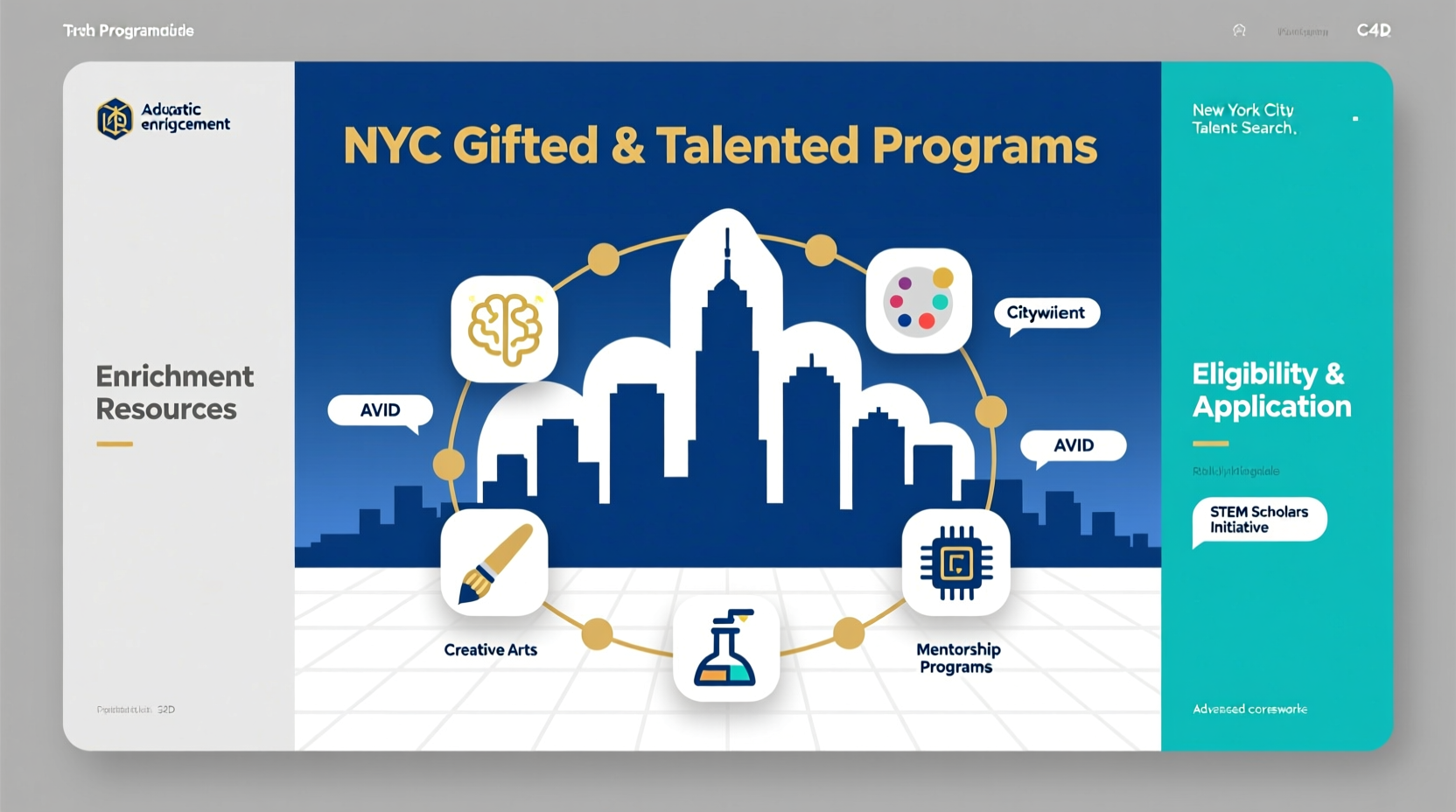
The NYC Department of Education offers Gifted & Talented programs at the elementary level (grades K–5), primarily through citywide and district-based models. Citywide programs serve highly gifted students across all five boroughs and require the highest qualifying scores on the admissions assessment. District programs cater to gifted learners within specific geographic zones and typically have slightly lower entry thresholds.
Admission has historically relied on a combination of a standardized test score—such as the Naglieri Nonverbal Ability Test (NNAT)—and a body-based score derived from pre-K performance. While testing policies have fluctuated in recent years due to equity initiatives, the DOE continues to evaluate methods for identifying giftedness that reduce bias and increase access.
“Gifted education isn’t about privilege—it’s about matching instruction to cognitive readiness. When advanced learners are placed in appropriately challenging environments, they thrive without holding back their peers.” — Dr. Lena Torres, Educational Psychologist, Columbia University
Enrichment Activities Beyond the Classroom
Even if a child does not qualify for or enroll in a formal G&T program, intellectual enrichment outside school hours can make a significant difference in long-term academic engagement. NYC offers abundant options tailored to curious, fast-learning children. These experiences reinforce critical thinking, creativity, and problem-solving skills essential for future success.
- STEM Workshops: Organizations like Beam Center and NYC FIRST Robotics host project-based engineering and coding camps for ages 8–14.
- Literary Circles: The 92nd Street Y runs reading and writing seminars for young authors, encouraging analytical discussion and narrative development.
- Math Circles: Art of Problem Solving (AoPS) and Math-M-Addicts offer rigorous after-school math training focused on competition-level reasoning.
- Museum-Based Learning: The American Museum of Natural History and the Intrepid Sea, Air & Space Museum provide inquiry-driven field trips and summer intensives.
- Music & Performing Arts: Special Music School (a public K–12 institution) and Brooklyn Conservatory of Music offer auditions-based training for musically gifted students.
Key Resources for NYC Families
Navigating gifted education requires more than awareness—it demands access to reliable tools and networks. Below is a curated list of institutions and platforms that support families throughout the journey.
| Resource | Focus Area | Access Method |
|---|---|---|
| NYC Department of Education – G&T Page | Program info, deadlines, testing updates | Online: schools.nyc.gov/gifted |
| InsideSchools.org | School reviews, parent forums, enrollment advice | Free public website |
| TAG Parent Network | Advocacy, workshops, community support | Email newsletter and events |
| Johns Hopkins CTY (Center for Talented Youth) | Online courses and summer programs | Qualify via SCAT test; fee-based |
| Brooklyn Public Library – Enrichment Series | Free STEM, literacy, and debate clubs | In-person registration at branches |
Step-by-Step Guide: Preparing for G&T Identification
The timeline for G&T admissions moves quickly, and preparation should begin months in advance. Follow this sequence to stay organized and responsive.
- September–October: Monitor the DOE website for announcements about testing windows and application procedures. Sign up for email alerts from InsideSchools and local parent groups.
- November–December: If assessments are offered, schedule your child’s evaluation. Practice nonverbal reasoning exercises using free online NNAT sample questions to build familiarity.
- January–February: Submit applications during the designated window. You may rank up to six district programs and separately apply to citywide options.
- March–April: Await results. Offers are typically released in batches. Check your NYC Schools account regularly.
- May–June: Accept an offer by the deadline. If waitlisted, maintain contact with the school and inquire about movement.
- Summer: Attend orientation sessions and connect with other families via school-specific Facebook groups or PTA mailing lists.
Mini Case Study: The Chen Family’s Approach
The Chens, a family in District 2, began researching gifted programs when their daughter, Mia, showed early reading fluency at age four. Though she didn’t qualify for a citywide program due to scoring just below the cutoff, they secured a seat in a district G&T class through careful ranking strategy. Recognizing that classroom placement alone wouldn’t sustain her curiosity, they enrolled Mia in the Art of Problem Solving’s introductory math course and joined the TAG Parent Network. Within a year, she was participating in a third-grade math bowl despite being in first grade. Her teachers noted increased confidence and deeper conceptual understanding. The blend of formal programming and external enrichment created a balanced ecosystem for growth—one that didn’t rely solely on admission status.
Do’s and Don’ts of Supporting a Gifted Learner
| Do | Don’t |
|---|---|
| Celebrate effort over innate ability | Say “You’re so smart” as the primary praise |
| Encourage deep dives into topics of interest | Push multiple enrichment activities without breaks |
| Teach self-advocacy skills early | Speak for your child in every teacher conversation |
| Use libraries and museums as learning labs | Rely only on worksheets or test prep for stimulation |
| Monitor social-emotional well-being | Assume academic strength means emotional maturity |
FAQ
Is the G&T test still used in NYC?
As of recent cycles, the DOE has paused universal testing and experimented with screen-free identification methods, including reviewing pre-K portfolios and teacher recommendations. However, policy changes occur frequently. Always verify current criteria directly through the official NYC Schools website.
What if my child doesn’t qualify for a G&T program?
Many general education classrooms in NYC use differentiated instruction to challenge advanced learners. Additionally, schools may offer honors tracks starting in middle school. Outside enrichment, independent projects, and mentorship opportunities can also provide intellectual rigor.
Are there gifted programs for middle and high school students?
While formal G&T programs end after fifth grade, NYC offers screened schools and specialized programs such as Humanities High School, Brooklyn Tech, and Fiorello H. LaGuardia High School. These institutions use grades, portfolios, auditions, or entrance exams (like the SHSAT, where applicable) to admit students based on academic or artistic talent.
Checklist: Building a Supportive Environment for Your Gifted Child
- ✅ Research your zoned school’s approach to differentiation
- ✅ Identify at least one weekly enrichment opportunity
- ✅ Join a parent network (e.g., TAG, district-specific groups)
- ✅ Schedule regular conversations with your child about challenges and interests
- ✅ Maintain a portfolio of academic work, creative projects, and achievements
- ✅ Stay informed about DOE updates via official channels and trusted third parties
- ✅ Prioritize balance—ensure time for play, rest, and unstructured exploration
Conclusion: Empowering Potential Through Informed Action
Success in NYC’s gifted education landscape isn’t determined by a single test score or program label. It emerges from consistent support, strategic resource use, and a commitment to nurturing a child’s natural curiosity. Whether your student is in a citywide G&T class or thriving in a general education setting with supplemental enrichment, the goal remains the same: to provide meaningful challenges that inspire lifelong learning. The resources exist. The opportunities are within reach. What matters most is taking the first step—and continuing forward with intention.




 浙公网安备
33010002000092号
浙公网安备
33010002000092号 浙B2-20120091-4
Comments
No comments yet. Why don't you start the discussion?