
Everyday tote bags are more than just accessories—they’re workhorses. Whether you're commuting to the office, running errands, or heading to the beach, your tote takes a beating. Among the most common materials, nylon and canvas stand out for their practicality and affordability. But when subjected to daily wear and tear, which one truly lasts longer? The answer isn’t as simple as material strength alone; it depends on construction, care habits, environmental exposure, and how you use the bag.
This in-depth analysis compares nylon and canvas tote bags across multiple real-world factors—durability, water resistance, abrasion tolerance, aging behavior, and maintenance needs—to help you choose the tote that will endure year after year.
Durability Showdown: Nylon vs Canvas Under Daily Stress
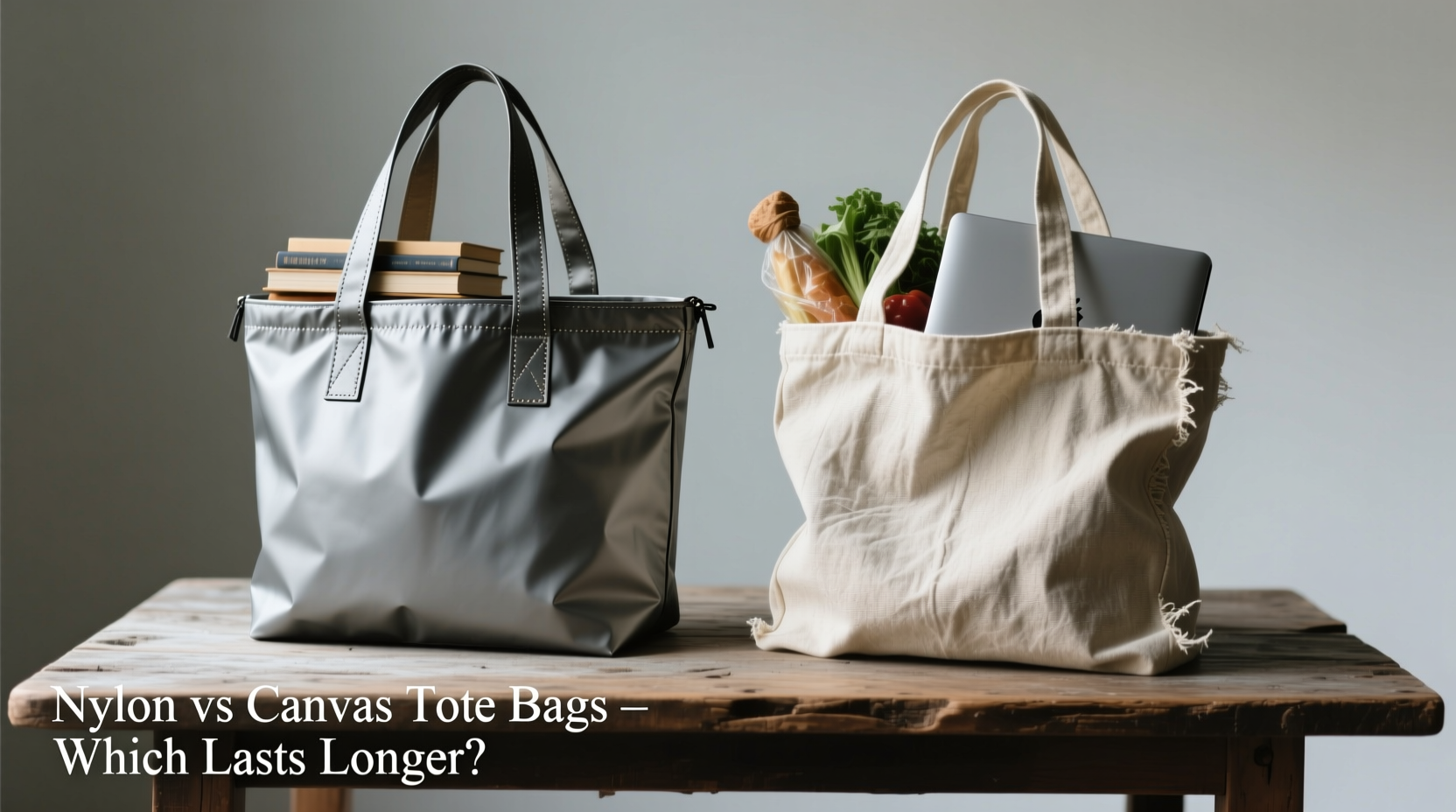
At first glance, both nylon and canvas appear rugged. Canvas is a tightly woven cotton fabric known for its stiffness and structure. Nylon is a synthetic polymer celebrated for its tensile strength and elasticity. When tested under mechanical stress, nylon consistently outperforms canvas in terms of raw durability metrics.
Nylon has a higher tensile strength, meaning it can withstand heavier loads without tearing. It also resists stretching and deformation better over time. In contrast, canvas, while strong when new, tends to soften with repeated use. This softening can lead to sagging, especially when carrying heavy items like laptops, books, or groceries.
However, canvas holds up well against abrasion from rough surfaces—such as being dragged across pavement or placed on gravel—due to its dense weave. Nylon, particularly lightweight varieties, can develop \"snags\" or runs if caught on sharp edges. Once a snag starts, it may propagate, compromising the integrity of the fabric.
The key difference lies in how each material fails. Canvas degrades gradually through fiber breakdown and fraying at seams. Nylon often fails suddenly if a critical snag turns into a rip. For long-term daily use, this means canvas offers predictable wear, while nylon demands vigilance to catch damage early.
Water Resistance and Environmental Exposure
One of the biggest challenges for any tote is moisture. Spills, rain, humidity—these elements accelerate wear and promote mold, mildew, and staining.
Nylon excels here. As a synthetic fiber, it’s inherently water-resistant. Most nylon totes are coated or laminated, making them nearly waterproof. Water beads up and rolls off, protecting contents inside. Even prolonged exposure to damp conditions won’t cause nylon to rot or weaken significantly.
Canvas, being natural cotton, absorbs water readily. A wet canvas tote becomes heavy, takes hours to dry, and risks developing mildew if stored improperly. Over time, repeated wetting and drying cycles degrade the fibers, leading to brittleness and seam separation.
In humid climates or rainy cities, nylon clearly wins. But even in dry regions, accidental spills happen. Nylon wipes clean easily; canvas often requires full washing, which introduces additional wear.
“Water is one of the silent killers of everyday bags. Natural fabrics absorb not just moisture but pollutants that break down fibers over time.” — Lena Patel, Textile Durability Researcher, MIT Materials Lab
Material Comparison Table: Key Performance Factors
| Factor | Nylon | Canvas |
|---|---|---|
| Tensile Strength | High – resistant to tearing under load | Moderate – strong when new, weakens with use |
| Water Resistance | Excellent – naturally hydrophobic | Poor – absorbs moisture quickly |
| Abrasion Resistance | Good – but vulnerable to snags | Very Good – dense weave resists scuffing |
| UV Resistance | Fair – may fade or become brittle in sun | Fair – color fades, fibers weaken over time |
| Maintenance | Low – wipe clean, air dry | Moderate – machine washable but wears fabric |
| Lifespan (Daily Use) | 3–5 years with care | 1–3 years depending on conditions |
| Eco-Impact | Higher – petroleum-based, slow to decompose | Lower – biodegradable, but often treated with chemicals |
Real-World Case Study: Two Commuters, Two Materials
Sarah and James both live in Seattle, where rain is a near-daily occurrence. They each bought a tote for their daily commute—one nylon, one canvas—and used them five days a week for two years.
Sarah chose a black nylon tote with reinforced stitching and a zip-top closure. She carried her laptop, lunch, and umbrella. Despite frequent rain, she never had issues with dampness. After 18 months, she noticed a small snag near the handle but repaired it with clear nail polish to prevent further unraveling. At the two-year mark, the bag still functions perfectly, though slightly faded.
James opted for a classic beige canvas tote, drawn to its “natural” look and structured shape. Within six months, the bottom began to darken from sidewalk moisture. He washed it twice, but the canvas lost some stiffness and developed mildew spots in the lining. By month 14, the shoulder strap seam split during rush hour, spilling his belongings onto a wet platform.
Sarah’s nylon tote outlasted James’s canvas bag by over eight months, despite similar usage patterns. The decisive factor was moisture resistance and lower maintenance needs.
Care Practices That Extend Lifespan
No matter the material, how you treat your tote dramatically affects longevity. Many users assume durability is fixed at purchase, but proper care can extend a bag’s life by 50% or more.
Nylon benefits from occasional wiping with a damp cloth and mild detergent. Avoid abrasive scrubbing, which can damage coatings. Store it empty and dry, away from direct sunlight to prevent UV degradation. If a snag appears, seal the end with clear nail polish or fabric glue.
Canvas requires more active upkeep. Shake out debris regularly. Spot-clean stains immediately to prevent setting. If machine washing, use cold water and air dry flat—never tumble dry, as heat shrinks cotton. To restore stiffness, some users lightly starch the fabric, though this can attract dust over time.
Step-by-Step Guide to Maximizing Tote Longevity
- Inspect Weekly: Check for loose threads, worn stitching, or surface damage.
- Clean Promptly: Wipe spills immediately. Use appropriate cleaners—mild soap for nylon, gentle detergent for canvas.
- Dry Thoroughly: Never store a damp bag. Air dry completely before reuse.
- Store Properly: Keep in a cool, dry place. Stuff canvas totes lightly to maintain shape; hang nylon totes to avoid creasing.
- Repair Early: Fix small tears or loose straps before they worsen. Sewn patches or fabric glue work well.
- Avoid Overloading: Respect weight limits. Excess load stresses seams and distorts shape.
- Rotate Usage: Alternate between multiple bags to distribute wear evenly.
Which Lasts Longer? The Verdict
When evaluated across real-world conditions—moisture, load-bearing, abrasion, and maintenance—nylon emerges as the longer-lasting material for daily use.
Its superior water resistance, consistent strength, and low maintenance give it an edge, especially in unpredictable environments. While canvas has charm and breathability, it deteriorates faster under routine stress, particularly when exposed to moisture or heavy loads.
That said, quality matters. A poorly made nylon tote with thin straps and flimsy stitching won’t outlive a well-constructed canvas bag with bar-tacked handles and double-layered base. Always check craftsmanship: reinforced stress points, durable zippers, and tight, even stitching are signs of longevity regardless of fabric.
For maximum lifespan, prioritize a high-quality nylon tote with thoughtful design features. Look for ripstop nylon (woven with reinforcement grids), waterproof linings, and metal hardware. These upgrades significantly boost resilience.
Checklist: Choosing a Long-Lasting Daily Tote
- ✅ Material: Ripstop nylon or heavyweight canvas (if preferring natural fibers)
- ✅ Stitching: Double or triple-stitched at handles and base
- ✅ Hardware: Metal zippers and D-rings instead of plastic
- ✅ Lining: Waterproof or water-resistant interior
- ✅ Base: Reinforced or rigid bottom panel
- ✅ Weight Limit: Clearly stated capacity matching your typical load
- ✅ Care Instructions: Provided and realistic for your lifestyle
Frequently Asked Questions
Can canvas tote bags be made water-resistant?
Yes, many canvas totes are treated with wax or PU coatings to improve water resistance. However, these treatments wear off over time and require reapplication. Even then, they don’t match the inherent water resistance of nylon.
Do nylon totes yellow or fade in sunlight?
Some nylon fabrics, especially lighter colors, can yellow or fade with prolonged UV exposure. Storing the bag out of direct sunlight and avoiding long-term outdoor placement helps preserve color and integrity.
Is canvas more eco-friendly than nylon?
In theory, yes—canvas is plant-based and biodegradable. But conventional cotton farming uses significant water and pesticides. Recycled nylon, meanwhile, repurposes waste like fishing nets and reduces reliance on virgin plastics. Eco-impact depends on sourcing and production methods.
Final Thoughts: Build Habits, Not Just Choose Materials
Selecting between nylon and canvas isn’t just about preference—it’s about aligning material strengths with your lifestyle. If you walk in rain, carry heavy loads, or value easy cleanup, nylon is the smarter long-term investment. If you prioritize texture, sustainability, and light-duty use, canvas can suffice—but expect to replace it sooner.
Ultimately, the longest-lasting tote isn’t just the strongest one off the shelf. It’s the one you care for consistently, repair promptly, and use thoughtfully. Durability is a partnership between material and user.




 浙公网安备
33010002000092号
浙公网安备
33010002000092号 浙B2-20120091-4
Comments
No comments yet. Why don't you start the discussion?