
Choosing the right backpack isn’t just about style or capacity—it’s about how well it withstands the conditions you’ll face daily. Whether commuting through city streets, hiking rugged trails, or braving sudden downpours, your pack needs to endure moisture, abrasion, and constant wear. Two of the most common materials used in modern backpacks are nylon and mesh. While both serve functional roles, they differ significantly in durability, weather resistance, and long-term resilience. Understanding these differences is essential for anyone who relies on their backpack in demanding environments.
Material Fundamentals: Nylon and Mesh Explained
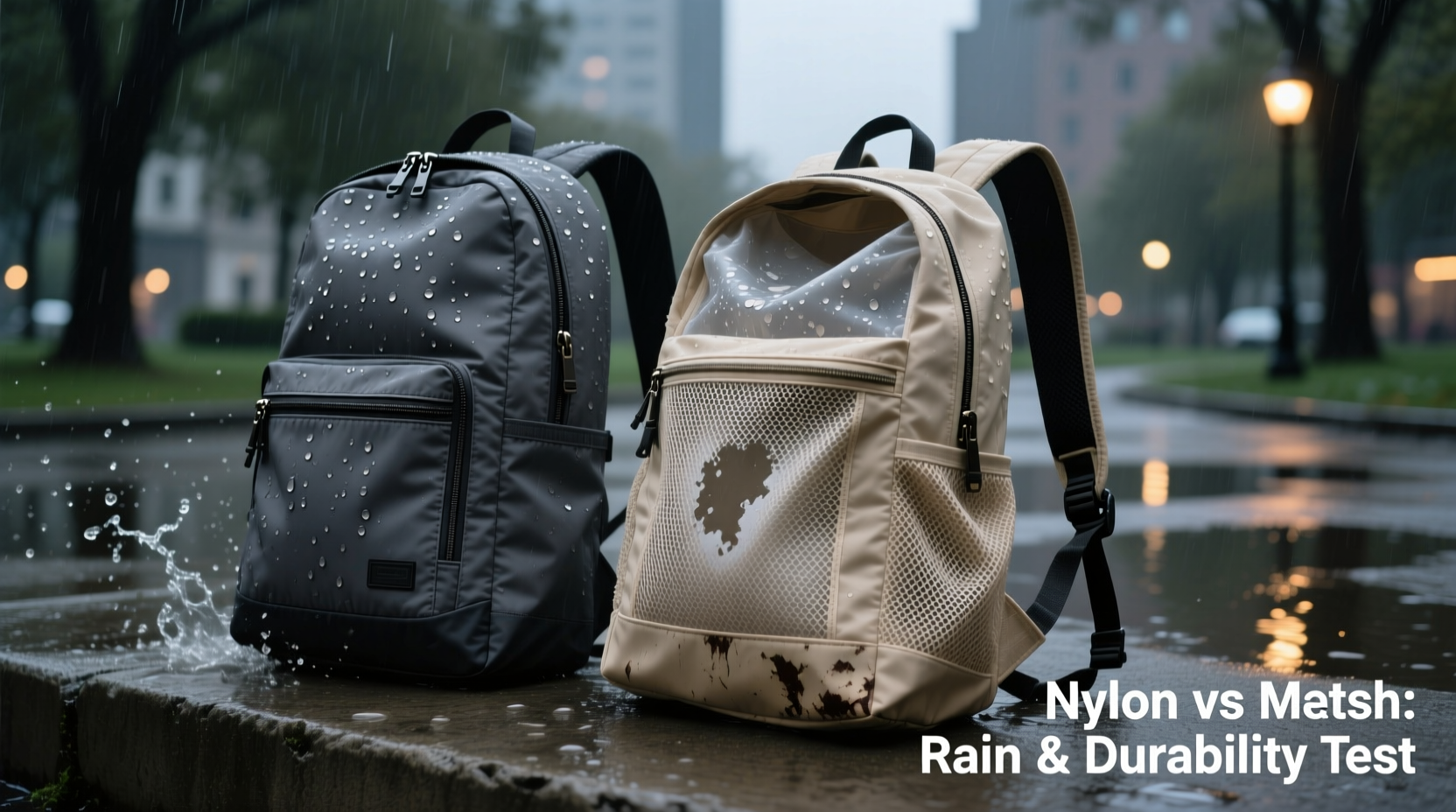
Nylon and mesh are often found together in backpack design—nylon forming the main body, mesh used for shoulder straps or back panels. But when comparing them as primary construction materials, their performance diverges sharply.
Nylon is a synthetic polymer known for its strength, flexibility, and resistance to abrasion and mildew. It’s commonly used in outdoor gear, military equipment, and travel luggage due to its toughness. Variants like Cordura® nylon or ripstop nylon enhance durability even further by incorporating reinforced weaving patterns that resist tearing.
Mesh, on the other hand, typically refers to a loosely woven fabric made from polyester or nylon fibers. Its open structure allows airflow, making it ideal for ventilation in areas like back panels or side pockets. However, this same structure makes it inherently less dense and more vulnerable to punctures, fraying, and environmental stress.
The key distinction lies in purpose: nylon is built for protection and longevity; mesh prioritizes breathability and comfort at the expense of structural integrity.
Durability Showdown: How Each Material Handles Heavy Use
When subjected to daily wear—carrying heavy loads, scraping against surfaces, being stuffed into tight spaces—the structural integrity of a backpack comes under constant pressure. Here, nylon clearly outperforms mesh.
Nylon’s tightly woven fibers create a robust barrier against abrasion. High-denier nylon (measured in “D,” with 600D–1000D considered durable) resists scuffing from concrete benches, car doors, or rough terrain. It also maintains shape over time, resisting sagging even when overloaded. This makes it ideal for students, travelers, and outdoor enthusiasts who carry laptops, books, or camping gear regularly.
In contrast, mesh degrades faster under mechanical stress. The open weave can snag on sharp edges, leading to runs or tears that compromise not only appearance but function. Over time, repeated friction weakens the fibers, especially in load-bearing zones like bottom panels or strap junctions. While lightweight and comfortable initially, mesh-backed packs often show signs of wear within months of frequent use.
Real-World Example: Urban Commuter vs. Weekend Hiker
Consider two users: Alex, a city commuter using public transit daily, and Jordan, a weekend hiker navigating forest trails. Alex’s backpack bumps against subway poles, gets shoved under seats, and endures winter slush. Jordan’s pack rubs against rocky outcrops, carries damp gear, and is occasionally dropped on gravel paths.
Alex benefits more from a nylon-dominated design. The material resists sidewalk grime, resists tearing during rush-hour jostling, and maintains cleanliness with minimal maintenance. Jordan might prefer some mesh for back ventilation during uphill climbs—but only if the core structure remains nylon. Pure mesh packs would fail quickly under trail conditions, where durability trumps breathability.
Water Resistance and Moisture Management
Rain exposure is one of the most common threats to backpack longevity. How each material reacts to moisture determines not only short-term protection but long-term degradation.
Nylon, particularly when treated with a Durable Water Repellent (DWR) coating, sheds light rain effectively. Even untreated nylon absorbs less water than cotton or canvas and dries relatively fast. Premium versions like ballistic nylon or silicone-coated variants offer near-waterproof performance. When properly sealed with taped seams or roll-top closures, nylon backpacks can keep contents dry during extended wet conditions.
Mechanically, nylon fibers swell slightly when wet but return to form upon drying without significant weakening. With proper care, nylon retains tensile strength across hundreds of wet-dry cycles.
M涉h fares poorly in direct rain. Its open weave allows water to pass through rapidly, soaking internal compartments within minutes. Even brief exposure can leave contents damp. Worse, trapped moisture promotes mold growth, especially if the pack isn’t dried thoroughly after use. While mesh dries quickly due to airflow, this advantage doesn’t offset its inability to protect valuables.
“Water isn’t just an external threat—it accelerates fabric breakdown from within. Materials that absorb moisture degrade faster at the fiber level.” — Dr. Lena Torres, Textile Engineer, Outdoor Gear Lab
Case Study: Monsoon Season Testing
A 2022 field test conducted by a Pacific Northwest outdoor collective compared identical-sized packs—one all-nylon, one primarily mesh—over a six-week rainy season. Both carried standard loads (laptop, notebook, water bottle).
The mesh pack showed visible discoloration after week two, with mildew spots forming along the lower back panel. By week four, stitching near the shoulder straps began loosening due to repeated swelling and contraction of wet fibers. Contents were consistently damp after any rainfall.
The nylon pack, though exposed to the same conditions, retained its appearance and functionality. Minor surface water beaded and rolled off. Interior items stayed dry unless submerged. After drying overnight, the pack showed no structural changes.
Comparative Analysis: Key Performance Metrics
| Feature | Nylon Backpack | Mesh Backpack |
|---|---|---|
| Tear Resistance | High – reinforced weaves prevent rips | Low – prone to snags and runs |
| Water Resistance | Good to excellent (with coatings) | Poor – highly permeable |
| Breathability | Moderate – traps some heat | Excellent – promotes airflow |
| Weight | Medium to heavy (depends on denier) | Very light |
| Lifespan (regular use) | 5+ years with care | 1–2 years before degradation |
| Cleaning Ease | Wipeable, machine washable (some) | Delicate – hand wash recommended |
This table highlights a central trade-off: nylon wins in protection and longevity; mesh excels in comfort and weight savings. For users prioritizing resilience against rain and heavy use, nylon is objectively superior.
Best Practices for Maximizing Longevity
Even the best materials degrade without proper care. Follow these steps to extend the life of any backpack, regardless of composition.
- Inspect Weekly: Check for loose threads, worn straps, or seam separation, especially after heavy use.
- Clean Gently: Use mild soap and lukewarm water. Avoid bleach or harsh detergents that break down synthetic fibers.
- Dry Thoroughly: Never store a damp backpack. Hang it upside down in a ventilated area away from direct sunlight.
- Store Smart: Keep in a cool, dry closet. Avoid compressing under heavy objects, which distorts shape and stresses seams.
- Apply Waterproofing: Re-treat nylon packs annually with a DWR spray to restore water beading properties.
Checklist: Choosing a Rain-Resistant, Durable Backpack
- ✅ Main fabric is high-denier nylon (at least 600D)
- ✅ Features a DWR or PU coating
- ✅ Seams are taped or welded (not just stitched)
- ✅ Zippers are covered or waterproof-rated
- ✅ Minimal mesh on load-bearing areas
- ✅ Reinforced bottom panel (e.g., rubberized or double-layered)
- ✅ Weight capacity matches intended use
Frequently Asked Questions
Can I make a mesh backpack more water-resistant?
You can apply fabric sealants, but they won’t fully block water due to mesh’s open structure. The treatment may also stiffen the material, reducing breathability. For reliable rain protection, consider a pack cover instead—but know that contents may still get damp during prolonged exposure.
Is nylon environmentally worse than mesh?
Both are petroleum-based synthetics, so neither is eco-neutral. However, nylon lasts longer, meaning fewer replacements and less waste over time. Recycled nylon options (like ECONYL®) reduce environmental impact while maintaining performance.
Are hybrid designs a good compromise?
Yes. Many high-performance packs use nylon for the shell and strategic mesh zones (e.g., back padding) for comfort. This balances durability with ventilation. Just ensure critical areas—bottom, sides, closures—are nylon-reinforced.
Final Verdict: Which Holds Up Better?
When evaluating backpacks for resistance to rain and heavy use, nylon is the clear winner. Its inherent strength, low moisture absorption, and ability to withstand abrasion make it the go-to material for professionals, travelers, and outdoor adventurers. Mesh has value in enhancing comfort, but only as a supplemental feature—not as a primary build material in demanding conditions.
No single factor defines a backpack’s worth, but longevity under stress is among the most important. A $100 nylon backpack that lasts five years offers better value than a $60 mesh model replaced every twelve months. Beyond cost, there’s reliability: knowing your gear won’t fail when skies turn gray or trails get rough.
“The best backpack isn’t the lightest or trendiest—it’s the one that keeps working when you need it most.” — Mark Rivera, Expedition Leader & Gear Reviewer, *Trail Resilience Journal*
Take Action Today
Before your next purchase, assess your real-world needs. If you face rain, carry heavy loads, or use your backpack daily, prioritize nylon construction. Look beyond aesthetics to examine denier ratings, seam quality, and weatherproofing features. And if you already own a mesh-heavy pack, consider upgrading for critical tasks—your laptop, documents, or hiking essentials deserve better protection.




 浙公网安备
33010002000092号
浙公网安备
33010002000092号 浙B2-20120091-4
Comments
No comments yet. Why don't you start the discussion?