
As virtual reality becomes more accessible, two headsets stand out in the standalone VR market: the Meta Quest 3 and the Pico 4. Both offer high-resolution displays, inside-out tracking, and wireless freedom, but they differ significantly in design philosophy, user comfort, and content availability. For consumers deciding between these devices, understanding how each performs in real-world use—especially in comfort during extended sessions and access to compelling games—is essential. This analysis dives deep into both aspects, helping you make an informed decision based on actual usage patterns and ecosystem maturity.
Design and Physical Comfort: Long Sessions Without Strain
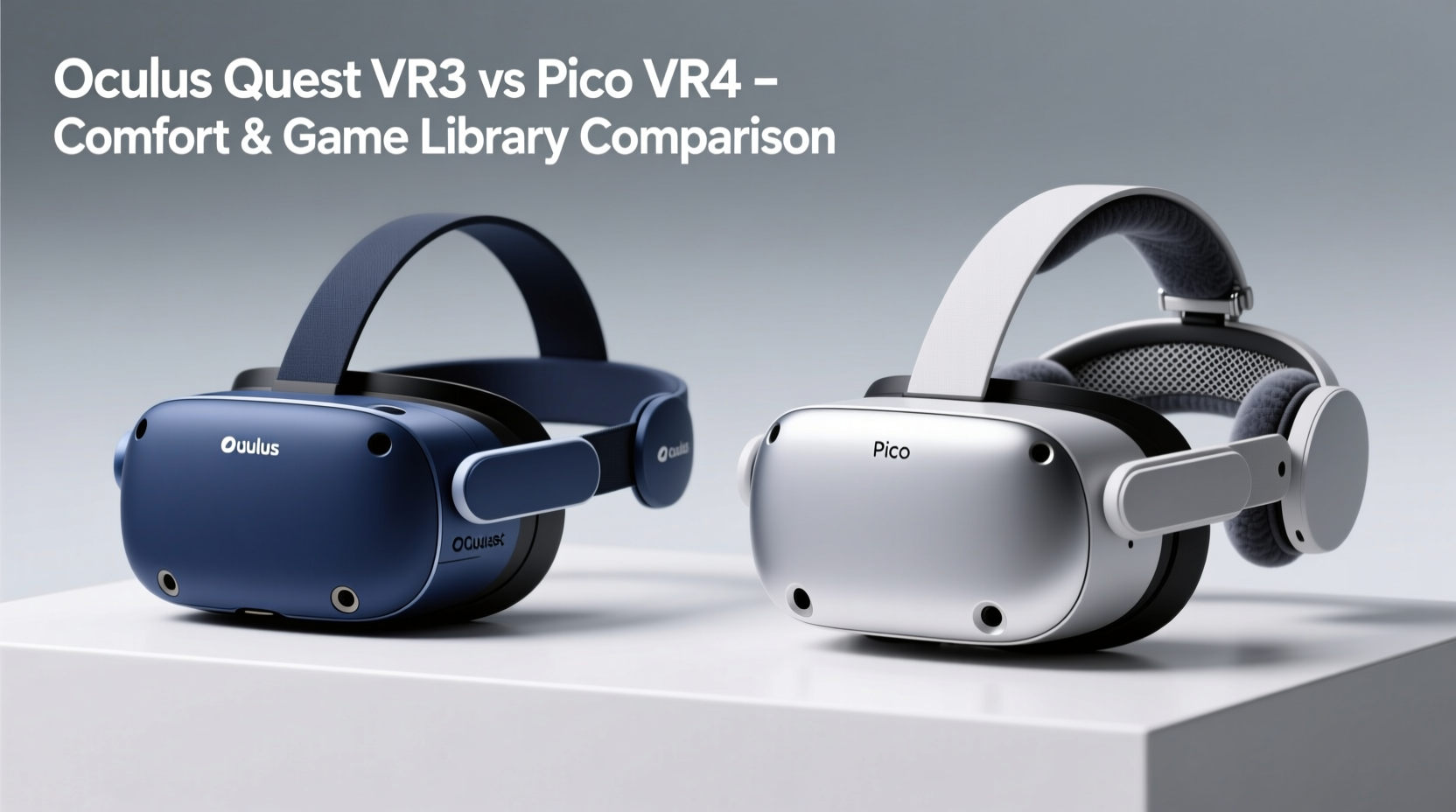
Comfort is one of the most critical factors in VR adoption. Even the most powerful headset can become frustrating if it causes pressure points, slips during movement, or grows heavy after 30 minutes of use. The Quest 3 and Pico 4 take different approaches to ergonomics, materials, and weight distribution.
The Meta Quest 3 uses a balanced front-to-back strap system with a rigid halo-style frame. Its weight—502 grams—is distributed across the front lens housing and the rear adjustment wheel, which helps reduce facial pressure. The facial interface is soft-touch and easily replaceable, and many users report being able to wear glasses comfortably underneath. However, some note that the default strap may dig into the back of the head during intense motion unless upgraded.
In contrast, the Pico 4 weighs slightly less at 295 grams—nearly 40% lighter than the Quest 3—and employs a split-band design. This places more support on the top and back of the head, minimizing contact with the face. The result is a floating sensation that many users describe as more immersive and less fatiguing over time. The nose cutout is deeper, reducing screen fogging and improving airflow, which is especially beneficial during active gameplay.
While both headsets are adjustable, the Pico 4’s lighter build gives it an edge in all-day comfort. Users with sensitive nasal bridges or those prone to sweat buildup may find the Pico 4’s ventilation and reduced facial contact more tolerable. However, Meta’s broader accessory ecosystem means easier access to premium straps, prescription lens inserts, and hygiene solutions.
Display and Visual Experience: Clarity Meets Immersion
Visual fidelity directly impacts immersion and, indirectly, comfort. A blurry or low-refresh display can cause eye strain and discomfort even if the physical fit is excellent.
The Quest 3 features dual LCD panels with a combined resolution of 2064 x 2208 per eye and a 120Hz refresh rate. It also introduces pancake lenses, allowing for a slimmer profile and improved clarity toward the edges of the field of view. Mixed reality capabilities enhance depth perception through its color passthrough cameras, making virtual objects appear convincingly anchored in the real world.
The Pico 4 matches the 120Hz refresh rate and uses similar pancake optics but offers a slightly higher resolution at 2160 x 2160 per eye. While the difference isn't drastic, text readability and fine details in games like *Demeo* or *Terraforming Mars* are marginally sharper. The Pico 4 also has a wider field of view (105 degrees vs. Quest 3’s ~100), contributing to a more expansive sense of space.
Both headsets support HDR, but the Quest 3’s advanced passthrough enables unique MR applications such as placing virtual monitors in your room or playing AR-enhanced games. For pure VR gaming, however, the Pico 4’s visual edge in resolution and FOV provides a subtly more immersive experience.
Game Library and Content Ecosystem: Quantity vs. Curation
No matter how comfortable a headset is, its value depends on what you can do with it. The game library is where the fundamental divide between the Quest 3 and Pico 4 becomes apparent.
Meta’s Quest platform dominates the standalone VR market. As of 2024, it hosts over 500 officially supported titles, including AAA experiences like *Resident Evil 4 VR*, *Lone Echo*, and *The Walking Dead: Saints & Sinners*. Independent developers prioritize Quest due to its large user base, leading to faster updates and richer mod support. Cross-buy options with PC VR (via Link/Air Link) further expand access to SteamVR content, effectively giving Quest 3 users thousands of additional titles.
Pico 4, owned by ByteDance, operates in a more limited ecosystem. While it has made strides with Western localization, its store remains smaller—around 200 core titles—and lacks many flagship exclusives. Popular games like *Population: One*, *Onward*, and *Gorilla Tag* are either missing or delayed. Some developers cite lower revenue potential and fragmented regional availability as reasons for slower porting.
However, Pico does offer strong curated content, particularly in fitness and productivity. Titles like *OhShape* and *Les Mills Bodycombat* are available at launch, and the integration with YouTube VR and Netflix provides solid media consumption options. Additionally, sideloading via ADB or third-party stores like Monado is more straightforward on Pico, allowing tech-savvy users to import APKs from the Quest store—though this comes with risks and usability trade-offs.
“Content drives hardware adoption. Without a robust first-party lineup or developer incentives, alternative platforms struggle to compete beyond price.” — Daniel Lee, VR Industry Analyst at TechInsight Asia
Detailed Comparison: Comfort and Game Library Side-by-Side
| Feature | Oculus Quest 3 | Pico 4 |
|---|---|---|
| Weight | 502 g | 295 g |
| Strap Design | Adjustable halo with rear dial | Split-band, top-and-back support |
| Facial Interface | Soft-touch foam, replaceable | Deep cutout, breathable fabric |
| Resolution (per eye) | 2064 x 2208 | 2160 x 2160 |
| Refresh Rate | Up to 120Hz | Up to 120Hz |
| Field of View | ~100° | 105° |
| Mixed Reality Support | Yes, full-color passthrough | Limited grayscale passthrough |
| Available Games | 500+ (including major exclusives) | ~200 (fewer AAA titles) |
| Sideloading Ease | Moderate (requires developer mode) | Easy (ADB or third-party apps) |
| PC VR Compatibility | Yes (Air Link / USB) | Yes (Pico Link) |
User Experience Case Study: Two Gamers, Two Choices
Consider Alex and Jordan, both VR enthusiasts who bought their headsets in early 2024. Alex chose the Quest 3 primarily for *Resident Evil 4 VR* and multiplayer shooters. Despite initial neck fatigue, switching to the Elite Strap resolved discomfort. Access to regular updates, community mods, and cross-play with PC users enhanced longevity. Over six months, Alex logged over 120 hours of gameplay across 15 different titles, citing the depth of content as the key reason for continued engagement.
Jordan opted for the Pico 4 due to its lightweight design and interest in fitness. Using *Supernatural* (sideloaded) and native apps like *OhShape*, Jordan maintained a consistent workout routine. However, frustration grew when trying to play newer social VR titles unavailable on Pico. While the headset felt better during use, limited native support eventually led Jordan to purchase a Quest 3 for secondary use—effectively doubling hardware costs.
This scenario reflects a common pattern: Pico excels in physical comfort and niche applications but lags in broad software support. For users prioritizing daily wearability without hardcore gaming, Pico is viable. But for those seeking evolving, community-driven experiences, the Quest ecosystem remains unmatched.
Step-by-Step Guide: Choosing Based on Your Needs
Selecting between the Quest 3 and Pico 4 shouldn’t be arbitrary. Follow this decision framework to align your choice with lifestyle and expectations:
- Assess your primary use case: Are you focused on gaming, fitness, productivity, or media? Gamers benefit from Quest’s library; fitness users may prefer Pico’s comfort.
- Evaluate session length: If you plan frequent 1+ hour sessions, test weight distribution. Pico’s lighter build reduces fatigue.
- Check game availability: List your must-have titles. Search both stores. If key games are missing on Pico, factor in sideloading complexity.
- Consider future-proofing: Meta invests heavily in VR content and AI-driven MR. Pico’s roadmap is less transparent outside Asia.
- Budget for accessories: Quest 3 may require a $50–$100 strap upgrade for optimal comfort. Pico rarely needs one.
- Test if possible: Visit a retail location or borrow units. Real-world feel outweighs specs on paper.
FAQ: Common Questions Answered
Can I play Quest games on Pico 4?
You can sideload many Quest games onto Pico 4 using tools like SideQuest or Monado, but performance varies. Some titles lack optimization, and updates may break compatibility. Multiplayer games often restrict cross-platform play.
Is the Quest 3 uncomfortable for glasses wearers?
Not inherently. The facial interface has ample space, and Meta offers a free prescription insert program in select regions. Upgrading to aftermarket magnetic lenses can also improve clarity and reduce smudging.
Does Pico 4 support hand tracking and passthrough?
Yes, Pico 4 supports hand tracking and has grayscale passthrough for basic mixed reality. However, it lacks the full-color, high-fidelity passthrough of the Quest 3, limiting immersive MR applications.
Final Verdict: Balancing Comfort and Content
The Pico 4 wins on physical comfort. Its lightweight design, superior ventilation, and ergonomic balance make it ideal for extended use, especially in fitness or enterprise settings. If you value wearing a headset for hours without discomfort and are comfortable sideloading or sticking to a curated set of apps, Pico offers strong value—particularly at a lower price point.
But the Oculus Quest 3 dominates in content. Its extensive, constantly growing library of polished, well-supported games makes it the go-to choice for serious VR gamers. When paired with Meta’s ongoing investment in mixed reality and social VR platforms like Horizon Worlds, the Quest 3 isn’t just a headset—it’s a gateway to a maturing digital universe.
In the end, comfort matters, but so does what you’re doing while wearing the device. For most users, especially those new to VR or looking for long-term engagement, the breadth and reliability of the Quest ecosystem justify its heft. Power users might appreciate Pico’s design innovations, but they’ll likely miss the richness of Meta’s platform.




 浙公网安备
33010002000092号
浙公网安备
33010002000092号 浙B2-20120091-4
Comments
No comments yet. Why don't you start the discussion?