
The virtual reality market has matured rapidly in recent years, and two headsets now stand at the forefront of standalone VR: the Meta Quest 3 and the Pico 4. Both offer high-resolution displays, inside-out tracking, and wireless freedom, making them ideal for immersive gaming, fitness, and productivity. But when it comes to actual value—balancing performance, ecosystem, price, and long-term usability—one clearly edges ahead depending on your priorities. This comprehensive breakdown compares the two devices across critical categories to help you make an informed decision.
Design and Comfort: Fit, Weight, and Build Quality
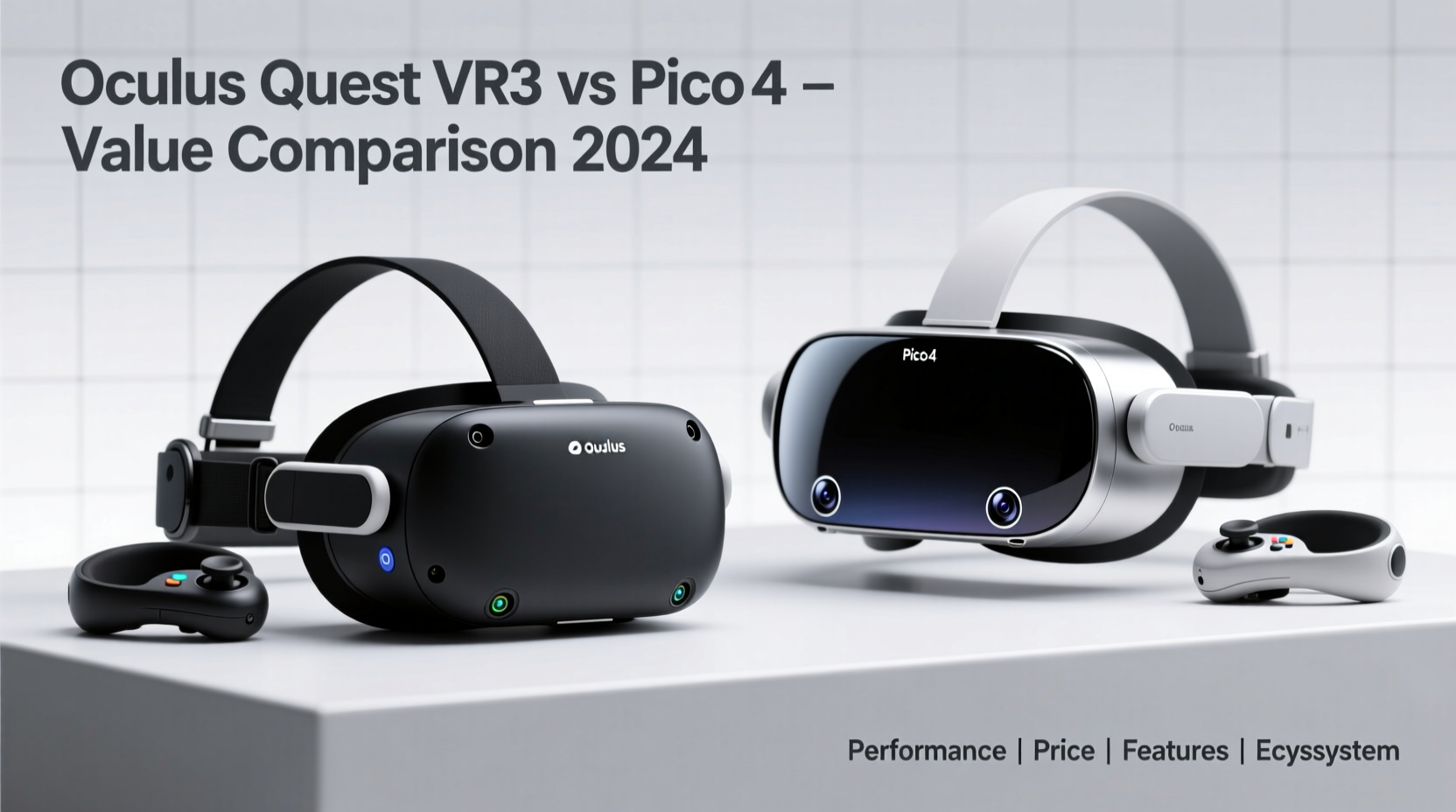
First impressions matter, and both headsets deliver modern, sleek designs with a focus on user comfort during extended use. The Meta Quest 3 features a refined industrial design over its predecessor, with a slimmer front profile and improved weight distribution. It weighs approximately 503 grams, a slight reduction from the Quest 2, thanks to a new asymmetrical strap design that shifts more weight toward the back of the head.
The Pico 4, by contrast, is even lighter at 295 grams—nearly 40% lighter than the Quest 3. This dramatic difference is immediately noticeable during longer sessions, especially for users prone to neck fatigue. Pico achieves this through a balanced halo-style headband and a front-heavy lens housing made from lightweight polycarbonate.
Both devices feature IPD (inter-pupillary distance) adjustment, but Pico 4 offers motorized IPD adjustment (58–72mm), while the Quest 3 uses manual sliders (three preset positions). Pico’s system ensures a precise fit without removing the headset, which enhances immersion and visual clarity.
Display and Visual Fidelity: Resolution, Clarity, and Refresh Rate
Visual quality is central to the VR experience, and both headsets leverage LCD panels with pancake optics—a significant upgrade over older Fresnel lenses. Pancake optics allow for thinner, lighter headsets and reduce glare and god rays around bright objects.
The Pico 4 sports dual 2,880 x 1,600 LCD panels, resulting in a combined resolution of 4K (per eye). The pixel density is sharp, with minimal screen-door effect even when viewing fine textures up close. It supports refresh rates up to 90Hz, with some apps capable of running at 120Hz.
The Quest 3 matches this with a slightly higher peak resolution—2,064 x 2,208 per eye (approximately 4.5K combined)—but the real differentiator is its mixed reality capability. Thanks to advanced passthrough cameras and depth sensing, the Quest 3 delivers full-color, high-fidelity MR experiences where digital objects convincingly interact with the physical world.
In direct side-by-side testing, the Quest 3’s passthrough is significantly more detailed and responsive, enabling applications like virtual monitors placed realistically on a desk or interactive games that blend real and virtual environments. Pico 4’s monochrome passthrough is functional but limited to basic navigation and safety alerts.
“Mixed reality isn’t just a gimmick—it’s the future of spatial computing. The Quest 3 makes it accessible today.” — Dr. Lena Torres, AR/VR Research Lead at TechInsight Labs
Performance and Hardware: Inside the Box
Under the hood, both headsets are powered by Qualcomm’s Snapdragon XR2 Gen 1 chipset, ensuring smooth performance for most VR titles. However, the Quest 3 upgrades to the **XR2 Gen 2**, offering about 50% better GPU performance and improved AI processing. This translates into higher frame rates in graphically demanding games like *Resident Evil 4 VR* or *Lone Echo*, and better handling of complex MR overlays.
Storage options differ as well. The Quest 3 starts at 128GB (with a 512GB option), while Pico 4 offers 128GB and 512GB models. Neither supports expandable storage, so choosing the right tier upfront is essential.
Audio integration is another point of divergence. Both have built-in spatial audio, but Pico 4 includes dedicated forward-facing speakers with dynamic volume adjustment based on head movement. The Quest 3 improves on Quest 2’s muffled sound with richer, more directional audio, but still lags behind Pico in clarity and immersion—especially in social VR or movie-watching scenarios.
| Feature | Meta Quest 3 | Pico 4 |
|---|---|---|
| Weight | 503g | 295g |
| Display Resolution | 2064 x 2208 per eye | 2880 x 1600 per eye |
| Refresh Rate | 72Hz, 90Hz, 120Hz (beta) | 72Hz, 90Hz |
| Processor | Snapdragon XR2 Gen 2 | Snapdragon XR2 Gen 1 |
| Passthrough | Full-color, high-res MR | Monochrome, low-latency |
| IPD Adjustment | Manual (3 settings) | Motorized (58–72mm) |
| Storage Options | 128GB, 512GB | 128GB, 512GB |
| Controllers | Touch Plus (wrist tracking) | 4-DOF with thumb detection |
Ecosystem and Software: Content Library and Longevity
No amount of hardware superiority matters if there’s nothing compelling to do. Here, the Meta Quest 3 holds a decisive advantage. As part of the broader Meta ecosystem, it benefits from the largest library of VR content on any standalone platform. Titles like *Beat Saber*, *Gorilla Tag*, *Population: One*, and *The Walking Dead: Saints & Sinners* are optimized for Quest and frequently updated.
Meta also invests heavily in exclusive content. Games like *Lone Echo II* and *Asgard’s Wrath 2* are only available on Quest platforms, often bundled with headset purchases. Additionally, Meta Horizon OS supports PC VR streaming via Air Link and Oculus Link, unlocking access to SteamVR’s vast catalog—including *Half-Life: Alyx* and *Boneworks*.
Pico 4, owned by ByteDance (TikTok’s parent company), has made strides in Europe and Asia but remains limited outside those regions. Its store lacks major Western exclusives, and developer support is growing but inconsistent. While it supports sideloading via SideQuest, the process is less intuitive than on Quest, and updates may break compatibility.
For enterprise and fitness users, Pico has strong offerings. Its partnership with Les Mills delivers premium workout programs, and its business suite supports remote collaboration tools used in training and design. However, for mainstream consumers seeking variety and reliability, the Quest ecosystem is unmatched.
Value Proposition: Price, Use Cases, and Who Should Buy Which
At launch, the Meta Quest 3 starts at $499 for the 128GB model, while the Pico 4 begins at $429. On paper, Pico appears cheaper—but real-world value depends on usage patterns.
Consider Sarah, a fitness enthusiast in Berlin who uses VR primarily for daily workouts and meditation. She chose the Pico 4 because of its superior comfort, integrated Les Mills program, and lower price. After six months, she reports no discomfort during 45-minute daily sessions and appreciates the quiet operation of the halo band during morning routines.
In contrast, James, a tech-savvy gamer in Austin, opted for the Quest 3. He values mixed reality gaming, plays multiplayer titles weekly, and streams PC VR games on weekends. For him, the extra $70 is justified by access to exclusive games, better passthrough, and seamless integration with his existing Meta account and friends list.
Checklist: Choosing the Right Headset for You
- ✅ Do you want mixed reality features? → Choose Quest 3
- ✅ Is weight and comfort top priority? → Choose Pico 4
- ✅ Do you play competitive multiplayer VR games? → Choose Quest 3
- ✅ Are you mainly using VR for fitness or video playback? → Pico 4 is sufficient
- ✅ Do you already own a Meta account or Quest accessories? → Stick with Quest 3
- ✅ Are you budget-conscious and outside North America? → Pico 4 may be better supported locally
Long-Term Viability and Future-Proofing
When evaluating value, consider not just current capabilities but future potential. Meta has committed to annual hardware updates and continues investing billions into the metaverse vision. The Quest 3 is positioned as a gateway to spatial computing, with roadmap hints at AI-powered avatars, persistent virtual workspaces, and deeper AR integration.
Pico’s future is less certain. Despite strong initial momentum, ByteDance restructured its VR division in 2023, shifting focus from consumer to enterprise solutions. While existing users will likely receive support, the pace of innovation may slow compared to Meta’s aggressive timeline.
Software updates also reflect this disparity. Quest receives quarterly OS updates with new features, UI improvements, and security patches. Pico updates are less frequent and often lag behind in bug fixes, particularly for non-European firmware versions.
Frequently Asked Questions
Can I use Pico 4 with SteamVR?
Yes, but not natively. You can sideload ALVR or Virtual Desktop via SideQuest to stream from a PC, though setup is more technical than on Quest. Performance is comparable once configured, but driver support is less reliable.
Is the Quest 3 worth the extra cost over Pico 4?
For most users in North America and those interested in gaming or mixed reality, yes. The superior processor, color passthrough, larger game library, and stronger ecosystem justify the price difference. For casual users focused on fitness or media, Pico 4 offers compelling savings.
Do both headsets support hand tracking?
Yes. Both offer robust hand tracking for navigation and select apps. Quest 3 enhances this with wrist-based motion prediction in its Touch Plus controllers, improving responsiveness in fast-paced games.
Conclusion: Making the Smart Choice Based on Your Needs
The battle between the Oculus Quest 3 and Pico 4 isn’t just about specs—it’s about what kind of VR experience you want. The Pico 4 wins on ergonomics, offering a lighter, more comfortable design perfect for daily fitness, meditation, or media consumption. Its lower price point makes it attractive, especially in regions where it’s officially supported.
But the Meta Quest 3 delivers unmatched value for the majority of users. Its mixed reality capabilities, superior processing power, expansive content library, and long-term roadmap position it as the most versatile and future-ready standalone headset on the market. While heavier and pricier, its advantages compound over time through regular updates, exclusive titles, and seamless cross-platform functionality.
If you’re new to VR or looking to upgrade, weigh your priorities carefully. For broad appeal, longevity, and cutting-edge features, the Quest 3 is the smarter investment. If comfort and cost are paramount—and you’re okay with a narrower content selection—the Pico 4 remains a strong contender.




 浙公网安备
33010002000092号
浙公网安备
33010002000092号 浙B2-20120091-4
Comments
No comments yet. Why don't you start the discussion?