
In the world of Attack on Titan, humanity's survival hinges on mobility, precision, and innovation. Among the most iconic pieces of technology in the series is the Omni-Directional Mobility (ODM) gear—a mechanical harness that allows soldiers to traverse three-dimensional space with astonishing speed and agility. Central to its operation are the \"notches,\" small but critical components that regulate gas pressure and blade control. While often overlooked, these notches play a pivotal role in both performance and survival during combat against Titans.
The ODM gear is more than just a tool; it's an extension of the soldier’s body. Mastery over every component—including the gas release notches—is what separates competent scouts from reckless recruits. Understanding how these notches work reveals deeper insights into the tactical design of the gear and the realism embedded within the series’ worldbuilding.
Understanding the ODM Gear System
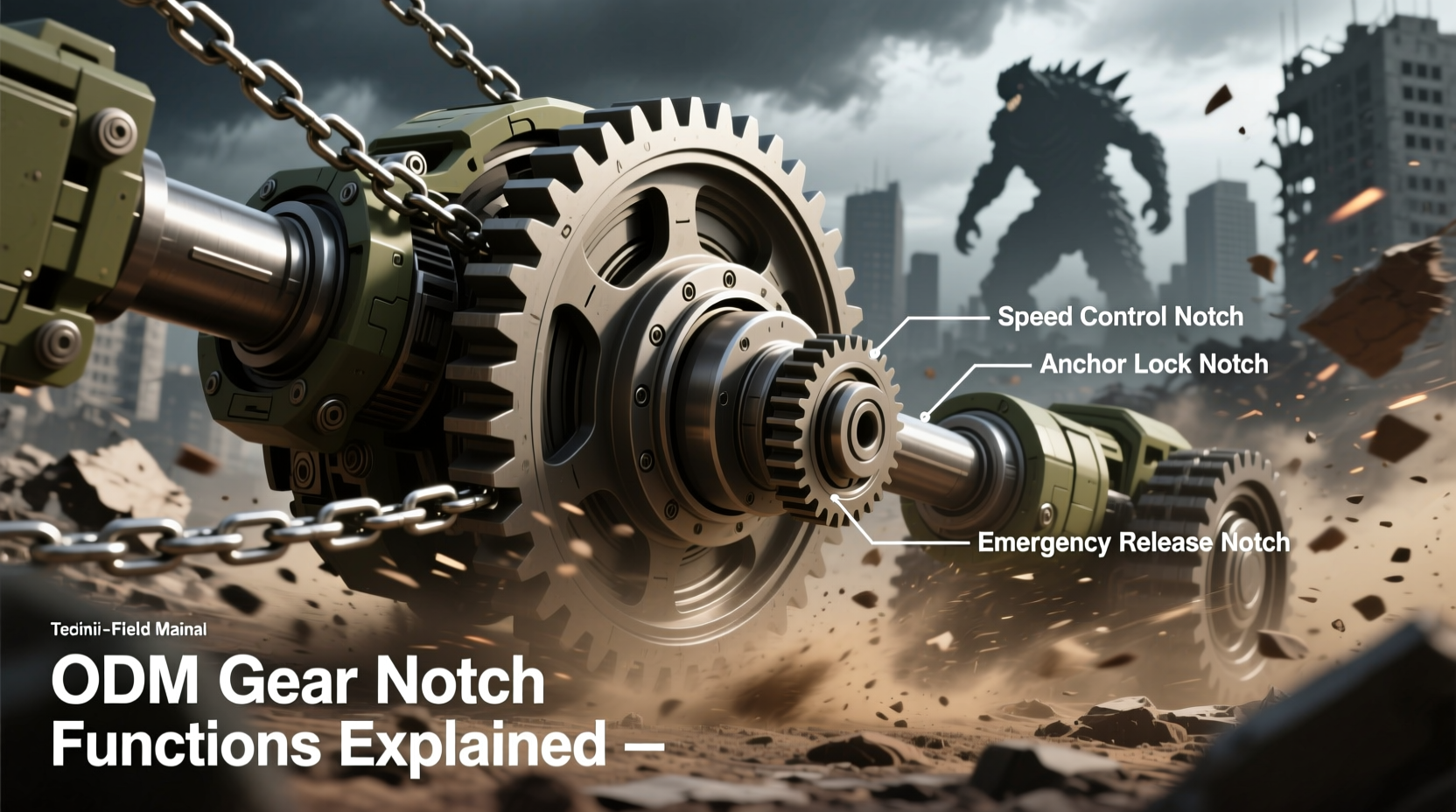
The ODM gear consists of several key parts: dual blades mounted on rotating holsters, compressed gas canisters, pulley-driven cables, and the anchoring hooks launched via hand triggers. The system enables rapid movement through urban ruins and forested areas by allowing users to grapple onto buildings or trees and swing across large distances at high speeds.
At the heart of this system lies the gas propulsion mechanism. Compressed gas stored in twin tanks powers the acceleration of the user during swings and mid-air repositioning. However, uncontrolled release would result in wasted resources or destabilizing thrusts. This is where the notches come in—they serve as mechanical regulators for gas flow, ensuring measured output based on the operator’s needs.
“Precision in motion isn’t achieved by strength alone—it’s about controlling force down to the last puff of gas.” — Captain Levi Ackerman, Survey Corps
What Are the Notches? Structure and Location
The notches refer to a series of calibrated settings located on the gas control valves of the ODM gear, typically found near the waist-mounted gas cylinders. Each notch corresponds to a predefined level of gas discharge per second. Most standard-issue units feature between five and seven distinct notches, marked numerically or with indicators for quick reference.
These settings are manually adjusted before deployment, depending on mission parameters. For example:
- Notch 1–2: Minimal gas use, ideal for short-distance corrections or controlled descents.
- Notch 3–4: Balanced output, used in routine patrols and moderate-speed maneuvers.
- Notch 5–7: High-output mode, reserved for emergency escapes or rapid assaults.
Each adjustment alters the valve aperture size, directly affecting how much pressurized gas enters the propulsion nozzles when triggered. Soldiers must pre-select their preferred setting because there is no in-flight adjustment during active swings due to safety and mechanical constraints.
Functional Role in Combat and Mobility
The primary function of the notches is twofold: conservation of limited gas supplies and optimization of kinetic efficiency during movement. Gas canisters cannot be refilled mid-mission, making every burst count. A poorly chosen notch can lead to either sluggish movement or premature depletion.
Consider a scenario where a Scout engages a Titan in narrow streets. Using a high-gas setting here could cause overshooting targets or crashing into walls due to excessive momentum. Conversely, using too low a setting in open terrain might prevent timely escape from a charging Titan.
Beyond propulsion, some advanced ODM models link notch settings to blade deployment sensitivity. Higher notches may trigger faster blade ejection upon impact detection, improving reaction time during decapitation attempts. This integration underscores the holistic engineering behind the gear—where even minor adjustments influence multiple systems.
Table: Notch Settings and Tactical Applications
| Notch Level | Gas Output | Typical Use Case | Risks of Misuse |
|---|---|---|---|
| 1–2 | Low | Urban reconnaissance, stealth approaches | Insufficient thrust for evasion |
| 3–4 | Moderate | Standard patrol, general combat | Moderate gas consumption |
| 5–6 | High | Open-field chases, rapid retreats | Fast gas depletion, reduced control |
| 7 (Max) | Maximum | Emergency launch, last-resort escape | Near-total gas drain in seconds |
Training and Soldier Proficiency
During basic training, cadets spend weeks mastering notch selection under varying conditions. Instructors emphasize that technical knowledge without situational awareness leads to failure. Trainees practice adjusting notches blindfolded, simulating battlefield stress where visual confirmation isn’t possible.
A notable mini case study involves Armin Arlert during the Battle of Trost. Though physically weaker than his peers, Armin compensates by optimizing his ODM settings. He uses lower notches to conserve gas while luring a Titan into a confined space, then switches to maximum output only at the decisive moment—allowing him to reposition quickly and deliver a fatal strike. His success highlights how strategic thinking combined with proper gear management can overcome physical limitations.
This kind of calculated approach reflects a broader truth in the series: victory often depends less on brute power and more on resource intelligence. As Commander Erwin Smith once stated, “Every meter of cable, every liter of gas, every millisecond—we weaponize them all.”
Step-by-Step: How Soldiers Select the Right Notch Setting
- Assess the environment: Determine whether the area is open, cluttered, or vertically complex.
- Evaluate threat proximity: Closer Titans require faster response times, possibly necessitating higher notches.
- Estimate mission duration: Longer operations demand conservative gas usage, favoring lower settings.
- Confirm blade synchronization: On newer models, verify that notch choice aligns with blade response thresholds.
- Test briefly if possible: Perform a short maneuver to confirm responsiveness before engaging enemies.
Frequently Asked Questions
Why don't soldiers adjust notches mid-combat?
The ODM gear lacks real-time adjustment mechanisms for safety reasons. Changing gas flow mid-swing could destabilize trajectory or cause valve jams. Pre-setting ensures reliability under extreme G-forces and reduces cognitive load during high-stress situations.
Can you modify the number of notches on ODM gear?
Only specialized units like the Military Police or elite Scouts have access to custom-tuned gear. Standard infantry models use factory-fixed notch ranges. Unauthorized modifications are strictly prohibited due to explosion risks from over-pressurization.
Do different manufacturers use different notch systems?
Yes. While the Survey Corps standardizes equipment around a 7-notch model for consistency, older or regional variants may use analog dials or binary (high/low) switches. These differences contribute to interoperability challenges during joint operations.
Conclusion: Mastering the Details That Save Lives
The notches on ODM gear may seem like minor mechanical details, but in the brutal reality of Titan warfare, they represent the difference between life and death. They embody the series’ core theme: survival through ingenuity, discipline, and attention to detail. Whether navigating the ruins of Shiganshina or launching a desperate counterattack beyond the walls, every Scout relies on these small regulators to stretch their capabilities to the limit.
Understanding the purpose and function of ODM gear notches offers more than technical insight—it reveals the depth of planning behind one of anime’s most compelling inventions. It reminds us that true mastery lies not in flashy moves, but in silent, precise choices made before the fight even begins.




 浙公网安备
33010002000092号
浙公网安备
33010002000092号 浙B2-20120091-4
Comments
No comments yet. Why don't you start the discussion?