
Mac and cheese is a beloved comfort food—creamy, rich, and deeply satisfying when done right. But too often, home cooks pull a golden casserole from the oven only to find pools of oil separating from the sauce. Greasy mac and cheese isn’t just unappetizing; it’s a sign that something went wrong in the process. The good news? Most causes are preventable—and even fixable mid-cook. Understanding why your mac and cheese turns oily empowers you to create consistently smooth, velvety results.
Why Mac and Cheese Becomes Oily: The Science Behind the Separation
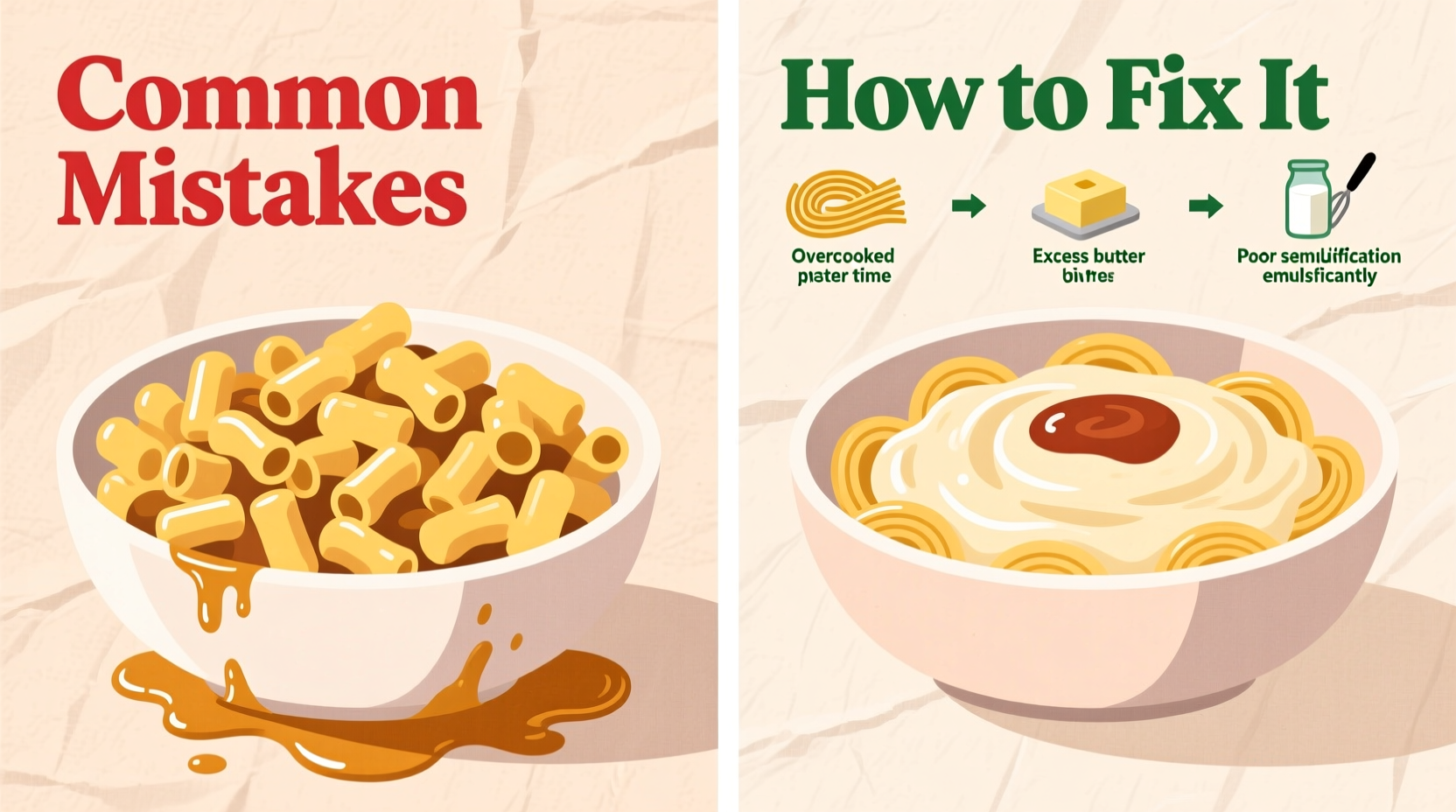
The creaminess of mac and cheese relies on a delicate emulsion—a stable blend of fat (butter, oil, or cheese fat) and liquid (milk, cream, or pasta water). When this emulsion breaks, fat separates and pools on the surface. This breakdown typically occurs due to temperature shock, incorrect ingredient ratios, or poor cheese selection.
Cheese contains proteins, water, and fat. When heated too quickly or unevenly, the proteins tighten and expel fat and moisture. High-fat cheeses like cheddar naturally release more oil when melted, especially if not balanced with stabilizing ingredients such as flour or starch. Additionally, adding cold dairy to a hot roux or removing the sauce from heat before fully incorporating can cause separation.
“Emulsions in cheese sauces are fragile. Gentle heat and gradual integration are non-negotiable for a smooth texture.” — Dr. Sarah Lin, Food Scientist & Culinary Chemist
5 Common Mistakes That Lead to Oily Mac and Cheese
- Using high-fat cheeses without balancing them: Sharp cheddar is flavorful but releases a lot of oil when melted. Using it exclusively increases greasiness.
- Overheating the sauce: Boiling a cheese sauce destabilizes its emulsion. Once it reaches a simmer, cheese should be added off direct heat.
- Adding cheese to a bubbling-hot base: Sudden temperature changes cause proteins to seize, pushing out fat.
- Not using a proper roux: Skipping the flour-butter base means no starch to bind fat and liquid, making separation more likely.
- Using pre-shredded cheese: These contain anti-caking agents like cellulose, which hinder smooth melting and promote graininess and oil pooling.
How to Fix Oily Mac and Cheese: Step-by-Step Rescue Methods
If you’ve already encountered a greasy sauce, don’t discard it. Several techniques can restore smoothness and balance.
- Remove from heat immediately: Continuing to cook will worsen separation.
- Add a starch slurry: Mix 1 teaspoon cornstarch with 1 tablespoon cold milk. Whisk into the sauce over low heat until it thickens and re-emulsifies.
- Incorporate a splash of warm milk or cream: Adding liquid helps reintegrate fat droplets back into the emulsion. Do this gradually while stirring gently.
- Use an immersion blender: Brief blending (5–10 seconds) can mechanically recombine separated components.
- Mix in a small amount of sodium citrate (optional): A pinch (1/8 tsp per cup of sauce) acts as an emulsifier, helping fat and water bind. Popular in restaurant-style cheese sauces.
After applying these fixes, taste and adjust seasoning. The sauce should coat the back of a spoon without leaving oily streaks.
Do’s and Don’ts for Creamy, Non-Greasy Mac and Cheese
| Do’s | Don’ts |
|---|---|
| Use a roux (butter + flour) as a base | Skip thickening agents entirely |
| Shred cheese yourself | Use pre-shredded cheese with fillers |
| Melt cheese off direct heat | Add cheese to boiling liquid |
| Combine lower-fat cheeses with high-fat ones (e.g., Gruyère with cheddar) | Use only extra-sharp cheddar |
| Stir constantly and gently | Walk away during cheese melting |
A Real Kitchen Scenario: Rescuing a Family Dinner Disaster
Jamie prepared mac and cheese for a weeknight dinner using only pre-shredded sharp cheddar and heavy cream. After baking, the top shimmered with oil, and the sauce had a gritty texture. Guests hesitated to serve themselves. Instead of starting over, Jamie reheated the dish on the stove, removed it from heat, and whisked in a mixture of 1 tbsp whole milk and 1 tsp cornstarch. After gentle stirring, the sauce regained body and shine. A handful of freshly grated Gruyère improved both flavor and texture. The second attempt was creamy and well-received—proof that recovery is possible with the right knowledge.
Prevention Checklist: Build the Perfect Mac and Cheese Every Time
- ▢ Use a roux (equal parts butter and flour) cooked for 1–2 minutes
- ▢ Warm milk or cream before adding to the roux
- ▢ Shred cheese from blocks just before use
- ▢ Remove sauce from heat before adding cheese
- ▢ Melt cheese gradually, stirring constantly
- ▢ Combine cheeses: use one melty (like Fontina), one flavorful (cheddar), and one creamy (like Monterey Jack)
- ▢ Finish with a splash of pasta water to enhance silkiness
- ▢ Avoid baking at high temperatures (keep below 375°F / 190°C)
Frequently Asked Questions
Can I fix oily mac and cheese after it’s baked?
Yes, though it's harder. Scoop the mac and cheese back into a saucepan. Add a few tablespoons of warmed milk and a cornstarch slurry. Stir over low heat until reabsorbed and smooth. Return to the oven briefly if needed to reheat.
Why does my homemade mac and cheese look oily even if it tastes fine?
Even with good flavor, visual oiliness suggests incomplete emulsification. This often happens when cheese is overheated or when starch content is too low. Next time, increase the roux slightly or add a bit more milk during melting.
Is there a cheese blend that prevents oiliness?
Yes. A balanced blend works best: 50% medium cheddar, 30% Gruyère or Fontina, and 20% American or young Colby. American cheese contains emulsifiers that help maintain smooth texture, even when reheated.
Final Tips for Consistently Creamy Results
Perfect mac and cheese isn’t about fancy ingredients—it’s about technique. Respect the science of emulsions. Keep heat moderate, integrate ingredients thoughtfully, and never rush the melt. Consider reserving a cup of starchy pasta water; it’s a powerful tool for adjusting consistency and enhancing cohesion. And remember, a little preventive care beats last-minute fixes.
Whether you’re cooking for kids, hosting a potluck, or craving a solo bowl of comfort, mastering mac and cheese means mastering control over fat, heat, and balance. With these insights, oily disasters become rare—and easily corrected when they happen.




 浙公网安备
33010002000092号
浙公网安备
33010002000092号 浙B2-20120091-4
Comments
No comments yet. Why don't you start the discussion?