
The Nintendo Switch has evolved since its 2017 debut, with the OLED model arriving in 2021 as a premium alternative to the original. While hardcore gamers may obsess over specs, most players fall into the “casual” category—those who play a few hours a week, enjoy indie titles or party games, and prioritize comfort and convenience over pixel-perfect visuals. For this group, the question isn’t just about technical superiority; it’s whether the upgrade delivers a meaningful improvement in everyday use.
The OLED Switch features a 7-inch organic light-emitting diode display, compared to the standard model’s 6.2-inch LCD. On paper, that sounds like a clear win. But does the average player actually notice the difference during a relaxed session of Animal Crossing, a quick round of Super Smash Bros., or a co-op run through It Takes Two? The answer depends on usage patterns, sensitivity to visual quality, and expectations.
Visual Clarity: What Changes Between Models?
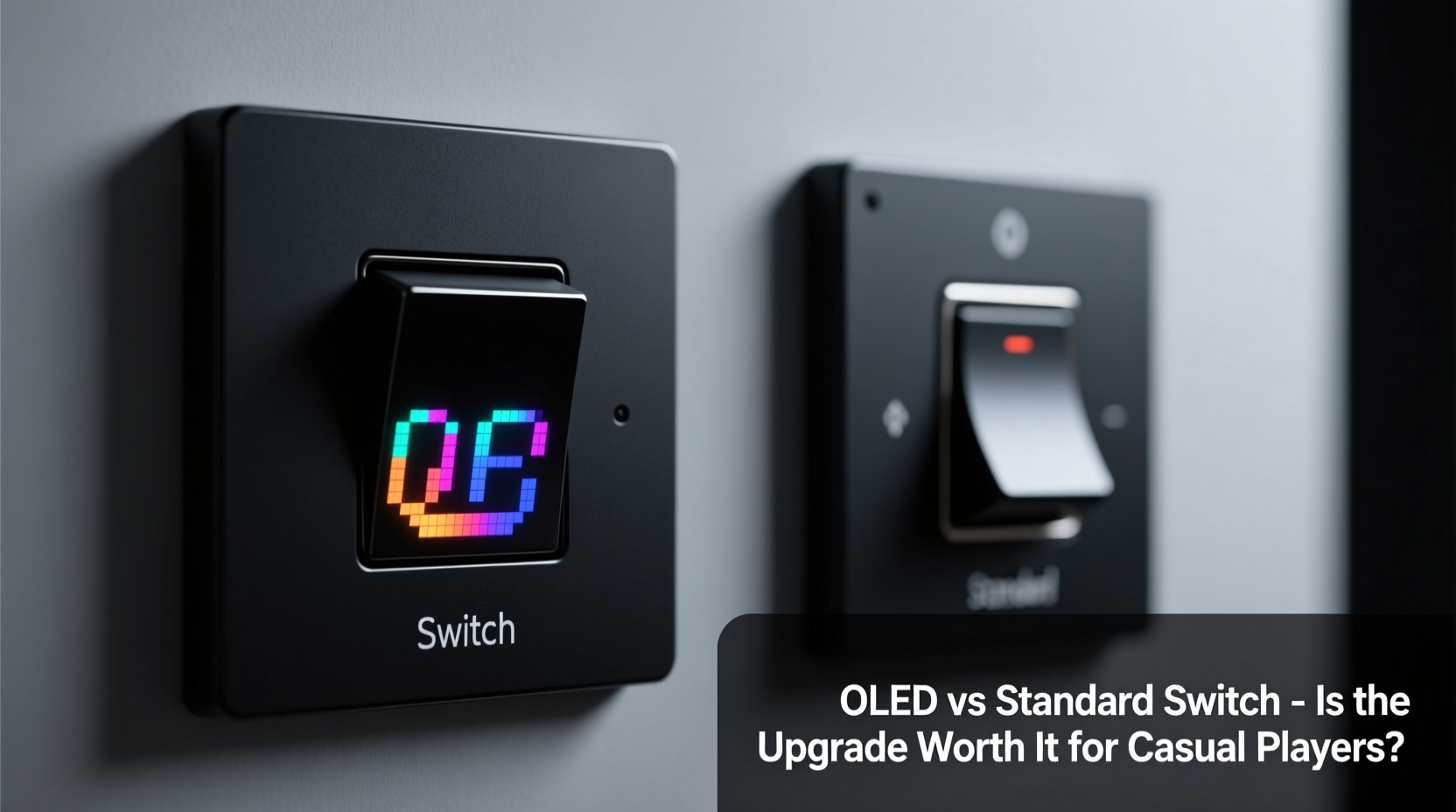
The most immediate difference lies in screen technology. LCDs rely on a backlight to illuminate pixels, which can lead to uneven brightness, grayish blacks, and limited contrast. OLED screens, by contrast, illuminate each pixel individually. When a pixel is off, it’s truly black—resulting in deeper shadows, richer colors, and superior contrast ratios.
In practical terms, this means:
- Darker scenes feel more immersive: Games like Metroid Dread or Hollow Knight benefit from improved depth, making environments feel more atmospheric.
- Colors pop more vividly: The OLED panel supports a wider color gamut, so greens in Stardew Valley appear lusher, and sunsets in The Legend of Zelda: Breath of the Wild glow with warmth.
- Viewing angles are better: Tilting the device doesn’t wash out colors or dim the image as much, which helps when sharing the screen with friends.
However, for someone playing primarily in well-lit rooms or switching frequently between docked and handheld modes, these enhancements may not register as dramatic. Casual players often care less about shadow detail in a dungeon and more about whether they can see their character clearly during a Mario Kart race.
Battery Life and Performance: Do They Match Up?
One concern among buyers is whether the upgraded screen drains power faster. Surprisingly, the OLED model matches or slightly exceeds the original’s battery life despite the larger, more advanced display. This is due to improvements in power efficiency—OLEDs consume less energy when displaying dark content—and a modest increase in battery capacity.
| Feature | Standard Switch (2017) | OLED Switch (2021) |
|---|---|---|
| Screen Size | 6.2 inches | 7.0 inches |
| Display Type | LCD | OLED |
| Resolution | 1280x720 | 1280x720 |
| Battery Life | 4.5–9 hours | 4.5–9 hours |
| Storage | 32GB | 64GB |
| Speaker Quality | Average | Improved stereo separation |
| Stand | Basic kickstand | Wide adjustable kickstand |
While resolution remains unchanged, the larger screen spreads the same number of pixels across more area, technically reducing pixel density. Yet, most users don’t perceive a drop in sharpness because OLED’s superior contrast compensates visually. Text remains readable, and UI elements stay crisp.
Performance-wise, both models run the same Tegra X1 chip. There’s no frame rate boost or faster loading times from the OLED alone. Any perceived smoothness comes from better motion clarity on the panel, not raw processing power.
Real-World Experience: A Day in the Life of a Casual Player
Consider Sarah, a 32-year-old teacher who plays Switch mainly on weekends. She enjoys puzzle games like Tetris 99, occasionally dabbles in Luigi’s Mansion 3, and loves hosting local multiplayer nights with Overcooked! 2. She bought the original Switch in 2018 and recently considered upgrading after noticing her screen had yellowed slightly at the edges.
She tested both models side by side at a retail store. The OLED’s colors were undeniably richer, and she appreciated the wider kickstand when placing the console on her coffee table. But when she played Snipperclips with her niece, the gameplay experience felt identical. The characters were just as visible, the controls just as responsive.
What swayed her wasn’t the screen—it was the extra storage. She’d been relying on a microSD card for months, and the OLED’s 64GB internal capacity meant she could install several games without swapping cards. Additionally, the improved speakers made dialogue in story-driven games easier to follow without headphones.
“Most consumers don’t need the best possible display—they need one that works reliably in their environment. For many, the OLED’s refinements are subtle but cumulative.” — David Liu, Consumer Electronics Analyst at TechPulse Insights
Sarah ultimately upgraded, but not because the visuals blew her away. It was the combination of small quality-of-life improvements that justified the cost. Her experience reflects a broader trend: for casual users, individual upgrades may seem minor, but together they enhance daily usability.
When the Upgrade Matters—And When It Doesn’t
The value of the OLED Switch hinges on how and where you play. Here’s a checklist to help determine if the upgrade is worthwhile for your habits:
✅ Consider the OLED if you:
- Play primarily in handheld mode
- Enjoy visually rich games (e.g., Celeste, Octopath Traveler)
- Use the console on tabletop mode frequently
- Want better built-in audio for shared play
- Prefer fewer accessories (no need for external stands)
- Have storage limitations on your current device
❌ Stick with the standard or Lite model if you:
- Dock your Switch most of the time (TV output is identical)
- Only play simple or 2D games (Among Us, Jackbox Party Pack)
- Are budget-conscious and don’t mind minor inconveniences
- Already own a Switch and aren’t experiencing hardware issues
Long-Term Value and Future-Proofing
Another factor for casual players is longevity. The original Switch’s plastic build feels less durable over time, especially with frequent travel. The OLED model uses a stronger aluminum rail for the kickstand and a more rigid body, which resists scratches and drops better. While neither is indestructible, the OLED’s construction inspires more confidence for use on couches, picnic tables, or airplane trays.
Additionally, Nintendo has not released a successor to the OLED model as of 2024. That suggests it remains their flagship handheld offering, meaning software support and resale value will likely last longer. For someone buying their first Switch, choosing the OLED now avoids an early obsolescence cycle.
Still, it’s important to recognize diminishing returns. The jump from the original Switch to OLED is significant, but not revolutionary. It’s akin to upgrading from a standard HD TV to a mid-tier OLED—not as stunning as a full 4K HDR setup, but clearly better than what came before.
Frequently Asked Questions
Does the OLED Switch have better graphics than the standard model?
No, the graphics processing is identical. Both use the same NVIDIA Tegra X1 chip. The OLED only improves the display quality—colors, contrast, and screen size—but does not enhance resolution, frame rate, or graphical effects in games.
Can I tell the difference if I’m not a tech-savvy user?
You might not notice right away, especially if you’re used to the original screen. However, after using the OLED for a few days, many casual players report that returning to an LCD model feels “flat” or “washed out.” The difference becomes apparent in side-by-side comparisons or when watching videos with dark scenes.
Is the OLED Switch worth it for someone who only plays occasionally?
Only if you value comfort and convenience. If you play less than two hours per week, the upgrade won’t transform your experience. But if those moments matter—like unwinding with a game before bed or playing with kids on weekends—the improved screen and audio can make them more enjoyable. It’s less about performance and more about pleasure in the details.
Final Verdict: Is the Screen Upgrade Noticeable for Casual Players?
The short answer: yes, but subtly. The OLED Switch doesn’t deliver a jaw-dropping leap in visual fidelity for the average user. You won’t suddenly see hidden textures or experience smoother gameplay. What changes is the overall viewing experience—more vibrant colors, deeper blacks, and a larger, sturdier design that feels modern and reliable.
For casual players, the decision shouldn’t hinge on specs alone. Instead, ask yourself: do I want a device that feels premium in my hands? Do I play enough in handheld mode to appreciate a better screen? Am I tired of propping up my console with books because the old stand won’t stay open?
If most of your gaming happens on the go or in shared spaces, the OLED Switch earns its price premium through consistent, thoughtful improvements. It’s not essential, but it is satisfying. And for someone who values relaxation and ease, satisfaction matters more than raw numbers.
“The best tech upgrade isn’t always the fastest or flashiest—it’s the one that disappears into your routine, making every interaction just a little better.” — Lena Tran, UX Designer & Gaming Enthusiast
Take Action: Choose Based on Your Playstyle
Don’t buy the OLED Switch expecting a revolution. But if you’re replacing an aging model, buying your first console, or simply want a more polished handheld experience, it’s the most refined version Nintendo has ever released. Visit a store to compare screens in person, test the kickstand, and listen to the speakers. Let your eyes and ears guide you—not marketing claims.
Ultimately, gaming is personal. Whether you choose the standard, OLED, or even the smaller Switch Lite, what matters is that you play. But when you do, make sure it feels good.




 浙公网安备
33010002000092号
浙公网安备
33010002000092号 浙B2-20120091-4
Comments
No comments yet. Why don't you start the discussion?