
In 2025, the battle between OLED and QLED TVs has never been more intense. With rapid advancements in display technology, manufacturers have pushed both formats to new heights. While OLED has long reigned supreme for its perfect blacks and cinematic contrast, QLED—backed by Samsung and other major brands—has made significant strides in brightness, color volume, and longevity. Consumers now face a real dilemma: Is it time to abandon OLED’s premium price tag for a high-end QLED, or does the self-emissive magic of OLED still justify its dominance?
This isn’t just about marketing hype. It’s about how each technology performs in real-world living rooms, gaming setups, and movie nights. Let’s break down the key differences, examine where QLED has closed the gap, and determine whether OLED remains the undisputed king.
Understanding the Core Technologies
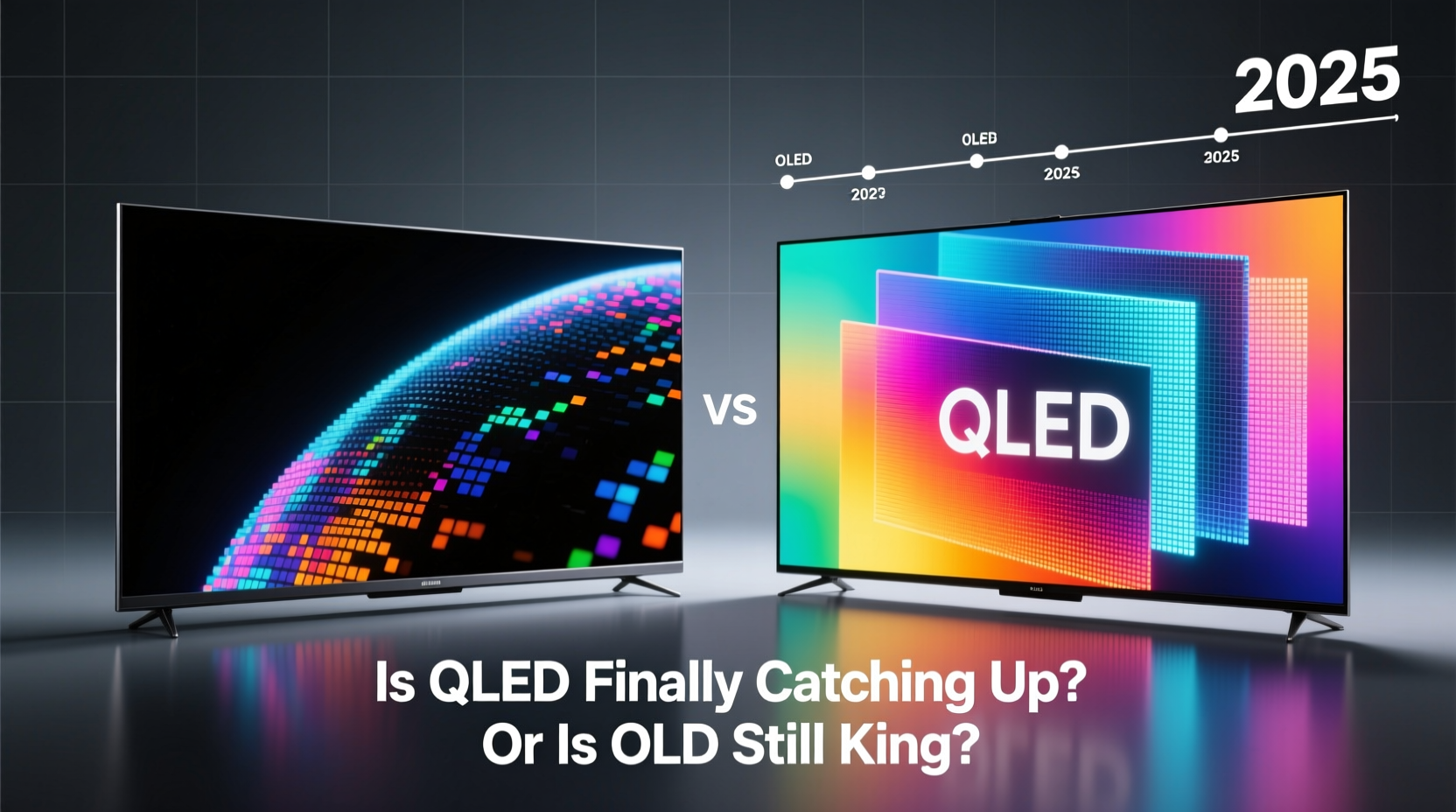
The fundamental difference between OLED and QLED lies in how they produce light and color.
OLED (Organic Light-Emitting Diode) uses organic compounds that emit light when an electric current passes through them. Each pixel is self-illuminating, meaning it can turn completely off to produce true black. This results in infinite contrast ratios and exceptional viewing angles.
QLED (Quantum-dot Light Emitting Diode), on the other hand, is a type of LCD TV that uses a quantum dot layer to enhance color and brightness. It relies on a full-array LED backlight, which limits its ability to achieve true black because the backlight cannot be fully extinguished at the pixel level.
While QLED isn't a self-emissive technology like OLED, Samsung and other manufacturers have improved local dimming algorithms, mini-LED backlights, and quantum dot efficiency to close the performance gap—especially in bright environments.
Picture Quality: Contrast, Brightness, and Color
Picture quality remains the most critical factor when choosing a premium TV. Here’s how OLED and QLED compare across three essential metrics:
| Metric | OLED | QLED (Mini-LED) |
|---|---|---|
| Contrast Ratio | Infinite (perfect blacks) | High (but limited by backlight bleed) |
| Peak Brightness | 800–1000 nits (typical), up to 1300 with newer panels | 1500–3000+ nits (ideal for HDR) |
| Color Volume | Excellent in dark rooms | Superior in bright scenes due to higher luminance |
| Viewing Angles | Nearly perfect, even at extreme angles | Noticeable color shift beyond 30 degrees |
| HDR Performance | Cinematic depth, best in controlled lighting | Bold highlights, better in sunlit rooms |
OLED continues to deliver unmatched contrast, making it ideal for dark-room viewing, film enthusiasts, and gamers who value deep immersion. However, QLED—with advanced mini-LED backlights and hundreds or thousands of dimming zones—now offers competitive shadow detail and far superior brightness, particularly beneficial for HDR content in well-lit environments.
“QLED has evolved from a budget alternative to a genuine competitor. In brightly lit spaces, modern QLEDs can outperform OLED in perceived vibrancy and highlight detail.” — Dr. Lena Torres, Display Technology Analyst at AV Insights Group
Gaming and Motion Performance
For gamers, input lag, refresh rate, and motion clarity are crucial. Both technologies have adapted well to the demands of next-gen consoles and PC gaming.
- OLED: Offers near-instantaneous response times (under 0.1ms), reducing motion blur. Most models support 120Hz refresh rates, VRR (Variable Refresh Rate), and ALLM (Auto Low Latency Mode).
- QLED: Modern QLEDs also support HDMI 2.1, 120Hz, VRR, and low input lag—some even exceed OLED in sustained brightness during gameplay.
However, OLED still holds an edge in motion clarity due to its pixel-level control. Fast-paced games like first-person shooters or racing titles benefit from OLED’s crisp transitions and lack of ghosting.
One concern with OLED remains burn-in risk during extended gaming sessions with static HUDs. While manufacturers have implemented pixel refreshers and logo dimming, prolonged use with fixed elements can still pose a threat over years.
QLED, being immune to burn-in, offers greater peace of mind for marathon gaming or mixed-use scenarios (e.g., using the TV as a secondary monitor).
Lifespan and Durability: The Long-Term View
Durability is increasingly influencing buyer decisions. OLED panels degrade over time, especially blue subpixels, leading to potential color imbalance or brightness loss after many thousands of hours. While LG claims 30,000 hours to half-brightness, real-world usage patterns matter.
QLEDs, by contrast, rely on inorganic quantum dots and LED backlights, which degrade much more slowly. They are less prone to permanent image retention and maintain consistent brightness longer—making them a smarter choice for households with varied daily usage, including news channels, sports bars, or home offices.
Maintenance Checklist for Longevity
- Enable screen savers or auto-dimming for static content
- Avoid max brightness settings for extended periods
- Use pixel refresher tools monthly (OLED only)
- Turn off the TV when not in use—don’t leave it on standby with paused images
- Keep firmware updated for optimal panel management
Real-World Example: The Martinez Family's Upgrade Dilemma
The Martinez family in Austin, Texas, recently upgraded their 75-inch living room TV. Their sun-drenched family room made previous OLEDs look washed out during daytime viewing. After testing both a 2025 LG G4 OLED and a Samsung Neo QLED QN90F, they chose the QLED—not for cost, but for performance.
“The OLED looked stunning at night,” said Carlos Martinez, “but during the day, the QLED was brighter, clearer, and more vibrant. We watch a lot of sports and kids’ shows with bright backgrounds. The QLED handled it all without glare issues.”
They did note slightly deeper blacks on the OLED in dark scenes, but overall usability tipped the scale toward QLED. For their environment, the trade-off was worth it.
Price and Value in 2025
Historically, OLED has commanded a 30–50% price premium over comparable QLED models. In 2025, this gap persists but is narrowing due to increased competition and manufacturing scale.
- Premium OLED (LG, Sony): $2,500–$4,000 for 65–77 inches
- High-End QLED (Samsung, TCL, Hisense): $1,800–$2,800 for similar sizes with mini-LED
Mid-range QLEDs now offer features once exclusive to OLEDs—such as wide color gamut, AI upscaling, and Dolby Vision support—making them compelling for budget-conscious buyers who don’t want to compromise heavily on quality.
Meanwhile, OLED manufacturers are focusing on durability improvements (like LG’s MLA2 panels) and eco-friendly production, but these innovations haven’t drastically reduced costs.
Frequently Asked Questions
Is QLED better than OLED for bright rooms?
Yes. QLED’s higher peak brightness and improved anti-glare coatings make it significantly better in sunny or brightly lit environments. OLED can struggle with visibility under strong ambient light.
Can I still get burn-in on OLED TVs?
Risk exists, though modern OLEDs include robust protection: pixel shifting, logo dimming, and automatic refresh cycles. For typical mixed usage, burn-in is unlikely within 5–7 years. But static content (news tickers, video game HUDs) increases risk over time.
Will QLED ever match OLED in contrast?
Not fully. Because QLED relies on a backlight, it cannot achieve true black. Even with advanced mini-LED and dense dimming zones, some haloing and blooming occur around bright objects on dark backgrounds. OLED’s per-pixel control remains unmatched here.
The Verdict: King or Challenger?
In 2025, OLED remains the king of picture quality—especially for cinephiles, gamers in controlled lighting, and those who prioritize contrast and viewing angles. Its ability to deliver perfect blacks and lifelike depth is still unmatched.
But QLED is no longer just chasing—it’s competing head-on. With dramatic improvements in mini-LED backlights, color accuracy, and brightness, high-end QLEDs now offer a compelling alternative, particularly in real-world, multi-use homes.
If your priority is cinematic perfection in a dark room, OLED still wins. But if you value versatility, brightness, durability, and value, QLED has earned its place at the top table.




 浙公网安备
33010002000092号
浙公网安备
33010002000092号 浙B2-20120091-4
Comments
No comments yet. Why don't you start the discussion?