
The One Piece anime, created by Eiichiro Oda and produced by Toei Animation, is one of the longest-running series in television history. With over 1,000 episodes as of 2024, it’s no surprise that fans often seek ways to streamline their viewing experience. While the manga remains the definitive version of the story, the anime includes a significant number of filler episodes—scenes not present in the original source material.
For viewers who want to experience the core narrative without spending hundreds of extra hours, knowing which episodes to skip is crucial. This guide provides a comprehensive breakdown of One Piece’s filler content, highlights major canon arcs, and identifies exactly which episodes can be skipped without losing critical plot developments.
Understanding Filler vs. Canon in One Piece
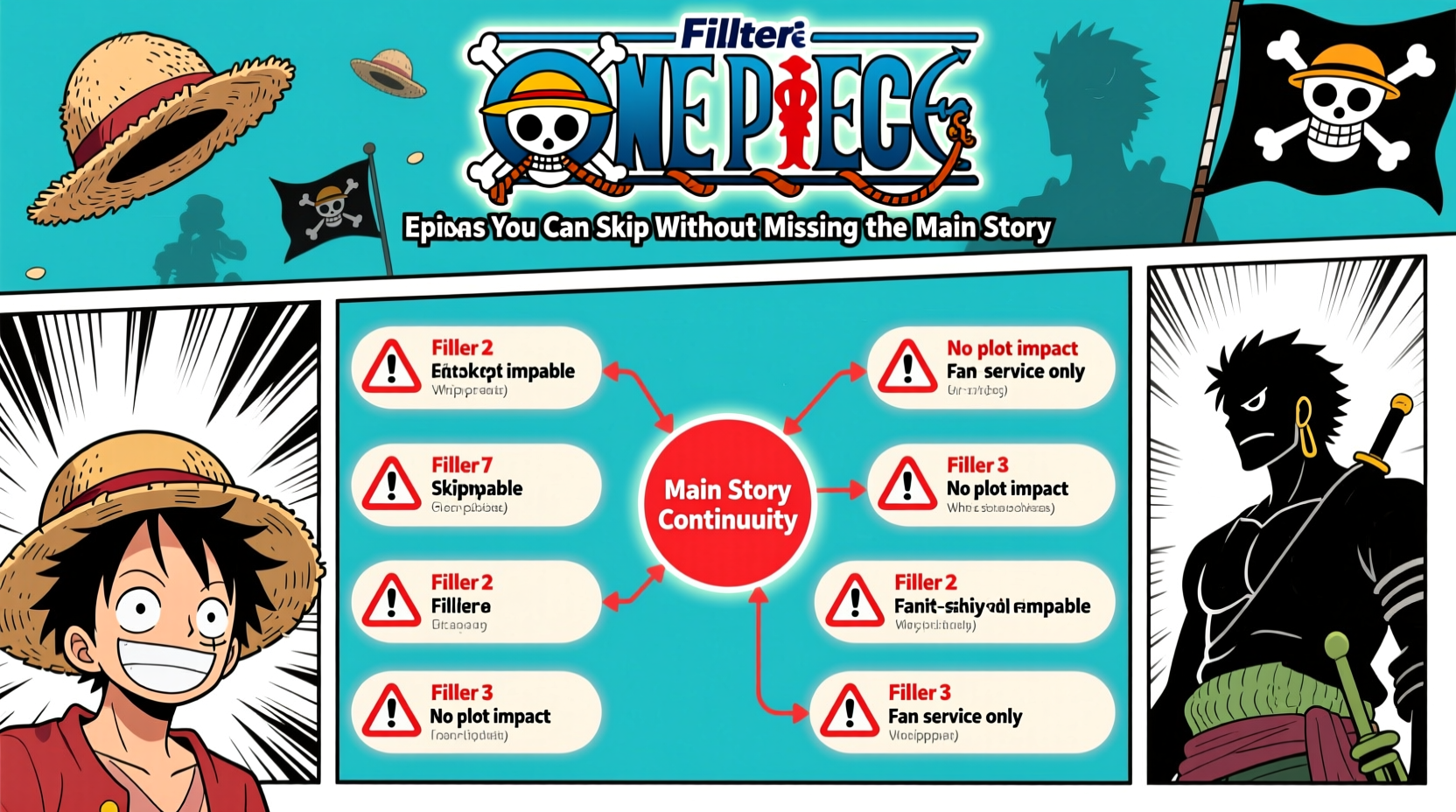
In anime production, \"filler\" refers to episodes created to extend the runtime beyond the current manga output. These episodes may feature side stories, character backstories, or entirely new adventures invented by the animation team. While some fillers are well-received and add depth to characters, others serve little purpose beyond buying time for the manga to progress.
One Piece has a complex relationship with filler. Approximately 30% of its total episodes are non-canon, but the distribution varies greatly across story arcs. Some sagas are 100% faithful to the manga (canon), while others contain long stretches of filler.
Eiichiro Oda maintains creative oversight, meaning most filler content aligns with the tone and world-building of the series. However, skipping filler episodes will not result in missing essential plot points, character development tied to main arcs, or future revelations.
“Filler exists to give breathing room to the manga, but the true journey of Luffy and his crew unfolds only in canon.” — Anime Production Insider, Toei Studio Interview (2020)
Major Canon Arcs You Should Never Skip
The backbone of One Piece lies in its manga-adapted story arcs. These sequences advance the central plot, introduce pivotal characters, and build toward the overarching mystery of the Void Century, the One Piece treasure, and the Will of D. Roger. Below are the essential canon arcs every viewer must watch:
- East Blue Saga – Establishes Luffy’s dream, crew formation, and foundational themes.
- Alabasta Saga – Introduces Warlords, the World Government, and large-scale political conflict.
- Water 7 & Enies Lobby – The emotional peak of Robin’s backstory and the crew’s unity.
- Thriller Bark – Introduces Moriah and sets up the Supernovas.
- Sabaody Archipelago & Marineford War – Critical for understanding the power balance in the world and Ace’s fate.
- Return to Sabaody & Fish-Man Island – Sets the stage for the New World journey.
- Dressrosa – Exposes the corruption of the World Government and Donquixote family.
- Zou & Whole Cake Island – Focuses on Sanji’s past, Big Mom, and Wano foreshadowing.
- Wano Country – Climactic battle against Kaido and revelation of ancient weapons.
- Egghead Island – Current arc exploring science, Vegapunk, and revolutionary politics.
These arcs are all adapted directly from the manga and should never be skipped, regardless of pacing or personal preference.
Comprehensive Filler List: Which Episodes Can Be Skipped?
The following table outlines major filler arcs, their episode ranges, and whether they contain any canon-relevant moments. Episodes marked as “Skip” can be bypassed without consequence. Those labeled “Optional” may include minor lore or character moments but remain non-essential.
| Filler Arc | Episode Range | Status | Notes |
|---|---|---|---|
| Post-Arabasta / Goat Island | 131–135 | Skip | Invented recovery arc; no impact on plot. |
| G-8 Arc | 196–228 | Skip | Long military base filler; humorous but irrelevant. |
| Post-Enies Lobby / Post-War Recovery | 382–407 | Optional | Mostly skip; includes Foxy rematch (fun but non-canon). |
| Impel Down Flashback | 420–421 | Optional | Bonus scenes of Magellan; adds minor context. |
| Post-Marineford / Luffy Training | 458–516 | Skip | Famous \"Power\" filler; delays return to crew. |
| Caesar Clown Mini-Arc | 575–578 | Optional | Leads into Punk Hazard; light setup but skippable. |
| Yamato Teaser Filler | 967–968 | Optional | Hints at Wano events; better experienced in canon. |
| Final Saga Previews | 1000–1004, 1006–1007 | Optional | Recaps and flashbacks; useful for memory refresh. |
Note: Between Episode 517 and 900, the anime was largely canon due to the manga catching up during the two-year timeskip. Since then, filler has been minimal and mostly limited to recaps or short transitional segments.
Step-by-Step Guide to Watching One Piece Efficiently
If your goal is to experience the full narrative without unnecessary detours, follow this timeline:
- Start from Episode 1 – The East Blue saga is entirely canon and vital for character introductions.
- Skip Episodes 131–135 – Goat Island filler adds nothing to the Alabasta transition.
- Watch straight through to Episode 195 – All canon up to departure from Alabasta.
- Skip Episodes 196–228 (G-8 Arc) – Return at Episode 229 for the Ocean’s Dream mini-arc, which leads into Water 7.
- Continue through Water 7, Enies Lobby, and Post-Enies Lobby (Episodes 229–381) – Mostly canon with minor fight extensions.
- Skip Episodes 382–407 – Post-war recovery and Foxy rematches are non-canon.
- Resume at Episode 408 – Thriller Bark begins, fully canon until Marineford.
- Skip Episodes 422–457 – These cover the Straw Hats’ separate journeys; only Luffy’s training (Episodes 574–575) briefly references it later.
- Jump to Episode 517 – Rejoin for the return to Sabaody and start of the New World saga.
- Watch continuously from Episode 517 onward – With rare exceptions, the anime remains canon through Dressrosa, Zou, Whole Cake Island, Wano, and Egghead.
This optimized path reduces viewing time by approximately 120 episodes—over 50 hours saved—without sacrificing narrative integrity.
Real Example: A Fan’s Journey Through the Filler Maze
Diego, a college student and longtime manga reader, decided to introduce One Piece to his younger brother via the anime. Knowing the series’ length could be daunting, he researched a lean viewing order. He followed the skip list above, cutting out G-8 and the post-Marineford filler.
His brother completed the series in under six months, staying engaged throughout. When they reached the climax at Marineford, he reacted emotionally to Ace’s death—a moment made more powerful by uninterrupted buildup. Later, Diego noted, “Skipping filler didn’t make the story feel incomplete. If anything, it made the highs hit harder because we weren’t slowed down by irrelevant tangents.”
This case illustrates how strategic skipping enhances, rather than diminishes, the viewing experience for new audiences.
Frequently Asked Questions
Are there any filler episodes that become canon later?
A few elements introduced in filler have been retroactively incorporated into the manga. For example, the character of Shakuyaku (from the G-8 arc) was later mentioned by Oda as an actual doctor in the One Piece world. However, these are Easter eggs, not plot-critical revelations. Skipping such arcs won’t leave you confused later.
Is the Power Arc (Episodes 458–516) worth watching?
The “Power” arc, where Luffy trains under Silvers Rayleigh on Rusukaina, is beloved by some fans for its focus on Luffy’s growth. However, it’s entirely non-canon. The manga reveals Luffy’s training off-screen. While thematically consistent, the arc adds no new abilities or plot points seen in later fights. It’s optional for die-hard fans but skippable for efficient viewers.
Does skipping filler affect understanding of Wano or Egghead?
No. The Wano and Egghead arcs are deeply rooted in manga canon. Any setup provided in minor filler (like Yamato teasers) is re-explained in full during the official adaptation. You’ll encounter all necessary context naturally.
Expert Tips for Managing Your One Piece Watchlist
- Use curated watchlists from trusted sources like Crunchyroll’s “Ultimate Watch Order” or fan-maintained guides on Reddit (r/OnePiece).
- Enable subtitles to catch subtle dialogue cues, especially during fast-paced political discussions in arcs like Dressrosa.
- Pair anime with manga chapters if you want maximum fidelity. Read the corresponding chapter after each arc.
- Avoid fan-made “every X episode is filler” rules—the pattern isn’t consistent. Always verify using updated databases.
- Revisit skipped fillers later if you’re invested in the world. Some, like parts of the G-8 arc, offer comedic relief and world expansion.
Conclusion: Watch Smart, Stay Engaged
The beauty of One Piece lies in its epic scope, emotional depth, and intricate world-building. But its length shouldn’t deter newcomers or time-constrained fans. By identifying and skipping non-essential filler episodes, you preserve the story’s momentum and focus on what matters: Luffy’s journey to become Pirate King.
You don’t need to watch every single episode to understand the heart of the series. The core narrative remains intact, powerful, and accessible—even when streamlined. Whether you're discovering the Grand Line for the first time or revisiting it with fresh eyes, use this guide to cut through the noise and sail straight into the adventure.




 浙公网安备
33010002000092号
浙公网安备
33010002000092号 浙B2-20120091-4
Comments
No comments yet. Why don't you start the discussion?