
In 2022, Eiichiro Oda stepped into uncharted narrative territory with One Piece Film: Red, a cinematic event that transcended the typical boundaries of an anime movie. Rather than focusing solely on action or spectacle, the film delves into themes of identity, legacy, and the cost of dreams—centered around Uta, the daughter of Red-Haired Shanks. Blending music, myth, and emotional depth, Film Red redefined what a One Piece movie could be. This deep dive unpacks the essential plot points, character evolutions, and thematic layers that make this film a pivotal moment in the One Piece saga.
The Rise of Uta: From Orphan to Global Idol
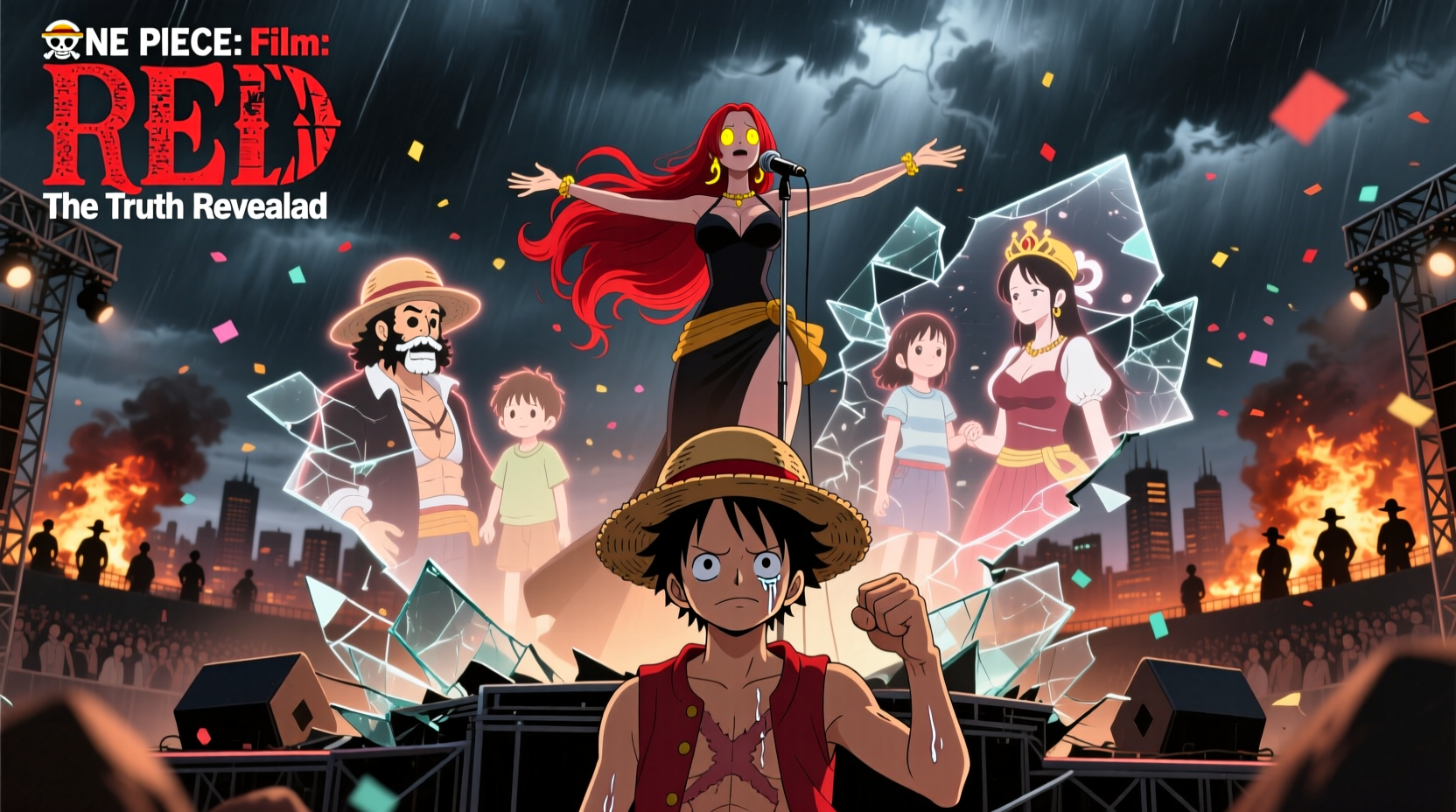
At the heart of Film Red is Uta, introduced not as a villain but as a global pop sensation known as \"Uta,\" whose voice captivates millions through the revolutionary singing app Adrena. Her performances are more than entertainment—they are gateways to her utopian vision: a world where people can escape pain by living inside their dreams.
Orphaned and raised on a remote island after being separated from Shanks, Uta’s childhood was marked by loneliness and abandonment. She believed Shanks had left her behind, fueling a deep-seated resentment. Her dream wasn’t just fame—it was transcendence. Using advanced Devil Fruit technology (the \"Singing Voice Fruit\"), she developed the ability to manifest sound into reality, creating illusions so vivid they blur the line between dream and truth.
Her transformation from a shy girl who sang with Luffy on a ship’s deck to a disillusioned messiah figure reflects a tragic arc of idealism corrupted by trauma. What begins as a desire to heal the world becomes a dangerous attempt to erase reality altogether.
Shanks’ Legacy: The Weight of a Father’s Absence
Shanks, one of the Four Emperors and a legendary figure in the One Piece world, is portrayed here not as a warrior, but as a flawed father. His decision to leave Uta behind—believing it was for her safety—becomes the emotional core of the film. In flashbacks, we see tender moments: teaching her to sing, promising never to abandon her, and ultimately breaking that promise.
Oda uses Shanks’ absence to explore a rarely examined theme in shonen storytelling: parental responsibility. Even the most powerful figures carry regrets. When Shanks finally confronts Uta during the climax, his plea—\"I didn’t want to lose you\"—isn’t delivered with bravado, but raw vulnerability. It reframes his entire persona, adding emotional gravity to a character often seen only through the lens of legend.
“We don’t need a perfect world. We need each other.” — Monkey D. Luffy
This quote, spoken at the turning point of the film, encapsulates the central conflict: Uta wants to eliminate suffering by removing reality; Luffy insists that pain, connection, and struggle are what make life meaningful.
Key Plot Points That Reshape the One Piece World
Film Red isn’t just a standalone story—it introduces elements that ripple across the broader One Piece narrative. Here are the pivotal moments that define the film’s impact:
- Uta’s True Identity Revealed: Midway through the film, it’s disclosed that Uta is Shanks’ daughter. This revelation reshapes fan understanding of Shanks’ past and hints at future developments in the manga.
- The Power of the Singing Voice Fruit: Uta’s Devil Fruit allows her to materialize sound, control minds through music, and create pocket dimensions. Its implications challenge established rules about Devil Fruit abilities.
- The Festival of Music on Elegia: The concert setting isn’t arbitrary. Elegia is implied to be connected to Joy Boy and ancient lore, suggesting Uta’s powers may have ties to lost civilizations.
- Luffy’s Near-Death Experience: After being trapped in Uta’s illusion world, Luffy dies briefly—only to be revived by Gear 5 activating instinctively. This marks the first time his ultimate form emerges outside his own will.
- The Collapse of the Dream World: As Uta realizes her plan would erase genuine human bonds, she sacrifices herself to dismantle the illusion, dying in Shanks’ arms.
These events aren’t isolated—they raise questions about the nature of reality in the One Piece universe, the ethics of escapism, and the role of music as a narrative device. For the first time, a One Piece film feels like required viewing for understanding future arcs.
Character Arcs: Growth Through Grief and Song
Beyond Uta and Shanks, several characters undergo subtle but significant development:
- Luffy: While he remains optimistic and impulsive, Luffy demonstrates deeper empathy. He doesn’t defeat Uta through strength, but by reminding her of their shared past and the value of real connections.
- Buggy: In a rare moment of sincerity, Buggy reveals he once knew Uta as a child and tried to protect her. His comedic persona cracks, showing loyalty beneath the clownish exterior.
- The Straw Hats: Each crew member enters Uta’s dream world and faces personalized illusions—Zoro battles shadow versions of himself, Nami relives losing Nojiko, Sanji sees himself rejected by his family. These visions highlight unresolved traumas, reinforcing that even heroes carry scars.
The dream sequences serve as psychological mirrors, forcing characters to confront fears they’ve buried. Unlike traditional battle arcs, growth here comes from introspection, not combat.
Table: Character Dreams vs. Reality in Uta’s Illusion
| Character | Dream Version | Reality Confronted |
|---|---|---|
| Zoro | Defeating endless doppelgängers | Fear of losing his identity as a swordsman |
| Nami | Nojiko never adopted her | Guilt over past losses and fear of abandonment |
| Sanji | Rejected by Germa despite serving them | Desire for acceptance vs. self-worth |
| Franky | Tony Tony Chopper hates his cyborg body | Anxiety over being seen as unnatural |
| Robin | Archaeology declared illegal again | Reliving the destruction of Ohara |
This table illustrates how Uta’s power exposes inner vulnerabilities, making the conflict deeply personal rather than purely physical.
Thematic Depth: Escapism, Trauma, and the Cost of Dreams
One Piece has always celebrated dreams, but Film Red interrogates them. Uta’s dream—to end all suffering—is noble in intent but catastrophic in execution. By offering eternal bliss through illusion, she risks erasing free will, memory, and growth. The film asks: Is a painless life worth living if it’s not real?
This tension mirrors real-world discussions about digital escapism, virtual reality, and mental health. Uta’s music app, Adrena, functions like a social media platform where users upload and share dreams—echoing modern concerns about disconnection masked as connection.
“Music should bring people together, not lock them away from the world.” — Shanks
Shanks’ final words to Uta underscore the film’s message: art should inspire, not isolate. Her songs remain beloved after her death, but now they symbolize resilience, not retreat.
Mini Case Study: How Uta’s Final Song Changed Fan Perception
During the film’s climax, Uta sings “New Genesis,” a ballad that initially seems like a requiem for the old world. As the melody swells, however, the lyrics shift—from destruction to hope. Lines like “Even if I vanish, my song will remain” transform her from antagonist to tragic heroine.
In Japan, fans reported emotional responses unlike any previous anime film. Online forums lit up with analyses of the song’s structure, comparing its modulation to classical requiems. One university student wrote: “I went to see it for the action, but left thinking about my mom. Uta made me realize how much I take real conversations for granted.”
This reaction exemplifies the film’s success: it used fantasy to provoke real introspection. Where other films might rely on spectacle, Film Red weaponized emotion—and won.
Step-by-Step: Understanding the Timeline of Key Events
To fully grasp the film’s significance, follow this chronological breakdown:
- Childhood Flashback: Young Uta lives aboard Shanks’ ship, bonding with Luffy. Shanks leaves her on an island for protection.
- Years Later: Uta develops her powers and rises to fame as a singer using the Singing Voice Fruit.
- Festival Begins: On Elegia, she invites fans via Adrena to enter her dream world during a live concert.
- Illusions Take Hold: Attendees—including the Straw Hats—are drawn into personalized dreamscapes.
- Luffy Breaks Free: Remembering his promise to protect Uta, he resists the illusion and confronts her.
- Truth Revealed: Shanks arrives; Uta learns he never abandoned her willingly.
- Sacrifice: Realizing her plan would destroy real bonds, Uta uses her final breath to reverse the effect.
- Legacy: Her music lives on, and Luffy vows to keep singing her songs.
This sequence shows a deliberate narrative arc—Uta isn’t defeated; she evolves. Her redemption is earned through realization, not battle.
Frequently Asked Questions
Is Uta canon in the One Piece manga?
Yes. Eiichiro Oda personally wrote and supervised the film, confirming Uta’s existence in the official timeline. References to her have since appeared in manga cover pages, and her connection to Shanks is treated as canonical.
Does Gear 5 appear in the film?
Yes. During Luffy’s confrontation with Uta, he briefly accesses Gear 5 when濒临死亡 (near death), marking the first canonical appearance of his ultimate form outside the Egghead Arc.
What happens to Shanks after the film?
He survives and is last seen holding Uta’s body. Though his next moves are unknown, the emotional weight of her death is expected to influence his actions in future conflicts, possibly involving the Final Sea or Joy Boy’s legacy.
Checklist: How to Fully Appreciate One Piece Film Red
- Watch the original Japanese version with subtitles for lyrical accuracy.
- Listen to the full soundtrack, especially “I’m Invincible” and “New Genesis.”
- Revisit Shanks’ debut episode (Episode 4) to compare young Uta’s interactions.
- Read Oda’s commentary in the film’s artbook for insight into Uta’s design and backstory.
- Discuss the ending with others—its emotional ambiguity invites multiple interpretations.
Conclusion: Why One Piece Film Red Matters Beyond the Screen
One Piece Film Red isn’t just a movie—it’s a statement. It proves that anime can tackle profound psychological and philosophical questions while delivering mass appeal. Uta’s story challenges the very notion of happiness, asking whether peace without struggle is peace at all. Her relationship with Shanks adds layers to one of the series’ most enigmatic figures, while Luffy’s role as a beacon of authenticity reaffirms his status as a hero of connection, not conquest.
The film also elevates music as a narrative force. Songs aren’t background—they’re plot devices, emotional catalysts, and cultural touchstones within the world. In doing so, Film Red sets a new standard for animated storytelling.




 浙公网安备
33010002000092号
浙公网安备
33010002000092号 浙B2-20120091-4
Comments
No comments yet. Why don't you start the discussion?