
The global phenomenon that is One Piece has finally made its leap from manga panels and animated frames to live-action television with Netflix’s 2023 adaptation. While fans rejoiced at the long-awaited realization of Eiichiro Oda’s world, many also noticed significant deviations from the original anime and manga. These changes weren’t random—they were strategic decisions made to condense a sprawling narrative into eight tight episodes while preserving emotional arcs and core themes.
This article breaks down the most important plot differences between the live-action series and the anime, analyzes why they matter, and explores how they affect the overall storytelling. Whether you're a lifelong Straw Hat fan or new to the Grand Line, understanding these shifts offers deeper insight into both versions of this epic tale.
Condensed Story Arcs and Pacing Adjustments
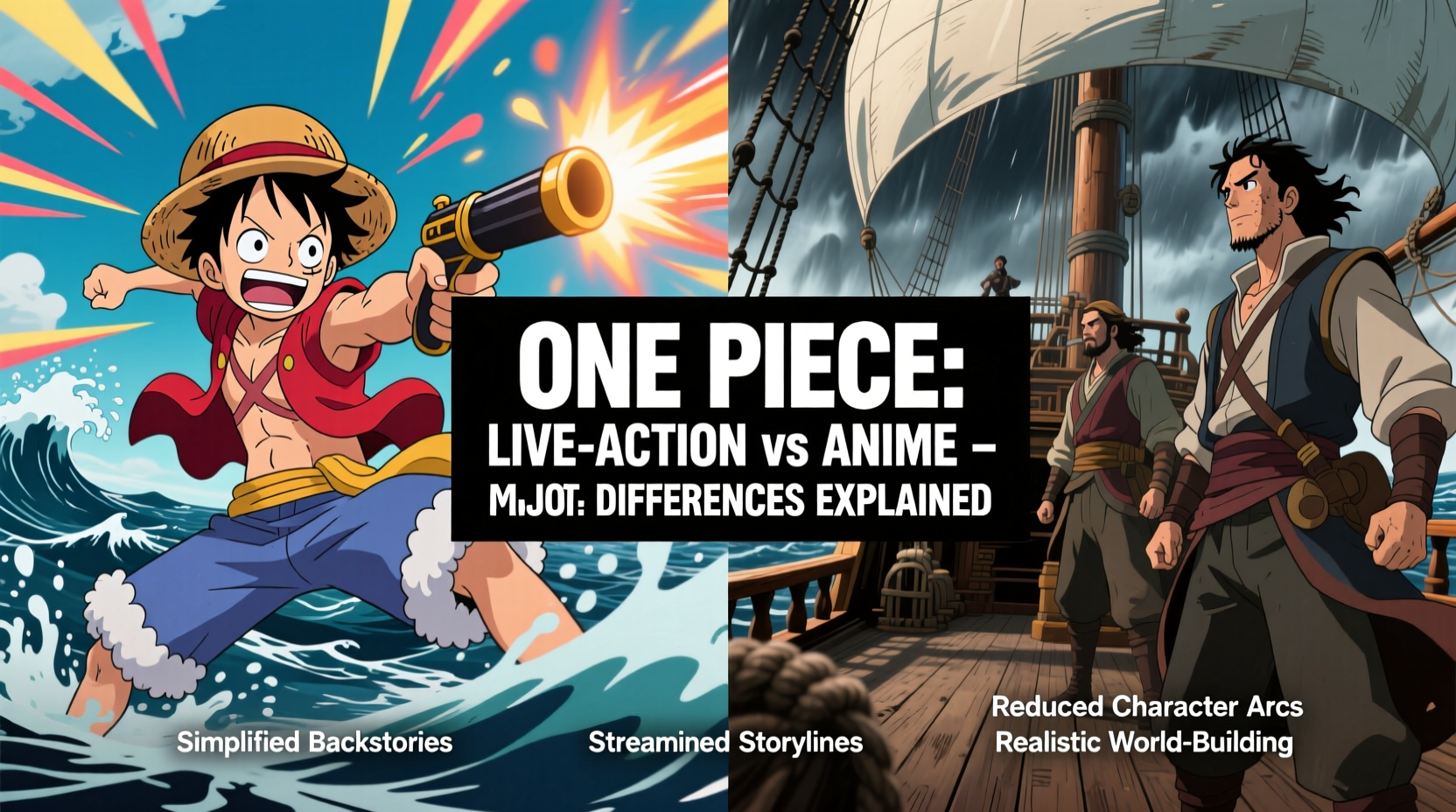
The first and most obvious difference lies in pacing. The anime dedicates over 50 episodes to the East Blue saga—the journey from Luffy’s departure to the defeat of Krieg and Arlong. In contrast, the live-action series compresses this entire arc into just eight episodes, merging events and trimming subplots.
For example, the Syrup Village arc (Usopp’s origin) and the Orange Town arc (Buggy the Clown) are combined. Buggy appears early as a comedic antagonist but is quickly sidelined after a brief confrontation. This allows Usopp’s introduction to happen sooner and with greater narrative weight. His cowardice, loyalty, and desire for courage are preserved, but his backstory unfolds more gradually through dialogue rather than standalone episodes.
Likewise, the Baratie and Arlong Park arcs are streamlined. Sanji joins the crew much earlier—after only one episode at sea—while Nami’s betrayal and redemption are restructured to emphasize her trauma and internal conflict without relying on extended flashbacks.
Character Backstories and Emotional Depth
One of the boldest choices in the live-action version is the expanded focus on certain backstories, particularly Nami’s. In the anime, her tragic past under Arlong is revealed slowly through flashbacks across multiple episodes. The live-action accelerates this revelation, showing key moments—such as Bell-mère’s execution and Nami’s forced cartography work—early in Episode 2.
This shift transforms Nami from a morally ambiguous figure into a clearly sympathetic protagonist from the start. Her alliance with Arlong isn’t portrayed as greed but as survival, which strengthens audience empathy. As showrunner Matt Owens explained:
“We wanted viewers to understand Nami’s pain immediately. Waiting 20 episodes to reveal her trauma wouldn’t work in a serialized format where emotional investment needs to happen fast.” — Matt Owens, Executive Producer
Zoro’s backstory also receives subtle enhancements. While the anime briefly touches on his promise to Kuina, the live-action includes dream sequences and dialogue that reinforce his guilt and determination. These additions deepen his motivation beyond mere swordsmanship pride.
Conversely, some characters lose depth due to time constraints. Johnny and Yosaku, minor bounty hunter allies in the anime, are entirely omitted. Their roles in aiding Zoro during the Baratie fight are absorbed by Sanji and Luffy, streamlining interactions but reducing ensemble dynamics.
Major Plot Deviations and Creative Liberties
The live-action doesn’t shy away from rewriting pivotal moments for dramatic effect. Below is a detailed comparison of key plot points:
| Event | Anime Version | Live-Action Version |
|---|---|---|
| Arlong’s Defeat | Luffy defeats Arlong after a brutal underwater battle; Nami delivers the final strike on Arlong’s map. | Luffy destroys the map himself; Nami watches, symbolizing her liberation through action rather than violence. |
| Marine Involvement | Captain Nezumi reports to Vice Admiral Garp; Marines play minimal role in East Blue. | Helmeppo and Vice Admiral Garp appear earlier; Marines actively pursue Luffy, setting up future conflicts. |
| Straw Hat Symbolism | Luffy retrieves the hat from Shanks years later; it’s always with him. | The hat is stolen by Blackbeard early on, creating a personal vendetta and raising stakes. |
| Final Battle Structure | Three parallel fights: Zoro vs. Hatchan, Sanji vs. Chew, Luffy vs. Arlong. | Focus shifts to Luffy vs. Arlong; other fights minimized or cut for tension. |
| Recruitment Order | Luffy → Zoro → Nami → Usopp → Sanji | Luffy → Zoro → Usopp → Nami → Sanji |
The decision to have Blackbeard steal Shanks’ straw hat is perhaps the most controversial change. In the original timeline, Luffy never loses the hat—it’s a constant symbol of his promise. By introducing Blackbeard in Episode 1 and having him take the hat, the series creates an immediate antagonist and raises narrative urgency. However, purists argue this undermines the hat’s symbolic inviolability.
Still, this alteration serves a practical purpose: it introduces one of the franchise’s central villains years before his anime debut, giving audiences a tangible threat beyond local pirates.
Worldbuilding and Thematic Shifts
The live-action version leans heavily into realism and grounded stakes. Unlike the anime’s whimsical tone—where characters stretch, float, and survive impossible falls—the series grounds abilities in physical consequences. When Luffy uses his Devil Fruit powers, there’s visible strain. After stretching too far, he collapses, bruised and exhausted.
This approach makes the world feel more dangerous and less cartoonish. It also affects how powers are introduced. In the anime, Luffy eats the Gum-Gum Fruit offhand, unaware of its effects. In the live-action, he knows exactly what it does—he steals it from a Marine vault—making him more deliberate and rebellious from the outset.
Similarly, the Government and Marines are portrayed with greater authority. In the anime, they often appear bumbling or corrupt but ineffective. Here, Helmeppo’s presence—and Garp’s looming oversight—suggests a more organized, threatening system. This sets up the overarching theme of systemic oppression versus individual freedom, central to One Piece's philosophy.
“The live-action couldn’t replicate the anime’s tone shot-for-shot. We had to find the soul of the story in realism, not animation.” — Steven Maeda, Co-Creator
Step-by-Step Comparison of Key Moments
To fully appreciate the differences, consider how specific scenes unfold across formats:
- Shanks’ Sacrifice: In the anime, he loses his arm saving Luffy from a Sea King in a sudden attack. In the live-action, the scene is premeditated—Shanks dives in after the hat, knowing the risk, making it a symbolic act of passing the torch.
- Luffy Meets Zoro: Anime shows Zoro tied to a mast, captured by Marines. Live-action adds a flashback mid-fight showing Zoro’s vow to Kuina, deepening emotional context during combat.
- Nami’s Betrayal: In the anime, she tricks the crew repeatedly. In the series, she confesses her plan early, turning her arc into one of reluctant deception rather than outright treachery.
- Sanji’s Introduction: Anime: Sanji refuses to fight on principle (won’t hit women). Live-action: He avoids fighting because of chef duties, softening his moral rigidity initially.
- Final Fight with Arlong: Anime: Climactic underwater brawl with Luffy punching through walls. Live-action: Fire-based visuals replace water pressure; Luffy burns through the tower, symbolizing destruction of oppression.
These shifts reflect a broader goal: translating metaphor into visual symbolism. Water in the anime represents emotional suffocation; fire in the series becomes a tool of liberation.
Frequently Asked Questions
Why did the live-action change the order of crew recruitment?
The switch places Usopp earlier to build camaraderie before heavier emotional arcs like Nami’s betrayal. It also allows for more balanced group dynamics earlier in the story.
Is Blackbeard really in the East Blue in the original story?
No. In the manga and anime, Blackbeard operates in the Grand Line and doesn’t appear until much later. His early appearance is a creative liberty to establish a long-term antagonist.
Will the live-action follow the anime exactly from now on?
Unlikely. The creators have confirmed they’ll continue blending canon material with original storytelling to maintain momentum across seasons. Future arcs may see similar restructuring.
Actionable Checklist for Fans
- ✅ Watch the live-action series for a fast, emotionally charged introduction to One Piece.
- ✅ Follow up with the anime to experience full character development and humor.
- ✅ Compare key arcs side-by-side (e.g., Arlong Park) to appreciate narrative choices.
- ✅ Read Eiichiro Oda’s manga notes or interviews to understand original intentions.
- ✅ Join fan discussions to explore differing interpretations of changes.
Real Example: A New Fan’s Journey
Jamal, a 24-year-old viewer with no prior exposure to One Piece, started with the Netflix series. He was immediately drawn to Nami’s struggle and Luffy’s unwavering belief in his crew. “I cried when she finally said ‘I’m free,’” he recalls. After finishing the season, he began the anime—but skipped ahead to the Arlong Park arc to compare.
He noticed how the anime built tension slowly, letting Nami’s betrayal simmer over weeks. “The live-action gave me emotion fast. The anime gave me patience. Both worked, just differently.” Now, Jamal plans to watch the entire 1000+ episode series, using the live-action as a narrative roadmap.
Conclusion: Embracing Evolution, Honoring Legacy
The live-action adaptation of One Piece isn’t a replacement for the anime—it’s a reinterpretation. By altering plot structure, enhancing backstories, and introducing early antagonists, it crafts a compelling entry point for newcomers while testing the loyalty of longtime fans.
Yet, despite the changes, the heart remains intact: a rubber-bodied boy chasing a dream, gathering outcasts who believe in freedom, friendship, and second chances. Whether animated or real, Luffy’s laugh still carries the spirit of adventure.




 浙公网安备
33010002000092号
浙公网安备
33010002000092号 浙B2-20120091-4
Comments
No comments yet. Why don't you start the discussion?