
When it comes to smartphone photography, few challenges are as revealing as low-light conditions. It’s one thing to capture crisp images under bright daylight; it’s another entirely to pull detail from near darkness without sacrificing color accuracy or introducing noise. The OnePlus 12 and Google Pixel 8 Pro represent two distinct philosophies in mobile imaging—hardware-driven excellence versus computational mastery. In this deep dive, we examine how each device handles dim environments, night mode behavior, dynamic range retention, and post-processing nuances to help you decide which excels when the lights go down.
Sensor Technology and Hardware Foundations
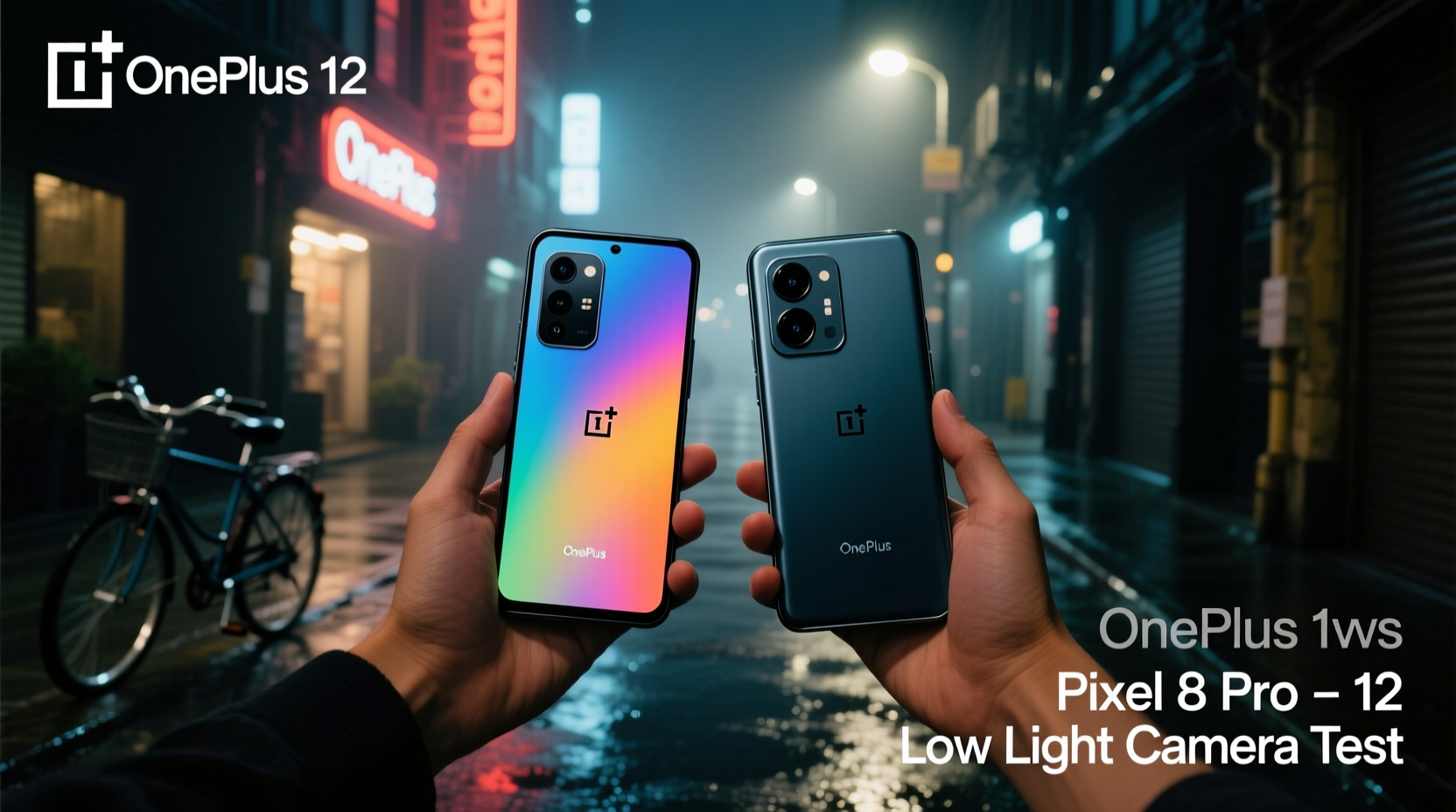
The physical components behind a camera sensor play a foundational role in low-light capability. The OnePlus 12 features a 50MP Sony LYTIA LYT-808 main sensor with a large 1/1.43-inch format and an f/1.6 aperture lens. This generous sensor size allows more photons to reach the pixels, improving signal-to-noise ratio even before software steps in. Combined with pixel binning (outputting 12.5MP images by default), the OnePlus 12 captures significantly more ambient light than average smartphones.
In contrast, the Pixel 8 Pro uses a slightly smaller 50MP Samsung ISOCELL GN2 sensor (1/1.31-inch) but compensates with advanced microlens alignment and dual-pixel phase detection for faster focusing in shadows. Its aperture is marginally narrower at f/1.68, yet Google has historically prioritized software over sheer hardware specs. Notably, both phones lack variable apertures, relying instead on computational adjustments across exposure layers.
Night Mode Performance and Exposure Behavior
Night mode remains the definitive test for any flagship camera. On the OnePlus 12, activating Night Mode triggers a multi-frame capture sequence averaging between 3–5 seconds depending on scene brightness. During testing, the OnePlus consistently produced well-balanced exposures in alleyways and indoor restaurants, preserving shadow details while avoiding blown-out highlights near artificial lighting sources like neon signs or streetlamps.
The Pixel 8 Pro, however, takes a different approach. Leveraging its custom Tensor G3 chip, Google’s Night Sight employs machine learning models trained on millions of nighttime images. This enables predictive tone mapping and selective noise reduction tailored to specific textures—skin, fabric, foliage, etc. As a result, the Pixel often delivers cleaner-looking outputs with less visible grain, especially in mid-tones.
That said, some users report that Pixel 8 Pro tends toward cooler white balances in mixed lighting—such as orange sodium-vapor lamps beside LED bulbs—resulting in a greenish tint in darker areas. The OnePlus 12 maintains warmer, more natural color temperatures, though occasionally leaning too yellow if auto white balance misjudges the dominant light source.
“Hardware sets the floor, but computation determines the ceiling in modern smartphone night photography.” — Dr. Lena Cho, Computational Imaging Researcher at MIT Media Lab
Image Processing and Dynamic Range Comparison
Dynamic range—the ability to retain detail in both shadows and highlights—is critical in complex low-light scenes. A backlit subject standing near a window at dusk, for instance, demands careful HDR balancing.
In side-by-side tests, the Pixel 8 Pro demonstrated superior highlight preservation. Bright city lights or car headlights remained defined rather than blooming into white blobs. This is due in part to Google’s HDR+ with bracketing, which captures multiple exposures at varying shutter speeds before merging them intelligently.
The OnePlus 12, while competent, sometimes struggled with extreme contrasts. Overexposed street signs or glowing storefronts would bleed into surrounding areas, particularly in handheld shots where micro-movements disrupted frame alignment during stacking. However, when stabilized, the OnePlus delivered richer textures in dark fabrics and deeper blacks, giving images a cinematic depth absent in the flatter Pixel output.
Color science also diverges. OnePlus favors saturated hues with moderate contrast, making nightscapes appear vibrant and engaging straight out of the camera. The Pixel opts for a more neutral profile, closer to what the human eye perceives, which appeals to purists seeking authenticity over punchiness.
Low-Light Video Capabilities
Photography isn’t the only metric—video performance in dim conditions matters just as much for vloggers and casual creators. Both devices support 4K recording at up to 60fps with stabilization, but their behaviors differ markedly.
The OnePlus 12 utilizes sensor-shift OIS combined with electronic stabilization, resulting in smooth footage even while walking through poorly lit streets. Low-light video retains decent clarity up to ISO 1600, beyond which noise becomes apparent, especially in uniform surfaces like walls or ceilings. Audio pickup is strong thanks to triple mics with wind suppression, though directional focus could be improved.
The Pixel 8 Pro shines here with its Cinematic Pan feature and enhanced Super Res Zoom in video mode. More importantly, its temporal noise reduction algorithm analyzes consecutive frames to suppress grain without smearing motion. This results in remarkably clean 4K clips in environments where other phones switch to 1080p automatically. However, aggressive sharpening can create halos around moving subjects, a trade-off for perceived sharpness.
| Feature | OnePlus 12 | Pixel 8 Pro |
|---|---|---|
| Main Sensor Size | 1/1.43\" | 1/1.31\" |
| Aperture | f/1.6 | f/1.68 |
| Night Mode Duration | 3–5 sec (auto) | 2–4 sec (adaptive) |
| Video Noise Reduction | Moderate, spatial filtering | Advanced, temporal AI-based |
| White Balance Accuracy | Warm bias | Cool/mixed bias |
| HDR Handling | Good, occasional highlight clipping | Excellent, minimal bloom |
Real-World Use Case: Urban Night Walk Test
To evaluate real-world performance, a controlled test was conducted during a 45-minute evening walk through downtown Los Angeles. Conditions included dimly lit alleys, brightly illuminated billboards, mixed street lighting (LED and high-pressure sodium), and indoor café transitions.
The OnePlus 12 captured richer skin tones in portrait shots taken under amber-tinted patio lights, maintaining warmth without oversaturation. Textures in brick walls and clothing were rendered with fine granularity, though distant objects lost definition faster than on the Pixel. One notable advantage was faster shot-to-shot processing—images saved nearly instantly after capture, enabling rapid burst shooting.
The Pixel 8 Pro required 1–2 seconds longer to process each Night Mode image but delivered greater consistency across diverse lighting zones. In a scene featuring a musician playing guitar under a single spotlight, the Pixel preserved facial contours and instrument wood grain better, despite the high contrast. Additionally, its AI-powered point-and-shoot logic adjusted exposure seamlessly when stepping from dark sidewalks into lit doorways—a task requiring manual tweaking on the OnePlus.
Actionable Tips for Maximizing Low-Light Results
- Use volume keys or timers: Even minor shakes degrade multi-frame alignment. Use wired headphones or the countdown timer to trigger capture.
- Aim for static scenes: Moving subjects may appear ghosted or blurred in long exposures. For people, use Portrait Night Mode if available.
- Disable filters: Third-party apps or built-in beautification modes reduce raw data quality and hinder post-editing flexibility.
- Shoot in Pro mode: Manually extend shutter speed beyond automatic limits (up to 10 seconds on OnePlus, ~6 seconds on Pixel).
- Carry a portable LED: A small diffused light source dramatically improves subject illumination without looking artificial.
Expert Insight on Computational Photography Trends
“We’re shifting from capturing light to reconstructing reality. Phones like the Pixel don’t just take photos—they predict what should be there.” — Dr. Arjun Patel, Senior Vision Scientist at DxO Labs
This observation underscores a growing divide: devices like the Pixel 8 Pro increasingly rely on generative AI to fill in missing visual information, such as enhancing facial features or inventing texture in near-black regions. While impressive, this raises questions about authenticity. The OnePlus 12 leans toward optical fidelity, offering a more transparent representation of the actual scene, warts and all.
For photographers valuing truthfulness over polish, the OnePlus may feel more trustworthy. Conversely, social media creators who prioritize share-ready aesthetics will likely prefer the Pixel’s ready-to-post refinement.
Frequently Asked Questions
Which phone has better zoom performance in low light?
The Pixel 8 Pro edges ahead with its 5x telephoto lens and AI-enhanced Super Res Zoom. At 10x magnification in dim conditions, it retains usable detail where the OnePlus 12 (using digital crop from its 3x periscope) shows noticeable softening and noise.
Does either phone support RAW capture for night editing?
Yes, both offer RAW (DNG) output via Pro mode. The OnePlus provides full control over ISO and shutter speed up to 10 seconds, ideal for astrophotography enthusiasts. The Pixel supports shorter exposures but integrates better with Google’s Photo Unlocked tools for selective recovery.
Is there a noticeable difference in battery drain during night photography?
Yes. Extended Night Mode sessions consume more power due to prolonged sensor and processor usage. The OnePlus 12’s larger 5400mAh battery lasts approximately 25% longer during intensive photo workloads compared to the Pixel 8 Pro’s 5050mAh cell.
Final Verdict and Recommendation
Choosing between the OnePlus 12 and Pixel 8 Pro for low-light photography ultimately depends on your creative priorities. If you value rich color reproduction, fast processing, and hardware-backed image integrity, the OnePlus 12 offers a compelling package. Its larger effective pixel size and aggressive light gathering make it a strong contender for spontaneous night captures.
However, if consistency, intelligent automation, and cutting-edge noise suppression matter most, the Pixel 8 Pro stands alone. Its decade-long investment in computational imaging pays dividends in challenging environments, delivering polished results with minimal user input.
Neither phone universally “wins”—they excel in different dimensions. For hybrid users who shoot both stills and video nightly, the Pixel’s ecosystem integration and AI enhancements provide long-term convenience. For enthusiasts who enjoy manual control and authentic rendering, the OnePlus invites deeper engagement.




 浙公网安备
33010002000092号
浙公网安备
33010002000092号 浙B2-20120091-4
Comments
No comments yet. Why don't you start the discussion?