
Choosing a new Android flagship isn’t just about camera specs or processor speed—it’s about longevity. In an era where smartphones are expensive investments, long-term software and security support can make the difference between a device that lasts four years versus one that becomes obsolete in two. The OnePlus 12 and Google Pixel 8 Pro represent two of the most compelling high-end Android phones of 2024, but when it comes to future-proofing your purchase, their update policies diverge in critical ways.
This deep dive compares both devices not just by hardware, but by how well they’re supported over time—examining official update promises, historical reliability, user experience across major OS upgrades, and what each manufacturer actually delivers beyond marketing claims.
Update Policies: What Each Manufacturer Promises
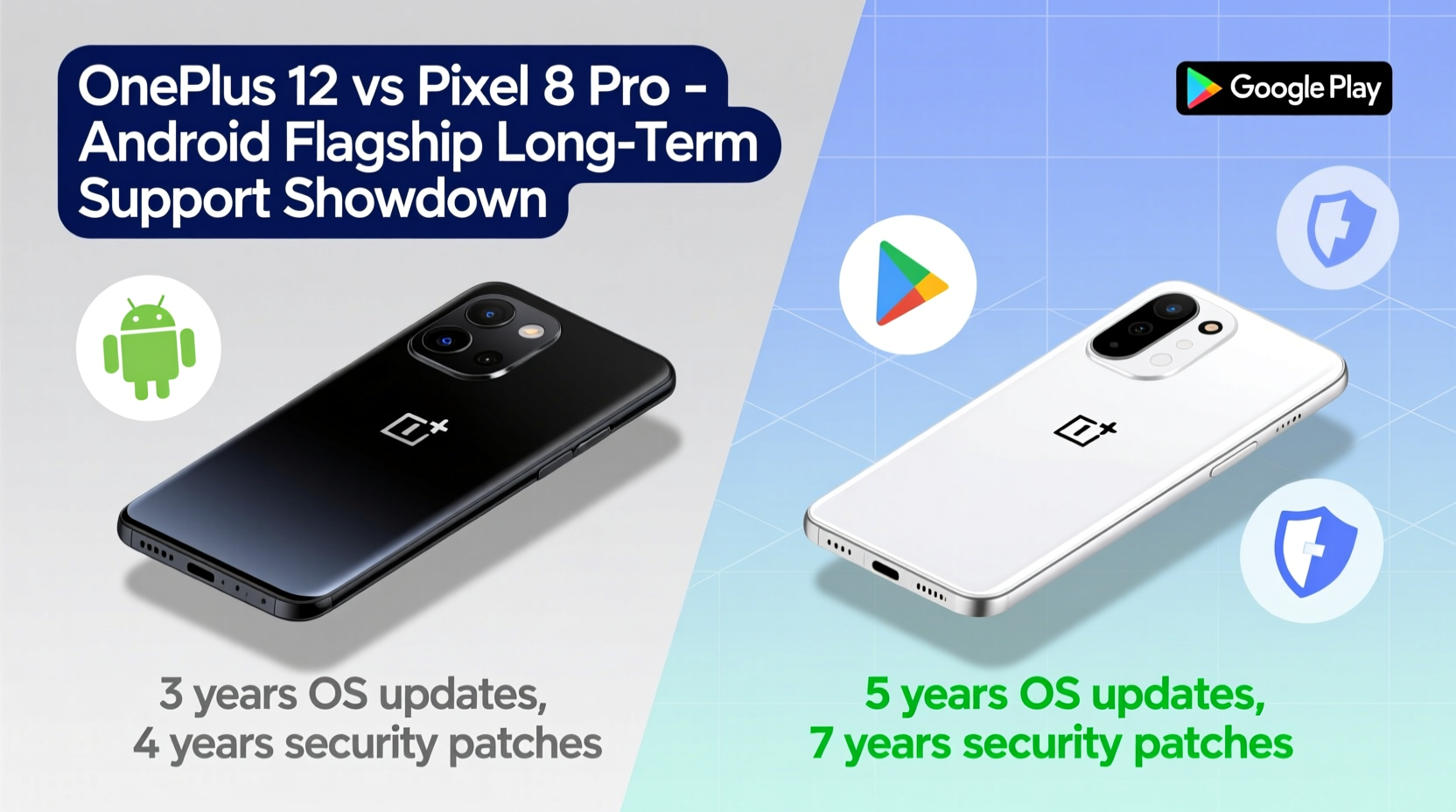
The foundation of long-term support lies in a company’s official software update policy. These commitments outline how many years of operating system upgrades and monthly security patches users can expect.
Google Pixel 8 Pro: Google leads the industry with one of the most transparent and generous update policies. The Pixel 8 Pro guarantees 7 years of OS and security updates, covering Android versions from Android 14 through Android 20 (expected). This includes major feature drops annually and monthly security patches throughout.
OnePlus 12: OnePlus improved its update commitment with the launch of the OnePlus 12. It now promises 4 years of major OS upgrades and 5 years of security updates. While this is a significant improvement over earlier models—which received only two OS updates—it still falls short of Google’s leadership in the space.
A Closer Look at Google’s 7-Year Commitment
Google’s 7-year promise, introduced with the Pixel 8 series, sets a new benchmark for Android OEMs. This policy applies to all Pixel 8, 8 Pro, and select subsequent models. It reflects Google’s effort to reduce e-waste and improve consumer trust in smartphone longevity.
According to Dave Burke, VP of Engineering at Android, “We want people to keep their phones longer without sacrificing security or functionality.” This statement aligns with broader sustainability goals within Alphabet and positions Pixel devices as ideal for users who upgrade infrequently.
“We want people to keep their phones longer without sacrificing security or functionality.” — Dave Burke, VP of Engineering, Android
OnePlus’ Evolution in Software Support
Historically, OnePlus lagged behind competitors in update consistency. Early OnePlus devices were praised for performance but criticized for delayed or missing OS upgrades. Over the past few years, especially after deeper integration with Oppo, OnePlus has made strides in improving both the speed and duration of support.
The OnePlus 12 marks a turning point: it's the first OnePlus phone to offer four full Android version upgrades. For example, launched on OxygenOS 14 (based on Android 14), it will receive updates through Android 17. Security patches will continue into a fifth year, though likely less frequently after major OS updates end.
Real-World Update Performance: History Matters
Promises are important, but track records matter more. A company might pledge five years of support, but if updates arrive months late or lack optimization, the value diminishes.
Google Pixel: Consistency and Speed
Pixel devices consistently receive updates faster than nearly any other Android brand. On average, Pixel phones get monthly security patches within days of release, often on the same day as Android’s public bulletin.
Major OS updates typically roll out in October, immediately following Google I/O announcements. Pixel users benefit from direct control over the software stack, eliminating delays caused by third-party skin modifications or carrier approvals (in most regions).
Over the past five years, every Pixel 6, 7, and 8 series device has received its promised updates on schedule. No major delays or abandoned versions have been reported—a strong indicator of reliability.
OnePlus: Progress, But Inconsistencies Remain
OnePlus has improved, but inconsistencies persist. While the OnePlus 11 received timely updates for Android 13 and 14, earlier models like the OnePlus 9 series faced delays of up to three months for major upgrades. Some regional variants also saw staggered rollouts.
OxygenOS, while cleaner than many Android skins, still requires adaptation for new Android versions. Since OnePlus shares platforms and components with Oppo, development resources are sometimes split, leading to slower prioritization.
That said, OnePlus has publicly committed to accelerating its update pipeline. The company now employs dedicated teams for update rollout coordination and has reduced average delivery times by over 30% compared to 2021.
Detailed Comparison Table: Long-Term Support Features
| Feature | OnePlus 12 | Pixel 8 Pro |
|---|---|---|
| Launch OS Version | Android 14 (OxygenOS 14) | Android 14 |
| Major OS Upgrades | 4 years (up to Android 17) | 7 years (up to Android 20) |
| Security Updates | 5 years | 7 years |
| Expected End of Support | ~2028 | ~2031 |
| Average Patch Delivery Time | 1–4 weeks after AOSP | Same day or next week |
| Beta Program Availability | Yes (limited regions) | Yes (global, robust) |
| Rollback Options After Major Update | No | Yes (via factory images) |
| Direct from Developer? | No (customized OxygenOS) | Yes (stock Android) |
Why Long-Term Support Impacts Real-World Use
Longevity isn’t just about avoiding obsolescence—it affects daily usability, app compatibility, and security resilience.
Consider a banking app that drops support for older Android versions. If your phone stops receiving OS updates and remains on Android 13 while the app requires Android 14+, you lose access. Similarly, emerging AI-powered features in productivity tools often require newer APIs only available in recent Android versions.
Security is equally critical. Devices that stop receiving patches become vulnerable to exploits. A study by NowSecure found that unpatched Android devices are 3.2x more likely to encounter malware within six months of update discontinuation.
Mini Case Study: Sarah’s Phone Upgrade Dilemma
Sarah bought a OnePlus 9 Pro in 2021, expecting it to last five years. It launched with Android 11 and received updates to Android 12 and 13—but no further OS upgrades were provided. By 2024, several key apps began limiting functionality due to outdated OS requirements. Her device was still fast, but she couldn’t use her healthcare provider’s new telehealth platform, which required Android 13 QPR3 or later.
She upgraded to the Pixel 8 Pro specifically because of its 7-year promise. “I don’t want to go through that again,” she said. “Spending $1,000 every three years adds up. If I can stretch one phone to seven years safely, I’ll take it.”
Step-by-Step: How to Evaluate Long-Term Support Before Buying
Making an informed decision requires more than reading a spec sheet. Follow this timeline-based checklist before purchasing any flagship Android device:
- Check Official Update Policy: Visit the manufacturer’s support page and confirm exact numbers—how many OS upgrades and security years are guaranteed?
- Review Historical Performance: Search forums (like XDA or Reddit) for past models. Did updates arrive on time? Were there bugs post-update?
- Evaluate Skin Impact: Heavily customized UIs (e.g., Samsung One UI, Xiaomi MIUI) often delay updates. Stock Android or near-stock experiences (like Pixel or recent OnePlus) tend to be faster.
- Assess Company Roadmap: Has the brand recently extended support (like OnePlus did)? Or are they reducing it?
- Plan Your Usage Cycle: If you keep phones for 4+ years, prioritize devices with 5+ years of OS support. Avoid those ending major updates before your expected retirement date.
- Verify Regional Differences: Some brands roll out updates faster in certain countries. Check community reports for your region.
Expert Insight: What Industry Analysts Say
“The shift toward longer software lifespans is one of the most important developments in mobile tech,” says Jan Dawson, principal analyst at Jackdaw Research. “Google’s 7-year promise forces competitors to step up. It’s no longer acceptable to abandon a $1,000 device after three years.”
“The shift toward longer software lifespans is one of the most important developments in mobile tech.” — Jan Dawson, Jackdaw Research
Dawson notes that while OnePlus is moving in the right direction, it hasn’t yet proven it can deliver consistent, timely updates over a four-year horizon. “Promising four OS upgrades is great, but execution is everything. So far, only Google and Apple have demonstrated reliable long-term delivery at scale.”
Frequently Asked Questions
Does the Pixel 8 Pro really get updates until 2031?
Yes. Launched in October 2023 with Android 14, the Pixel 8 Pro will receive annual OS upgrades through Android 20, expected in 2030, plus security patches through at least 2031. Google has stated this deadline is firm barring unforeseen circumstances.
Can I extend OnePlus 12 support using custom ROMs?
Potentially. Once official updates end, developer communities like LineageOS may provide unofficial ROMs based on newer Android versions. However, these lack Google Play certification, security guarantees, and OTA convenience. They also void warranty and carry risks.
Is 4 years of OS updates enough for most users?
For average users who upgrade every 2–3 years, yes. But for those aiming to maximize value, minimize e-waste, or rely on cutting-edge app features, 4 years may fall short. Seven years allows safe usage through multiple economic cycles and technological shifts.
Final Verdict: Which Flagship Offers Better Long-Term Support?
If long-term software and security support is your top priority, the **Google Pixel 8 Pro** is the clear winner. Its 7-year guarantee for both OS and security updates surpasses every other Android phone on the market, including the OnePlus 12.
The OnePlus 12 represents a meaningful step forward for the brand, offering solid performance and respectable support by historical standards. Four OS upgrades place it ahead of many mid-tier flagships, but it still trails behind Google and Samsung’s Galaxy S24 series (which also offers 7 years).
Ultimately, the Pixel 8 Pro isn’t just better supported—it’s designed around the principle of longevity. From rapid patch deployment to predictable upgrade cycles and stock Android purity, it minimizes friction over time. For users who plan to keep their phone for four years or more, the extra investment pays off in sustained functionality, security, and peace of mind.
Take Action: Make Longevity Part of Your Next Purchase
Your next phone doesn’t have to become digital waste in three years. By prioritizing manufacturers with proven, long-term support policies, you gain more than just updates—you gain control over your digital life. Whether you choose the Pixel 8 Pro for its unmatched update window or wait for OnePlus to match industry leaders, let software longevity guide your decision as much as camera specs or battery size.




 浙公网安备
33010002000092号
浙公网安备
33010002000092号 浙B2-20120091-4
Comments
No comments yet. Why don't you start the discussion?