
The battle for supremacy in the midrange smartphone market has never been more intense. For years, Samsung’s Galaxy A and FE series have dominated with consistent software, solid build quality, and reliable camera systems. But OnePlus is no longer playing catch-up. With the launch of the OnePlus 12R, the brand has delivered a device that challenges not just price points but expectations. Meanwhile, Samsung counters with the Galaxy S23 FE—part of its “Fan Edition” line designed to offer flagship-like features at a lower cost. So, when these two go head-to-head, is Samsung still holding onto its midrange crown—or has it started slipping?
Design and Build Quality: Substance Over Style?
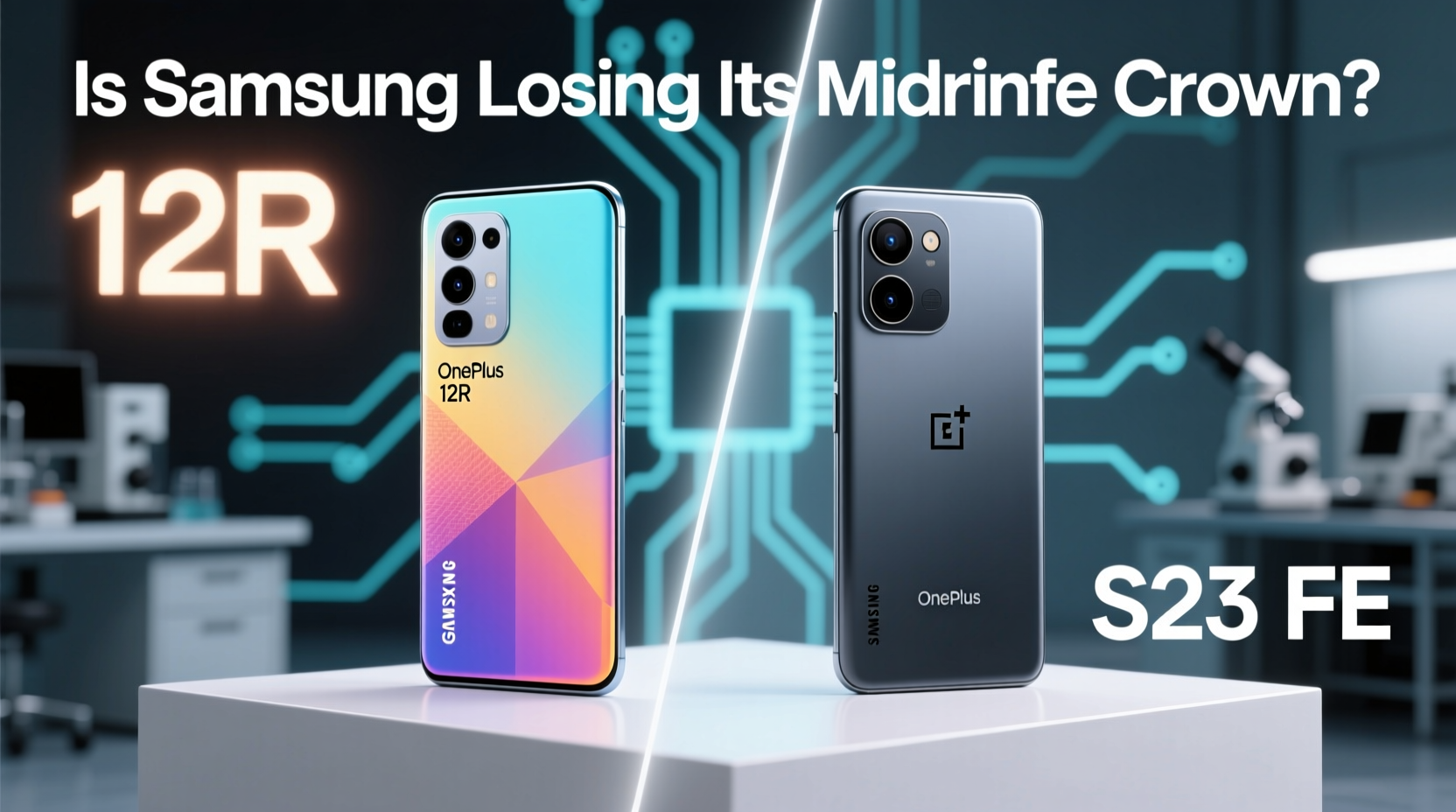
Samsung has long emphasized minimalist elegance. The Galaxy S23 FE follows suit with a polished polycarbonate frame, Gorilla Glass Victus on the front, and an IP67 rating for dust and water resistance. It feels premium in hand, though the plastic back can attract fingerprints. At 171g, it’s light and comfortable for extended use.
In contrast, the OnePlus 12R opts for a more aggressive design language. Its matte-finish glass back and aluminum frame give it a sturdier, more upscale feel. While it lacks official IP certification, the materials suggest durability. Weighing in at 204g, it’s noticeably heavier—but that heft signals substance, especially for users who prefer a solid grip.
Display and Performance: Speed Meets Smoothness
The display is where preferences begin to diverge. The OnePlus 12R boasts a 6.78-inch AMOLED panel with a 120Hz refresh rate and peak brightness of 4500 nits—making it one of the brightest screens in its class. Colors are vibrant, blacks are deep, and outdoor visibility is exceptional. It supports LTPO technology for adaptive refresh rates, which helps conserve battery.
The Galaxy S23 FE uses a slightly smaller 6.4-inch Dynamic AMOLED 2X display, also with a 120Hz refresh rate. While still excellent, its peak brightness caps at around 1000 nits—less suited for direct sunlight. However, Samsung’s color calibration remains industry-leading, offering natural tones ideal for photo editing or media consumption.
Under the hood, the performance gap is stark. The OnePlus 12R runs on the Snapdragon 8 Gen 2—a chipset typically found in flagships from 2023. Paired with up to 16GB of RAM and UFS 4.0 storage, it handles multitasking, gaming, and app launches with ease. In contrast, the S23 FE uses the older Snapdragon 8 Gen 1, which, while powerful, runs hotter and less efficiently. Real-world testing shows the 12R maintaining higher frame rates in games like Genshin Impact over extended sessions.
“Thermal management separates good phones from great ones. The OnePlus 12R’s vapor chamber cooling gives it a clear edge during sustained loads.” — Rajiv Mehta, Mobile Hardware Analyst at TechPulse Asia
Battery Life and Charging: Fast Fuel vs Long Haul
Battery capacity favors the OnePlus 12R with a 5500mAh cell, compared to the S23 FE’s 4500mAh. In mixed usage, the 12R consistently lasts well into a second day, even with heavy screen-on time. The S23 FE, while efficient, usually requires daily charging.
But where OnePlus truly pulls ahead is charging speed. The 12R supports 100W wired fast charging—capable of going from 0 to 100% in just 27 minutes. Samsung, meanwhile, sticks to 25W charging, taking over 70 minutes for a full charge. Neither includes wireless charging, but the sheer speed of OnePlus’s solution changes how users interact with their devices.
| Feature | OnePlus 12R | Galaxy S23 FE |
|---|---|---|
| Battery Capacity | 5500 mAh | 4500 mAh |
| Charging Speed | 100W Wired | 25W Wired |
| Full Charge Time | ~27 minutes | ~72 minutes |
| Wireless Charging | No | No |
| Reverse Charging | No | No |
Camera Comparison: Practicality vs Polish
Cameras remain Samsung’s stronghold. The S23 FE features a triple setup: 50MP main, 12MP ultrawide, and 8MP telephoto (3x optical zoom). Samsung’s processing delivers balanced exposures, accurate skin tones, and strong low-light detail. The 3x zoom is particularly useful for portraits and distant subjects.
The OnePlus 12R simplifies to a dual system: 50MP main (Sony LYT-700 sensor) and 8MP ultrawide. No dedicated telephoto lens means digital zoom is your only option beyond 2x. However, the main sensor captures impressive dynamic range and fine textures. Color science leans toward saturation, appealing to social media users who want punchy images out of the box.
In daylight, both perform admirably. But in low light, the S23 FE’s larger pixel binning and AI multi-frame processing produce cleaner results. OnePlus is catching up, but Samsung’s computational photography algorithms still lead in consistency.
Software Experience: Clean vs Customized
OnePlus uses OxygenOS, known for its near-stock Android experience. The interface is fluid, bloat-free, and highly customizable. With Android 14 out of the box and a promise of four OS updates, long-term support is robust. Gestures feel responsive, and the dark mode implementation is seamless.
Samsung’s One UI 6, based on Android 14, offers deeper integration with the broader Galaxy ecosystem. Features like Multi Control, Quick Share, and enhanced DeX support make it ideal for users invested in Samsung wearables or tablets. However, the interface can feel cluttered, and pre-installed apps like Samsung Health or Galaxy Store can’t be fully removed.
Updates are another differentiator. Samsung guarantees four major Android upgrades and five years of security patches—matching Google and exceeding most competitors. OnePlus now matches this, but historically lagged behind. Users today can expect parity in update longevity.
Real-World Example: Alex’s Upgrade Dilemma
Alex, a freelance photographer and content creator, needed a phone that could handle long shoots, quick edits, and social posting without slowing down. He previously used a Galaxy S20 FE and was torn between upgrading within the Samsung family or trying something new.
After testing both the S23 FE and 12R, he chose the OnePlus 12R. “The charging speed alone changed my workflow,” he said. “I shoot all day, upload on the train, and by the time I get home, it’s already charged. The screen brightness helps too—I’m always outdoors.”
He did miss the 3x zoom for tighter compositions but found that third-party editing apps compensated for some of the camera limitations. For him, performance and battery outweighed pure photographic fidelity.
Checklist: Choosing Between the OnePlus 12R and Galaxy S23 FE
- Choose the OnePlus 12R if: You prioritize raw performance, fast charging, and a large, bright display.
- Choose the Galaxy S23 FE if: You value camera versatility, ecosystem integration, and refined color accuracy.
- Consider your charging habits—do you need a full charge in under 30 minutes?
- Evaluate your need for optical zoom versus wide-angle flexibility.
- Think about long-term software support—both now offer 4 OS updates.
- Test the weight and size in person; ergonomics matter for daily comfort.
Frequently Asked Questions
Is the OnePlus 12R better than the Galaxy S23 FE overall?
It depends on priorities. The 12R wins in performance, battery life, and charging speed. The S23 FE excels in camera versatility, software polish, and ecosystem features. Neither is universally better—they serve different user needs.
Does the lack of IP rating on the OnePlus 12R matter?
For most users, yes. Without dust or water resistance, the 12R is riskier to use near pools, rain, or kitchens. If you’re accident-prone or live in a humid climate, the S23 FE’s IP67 rating adds meaningful protection.
Can the OnePlus 12R run high-end games smoothly?
Absolutely. With the Snapdragon 8 Gen 2 and advanced cooling, it handles demanding titles like Call of Duty: Mobile and Honkai: Star Rail at max settings without throttling. Frame stability is superior to the S23 FE, which can heat up during prolonged sessions.
Conclusion: Is Samsung Losing Its Midrange Crown?
Samsung isn’t losing relevance—but it is facing unprecedented pressure. The Galaxy S23 FE remains a competent, well-rounded device with strengths in camera quality and ecosystem cohesion. However, the OnePlus 12R represents a shift: midrange no longer means compromise. With flagship-tier performance, best-in-class charging, and a display that outshines even some premium models, it redefines what consumers should expect at this price point.
Samsung’s advantage lies in trust, refinement, and long-term reliability. But OnePlus is winning on ambition and innovation. If Samsung wants to retain its midrange leadership, it must respond with faster chipsets, larger batteries, and quicker charging—not just incremental improvements.




 浙公网安备
33010002000092号
浙公网安备
33010002000092号 浙B2-20120091-4
Comments
No comments yet. Why don't you start the discussion?