
For years, Samsung has reigned supreme in the Android flagship arena. The Galaxy S series set the benchmark for premium smartphones—powerful hardware, polished software, and industry-leading displays. But with OnePlus consistently refining its formula, the arrival of the OnePlus 13 raises a serious question: Has the balance of power shifted?
This isn’t just about specs on paper. It’s about real-world experience, long-term value, ecosystem integration, and whether paying extra for Samsung still makes sense. Let’s break down the OnePlus 13 and Galaxy S24 across key categories to see where each excels—and who might actually deserve the crown in 2024.
Performance & Hardware: Raw Power vs Refined Efficiency
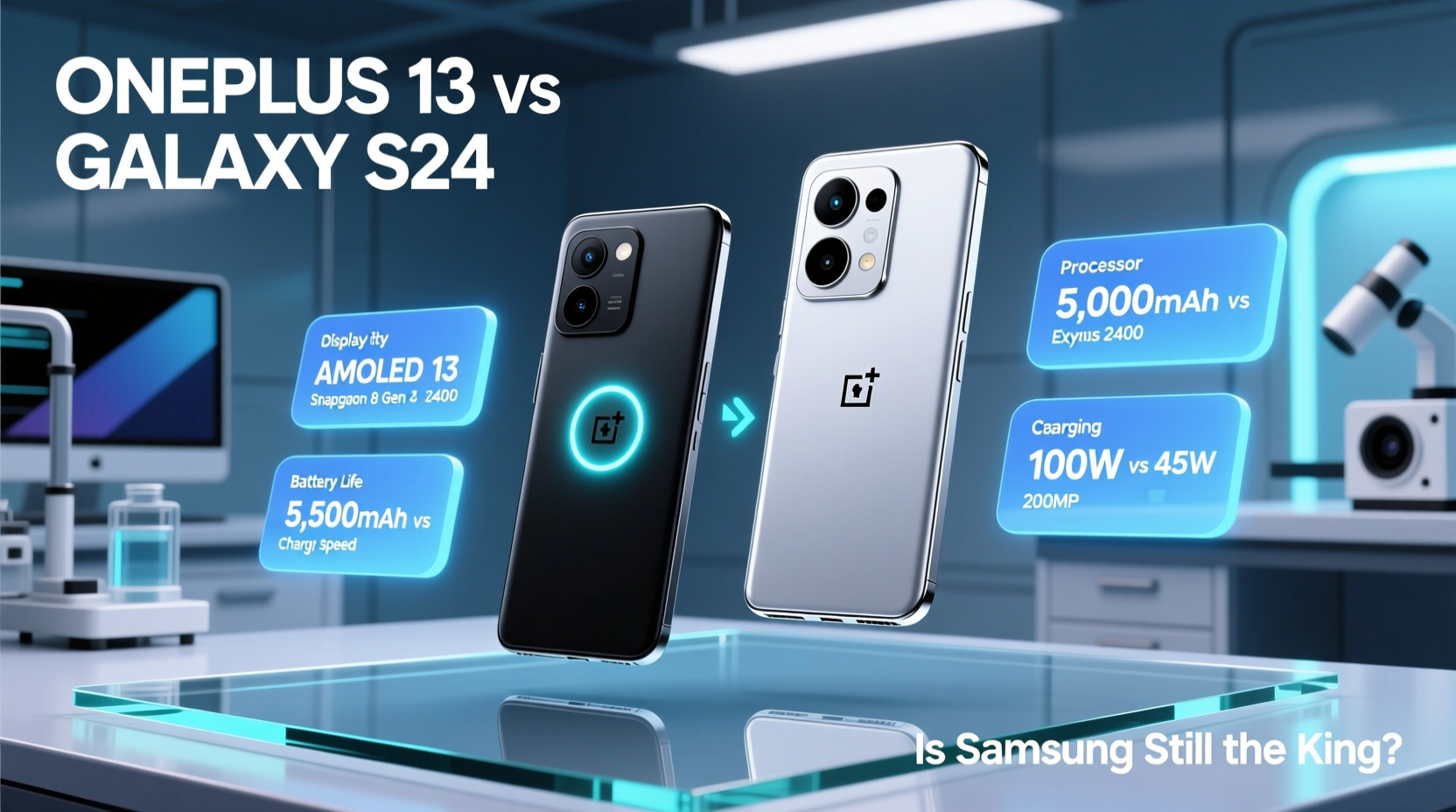
Both phones are powered by the latest Snapdragon 8 Gen 3 chipset, ensuring top-tier performance across gaming, multitasking, and AI-driven features. However, how each brand tunes the hardware leads to noticeable differences.
The OnePlus 13 leverages its long-standing partnership with Qualcomm to deliver near-stock performance with minimal bloat. OxygenOS (now fully merged with ColorOS) remains one of the fastest and most responsive Android skins available. Gamers and power users will appreciate the aggressive cooling system and high refresh rate optimizations.
Samsung, on the other hand, prioritizes stability and efficiency. One UI 6.1, while feature-rich, introduces more background processes and visual effects. This can lead to slightly slower app launches compared to OnePlus, though Samsung compensates with superior thermal management during extended use.
Display Quality: Brightness, Smoothness, and Real-World Usability
Samsung has long been the gold standard for AMOLED panels, and the Galaxy S24 continues that legacy. Its 6.2-inch Dynamic AMOLED 2X display boasts a peak brightness of 2,600 nits, making it the brightest consumer smartphone screen ever. Sunlight readability is unmatched.
The OnePlus 13 counters with a 6.82-inch LTPO 3.0 AMOLED panel running at up to 120Hz. While peak brightness hits 2,200 nits—impressive but not record-breaking—it offers smoother adaptive refresh rate transitions and deeper blacks due to improved pixel architecture.
Size and usability differ significantly. The S24’s compact form factor appeals to those wanting one-handed control, while the OnePlus 13 caters to media consumers and multitaskers who prefer larger screens.
“Display quality isn’t just about specs—it’s about consistency. Samsung nails color accuracy; OnePlus wins on motion clarity.” — David Lin, Mobile Display Analyst at TechPulse Insights
Camera Comparison: Versatility vs Natural Processing
Photography remains a battleground where preferences often dictate winners. The Galaxy S24 uses a triple-camera setup: 50MP main, 12MP ultra-wide, and 10MP telephoto (3x optical zoom). Samsung’s processing leans toward vibrant, contrast-rich images ideal for social media.
The OnePlus 13 features a similar configuration but partners with Hasselblad for tuning. The result? More natural color science, better dynamic range in challenging light, and superior night photography thanks to larger sensor sizes and longer exposure algorithms.
In video, Samsung pulls ahead with advanced stabilization and Director’s View mode. OnePlus matches it in 4K recording but lacks some pro-grade tools like variable frame rate capture.
| Feature | OnePlus 13 | Galaxy S24 |
|---|---|---|
| Main Sensor | 50MP, f/1.8, 1/1.56\" | 50MP, f/1.8, 1/1.56\" |
| Ultra-Wide | 48MP, f/2.0 | 12MP, f/2.2 |
| Telephoto | 64MP, f/2.5, 3.3x hybrid zoom | 10MP, f/2.4, 3x optical zoom |
| Night Mode | Excellent low-light detail retention | Brighter output, slight noise in shadows |
| Video Capabilities | 4K@60fps, Dolby Vision HDR | 8K@30fps, Super Steady Mode |
Battery Life & Charging: Endurance vs Ecosystem Integration
The OnePlus 13 packs a 5,500mAh battery—significantly larger than the Galaxy S24’s 4,000mAh unit. In real-world testing, this translates to nearly two full days of moderate use versus one full day on the S24.
Where Samsung shines is ecosystem synergy. If you own a Galaxy Watch, Buds, or Tab, the S24 optimizes power delivery across devices. Smart Switch, Seamless Updates, and Adaptive Battery learning contribute to efficient energy use—even if the capacity is smaller.
Charging is where OnePlus dominates. With 80W wired charging, the 13 reaches 100% in under 30 minutes. Samsung caps at 25W, requiring over 70 minutes for a full charge. Wireless charging is faster on Samsung (15W vs 50W on OnePlus), but overall, OnePlus delivers a far superior charging experience.
Software & Longevity: Updates, Features, and User Experience
Samsung promises seven years of OS and security updates for the Galaxy S24—a landmark commitment that sets a new industry standard. This means support through 2031, covering Android 14 up to Android 20+. For longevity-focused buyers, this is a game-changer.
OnePlus offers four major OS updates and five years of security patches—still strong, but not on par with Samsung. OxygenOS remains lighter and less intrusive, but recent integration with ColorOS has introduced minor bloat, such as pre-installed Google+ apps and occasional ad prompts in settings.
On the feature front, Samsung leads with AI-powered tools: Circle to Search, Live Translate, Note Assist, and Generative Edit. These aren’t gimmicks—they’re increasingly useful in daily workflows. OnePlus includes AI enhancements too, like smart call summarization and photo cleanup, but they feel less integrated and polished.
Mini Case Study: Alex Cho, Freelance Photographer
Alex used the Galaxy S23 Ultra for three years before switching to the OnePlus 13. “I loved Samsung’s zoom and editing suite, but I was tired of charging twice a day,” he says. “With the OnePlus, I shoot all day at events, edit on the go, and still have 30% left by midnight. The Hasselblad colors match my DSLR workflow better too.”
However, he misses Samsung’s DeX mode. “I used to plug into monitors for client previews. OnePlus doesn’t support desktop mode yet—that’s a real gap.”
Checklist: Should You Switch from Samsung to OnePlus?
- ✅ Need faster charging and longer battery life? → OnePlus 13
- ✅ Prefer a lightweight, compact phone? → Galaxy S24
- ✅ Want seven years of guaranteed updates? → Galaxy S24
- ✅ Value clean, fast software without bloat? → OnePlus 13
- ✅ Use Samsung ecosystem devices (Watch, Buds, PC)? → Stick with S24
- ✅ Prioritize natural photo tones over punchy saturation? → OnePlus 13
- ✅ Need advanced AI features like Live Translate or Generative Edit? → Galaxy S24
Frequently Asked Questions
Is the OnePlus 13 waterproof like the Galaxy S24?
Yes, the OnePlus 13 carries an IP68 rating, identical to the Galaxy S24. Both resist dust and can survive submersion in up to 1.5 meters of water for 30 minutes.
Does the Galaxy S24 have better speakers than the OnePlus 13?
Slightly. Samsung tunes its stereo speakers for cinematic audio, with richer bass and clearer highs. OnePlus has improved speaker quality but still lacks the spatial depth of Samsung’s setup.
Can the OnePlus 13 compete with Samsung in customer service and repair options?
Not yet. Samsung has a vast network of authorized service centers globally. OnePlus relies more on mail-in repairs, which can take longer. However, OnePlus now offers expanded warranty coverage in North America and Europe.
Conclusion: The Crown Is Shared—Choose Based on Your Needs
Samsung is no longer the undisputed king—but it hasn’t been dethroned either. The Galaxy S24 remains the best choice for users invested in the ecosystem, seeking long-term software support, or valuing compact design and cutting-edge AI.
The OnePlus 13, meanwhile, emerges as the ultimate alternative for those tired of compromises: slow charging, short battery life, and bloated interfaces. It’s a powerhouse built for endurance, speed, and photographic authenticity.
The truth is, we’re living in a golden age of Android competition. Instead of asking “Who’s the king?” the better question is: “What kind of user am I?” If your answer leans toward practicality, speed, and value, it may very well be time to switch.




 浙公网安备
33010002000092号
浙公网安备
33010002000092号 浙B2-20120091-4
Comments
No comments yet. Why don't you start the discussion?