
Choosing between smartphones in the mid-to-high range can be overwhelming—especially when both options promise strong performance, modern design, and future-ready features. The OnePlus 13R and Samsung Galaxy A56 are two of the most talked-about devices in 2024, each appealing to different user preferences. But if you're trying to decide which one is truly worth upgrading to, it's not just about brand loyalty or marketing hype. It’s about real-world usability, longevity, value for money, and how well each device fits your daily needs.
This detailed comparison breaks down every critical aspect—from processing power and display quality to camera capabilities and software experience—to help you make an informed decision without getting lost in spec sheets.
Performance & Hardware: Power vs Efficiency
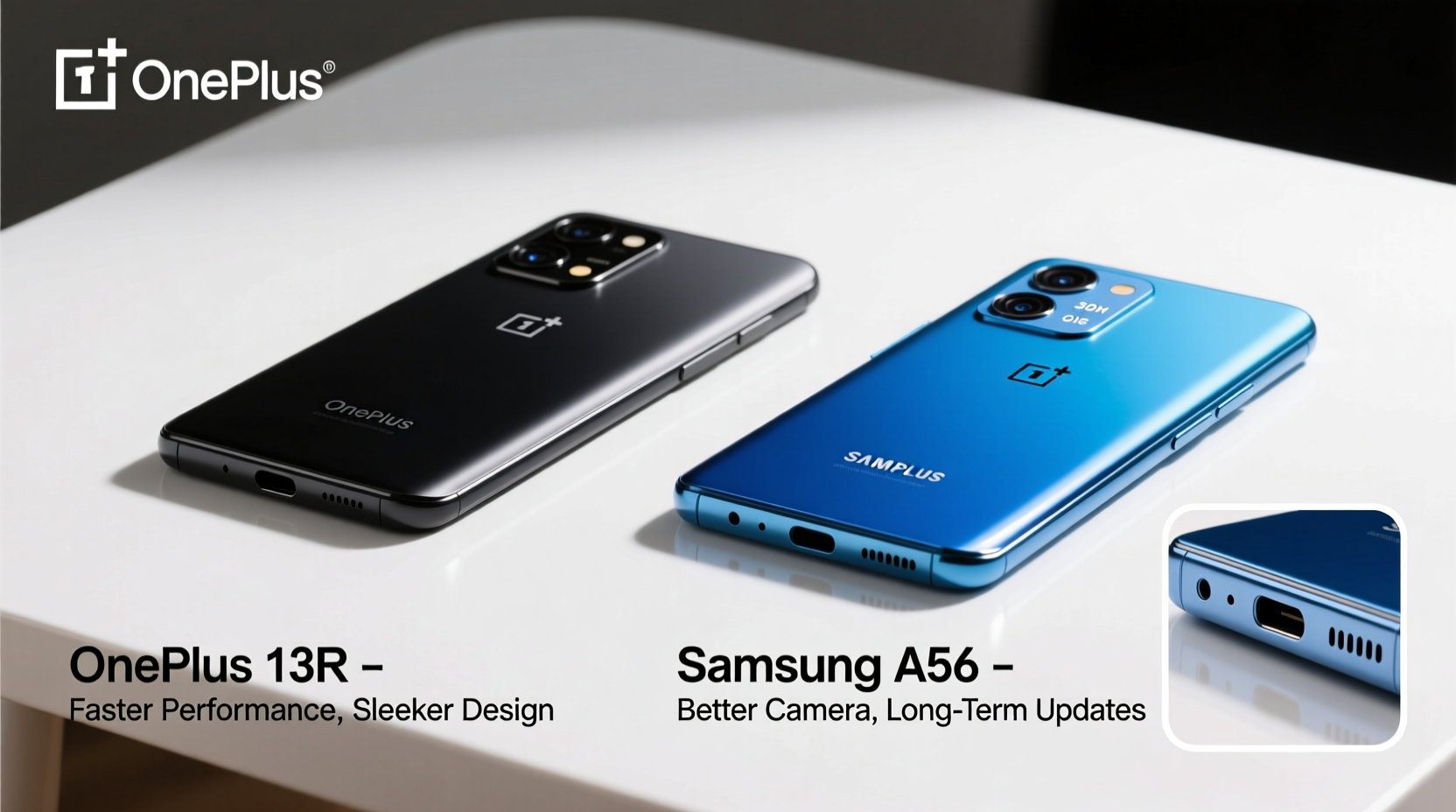
The core difference between the OnePlus 13R and the Samsung A56 lies in their underlying hardware philosophy. OnePlus continues its tradition of prioritizing raw performance, while Samsung focuses on balanced efficiency and ecosystem integration.
The OnePlus 13R is expected to launch with the latest Snapdragon 8 Gen 3 processor, paired with up to 16GB of LPDDR5X RAM and UFS 4.0 storage. This combination ensures lightning-fast app launches, seamless multitasking, and excellent gaming performance—even at maximum settings. OnePlus also typically includes vapor chamber cooling systems, which prevent throttling during extended use.
In contrast, the Samsung Galaxy A56 runs on the Exynos 1480 (or possibly a regional variant with the Snapdragon 7+ Gen 3), offering solid mid-range performance. While it handles everyday tasks like browsing, social media, and video streaming with ease, it may struggle with intensive games or long recording sessions. However, Samsung optimizes its software to run efficiently even on less powerful chips, resulting in smoother long-term usability.
Display Quality: Brightness, Smoothness, and Comfort
Both phones feature AMOLED displays—a major win for visual clarity and color accuracy—but they differ significantly in refresh rate and peak brightness.
The OnePlus 13R boasts a 6.78-inch Fluid AMOLED display with a 120Hz adaptive refresh rate and peak brightness exceeding 4500 nits. This makes outdoor visibility exceptional and scrolling incredibly smooth. OnePlus also uses Gorilla Glass Victus 2 and includes advanced eye comfort certifications, reducing strain during late-night reading.
The Samsung A56 comes with a slightly smaller 6.6-inch Super AMOLED display, also at 120Hz, but peaks around 1000–1200 nits. While still vibrant and sharp, it doesn’t match the sheer brilliance or HDR impact of the OnePlus panel. That said, Samsung’s display tuning remains industry-leading in terms of natural color reproduction and sunlight readability algorithms.
“High brightness isn’t just about outdoor use—it enhances HDR content, making movies and photos feel more immersive.” — David Lin, Mobile Display Analyst at TechPulse Insights
Camera Comparison: Real-World Photography
Cameras are often the deciding factor for many buyers. Let’s examine what each phone delivers beyond megapixel counts.
The OnePlus 13R features a triple rear setup led by a 50MP Sony IMX890 main sensor with optical image stabilization (OIS), a 48MP ultra-wide lens, and a 64MP periscope telephoto with 3x optical zoom and up to 120x digital zoom. Its computational photography has improved dramatically, now offering natural skin tones, accurate white balance, and excellent low-light detail retention. Video recording supports 4K@60fps with HDR10+ and stereo audio capture.
The Samsung A56 uses a 50MP main sensor (likely ISOCELL GN3) with OIS, a 12MP ultra-wide, and a 5MP macro lens. While the primary camera produces clean, vivid images—especially in daylight—the lack of a dedicated telephoto lens limits zoom flexibility. Samsung’s AI processing tends to oversharpen and oversaturate, which some users love but others find unrealistic. Night mode is capable but lags behind OnePlus in dynamic range.
| Feature | OnePlus 13R | Samsung A56 |
|---|---|---|
| Main Sensor | 50MP Sony IMX890 (OIS) | 50MP ISOCELL GN3 (OIS) |
| Ultra-Wide | 48MP | 12MP |
| Telephoto | 64MP Periscope (3x optical) | No telephoto |
| Front Camera | 32MP | 13MP |
| Video Recording | 4K@60fps, HDR10+ | 4K@30fps |
Battery Life & Charging: Speed vs Longevity
Battery performance is where personal usage patterns matter most. The OnePlus 13R packs a 5500mAh battery with 100W fast charging—capable of going from 0% to 100% in under 25 minutes. For users who hate waiting, this is a game-changer. It also supports 50W wireless charging, a rare feature in this segment.
The Samsung A56 has a more modest 5000mAh battery and supports 25W fast charging (charger sold separately in some regions). It takes about 70 minutes to fully charge. While the battery capacity is smaller, Samsung’s optimized software and efficient chipset help deliver a full day of moderate use. However, heavy users may need to top up by late evening.
Software & Updates: Long-Term Value
OnePlus uses OxygenOS, a near-stock Android experience known for speed, minimal bloatware, and intuitive gestures. With Android 14 out of the box, the 13R is guaranteed four major OS updates and five years of security patches—matching Google’s Pixel-level support.
Samsung’s One UI 6.1 on the A56 offers deep customization, split-screen multitasking, and seamless integration with Galaxy Buds, Watches, and tablets. It also promises four Android upgrades and five years of security updates—on par with OnePlus. However, One UI includes more preinstalled apps and occasional ads in the app drawer, which may frustrate minimalist users.
If you value clean software and quick update rollouts, OnePlus has a slight edge. If you’re already invested in the Samsung ecosystem, the A56 integrates effortlessly.
Mini Case Study: Priya’s Upgrade Dilemma
Priya, a freelance photographer based in Bangalore, was using a three-year-old mid-range phone. She needed better photo quality, longer battery life, and reliable performance for editing on the go. After testing both devices, she chose the OnePlus 13R. “The periscope zoom lets me crop into wildlife shots without losing detail,” she said. “And charging my phone during a coffee break means I never worry about running out of juice on shoots.”
For her workflow, the superior camera system, fast charging, and desktop-like file management made the OnePlus the clear winner—even at a higher price point.
Checklist: Is This Phone Right for You?
Before upgrading, ask yourself these questions:
- Do I play graphics-intensive games or edit videos on my phone? → Choose OnePlus 13R
- Am I already using Samsung wearables or a Galaxy tablet? → Lean toward A56
- Do I want the fastest possible charging and best display? → OnePlus 13R
- Is budget a key constraint, and do I mostly use social media and messaging? → A56 offers great value
- Do I take a lot of zoomed or low-light photos? → OnePlus 13R wins clearly
Frequently Asked Questions
Is the OnePlus 13R waterproof?
Yes, the OnePlus 13R is expected to have an IP65 rating, meaning it’s protected against dust and low-pressure water jets. It’s splash-resistant but not suitable for submersion.
Does the Samsung A56 support expandable storage?
No, the Galaxy A56 does not have a microSD card slot. All storage must be managed internally, so consider the 256GB model if you store lots of photos or videos.
Which phone gets updates faster?
OnePlus typically rolls out updates within two weeks of Google’s release. Samsung updates are stable but can take 4–6 weeks to reach all regions. For timely security fixes, OnePlus has the edge.
Final Verdict: Which Upgrade Makes Sense?
The answer depends on your priorities. If you demand top-tier performance, advanced cameras, ultra-fast charging, and a premium build, the **OnePlus 13R** is absolutely worth the upgrade—especially if you're coming from a phone older than two years.
However, if you're looking for a dependable daily driver with solid software, good-enough cameras, and tight integration with other Samsung devices, the **Galaxy A56** delivers impressive value at a lower cost. It’s ideal for users who don’t push their phones to the limit but still want a modern Android experience.
Ultimately, the OnePlus 13R is built for enthusiasts and power users. The Samsung A56 caters to practical, budget-conscious consumers who want reliability without excess.




 浙公网安备
33010002000092号
浙公网安备
33010002000092号 浙B2-20120091-4
Comments
No comments yet. Why don't you start the discussion?