
When the Samsung Galaxy S10 launched in 2019, it set a new benchmark for flagship Android smartphones. Meanwhile, the OnePlus 6T, released just months earlier, had already earned praise for delivering premium specs at a fraction of the price. For users weighing an upgrade or choosing between used models today, the question remains: does the Galaxy S10 justify its higher price tag over the OnePlus 6T? The answer depends on what you value—raw performance, camera versatility, software experience, or long-term ecosystem integration.
Performance and Hardware: Power vs Polish
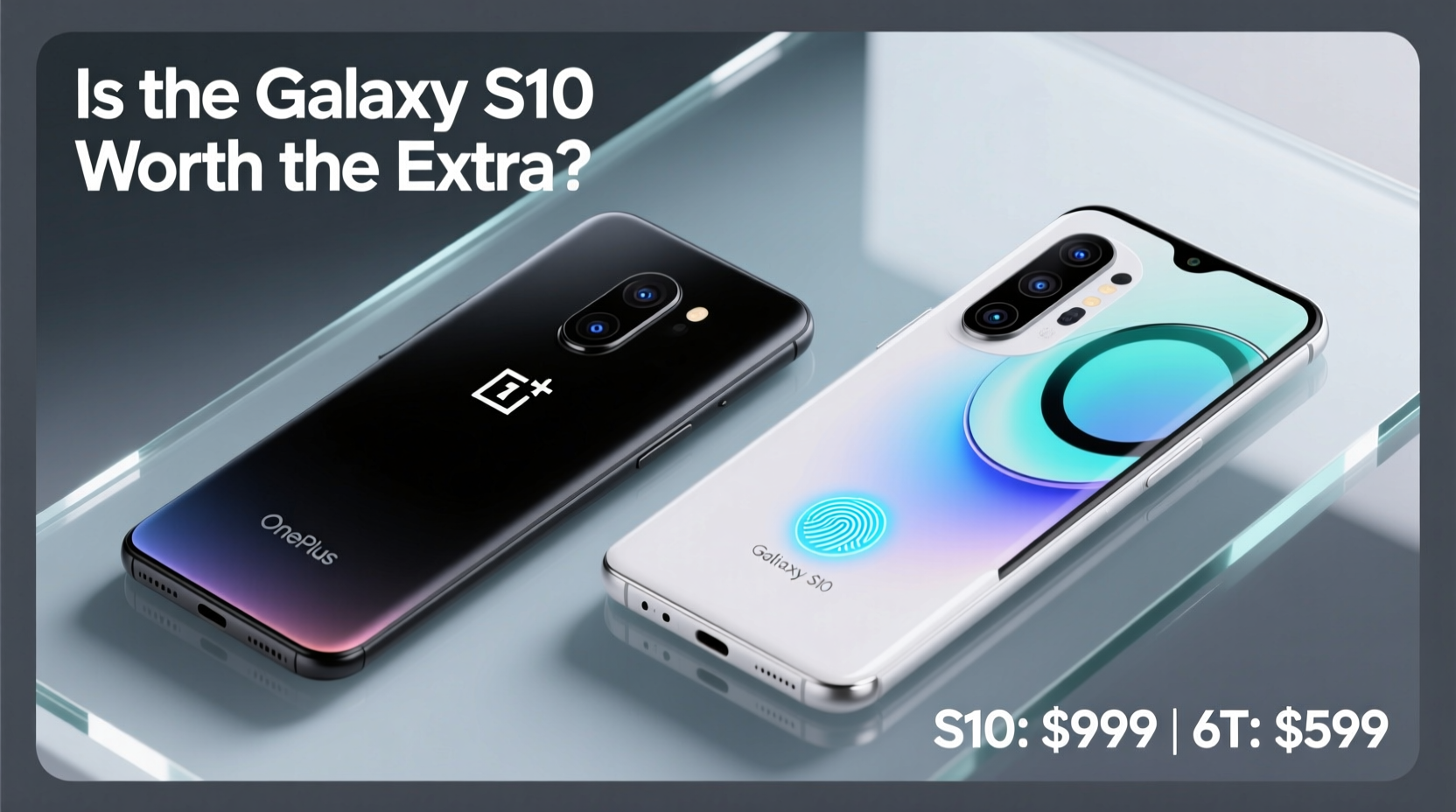
Both phones were powered by Qualcomm’s Snapdragon 845 chipset, making them evenly matched in raw processing power. Benchmarks from AnTuTu and Geekbench show nearly identical CPU and GPU performance, meaning everyday tasks like browsing, multitasking, and gaming run smoothly on both devices.
However, differences emerge in RAM and storage configurations. The OnePlus 6T launched with up to 8GB of RAM and UFS 2.1 storage, while the Galaxy S10 offered options up to 8GB RAM and UFS 2.1 as well—but with Samsung’s proprietary optimizations for file management and app launching. In real-world use, the S10 often felt slightly snappier when switching between heavy apps, thanks to Samsung’s deeper hardware-software integration.
Display and Design: Curves vs Clean Lines
The Galaxy S10 introduced a dynamic AMOLED display with a punch-hole front camera, offering a 6.1-inch edge-to-edge screen with QHD+ resolution (3040 x 1440). It supports HDR10+ and delivers vibrant colors, deep blacks, and excellent outdoor visibility. The curved edges give it a futuristic look but can lead to accidental touches for some users.
In contrast, the OnePlus 6T featured a flat 6.41-inch Optic AMOLED display with Full HD+ resolution (2340 x 1080) and a waterdrop-style notch. While not as sharp pixel-per-inch as the S10, the 6T’s display was still highly regarded for its color accuracy and brightness. Its flat design made screen protection easier and reduced glare.
“Samsung’s display technology continues to lead the industry in color fidelity and energy efficiency.” — David Lee, Display Analyst at TechInsight Group
Camera Comparison: Versatility Wins
This is where the Galaxy S10 pulls significantly ahead. It features a triple rear camera setup: a 12MP main sensor (f/1.5–f/2.4 variable aperture), a 12MP telephoto lens (2x optical zoom), and a 16MP ultra-wide lens. This configuration allows for greater creative flexibility—capturing sweeping landscapes, tight portraits, and everything in between.
The OnePlus 6T, by comparison, has a dual-camera system: a 16MP primary sensor and a 20MP secondary depth sensor. While capable in good lighting, it lacks optical zoom and wide-angle capability. Low-light photography favors the S10 due to better image processing and multi-frame stacking algorithms.
Front cameras tell a similar story. The S10’s 10MP selfie shooter includes autofocus and dual-pixel technology, producing sharper close-ups. The 6T’s 16MP pop-up camera was innovative for its time but doesn’t match the S10’s consistency across lighting conditions.
| Feature | Galaxy S10 | OnePlus 6T |
|---|---|---|
| Rear Cameras | 12MP (main) + 12MP (tele) + 16MP (ultra-wide) | 16MP (main) + 20MP (depth) |
| Front Camera | 10MP with autofocus | 16MP pop-up |
| Video Recording | 4K @ 60fps, HDR10+ | 4K @ 30fps, no HDR |
| Zoom | 2x optical, up to 10x digital | Digital only |
Battery Life and Charging: Efficiency Over Speed
The OnePlus 6T packs a larger 3700mAh battery compared to the S10’s 3400mAh unit. Despite this, real-world endurance is surprisingly close. The S10 benefits from more aggressive Doze modes, adaptive battery learning, and a more efficient display panel that dynamically adjusts resolution based on usage.
Charging is where OnePlus shines. With Dash Charge (a licensed version of OPPO’s VOOC), the 6T supports 30W fast charging—going from 0 to 60% in about 30 minutes. The Galaxy S10 maxes out at 15W wired charging (with Adaptive Fast Charging) and supports wireless charging and reverse wireless charging—a feature the 6T lacks.
Software and Long-Term Value
The Galaxy S10 runs Samsung’s One UI (originally TouchWiz-based) atop Android, offering deep customization, split-screen multitasking, DeX support, and regular security updates for four years. It integrates seamlessly with other Samsung devices like Galaxy Buds, Watches, and tablets.
The OnePlus 6T shipped with OxygenOS, known for its clean, near-stock Android experience and minimal bloatware. Updates were frequent early on, but official support ended sooner than Samsung’s—typically around two major OS upgrades. For users who prefer simplicity and speed, OxygenOS remains a favorite.
Samsung also provides longer software support. The S10 received Android 13, while the 6T topped out at Android 11. This extended lifecycle adds value if you plan to keep your phone beyond two years.
Mini Case Study: Sarah’s Upgrade Dilemma
Sarah, a freelance photographer, considered buying a used OnePlus 6T for $250 or a Galaxy S10 for $400. She needed strong low-light performance, wide-angle shots for architecture, and reliable video recording. After testing both in-store, she chose the S10 despite the higher cost. “The ultra-wide lens alone saved me from carrying a second camera,” she said. “And being able to shoot 4K at 60fps made a difference in my client reels.”
For her, the $150 premium paid off in creative flexibility and professional output.
Checklist: Is the Galaxy S10 Worth the Extra Cost?
- ✅ Need a versatile camera system with zoom and wide-angle lenses?
- ✅ Want longer software support (up to 4 years of updates)?
- ✅ Use Samsung ecosystem devices (watch, earbuds, tablet)?
- ✅ Prefer HDR video recording and high-resolution displays?
- ✅ Value wireless charging and modern design cues?
- ❌ Prioritize fastest possible wired charging and lower upfront cost?
If most of your answers are “yes” to the first five, the S10 likely justifies its price. If you answered “yes” to the last point, the 6T may be the smarter buy.
Frequently Asked Questions
Is the OnePlus 6T still usable in 2024?
Yes, but with limitations. It runs Android 11 and lacks critical security patches beyond 2022. App compatibility is mostly fine, but newer versions of Google services and banking apps may phase it out gradually.
Does the Galaxy S10 have a headphone jack?
Yes—the S10 is one of the last flagship Samsung phones to include a 3.5mm audio port. The OnePlus 6T removed it, requiring USB-C or Bluetooth headphones.
Which phone has better build quality?
Both use glass-and-metal designs, but the S10 has IP68 water and dust resistance certification. The 6T lacks formal waterproofing, making it less durable in wet conditions.
Conclusion: Making the Right Choice for Your Needs
The Galaxy S10 isn’t just a step up—it’s a complete rethinking of what a flagship should offer. From its triple-lens camera system to wireless charging, IP68 rating, and superior software longevity, it delivers tangible benefits that the OnePlus 6T can’t match. However, those advantages come at nearly double the original launch price difference.
If you’re buying used or refurbished today, the gap narrows. At $350–$400, the S10 remains a compelling option for users who want a full-featured flagship experience. But if you’re budget-conscious, need blazing-fast charging, and don’t care about zoom or wireless charging, the OnePlus 6T still holds up remarkably well.
Ultimately, the extra cost of the S10 is worth it if you value camera versatility, ecosystem integration, and long-term usability. For others, the 6T proves that sometimes, less really is more—especially when it performs just as fast for hundreds less.




 浙公网安备
33010002000092号
浙公网安备
33010002000092号 浙B2-20120091-4
Comments
No comments yet. Why don't you start the discussion?