
The Galaxy S8 was a flagship powerhouse in 2017—sleek design, groundbreaking bezel-less display, and top-tier performance for its time. Fast forward to today, and users still holding onto their S8 may wonder: Is it finally time to upgrade? With devices like the OnePlus 7 Pro entering the market as a premium mid-range contender, the question becomes more nuanced. The OnePlus 7 Pro launched in 2019 with bold promises: high refresh rate displays, pop-up cameras, and flagship-level specs at a lower price. But does making the jump from the Galaxy S8 to the OnePlus 7 Pro still make sense in 2024?
This isn’t just about raw specs. It’s about usability, longevity, daily experience, and whether the improvements translate into meaningful upgrades. Let’s dive deep into what’s changed—and what hasn’t.
Design and Build: A Leap Forward
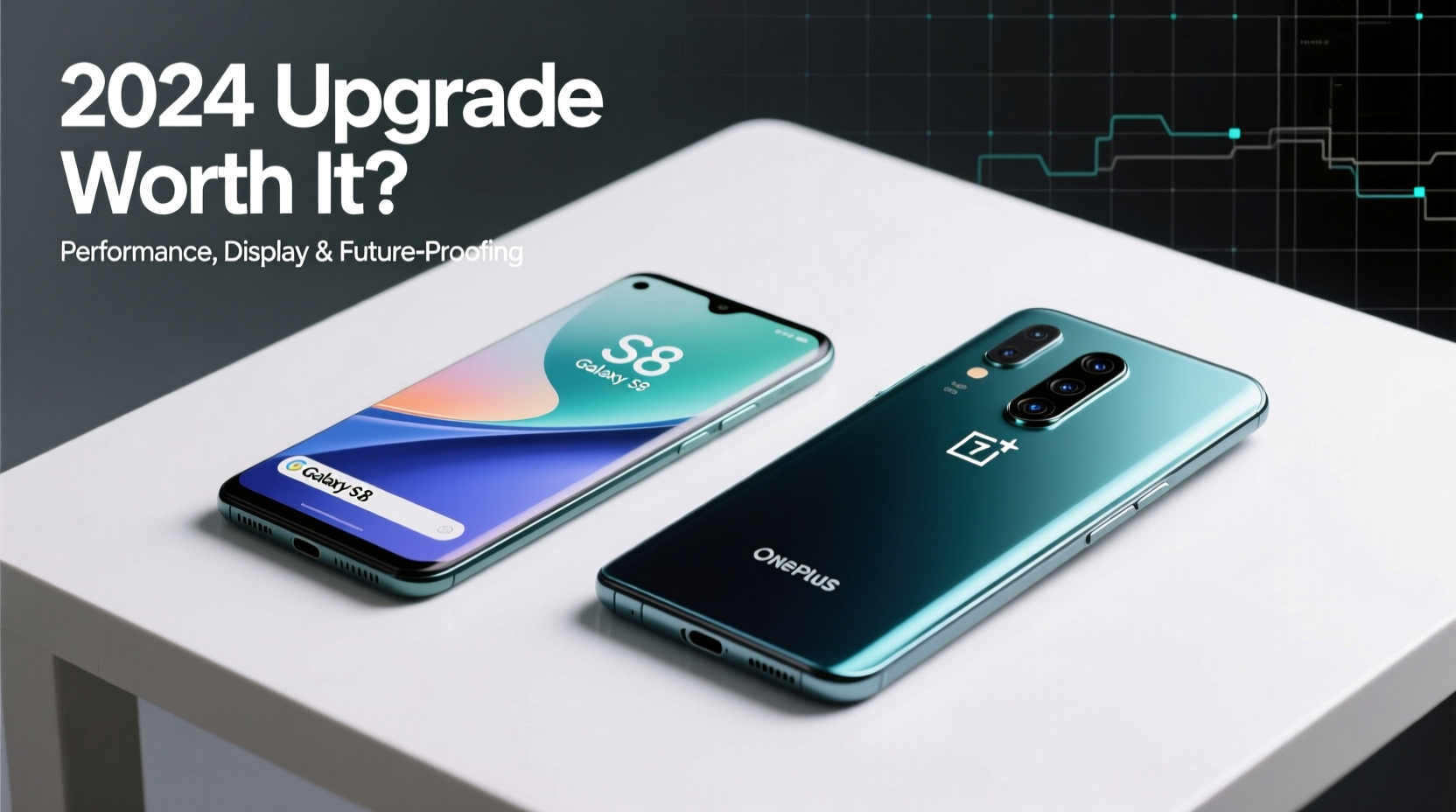
The Galaxy S8 introduced curved glass on both sides with an aluminum frame, setting a new standard for smartphone aesthetics. Its 5.8-inch Infinity Display felt futuristic, with minimal bezels and a centered fingerprint sensor that was often criticized for being awkwardly placed.
In contrast, the OnePlus 7 Pro brought a more modern approach. At 6.67 inches, its Fluid AMOLED display dominates the front with near-bezel-less symmetry. The most notable change? The motorized pop-up front camera eliminates the notch or cutout, preserving screen integrity. The device feels larger but more balanced thanks to improved ergonomics and a matte finish option that resists fingerprints.
While both phones feature glass backs (prone to smudges and drops), the 7 Pro adds IP68 water resistance only if purchased in specific regions—a feature the S8 already had globally. However, the newer device feels sturdier overall due to refined materials and structural rigidity.
Display Quality: From Good to Exceptional
The S8’s 1440p Super AMOLED panel was industry-leading in 2017, offering vibrant colors, deep blacks, and excellent viewing angles. It ran at 60Hz, which was standard then.
The OnePlus 7 Pro’s 90Hz Fluid Display marked a turning point in Android UX fluidity. Scrolling, animations, and gaming feel noticeably smoother. Though resolution drops slightly to QHD+ (3120×1440), pixel density remains high, and the adaptive brightness and HDR10+ support enhance media consumption significantly.
“High refresh rate displays aren’t just a gimmick—they redefine how we interact with our phones.” — David Liu, Mobile UX Analyst at TechPulse Insights
If you spend hours reading, browsing, or watching videos, the 7 Pro’s display offers a tangible quality-of-life improvement. For long-term comfort, especially in low light, the 7 Pro also includes a DC dimming mode to reduce eye strain—a thoughtful addition missing on many OLED phones.
Performance Comparison: Generational Gains
Under the hood, the difference is stark. The Galaxy S8 shipped with Samsung’s Exynos 8895 (in most regions) or Snapdragon 835—both capable chips in their prime. Today, they struggle with multitasking, app loading times, and background processes, especially after years of OS updates and bloatware accumulation.
The OnePlus 7 Pro runs on the Snapdragon 855 paired with up to 12GB of RAM. Even in 2024, this combination handles modern apps, streaming, and gaming with ease. Apps launch faster, switching between them is seamless, and even heavy workloads like photo editing or video rendering are manageable.
| Feature | Galaxy S8 | OnePlus 7 Pro |
|---|---|---|
| Processor | Snapdragon 835 / Exynos 8895 | Snapdragon 855 |
| RAM | 4GB | 6GB / 8GB / 12GB |
| Storage | 64GB (expandable) | 128GB / 256GB (non-expandable) |
| Battery | 3000mAh | 4000mAh |
| Charging | Fast charging (15W) | Dash Charge (30W) |
| OS (Launch) | Android 7.0 | Android 9.0 |
| Current Update Status | No updates since 2020 | Last update: Android 12 (OxygenOS 12) |
The battery life alone makes a compelling case. The S8’s 3000mAh cell barely lasts a full day with moderate use in 2024, while the 7 Pro’s 4000mAh battery routinely delivers 1.5 days under similar conditions. And when it does run low, Dash Charge can refill half the battery in 20 minutes.
Camera Evolution: Night and Day Difference
The Galaxy S8 featured a solid single 12MP rear camera with Dual Pixel AF and optical image stabilization. In good lighting, it produced detailed, natural-looking photos. Low-light performance was acceptable for its era, but noise and blur were common.
The OnePlus 7 Pro introduced a triple-camera system: 48MP main (f/1.6), 8MP telephoto (3x zoom), and 16MP ultra-wide. While pixel-binning reduces output to 12MP, the larger sensor and improved processing yield sharper images, better dynamic range, and usable zoom capabilities absent on the S8.
Night mode, though not class-leading by today’s standards, brings dramatic improvements in dark environments. Video recording jumps from 4K@30fps on the S8 to 4K@60fps with electronic stabilization on the 7 Pro—making vlogging and casual filming far more viable.
Real Example: Daily Use Upgrade Scenario
Consider Maria, a freelance photographer who held onto her Galaxy S8 until early 2023. She used it for client communication, social media posting, and occasional snapshots. Over time, she noticed delays in uploading edited photos, sluggish gallery navigation, and poor performance in dim indoor shoots.
After switching to the OnePlus 7 Pro, she reported immediate gains: faster export times from Lightroom Mobile, smoother scrolling through large image folders, and confidence shooting in cafes or evening events thanks to night mode. “It felt like I’d upgraded my entire workflow,” she said. “Not just the camera—the whole experience became lighter.”
Software and Longevity: The Hidden Cost of Staying Behind
This is where the decision becomes critical. The Galaxy S8 received three major Android updates (up to Android 10) and security patches until late 2020. As of 2024, it no longer receives any official support—posing risks for privacy, compatibility, and app functionality.
The OnePlus 7 Pro got two major OS upgrades (to Android 11 and 12) and four years of security updates, ending in 2023. While also past official support, its final software state is significantly more modern, supporting newer authentication methods, banking apps, and productivity tools without issues.
Additionally, OxygenOS (now merged into ColorOS) offered a cleaner, closer-to-stock Android experience than Samsung’s heavily skinned One UI—appealing to users who prefer simplicity and speed over feature overload.
Checklist: Is Upgrading Worth It for You?
- ✅ Does your S8 struggle to keep up with basic tasks like messaging or browsing?
- ✅ Have you noticed increasing app crashes or slow loading times?
- ✅ Are you unable to install essential apps due to OS incompatibility?
- ✅ Do you want better photo quality, especially in low light?
- ✅ Is fast charging or longer battery life important to your routine?
- ✅ Are you concerned about security vulnerabilities from outdated software?
If three or more apply, upgrading isn't just beneficial—it's necessary for maintaining digital efficiency and safety.
Frequently Asked Questions
Can the OnePlus 7 Pro still receive apps and updates in 2024?
While it no longer gets official OS or security updates, the OnePlus 7 Pro runs Android 12, which is compatible with nearly all current apps on the Google Play Store. Most services—including banking, streaming, and productivity tools—function normally.
Is the OnePlus 7 Pro waterproof like the Galaxy S8?
Only select variants (mainly European models) include IP68 certification. Unlike the S8, which had universal water resistance, this varies by region and model number. Always verify before exposing to moisture.
Will my accessories transfer from the S8 to the 7 Pro?
Likely not. The 7 Pro uses USB-C for everything (including audio), eliminating the headphone jack present on the S8. Wireless chargers designed for Samsung may not align properly due to different back curvature and coil placement.
Final Verdict: Yes, the Upgrade Still Makes Sense
Moving from the Galaxy S8 to the OnePlus 7 Pro in 2024 represents more than a hardware refresh—it’s a substantial leap in user experience. The improvements in display smoothness, battery endurance, camera versatility, and overall system responsiveness address the core frustrations of aging smartphones.
Even though both devices are now beyond their official support cycles, the OnePlus 7 Pro operates at a functional level much closer to modern expectations. For users clinging to the S8 out of loyalty or frugality, the reality is that technological stagnation comes at a cost: reduced productivity, compromised security, and diminished enjoyment.




 浙公网安备
33010002000092号
浙公网安备
33010002000092号 浙B2-20120091-4
Comments
No comments yet. Why don't you start the discussion?