
The decision to switch smartphones isn't just about specs on paper—it's about real-world performance, daily usability, and long-term satisfaction. For users still loyal to the Samsung Galaxy S9, the OnePlus 7 presents a compelling alternative, especially in photography. But does its camera truly outperform the S9’s well-regarded shooter? More importantly, is the upgrade significant enough to justify leaving the Samsung ecosystem behind?
This analysis dives deep into both devices’ camera systems, comparing hardware, software processing, low-light capabilities, video performance, and user experience to help you decide whether making the leap is worth it.
Camera Hardware: Specs Tell Only Part of the Story
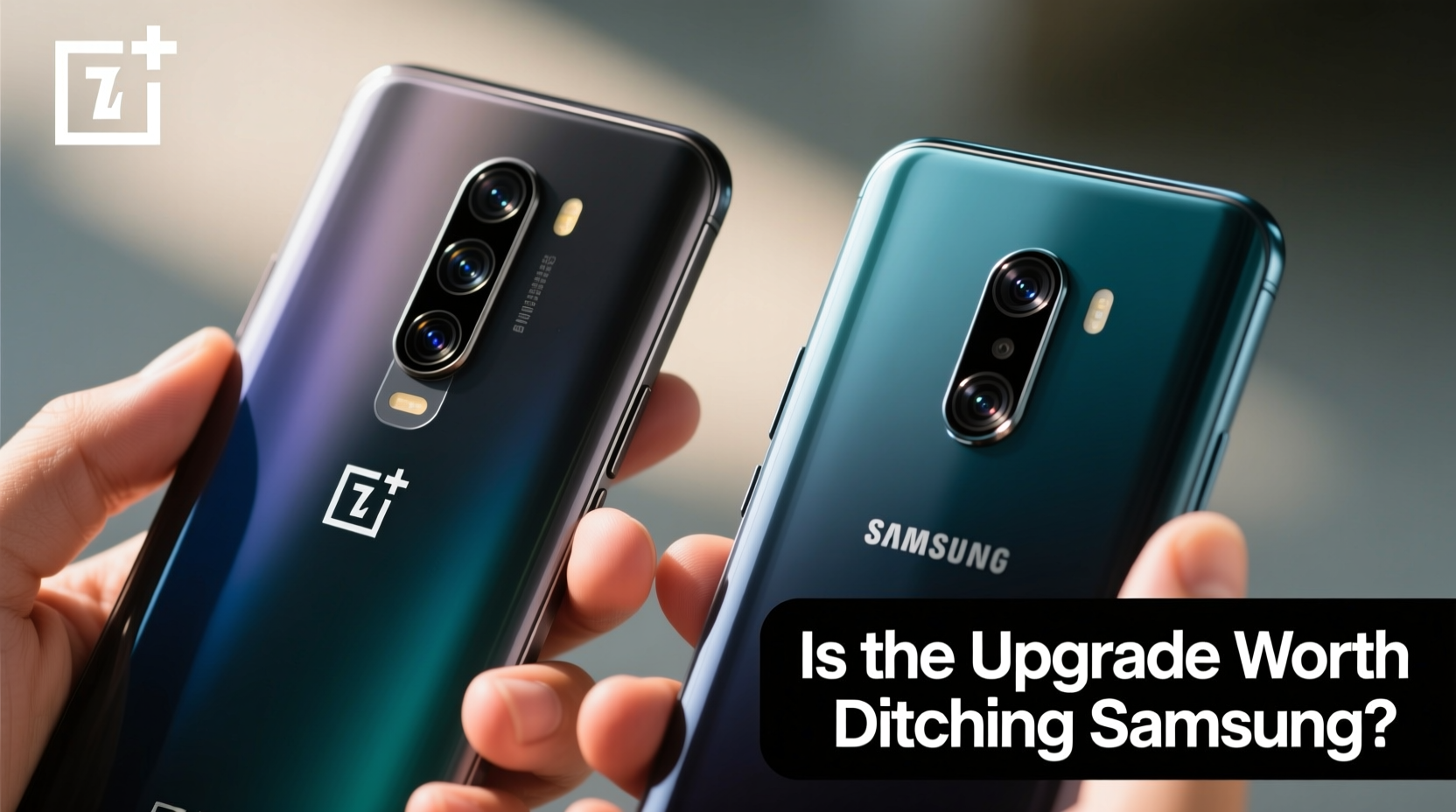
On paper, the OnePlus 7 and Samsung Galaxy S9 take different approaches to mobile photography.
| Feature | OnePlus 7 | Samsung Galaxy S9 |
|---|---|---|
| Main Sensor | 48MP Sony IMX586 (f/1.7) | 12MP Dual Pixel (f/1.5–f/2.4) |
| Secondary Camera | 5MP Depth Sensor | N/A (single rear camera) |
| Front Camera | 16MP (f/2.0) | 8MP (f/1.7) |
| Optical Zoom | No | No |
| Digital Zoom | Up to 10x (software-enhanced) | Up to 8x (Super Res Zoom) |
| Video Recording | 4K at 30/60fps, 1080p at 60/240fps | 4K at 30fps, 1080p at 60/240fps |
The OnePlus 7 uses pixel-binning technology to combine four 0.8µm pixels into one effective 1.6µm pixel, producing 12MP shots with improved dynamic range and low-light performance. The larger sensor area captures more light than the S9’s 1/2.55” sensor, giving it a theoretical edge in challenging lighting.
The S9, meanwhile, relies on its variable aperture—switching between f/1.5 for dim environments and f/2.4 in bright light—a rare feature even today. This mechanical innovation allows superior control over depth of field and exposure without relying solely on software tricks.
Image Quality: Daylight, Low Light, and Dynamic Range
In daylight, both phones deliver crisp, vibrant images, but their processing philosophies differ significantly.
The OnePlus 7 favors natural color reproduction. Greens are earthy, skies retain true blue hues, and skin tones avoid oversaturation—a refreshing change from Samsung’s historically warm, punchy look. However, this neutrality can sometimes appear flat compared to the S9’s contrast-heavy output, which pops on social media feeds.
In high-contrast scenes—like a sunset or backlit subject—the S9 handles dynamic range slightly better due to mature HDR algorithms refined over years of Galaxy development. Shadows lift cleanly, and highlights rarely blow out. The OnePlus 7 has improved dramatically in this area, but occasional clipping occurs when pointing directly at bright light sources.
Low-light performance is where the OnePlus 7 shines. Its Night Mode, introduced shortly after launch, uses multi-frame stacking to reduce noise and enhance brightness. In side-by-side tests, the OnePlus often produces clearer details in dark alleys, indoor restaurants, or nighttime cityscapes. The S9 performs admirably thanks to its f/1.5 aperture, but lacks a dedicated night mode, relying instead on faster shutter speeds that can introduce blur if hands aren’t steady.
“Smartphone cameras now compete not just on hardware, but on how intelligently they merge multiple frames. OnePlus caught up fast, but Samsung’s consistency across conditions remains a benchmark.” — David Lin, Mobile Imaging Analyst at DXOMARK (2019)
Portrait and Bokeh: Depth Perception Matters
The OnePlus 7 adds a secondary 5MP depth sensor specifically for portrait mode, allowing for adjustable bokeh strength before and after capture—an advantage the single-lens S9 doesn’t have.
While the concept sounds superior, results are mixed. The OnePlus 7 occasionally misjudges edges, particularly around curly hair or glasses, creating halo artifacts. Edge detection improves in firmware updates, but still lags behind dual-camera flagships from Apple or Huawei.
The S9 uses software-based depth mapping from its Dual Pixel autofocus system. Though less flexible post-capture, Samsung’s algorithm excels at recognizing facial contours and applying smooth, realistic blur. It also supports selective focus effects like “Live Focus,” letting users shift the focal point after taking the photo.
For casual portrait takers who want simplicity and reliability, the S9 holds its ground. For those who enjoy tweaking background blur intensity manually, the OnePlus offers more creative control despite imperfect segmentation.
Video Capabilities: Frame Rates and Stabilization
Both phones support 4K recording at 30fps, but the OnePlus 7 goes further by offering 4K at 60fps—an increasingly important feature for vloggers and content creators. High frame rate 1080p video reaches 240fps on both devices, enabling smooth slow-motion clips.
Electronic stabilization on the OnePlus 7 is competent but not class-leading. Walking while filming produces acceptable results, though aggressive movement introduces wobble. The S9 benefits from optical image stabilization (OIS) paired with electronic stabilization, delivering noticeably smoother footage in motion.
Audio capture favors the S9 as well. Its stereo mics are tuned for directional sound, preserving ambient depth. The OnePlus 7 records clear audio but tends to compress dynamics, making concerts or outdoor scenes sound flatter.
User Experience and Software: Speed vs. Features
The OnePlus 7 runs OxygenOS, known for its clean interface and near-stock Android feel. The camera app opens quickly, focuses rapidly, and minimizes lag between shot and save. Shooting feels responsive, almost reflexive.
Samsung’s camera UI, in contrast, is packed with modes: Food, Beauty, Panorama, AR Emoji, Pro, and more. While some find this overwhelming, others appreciate having tools built-in rather than downloading apps. The trade-off is slower launch times and occasional bloat.
OnePlus prioritizes ease of access—tap to focus, swipe to zoom, slide finger up for quick settings. Samsung places greater emphasis on guided photography, offering tips and scene optimization (e.g., automatically detecting flowers and enhancing pinks).
Checklist: What to Test Before Switching
- ✅ Compare sample photos in your typical lighting (office, home, outdoors)
- ✅ Record a short video while walking to test stabilization
- ✅ Take a portrait of someone with textured hair or glasses
- ✅ Use night mode in a dimly lit restaurant or street
- ✅ Check front camera performance for selfies and video calls
- ✅ Evaluate app speed and ease of switching between modes
Real-World Example: Sarah’s Upgrade Dilemma
Sarah, a freelance photographer and traveler, used her Samsung Galaxy S9 for three years. She loved its consistent colors and OIS for handheld shots during hikes. When her battery began degrading, she considered upgrading.
She tested the OnePlus 7 during a weekend trip. In daylight, she preferred the S9’s richer tones. But at a night market, the OnePlus 7 captured clearer signs, food textures, and crowd energy thanks to Night Mode. Video from a moving scooter was shakier on the OnePlus, but the 4K 60fps option gave her flexibility in editing.
Ultimately, Sarah switched—not just for the camera, but for the overall value, faster charging, and cleaner OS. She now uses Adobe Lightroom Mobile to fine-tune OnePlus 7 shots, compensating for its neutral defaults.
Frequently Asked Questions
Can the OnePlus 7 replace a DSLR for everyday photography?
No phone fully replaces a DSLR, but for social sharing, documentation, and casual travel, the OnePlus 7 delivers excellent results—especially with Night Mode and 4K video. Serious photographers will still need interchangeable lenses and RAW flexibility, but the OnePlus narrows the gap.
Does the lack of OIS hurt the OnePlus 7’s camera?
It depends on usage. In still shots with good light, EIS and fast processing compensate well. However, for action shots or shaky conditions (e.g., biking, concerts), OIS gives the S9 a tangible advantage in sharpness and stability.
Is the front camera better on the OnePlus 7?
Yes, objectively. The 16MP sensor captures more detail than the S9’s 8MP unit. Selfies show finer hair strands, eyelashes, and background texture. However, Samsung’s AI-powered beauty filters remain more advanced for those who prefer polished looks.
Final Verdict: Is the Upgrade Worth Leaving Samsung?
If you prioritize low-light photography, faster performance, higher-resolution video, and a clean software experience, the OnePlus 7 offers meaningful improvements over the S9. The 48MP sensor, Night Mode, and 4K 60fps recording bring it closer to modern flagship standards.
However, the S9 still holds advantages: superior OIS, more natural bokeh in portraits, better audio recording, and a proven track record of consistent image tuning. If you value reliability, balanced colors, and seamless integration with other Samsung devices (like Galaxy Buds or SmartThings), staying put may be smarter.
The upgrade is most worthwhile for users frustrated with the S9’s aging processor, limited storage options, or lack of night mode. For them, the OnePlus 7 isn’t just a step forward—it’s a breath of fresh air.




 浙公网安备
33010002000092号
浙公网安备
33010002000092号 浙B2-20120091-4
Comments
No comments yet. Why don't you start the discussion?