
In 2014, a quiet but significant shift occurred in the smartphone world. Longtime Apple users began trading their iPhone 5s for a new contender: the OnePlus One. This wasn’t just another Android phone—it was a cultural disruptor. Priced at $299 unlocked, it offered flagship-level hardware while challenging the premium pricing model that Apple had mastered. The question isn’t whether the OnePlus One was technically superior—it often was—but why so many loyal Apple customers made the leap. The answer lies in performance, philosophy, price, and timing.
The Rise of the Flagship Killer
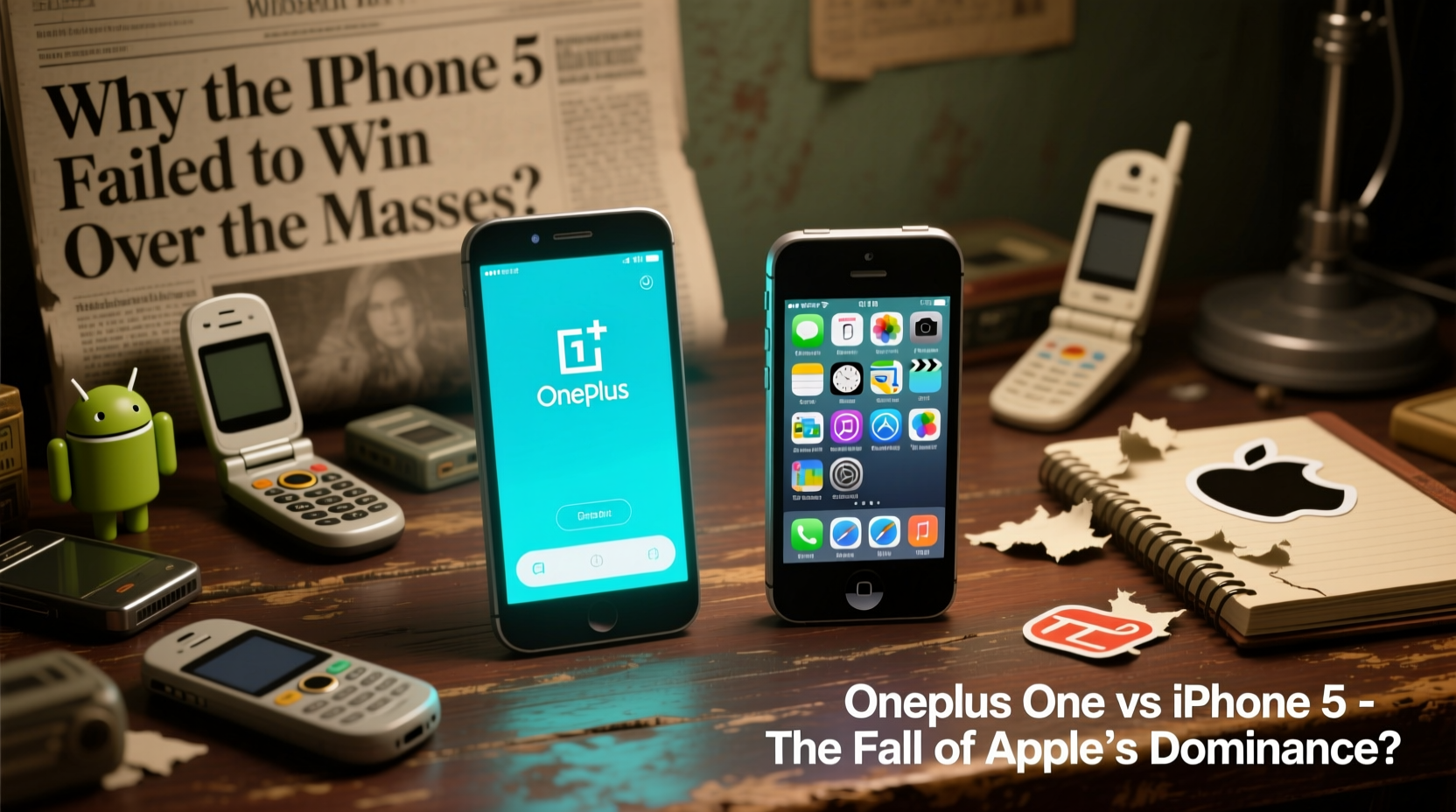
The OnePlus One launched with specs that rivaled the iPhone 5s and even outpaced it in several areas. It featured a 5.5-inch 1080p display, a Snapdragon 801 processor, 3GB of RAM, and a 13MP rear camera—numbers that dwarfed the iPhone 5s’s 4-inch Retina display, dual-core A7 chip, 1GB of RAM, and 8MP camera. For tech-savvy consumers, these weren’t just numbers; they were promises of speed, multitasking power, and future-proofing.
Apple had long prioritized software optimization over raw hardware. While iOS ran smoothly on lower specs, enthusiasts wanted more—more RAM, larger screens, expandable storage. The iPhone 5s felt increasingly constrained by its design choices. In contrast, the OnePlus One delivered what many saw as “no compromises” at half the price of an iPhone with contract.
Price-to-Performance Revolution
The most immediate reason people switched was value. At $299, the OnePlus One undercut every flagship—including the iPhone 5s, which retailed for $649 (unlocked, 16GB). Even with carrier subsidies, many users paid hundreds upfront or were locked into two-year contracts. OnePlus offered freedom: no carrier bloat, no lock-in, full control.
This wasn’t just about saving money. It was a statement. Consumers began questioning whether Apple’s premium pricing reflected innovation—or brand loyalty exploitation. For early adopters and tech influencers, buying a OnePlus One became symbolic: a rejection of closed ecosystems in favor of open, customizable alternatives.
“People didn’t just buy the OnePlus One for its specs—they bought it because it represented a new kind of ownership.” — David Pierce, The Verge, 2014
Philosophical Shift: Openness vs. Control
Apple has always prided itself on a seamless, curated user experience. But that control comes at a cost: limited customization, restricted file access, and no sideloading without jailbreaking. By 2014, a growing segment of users—especially developers, tinkerers, and privacy-conscious individuals—were tired of constraints.
The OnePlus One, running CyanogenMod (a popular custom Android ROM at the time), offered root access, theming options, app permissions control, and deep system-level changes. Want to change your default keyboard? Replace Google services? Tweak animations? You could. For many, this level of autonomy was intoxicating compared to iOS’s rigid interface.
OnePlus also embraced community feedback. Early invites were distributed through forums, creating a sense of exclusivity and involvement. Users didn’t just buy a phone—they joined a movement. That emotional connection proved powerful against Apple’s polished but impersonal retail experience.
Specs Comparison: OnePlus One vs iPhone 5s
| Feature | OnePlus One | iPhone 5s |
|---|---|---|
| Display | 5.5\", 1080p LCD | 4.0\", 640x1136 IPS LCD |
| Processor | Snapdragon 801 (Quad-core) | Apple A7 (Dual-core) |
| RAM | 3GB | 1GB |
| Storage Options | 16GB / 64GB (non-expandable) | 16/32/64GB (non-expandable) |
| Rear Camera | 13MP, f/2.0 | 8MP, f/2.4 |
| Front Camera | 5MP | 1.2MP |
| Battery | 3100 mAh (removable via tools) | 1440 mAh (non-removable) |
| OS | CyanogenMod 11S (Android 4.4) | iOS 7 (upgradable to iOS 12) |
| Price (Launch) | $299 (Unlocked) | $649 (Unlocked, 16GB) |
Real Example: Why Alex Switched
Alex, a mobile developer based in Austin, owned iPhones exclusively from 2009 to 2014. He loved the ecosystem—iCloud, iMessage, AirPlay—but grew frustrated when iOS updates slowed his iPhone 5s. He wanted to test apps on different launchers, tweak DPI settings, and use alternative app stores. Jailbreaking worked, but it voided warranties and introduced instability.
When he heard about the OnePlus One’s invite-only launch and CyanogenMod integration, he applied immediately. After receiving his device, he installed custom kernels, changed system fonts, and even replaced Google services with privacy-focused FOSS apps. “It felt like I finally had a phone that belonged to me,” he said. “Not Apple, not AT&T—me.”
He kept his iPhone for iMessage and FaceTime but used the OnePlus One as his daily driver. Within months, he sold his iPhone and never looked back.
Why Timing Mattered
The year 2014 was pivotal. Android had matured—Google had improved performance, notifications, and design with KitKat. Meanwhile, Apple hadn’t significantly updated the iPhone design since the 4S. The iPhone 5s brought Touch ID and a 64-bit chip, but otherwise felt incremental. Enthusiasts craved innovation, not refinement.
OnePlus arrived at exactly the right moment: high-end specs, low price, and a rebellious image. They marketed not just a phone, but a philosophy—“Never Settle.” That resonated with users who felt Apple had become complacent.
Frequently Asked Questions
Was the OnePlus One actually better than the iPhone 5s?
In raw performance and multitasking, yes. It had more RAM, a faster processor, and a higher-resolution display. However, iOS was smoother and more consistent. The iPhone still won on software polish, app quality, and long-term updates. It depended on priorities: power and control vs. simplicity and reliability.
Did OnePlus deliver on its promises?
Mixed results. The hardware was excellent, but early software support was inconsistent. CyanogenMod eventually split from OnePlus, leading to delays in updates. Still, the company built a loyal fanbase and evolved into a major global brand.
Can you still use either phone today?
The iPhone 5s received iOS updates until 2023 (iOS 12.5.7), making it surprisingly durable. The OnePlus One officially stopped at Android 6.0, though community ROMs like LineageOS extended its life. Neither is viable as a primary phone today due to app compatibility and security concerns.
Action Checklist: What to Consider When Switching Ecosystems
- Evaluate your ecosystem dependence: Do you rely on iMessage, AirDrop, or iCloud?
- Assess customization needs: Do you want to theme, root, or install third-party apps?
- Compare total cost: Include device price, accessories, and subscription services.
- Check app availability: Some apps launch first (or only) on iOS.
- Consider long-term support: How many years of OS updates does each platform offer?
Conclusion: A Turning Point in Smartphone Culture
The switch from iPhone 5s to OnePlus One wasn’t just about specs or savings—it reflected a broader shift in consumer expectations. People began demanding more control, transparency, and value. Apple’s closed garden, once a strength, started feeling restrictive. OnePlus tapped into that frustration with a product that celebrated openness, modularity, and user empowerment.
While OnePlus has since moved toward a more mainstream, polished approach, the legacy of the OnePlus One endures. It proved that a small startup could challenge giants by listening to users and redefining what a premium phone could be. For those who made the jump, it wasn’t abandoning Apple—it was choosing possibility.




 浙公网安备
33010002000092号
浙公网安备
33010002000092号 浙B2-20120091-4
Comments
No comments yet. Why don't you start the discussion?