
Choosing between an opal pendant and an opal ring isn’t just about aesthetics—it’s a decision shaped by lifestyle, symbolism, wearability, and emotional resonance. Opals, with their mesmerizing play-of-color and ethereal glow, have long been cherished in jewelry. But how do you decide whether to wear one close to your heart on a chain or proudly on your finger? While both options celebrate the gemstone’s beauty, they serve different purposes and suit distinct needs. The answer lies not in which is objectively better, but in which aligns more closely with who you are and how you live.
The Symbolism Behind Placement
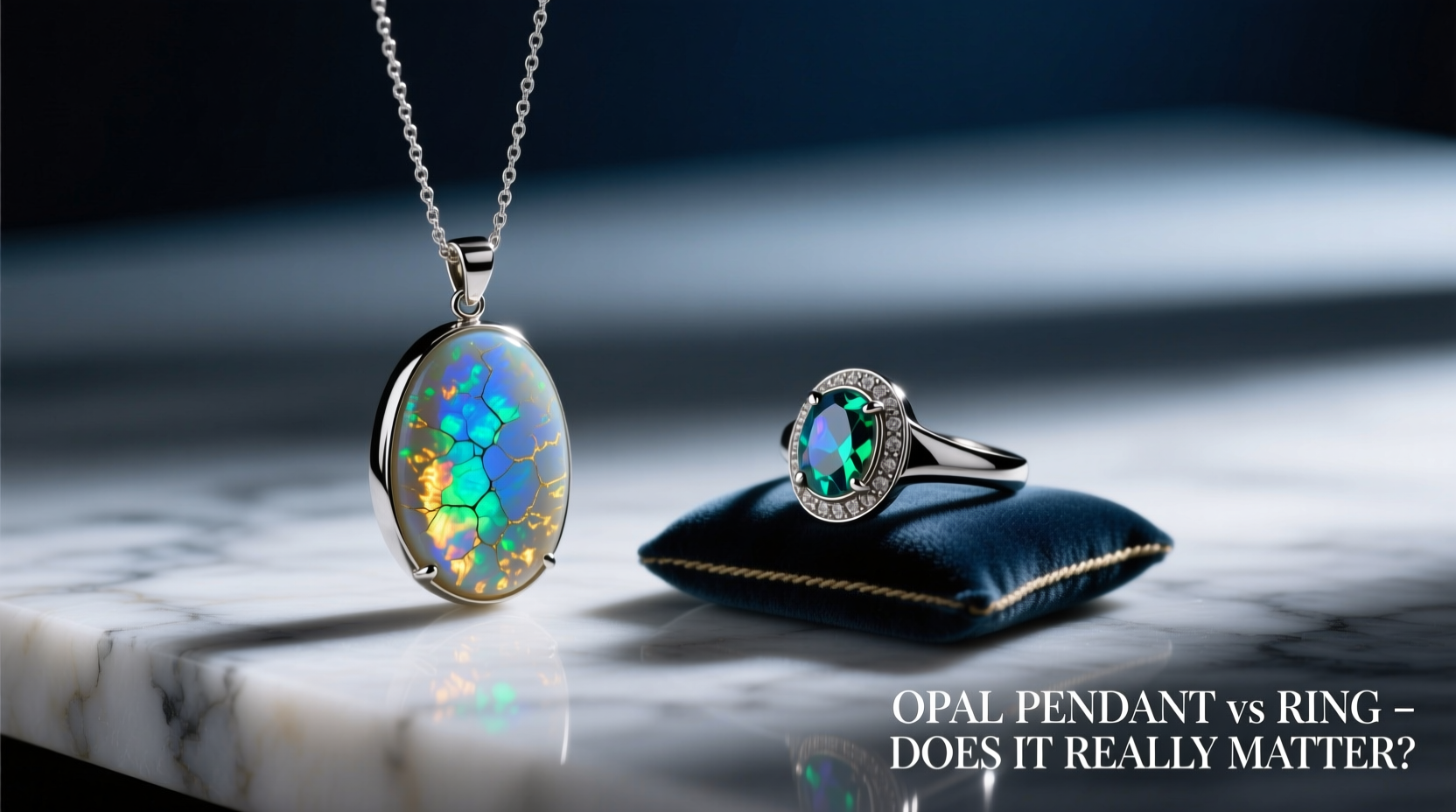
Jewelry has always carried symbolic weight. Rings traditionally represent commitment—think engagement bands, wedding circles, or signet rings passed through generations. Wearing an opal ring can signal intention: a personal promise, a celebration of individuality, or even a declaration of creativity. Because it sits at the end of the hand, a ring is highly visible during interaction, making it a social statement.
In contrast, pendants rest near the heart, often associated with intimacy, memory, and protection. An opal pendant may be worn as a talisman, a reminder of a loved one, or a connection to inner emotions. Its placement makes it more private—visible when chosen, hidden when desired. This duality allows for deeper personal meaning without constant public exposure.
“Jewelry worn close to the chest often carries emotional significance beyond adornment. It becomes a silent companion.” — Dr. Lena Torres, Cultural Anthropologist & Jewelry Historian
Durability and Practicality Compared
Opals are beautiful but delicate. With a hardness of 5.5–6.5 on the Mohs scale, they’re softer than diamonds, sapphires, or even quartz. This makes them vulnerable to scratches, impacts, and sudden temperature changes. How you wear your opal directly affects its longevity.
Rings, especially those worn daily, face constant contact—bumping against desks, keys, door handles, and sinks. Even a simple gesture like washing hands can expose a ring-setting to water and chemicals that destabilize opal’s structure over time. Black opals and boulder opals fare slightly better due to their ironstone backing, but still require caution.
Pendants, by comparison, experience far less physical stress. Suspended from a chain, they avoid direct abrasion and impact. Unless worn during exercise or in hazardous environments, opal pendants are inherently safer for long-term preservation.
Style Flexibility and Wardrobe Integration
Fashion versatility plays a major role in jewelry decisions. Opal pendants offer unmatched adaptability across outfits and occasions. Whether layered with other necklaces or worn solo over a turtleneck or V-neck, a pendant integrates seamlessly into both casual and formal wear. Its position draws attention to the neckline and face, enhancing overall presence without overwhelming the look.
Rings, while impactful, are more limited by hand proportions, nail length, and glove compatibility. A bold opal ring might clash with existing bands or feel cumbersome under certain conditions (e.g., typing, cooking). However, when styled intentionally—paired with minimalist metals or used as a centerpiece—they command attention and express personality boldly.
| Feature | Opal Pendant | Opal Ring |
|---|---|---|
| Visibility | Moderate (adjustable) | High (constant) |
| Durability Risk | Low | High |
| Wardrobe Compatibility | Excellent | Good |
| Emotional Proximity | High (near heart) | Medium (on hand) |
| Care Requirements | Minimal | Regular monitoring |
| Best For | Daily wear, gifting, sentimental value | Statements, special occasions, self-expression |
Real-Life Example: Two Women, Two Choices
Sophie, a graphic designer, inherited her grandmother’s white opal ring. She wore it every day until she cracked the stone while moving furniture. Devastated, she had the opal reset into a locket pendant. Now, she wears it daily, feeling closer to her grandmother without fear of damage. “It feels more personal now,” she says. “I can touch it when I need comfort.”
Meanwhile, Maya, a freelance photographer, bought herself a vibrant Ethiopian opal ring after a successful exhibition. She wanted something bold to reflect her artistic identity. Though she removes it before shoots and chores, she loves how it sparks conversations. “People notice my hands when I speak. The ring gives me confidence.”
Their stories illustrate a key truth: the best choice depends on context, not convention.
How to Decide: A Step-by-Step Guide
If you're torn between a pendant and a ring, follow this process to clarify your priorities:
- Assess Your Lifestyle – Do you type often, garden, cook, or engage in physical work? High-hand-use routines favor pendants.
- Consider Emotional Intent – Is this piece meant to honor someone, mark a milestone, or express independence? Sentiment leans toward pendants; bold expression suits rings.
- Evaluate Existing Jewelry – Do you already own statement rings or layered necklaces? Choose the option that fills a gap in your collection.
- Think About Longevity – Are you investing in a heirloom piece? Pendants generally last longer with less maintenance.
- Try Before You Commit – Rent or borrow both styles for a week. Notice which feels more natural, which you forget you're wearing, and which draws compliments.
Expert Care Tips for Both Options
No matter your choice, opals demand thoughtful care. Unlike many gemstones, they contain up to 20% water, making them prone to drying out and cracking if exposed to heat or harsh environments.
- Avoid ultrasonic cleaners and steam devices—they can fracture opals.
- Remove opal jewelry before swimming, showering, or applying lotions.
- Store pieces separately in soft pouches; never let opals rub against harder stones.
- For rings, consider protective bezel settings over prongs to minimize exposure.
- Rehydrate dry opals by placing them in a sealed container with a damp cloth (consult a jeweler first).
Frequently Asked Questions
Can I wear an opal ring every day?
Yes, but with caution. Daily wear increases the risk of chipping or scratching. If you choose a ring, opt for a protective setting, wear it selectively, and remove it during manual tasks.
Is an opal pendant more meaningful than a ring?
Meaning is personal. A pendant’s proximity to the heart often enhances its emotional symbolism, but a ring can carry equal significance—especially if tied to a vow, achievement, or rite of passage.
Which holds value better over time—an opal pendant or ring?
Value retention depends more on the opal’s quality (color, clarity, origin) and craftsmanship than the setting type. However, well-preserved pendants tend to maintain condition longer, indirectly supporting resale or heirloom value.
Final Thoughts: It Matters—But Not How You Think
Yes, it matters whether you choose an opal pendant or ring—but not because one is superior. It matters because your choice reflects your life, values, and relationship with beauty. A pendant offers quiet elegance and enduring safety. A ring delivers presence and fearless self-expression. Neither diminishes the opal’s magic; they simply channel it differently.
Instead of asking which is better, ask: Which serves me best? Which will I cherish without hesitation? The right piece isn’t the one that looks stunning in a display case—it’s the one you reach for instinctively, the one that feels like an extension of yourself.




 浙公网安备
33010002000092号
浙公网安备
33010002000092号 浙B2-20120091-4
Comments
No comments yet. Why don't you start the discussion?