
Choosing between an open bangle and a clasp bracelet isn’t just about aesthetics—it’s a decision that impacts daily comfort, security, and long-term wearability. While both styles have endured for centuries across cultures, modern lifestyles demand jewelry that balances elegance with practicality. Whether you're selecting a piece for everyday wear, a special occasion, or as a meaningful gift, understanding the structural and functional differences between these two designs is essential.
The core distinction lies in how each bracelet secures around the wrist. Open bangles rely on a gap in the metal band to slip over the hand, while clasp bracelets use mechanical fasteners—lobster clasps, toggle closures, or magnetic locks—to stay in place. This fundamental difference influences everything from ease of use to risk of loss.
Design & Structure: How They Work
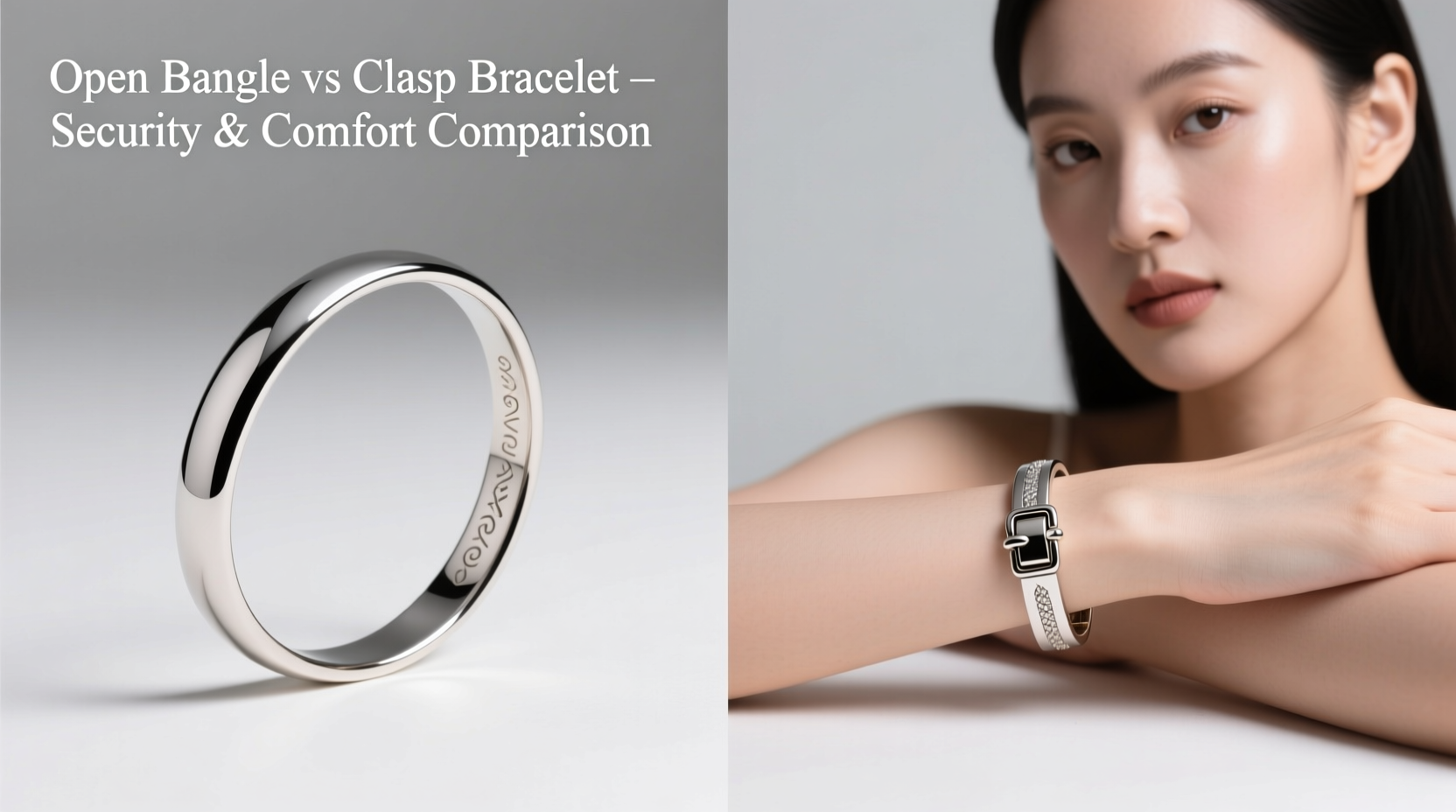
An open bangle is a rigid or semi-rigid ring with a deliberate break in its circumference. It doesn’t expand or contract but depends on careful sizing so it can slide over the hand without being too loose once on the wrist. Traditionally made from metals like gold, silver, or brass, open bangles are common in Indian, Middle Eastern, and vintage European jewelry. Their minimalist structure gives them a sleek profile, but their fit must be precise.
In contrast, a clasp bracelet features a continuous band with a closure mechanism. Lobster clasps are among the most secure, using a spring-loaded hook that snaps into a loop. Toggle clasps consist of a bar that passes through a circular ring—elegant but potentially less secure during physical activity. Magnetic clasps offer convenience, especially for those with limited dexterity, but may accidentally disengage under pressure.
The presence of a clasp introduces a potential weak point—both mechanically and aesthetically—but also allows for adjustable fit and easier removal. For people with larger hands or smaller wrists, this adjustability can make a significant difference in daily usability.
Security: Which Is Less Likely to Be Lost?
Security is one of the most critical considerations when choosing a bracelet. A lost piece of jewelry often carries emotional and financial value that cannot be easily replaced.
Open bangles, when properly sized, can be very secure. Once seated correctly on the wrist, they don’t shift much and lack moving parts that could fail. However, if the bangle is too large—or if the wearer has slender hands relative to wrist size—it may rotate and slip off unnoticed, especially during movement. There's no warning before it drops; one moment it’s there, the next it’s gone.
Clasp bracelets introduce a different kind of risk: mechanical failure. A poorly made clasp, worn spring, or snagged chain can cause the bracelet to come undone. That said, high-quality clasps—particularly lobster clasps with safety latches—are engineered to withstand daily stress. Many luxury watches and fine jewelry pieces use such closures precisely because they combine reliability with controlled access.
“While open bangles have timeless appeal, I recommend a secure clasp for active clients—especially those who work with their hands or travel frequently.” — Lena Torres, Master Jeweler & Designer at Atelier Vela
Security Comparison Table
| Feature | Open Bangle | Clasp Bracelet |
|---|---|---|
| Mechanical Failure Risk | None (no moving parts) | Moderate to High (depends on clasp quality) |
| Accidental Slippage Risk | High (if improperly sized) | Low (when clasp is secure) |
| Detectable Warning Before Loss | No | Yes (you feel the clasp opening) |
| Suitability for Active Lifestyles | Moderate | High (with quality hardware) |
Comfort & Wearability: Daily Experience Matters
Comfort is deeply personal and influenced by anatomy, activity level, and even climate. An open bangle that fits perfectly won’t pinch or rotate excessively, offering a “set it and forget it” experience. Because it lacks a clasp, there’s no pressure point or protruding hardware to catch on clothing or irritate the skin.
However, getting it on and off can be awkward. Some users must wiggle or twist their hand through the opening, which may strain fingers or damage manicures. Those with swollen joints, arthritis, or limited hand mobility often find this process painful or impossible without assistance.
Clasp bracelets, particularly flexible chains or stretch styles, adapt more easily to anatomical variations. You simply open the clasp, position the bracelet, and close it. No force required. Over time, this small convenience adds up—especially for older adults or those with reduced dexterity.
That said, low-quality clasps can dig into the skin or loosen with friction. A poorly positioned lobster clasp might rest directly on the underside of the wrist where it rubs against desks or steering wheels. Choosing a well-designed clasp bracelet means paying attention not just to the closure, but to its placement and weight distribution.
Mini Case Study: Sarah’s Commute Dilemma
Sarah, a 34-year-old graphic designer in Chicago, loved her delicate gold open bangle—a gift from her sister after a trip to Jaipur. She wore it every day, admiring how it caught the light during meetings. But during a crowded rush-hour train commute, she reached for a handrail and felt the bangle twist sideways. Before she could react, it slipped off and vanished between the platform gaps.
Devastated, she switched to a slim rose gold bracelet with a lobster clasp and safety latch. Though less traditional, it stayed securely in place—even during yoga classes and grocery shopping. “I didn’t realize how much anxiety I had until I stopped worrying about losing it,” she said. “The clasp feels more modern, and honestly, just as elegant.”
Sarah’s experience reflects a growing trend: sentimental value now competes with practical durability. Jewelry that disappears easily may no longer suit fast-paced urban lives.
Step-by-Step Guide: Choosing the Right Style for You
- Assess Your Lifestyle: Do you work manually, exercise regularly, or commute via public transit? High-motion activities favor secure clasps.
- Check Your Hand-Wrist Ratio: Try slipping a ring over your knuckles and onto your wrist. If it slides easily, an open bangle may be too loose.
- Test Dexterity Needs: Can you operate small clasps easily? If not, consider magnetic or oversized toggles—or stick with open bangles if they fit snugly.
- Evaluate Jewelry Value: For expensive or heirloom pieces, prioritize security. A hidden safety chain adds protection without compromising looks.
- Try Before You Buy: Whenever possible, wear both styles for a full day. Notice irritation, slippage, or inconvenience.
Frequently Asked Questions
Can open bangles be resized?
Generally, no—due to their rigid structure, resizing an open bangle is difficult and risky. Bending it may weaken the metal or distort the shape. Some jewelers can add soldered tabs or silicone grips to improve fit, but this alters the original design.
Are magnetic clasps safe for daily wear?
Magnetic clasps are convenient but not ideal for heavy or valuable bracelets. They can snap open under sudden tugs—like pulling a jacket sleeve or lifting a bag. Use them for lightweight, casual pieces only.
Which is better for sensitive skin?
Open bangles often win here—they eliminate contact with metal clasps that may contain nickel or create friction points. However, hypoallergenic clasp materials like surgical steel or titanium level the playing field.
Final Checklist: Make the Right Choice
- ✅ Measure your wrist and compare with bangle inner diameter
- ✅ Choose a lobster clasp with a safety latch for high-value pieces
- ✅ Avoid oversized open bangles if you have narrow hands
- ✅ Prioritize comfort during movement—not just at rest
- ✅ Inspect clasp quality: smooth action, no wobble, secure closure
Conclusion
The choice between an open bangle and a clasp bracelet ultimately hinges on balancing tradition with practicality. Open bangles offer clean lines and timeless elegance, but demand precision in fit and caution in use. Clasp bracelets provide adaptability and enhanced security—especially when crafted with durable mechanisms and thoughtful ergonomics.
For most modern wearers, particularly those leading active lives, a well-made clasp bracelet delivers superior reliability and comfort. But if you cherish the simplicity of a seamless band and have the right proportions, an open bangle remains a beautiful, enduring option.




 浙公网安备
33010002000092号
浙公网安备
33010002000092号 浙B2-20120091-4
Comments
No comments yet. Why don't you start the discussion?