
Choosing the right bracelet isn’t just about aesthetics—it’s about how it feels when worn. Two of the most popular styles today are open cuffs and chain bracelets. While both offer distinct visual appeal, their tactile experience varies significantly. The way a piece rests on your skin, moves with your hand, and responds to daily activity can make the difference between a cherished accessory and one left in the jewelry box. Understanding the physical and sensory qualities of each design helps you select not only what looks best but also what feels best.
Design and Structure: How They’re Built
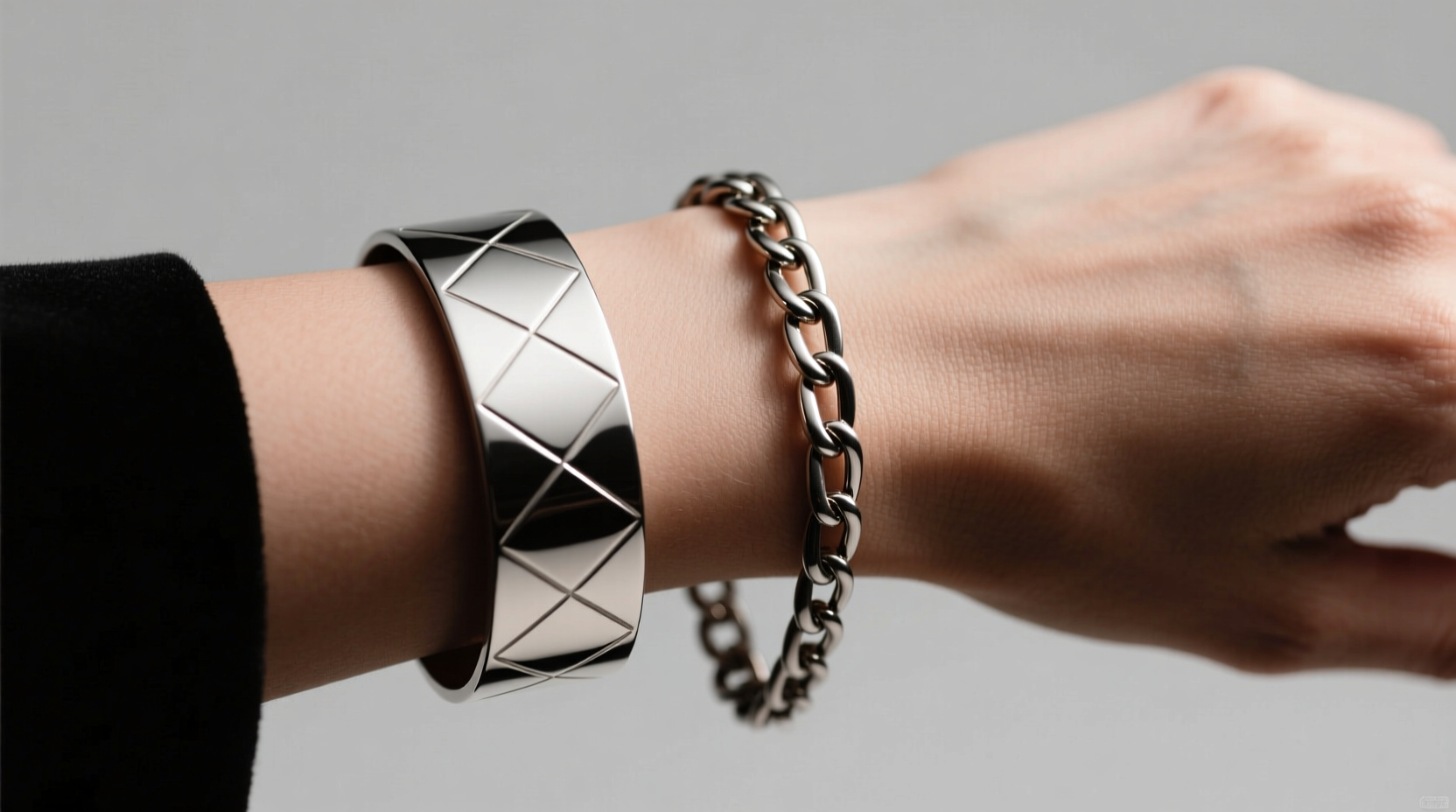
The fundamental difference between open cuff and chain bracelets lies in their construction. An open cuff is a rigid or semi-rigid band that wraps around the wrist without a clasp, relying on flexibility in the metal or an adjustable gap to slide on. It typically features a continuous curve and often emphasizes bold shapes, hammered textures, or sculptural details.
In contrast, a chain bracelet consists of interlocking links—whether delicate trace chains, chunky curb links, or intricate Byzantine patterns—that form a flexible loop secured by a clasp. This structure allows it to drape naturally over the contours of the wrist, conforming closely to the skin.
Because of these structural differences, the sensation of wearing each type diverges from the moment you put it on. The cuff tends to sit higher on the wrist, hugging the bone with minimal give, while the chain nestles into the natural dip above the hand, moving fluidly with every gesture.
Comfort and Wearability: A Day-to-Day Comparison
Comfort is highly personal, but certain objective factors influence how each bracelet performs during extended wear. Cuffs, especially those made from thicker metals like sterling silver or brass, can feel constricting if sized too tightly. Even well-designed cuffs apply slight pressure along the sides of the wrist, which may become noticeable after several hours—particularly during activities involving typing, driving, or lifting.
Chain bracelets distribute weight evenly and rarely pinch or press. Their flexibility allows them to glide over tendons and bones without resistance. However, very fine chains might dig slightly if snagged or pulled, and clasps—especially lobster or spring-ring types—can occasionally catch on clothing or irritate the skin if poorly finished.
A key consideration is wrist shape. People with slender wrists may find that some open cuffs slip or rotate, requiring constant adjustment. Those with broader or more angular wrists might struggle to get a cuff over the hand without excessive force, risking damage to the piece or discomfort during removal.
“Jewelry should enhance movement, not restrict it. A well-chosen bracelet disappears into your daily life.” — Lena Torres, Jewelry Designer & Ergonomics Consultant
Comparative Overview: Open Cuff vs Chain Bracelet
| Feature | Open Cuff | Chain Bracelet |
|---|---|---|
| Flexibility | Low – rigid structure | High – fully flexible |
| Fit Adjustment | Limited – depends on gap width | Precise – multiple clasp settings |
| Weight Distribution | Concentrated on sides | Evenly distributed |
| Ease of On/Off | Moderate – requires wrist clearance | Easy – simple clasp mechanism |
| Durability Concerns | Metal fatigue at stress points | Link wear or clasp failure |
| Best For | Statement wear, special occasions | Daily wear, layered styling |
Real-Life Scenario: Office Worker vs Creative Artist
Consider two individuals with different lifestyles. Sarah, a graphic designer, spends eight hours a day at her desk using a mouse and keyboard. She initially loved the look of a wide open cuff but found it pressed against her palm during long sessions, causing numbness in her ring finger. After switching to a medium-weight cable chain bracelet, she noticed immediate relief—the piece moved freely and never interfered with her workflow.
Meanwhile, Julian, a mural artist, prefers open cuffs for his studio work. He values pieces that don’t snag on canvas or absorb paint like porous beads might. His go-to is a thick bronze cuff with a wide gap—he slides it on easily and appreciates its heft as a grounding presence while painting. For him, the rigidity signals intention; it’s part of his creative ritual.
This contrast illustrates that “feels better” isn’t universal. It depends on motion patterns, professional demands, and even psychological associations with weight and texture.
How to Choose Based on Your Lifestyle
Selecting between an open cuff and a chain bracelet should align with how you live, not just how you dress. Follow this checklist to guide your decision:
- Evaluate your daily movements: Do you type frequently, drive often, or engage in hands-on tasks?
- Assess your wrist sensitivity: Have you experienced irritation from bangles or tight watches?
- Consider layering habits: Do you stack bracelets? Chains layer smoothly; cuffs dominate space.
- Think about security: Cuffs are less likely to accidentally come undone, ideal if you forget to check clasps.
- Test before committing: Try both styles for a full day to gauge comfort beyond first impressions.
Frequently Asked Questions
Can I wear an open cuff every day?
Yes, but only if it's designed for durability and fits comfortably. Lightweight, slightly flexible cuffs made from titanium or aluminum are better suited for daily wear than heavy artisan silver pieces that may stress joints over time.
Are chain bracelets more secure than cuffs?
They can be, but it depends on the clasp quality. A well-made magnetic or box clasp offers strong hold, while cheap spring rings may fail. Cuffs eliminate clasp risks entirely but can be knocked off if struck sideways.
Which is better for small wrists?
Chain bracelets generally work better—they can be sized precisely. Some cuffs may gape or spin on narrow wrists unless custom-fitted. Look for petite cuffs with inward curves for improved stability.
Final Thoughts: Prioritize Feel Over Fashion
Ultimately, the best bracelet is the one you forget you're wearing. While open cuffs command attention and project confidence, they demand tolerance for pressure and limited flexibility. Chain bracelets offer subtle elegance and ergonomic ease, making them ideal companions for active lives. Neither is inherently superior—the choice hinges on your body, routine, and personal definition of comfort.
Don’t let trends dictate your decision. Try both styles mindfully. Pay attention to how they interact with your pulse point, whether they heat up in sunlight, or if they wake you at night. These small sensations accumulate into long-term satisfaction—or regret.




 浙公网安备
33010002000092号
浙公网安备
33010002000092号 浙B2-20120091-4
Comments
No comments yet. Why don't you start the discussion?