
In the last two decades, open world games have become the gold standard of AAA game development. From The Legend of Zelda: Breath of the Wild to Red Dead Redemption 2, expansive landscapes filled with icons, waypoints, and checklists dominate the industry. Yet, a growing number of players report feeling exhausted—overwhelmed not by difficulty, but by the relentless stream of map markers dictating every move. This phenomenon, often called \"checklist fatigue,\" is reshaping player preferences, sparking renewed appreciation for linear game design. The tension between open world freedom and structured storytelling has never been more apparent.
The Rise of the Open World and Its Hidden Cost
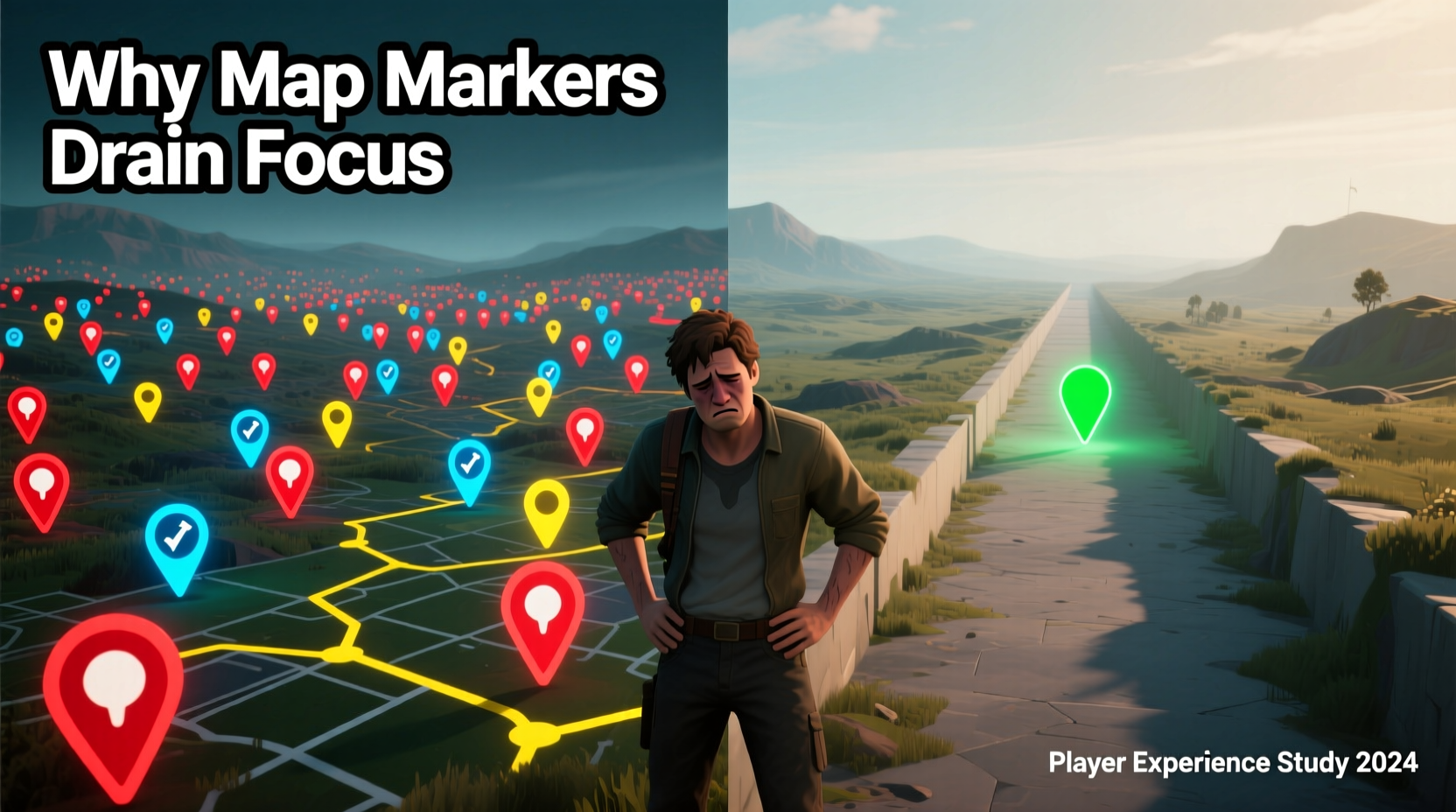
Open world games promise freedom: explore mountains, discover hidden caves, stumble upon side quests, and shape your own journey. But as these games grew in scale, developers leaned heavily on UI-driven navigation—map markers, quest indicators, and objective arrows—to guide players through increasingly massive environments. What began as helpful tools have evolved into compulsive to-do lists that transform exploration into obligation.
Modern open worlds often feature hundreds of collectibles, side missions, and points of interest—all marked clearly on the map. While this ensures players don’t get lost, it also strips away mystery. There’s little thrill in finding a hidden shrine when a pulsing icon has been blinking on your HUD for hours. The sense of discovery is replaced with completionism, turning gameplay into a series of menu-driven tasks rather than organic experiences.
Why Map Marker Fatigue Sets In
Map marker fatigue isn't just about visual clutter; it's psychological. The human brain responds strongly to task completion, releasing dopamine when goals are achieved. Game designers exploit this through systems like checklist progression and achievement tracking. But overuse turns play into work.
Consider a typical session in a modern RPG: you fast-travel to a region, see ten new icons appear, prioritize them based on color or reward, complete each one in sequence, and repeat. Exploration becomes transactional. Instead of asking, “What’s over that mountain?” the player asks, “Which icon gives the best loot?”
This shift erodes immersion. Players stop seeing the world as a living space and begin viewing it as a checklist engine. Even narrative moments can feel like rewards for completing a chore rather than meaningful experiences.
“We’ve optimized for completion, not meaning. When every cave hides a treasure chest and every NPC has a three-part quest, we risk making the world feel repetitive, not rich.” — Marcus Lin, Senior Game Designer at Horizon Studios
Linear Games: A Return to Focused Design
In contrast, linear games follow a defined path. Titles like Half-Life 2, Portal, Resident Evil 4, or Inside guide players through tightly crafted sequences where pacing, atmosphere, and story unfold deliberately. These games don’t offer vast maps, but they excel in environmental storytelling, emotional impact, and moment-to-moment engagement.
Linear design allows for precision. Every room, sound cue, and enemy placement serves a purpose. There’s no filler because there’s no need to pad runtime with optional content. The experience feels curated, almost cinematic, yet deeply interactive.
Moreover, linear games rarely suffer from completion anxiety. Players aren’t burdened with backtracking or worrying about missing 50% of content. They progress forward, absorbing the narrative and mechanics as intended. This focused approach fosters stronger emotional arcs and memorable set pieces.
The Art of Pacing in Linear Experiences
Pacing is where linear games shine. Without the pressure to maintain a sprawling world, developers can orchestrate rhythm—alternating tension and release, action and quiet, challenge and reflection. For example, Return of the Obra Dinn offers a non-linear investigation within a tightly bounded ship, creating depth through deduction, not distance. Similarly, Disco Elysium unfolds across a single city district, yet feels immense due to its layered writing and branching dialogue.
These games prove that scope isn’t measured in square kilometers, but in emotional and intellectual density.
Striking a Balance: Hybrid Models and Player Choice
Not all open world games fall into the trap of marker overload. Some successfully blend freedom with restraint. Shadow of the Colossus presents a vast landscape with only sixteen objectives—each monumental in scale and emotional weight. The emptiness between colossi isn’t wasted space; it’s contemplative breathing room.
Similarly, Death Stranding uses isolation and traversal as core themes. While technically open, its sparse markers and emphasis on journey over destination subvert expectations. Completing deliveries doesn’t feel like ticking boxes—it feels like rebuilding connection in a broken world.
The key lies in intentionality. When every point of interest serves the theme, tone, or narrative, the world feels cohesive. When markers exist solely to inflate playtime, they feel hollow.
Design Principles That Reduce Fatigue
- Meaningful Objectives: Side content should enrich the world, not just extend playtime.
- Dynamic Discovery: Encourage exploration through curiosity (e.g., visible ruins in the distance) rather than UI prompts.
- Progressive Unveiling: Reveal map areas organically as players explore, rather than dumping everything at once.
- Optional Guidance: Allow players to toggle map markers or use minimalist navigation modes.
- Narrative Integration: Tie side activities to character development or world-building, not just loot.
| Feature | Open World (Overloaded) | Linear or Balanced Design |
|---|---|---|
| Exploration Motivation | Driven by map icons | Driven by curiosity or narrative |
| Pacing | Player-controlled, often fragmented | Curated, rhythmic progression |
| Completion Pressure | High (percentages, achievements) | Low to moderate |
| World Density | Broad but often shallow | Focused, thematically rich |
| Emotional Impact | Spreads thin across content | Concentrated in key moments |
Real Example: The Case of Elden Ring and Its Aftermath
Elden Ring exemplifies both the brilliance and burden of modern open world design. Praised for its vast, interconnected realm and minimal hand-holding, it still suffers from widespread marker fatigue—especially among players using community-created maps or mods that reveal every dungeon and item.
One player, Alex R., shared his experience: “I started Elden Ring fresh, found a cave, fought a boss, got wrecked, came back later—felt amazing. But after beating the game, I installed a map mod showing every hidden location. Suddenly, my ‘adventure’ turned into a scavenger hunt. I visited 30 catacombs in one sitting, grabbing runes and weapons. It felt empty. I wasn’t discovering—I was data-mining.”
This anecdote reflects a broader trend: even games designed to encourage organic exploration are being undermined by player habits shaped by years of checklist-driven design. The expectation to “see everything” overrides the impulse to savor the journey.
Expert Insight: What Developers Are Saying
Industry professionals are noticing the backlash. At GDC 2023, several designers spoke about rethinking open world structures.
“The next evolution isn’t bigger worlds—it’s smarter ones. We need to design spaces that invite questions, not just answers.” — Lena Torres, Environmental Designer at Nova Interactive
Torres advocates for “mystery-first” design: placing distant spires, half-buried statues, or unexplained sounds to lure players without explicit markers. This approach mirrors real-world exploration—curiosity, not compulsion, drives movement.
Meanwhile, indie studios are leading the charge in reviving linear formats. Games like Outer Wilds and Tunic prove that constrained spaces can deliver profound depth through puzzle integration, lore discovery, and time loops. These titles reject map markers entirely, trusting players to piece together their own paths.
Checklist: How to Combat Map Marker Fatigue
Whether you're a player seeking deeper enjoyment or a designer aiming for meaningful engagement, here’s a practical checklist:
- Limit Your UI: Disable unnecessary map icons or use minimalist HUD settings if available.
- Play With Constraints: Set personal rules—no fast travel, explore only on foot, avoid guides.
- Focus on Narrative: Prioritize story missions first; treat side content as bonus, not obligation.
- Take Breaks: Step away if the game starts feeling like a chore. Return with fresh eyes.
- Choose Wisely: Support games that emphasize discovery over completion metrics.
- Give Feedback: Let developers know when content feels repetitive or forced.
FAQ
Are open world games inherently worse than linear ones?
No. Open world games offer unparalleled freedom and player agency. The issue arises when design prioritizes quantity over quality. Well-crafted open worlds—like Horizon Zero Dawn or Ghost of Tsushima—balance exploration with meaningful content. The problem isn’t the format, but how it’s executed.
Can linear games be replayable?
Absolutely. Replayability doesn’t require open worlds. Linear games gain replay value through branching choices (Life is Strange), multiple endings (Bioshock Infinite), or mastery-based challenges (Doom Eternal). Some, like Super Metroid, blend linearity with exploration in a way that invites repeated playthroughs.
Is map marker fatigue affecting game sales or reviews?
Indirectly, yes. Criticisms of “bloat” and “grind” appear frequently in user reviews of major open world titles. Games like Starfield faced backlash for “fetch quests” and repetitive planet scanning, despite high production values. Conversely, linear or compact games like Alan Wake 2 received praise for tight pacing and atmospheric cohesion, suggesting a market appetite for focused design.
Conclusion: Reclaiming the Joy of Play
The debate between open world and linear games isn’t about declaring a winner—it’s about recognizing what kind of experiences we value. Map marker fatigue signals a cultural shift: players are craving meaning over mileage, immersion over inventory. While open worlds will remain popular, their current formula is showing signs of strain.
The future of gaming may lie not in ever-larger maps, but in smarter design—worlds that respect player time, trust curiosity, and prioritize emotional resonance. Whether through linear storytelling, hybrid models, or minimalist open spaces, the goal remains the same: to make every step feel intentional, every discovery rewarding.




 浙公网安备
33010002000092号
浙公网安备
33010002000092号 浙B2-20120091-4
Comments
No comments yet. Why don't you start the discussion?