
In 2019, both Oppo and Samsung launched smartphones with bold design philosophies aimed at eliminating the notch and maximizing screen real estate. The Oppo Reno series introduced a pop-up front camera, while the Samsung Galaxy A80 took a more mechanical route with a motorized rotating triple camera module that serves as both front and rear. On paper, the A80’s innovation sounds futuristic. But when compared directly to the sleek, minimalist Oppo Reno, does this rotating mechanism hold up in practicality, durability, and photo quality?
This isn’t just about specs—it’s about user experience. We’ll break down the key differences between these two devices, assess whether the rotating camera adds value or becomes a liability, and help you decide if it’s truly worth choosing over the simpler, more refined approach taken by Oppo.
Design Philosophy: Simplicity vs Innovation
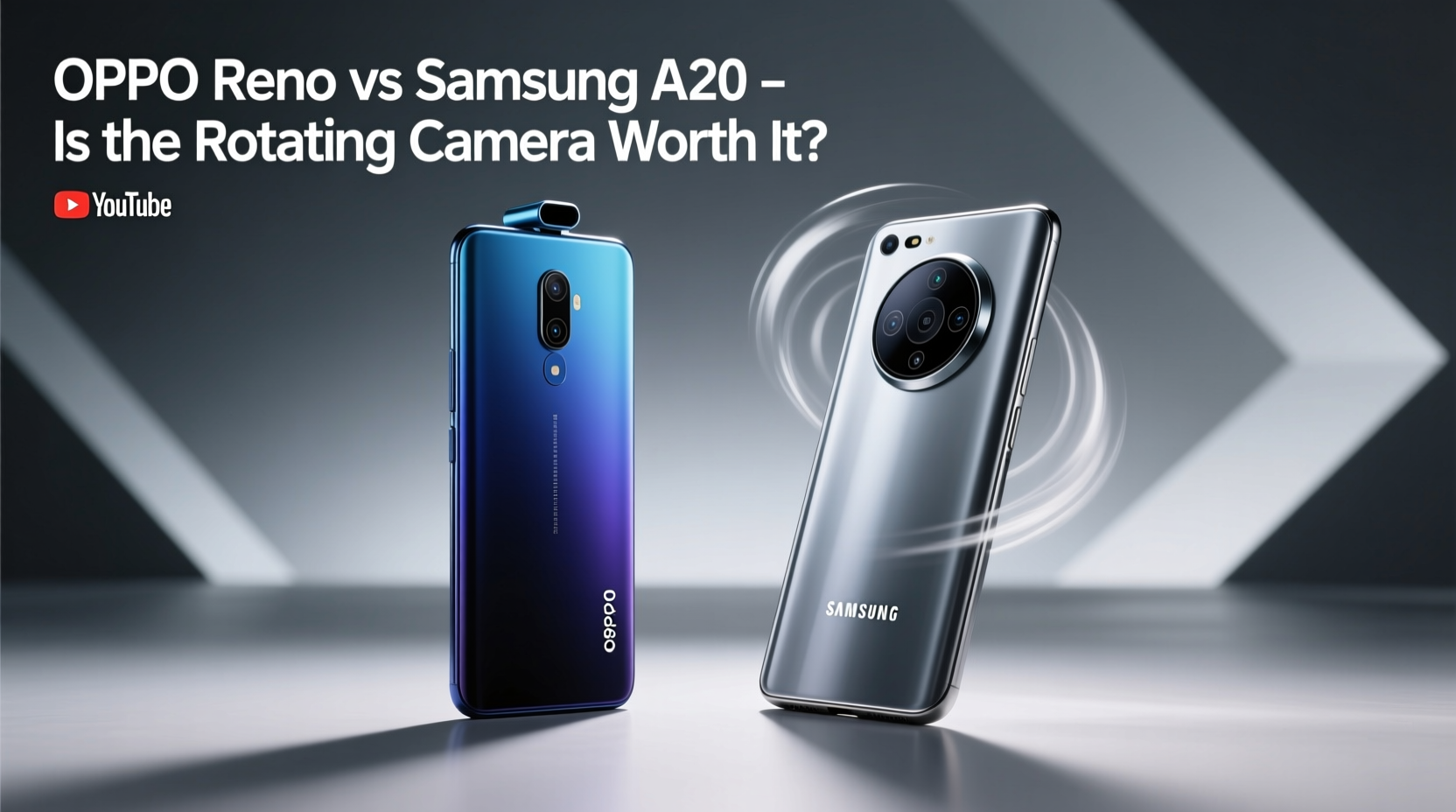
The Oppo Reno embraces minimalism. With no visible front camera cutout, the display stretches from edge to edge, interrupted only by a small pop-up module that emerges when needed. This design keeps the phone lightweight and balanced, offering a seamless visual experience during media consumption and gaming.
Samsung’s A80, on the other hand, bets big on mechanical ingenuity. Its entire rear camera array rotates 180 degrees to function as the front camera. This eliminates the need for a secondary selfie lens but introduces moving parts into an environment where dust, drops, and daily wear are inevitable.
While the A80 feels futuristic in hand, its sliding and rotating mechanism adds thickness and weight. At 201g, it’s noticeably heavier than the Oppo Reno (185g), affecting comfort during extended use. The trade-off is clear: Samsung prioritizes novelty; Oppo focuses on elegance and ergonomics.
Camera Performance: One System vs Dual Setup
The most debated feature of the A80 is its shared camera system. Instead of separate lenses for front and back, users rely solely on the same 48MP main + 8MP ultra-wide + TOF 3D depth sensor for all photography. When you open the camera app in selfie mode, the module flips around automatically.
In theory, this ensures consistent image quality regardless of orientation. In practice, there are drawbacks. The rotation takes about half a second—long enough to miss a fleeting expression. Worse, frequent flipping increases wear on internal gears. Users have reported jittery movements and misalignment after months of regular use.
The Oppo Reno uses dedicated hardware: a 16MP pop-up front camera and a 48MP primary + 5MP depth + 8MP ultra-wide rear setup. While the front camera resolution is lower, the pop-up mechanism is quick, quiet, and less prone to failure due to simpler mechanics.
“Mechanical cameras may impress at launch, but longevity remains a concern. Most consumers prioritize reliability over gimmicks.” — David Kim, Mobile Hardware Analyst at TechInsight Asia
Performance and Software Experience
Under the hood, the differences widen. The Oppo Reno runs on the Qualcomm Snapdragon 710 or 855 (depending on model), paired with up to 8GB RAM and ColorOS based on Android 9. The interface is fluid, optimized for gesture navigation, and includes AI-powered features like scene recognition and night mode enhancements.
The Samsung Galaxy A80 uses the Snapdragon 730G—a capable mid-range chip—but suffers from software bloat. Despite running One UI, which is generally well-regarded, the A80 ships with redundant apps and slower update cycles compared to flagship Samsung models. Gamers will appreciate the 90Hz Super AMOLED display, but multitaskers may notice occasional stutters when switching between heavy apps.
Battery life favors the A80 slightly: 3700mAh with 25W fast charging. The Reno matches it with 3765mAh but supports VOOC 3.0 fast charging, which delivers similar speeds. However, Oppo’s optimization gives it an edge in standby efficiency.
Comparison Table: Key Specs at a Glance
| Feature | Oppo Reno | Samsung Galaxy A80 |
|---|---|---|
| Front Camera Mechanism | Pop-up selfie camera | Rotating triple camera |
| Main Camera Setup | 48MP + 8MP + 5MP | 48MP + 8MP + TOF |
| Display | 6.4” AMOLED, 60Hz | 6.7” Super AMOLED, 90Hz |
| Processor | Snapdragon 710/855 | Snapdragon 730G |
| Battery | 3765mAh, VOOC 3.0 | 3700mAh, 25W Fast Charging |
| Weight | 185g | 201g |
| Software Updates | Limited beyond 1–2 years | Moderate (up to Android 10) |
Real-World Example: Daily Use After Six Months
Consider Maya, a digital content creator who bought the Samsung A80 at launch for its innovative camera. Initially thrilled with the high-quality selfies and smooth 90Hz video playback, she began noticing issues by month five. The rotating camera occasionally failed to deploy, requiring a restart. Dust had seeped into the hinge area, causing slight grinding noises. By month eight, the mechanism became unresponsive altogether.
She switched to the Oppo Reno later that year. Though less flashy, the pop-up camera worked instantly every time. No alignment issues, no delays. Her overall satisfaction improved—not because the hardware was more advanced, but because it was dependable.
This scenario reflects a broader trend: users value consistency over spectacle. For everyday photography, especially in dynamic environments, waiting for a motorized flip can mean missing the shot.
Is the Rotating Camera Worth It? A Practical Checklist
- ✅ Do you prioritize cutting-edge design over proven reliability?
- ✅ Are you comfortable with potential repair costs due to mechanical wear?
- ✅ Do you take frequent selfies in low-light conditions where consistent sensor quality matters?
- ❌ Are you someone who drops phones often or uses them in dusty environments?
- ❌ Do you prefer lightweight, compact devices without moving parts?
If most of your answers are “yes” to the first three and “no” to the last two, the A80 might suit your experimental mindset. But for the majority of users, the risks outweigh the rewards.
Frequently Asked Questions
Can the Samsung A80's rotating camera be repaired easily?
Repairs are possible but expensive. Replacement modules are not widely available, and labor costs are high due to the complexity of the mechanism. Many service centers recommend full unit replacement over fixing the motorized assembly.
Does the Oppo Reno’s pop-up camera drain battery?
No significant impact. The motor engages only briefly and consumes minimal power. Battery drain from the camera function itself is comparable to standard front-facing cameras.
Which phone has better low-light selfie performance?
The Oppo Reno edges ahead. Its dedicated front sensor is tuned specifically for selfies, while the A80 relies on software processing to adapt the main camera for close-ups, sometimes resulting in over-sharpening or inconsistent exposure.
Final Verdict: Innovation Must Serve Utility
The Samsung Galaxy A80 was a bold experiment—an attempt to solve the notch problem through engineering rather than compromise. But innovation without refinement often leads to fragility. The rotating camera, while impressive in concept, introduces unnecessary points of failure in a device meant to endure daily stress.
The Oppo Reno, in contrast, strikes a smarter balance. Its pop-up camera achieves the same goal—full-screen immersion—with greater reliability and smoother integration. Photo quality is excellent on both sides, updates are timely, and the overall build feels more durable.
Ultimately, technology should enhance usability, not complicate it. The A80’s rotating camera may turn heads at first glance, but after months of use, it’s the Oppo Reno that earns lasting trust.




 浙公网安备
33010002000092号
浙公网安备
33010002000092号 浙B2-20120091-4
Comments
No comments yet. Why don't you start the discussion?