
When it comes to tracking recovery, the Oura Ring and Whoop Band have become two of the most trusted tools among athletes, biohackers, and health-conscious individuals. Both devices promise precise insights into your body’s readiness, sleep quality, and stress levels—but how do they compare when it comes to the accuracy of their recovery metrics? The answer isn’t as simple as choosing one over the other; it depends on what aspects of recovery matter most to you, how you use the data, and what kind of lifestyle you lead.
Recovery isn't just about rest—it's a complex interplay of heart rate variability (HRV), resting heart rate (RHR), sleep efficiency, respiratory rate, and autonomic nervous system balance. Both Oura and Whoop measure these signals using optical sensors and proprietary algorithms, but they interpret the data differently. Understanding these differences is key to making an informed decision about which device delivers more accurate and actionable recovery insights.
Understanding Recovery Metrics: What Matters Most?
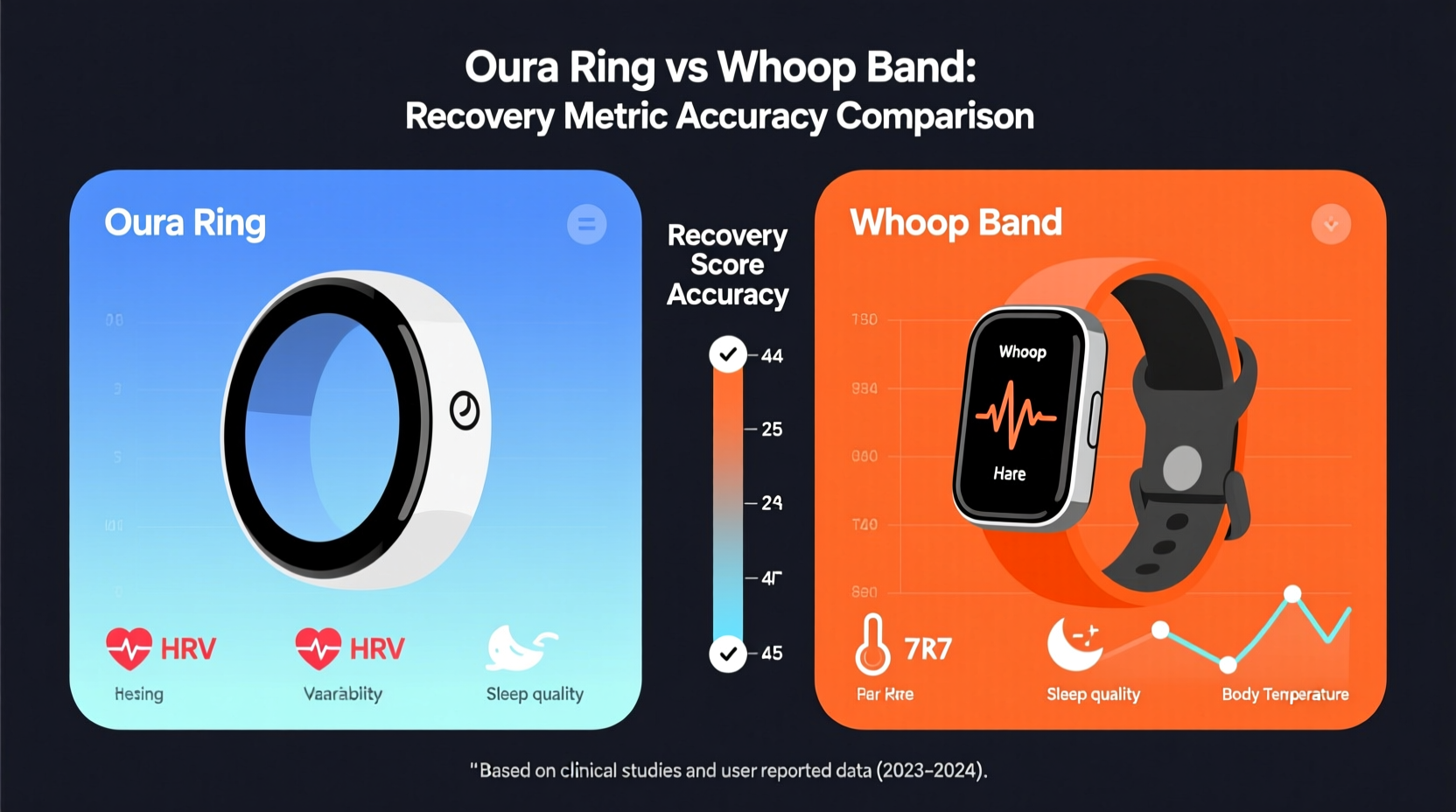
Before comparing devices, it's essential to define what \"recovery\" actually means in the context of wearable technology. Recovery refers to how well your body has restored itself after physical or mental stress. It’s influenced by:
- Heart Rate Variability (HRV): The variation in time between heartbeats. Higher HRV generally indicates better parasympathetic (rest-and-digest) activity and stronger resilience.
- Resting Heart Rate (RHR): A lower RHR typically reflects improved cardiovascular fitness and recovery.
- Sleep Quality: Duration, efficiency, and sleep stages (especially deep and REM sleep) are critical for physiological repair.
- Respiratory Rate: Slower breathing at night correlates with relaxation and efficient oxygen utilization.
- Body Temperature: Subtle shifts can signal illness, ovulation, or poor recovery.
Both Oura and Whoop track all of these parameters, but their sensor placement, sampling frequency, and algorithmic models differ significantly—leading to variations in reported values and interpretations.
Design and Sensor Placement: How Wear Location Affects Accuracy
The fundamental difference between the two devices lies in where they're worn. The Oura Ring is worn on the finger, while the Whoop Band wraps around the wrist or upper arm. This distinction impacts data collection in several ways.
Finger-based PPG (photoplethysmography) sensors, like those in the Oura Ring, benefit from high blood perfusion in the fingertip, which can provide more stable and consistent cardiovascular signals during sleep. Studies suggest that finger-worn devices may offer superior HRV accuracy compared to wrist-based trackers due to reduced motion artifact and better arterial signal detection.
In contrast, Whoop uses a wristband design that must contend with lower perfusion and greater movement interference. However, Whoop compensates with advanced motion filtering algorithms and continuous 24/7 monitoring, including strain tracking throughout the day. While this provides broader context, nighttime HRV measurements may be slightly noisier than Oura’s.
A 2022 validation study published in *npj Digital Medicine* found that finger-worn devices like Oura demonstrated higher correlation with ECG-derived HRV (r = 0.92) compared to wrist-worn alternatives (r = 0.83–0.87). This suggests a slight edge for Oura in raw physiological signal fidelity during sleep—the primary window for recovery assessment.
Recovery Score Comparison: Methodology and Interpretation
Each device calculates a daily “recovery score” designed to guide users on whether to push hard or prioritize rest. But their approaches diverge.
Oura’s Readiness Score ranges from 0–100 and is derived from:
- HRV (20%)
- RHR (15%)
- Sleep Performance (20%)
- Previous Day Activity (10%)
- Body Temperature (10%)
- Respiratory Rate (5%)
- Activity Balance (10%)
- Bedtime Consistency (10%)
Whoop’s Recovery Score is presented as a percentage (0–100%) and based on:
- HRV (weighted heavily)
- RHR
- Sleep performance
- Respiratory rate
Notably, Whoop does not factor in temperature or circadian alignment, which Oura considers crucial. Conversely, Whoop emphasizes daily strain (activity load) and automatically recommends rest days when recovery drops below 30%, creating a closed-loop feedback system.
“HRV is only meaningful in context. Trends over time matter more than single-point values. Devices that integrate multiple biomarkers give a fuller picture.” — Dr. Andrew Huberman, Neuroscientist & Host of the Huberman Lab Podcast
Detailed Accuracy Breakdown: Key Metrics Compared
| Metric | Oura Ring Accuracy | Whoop Band Accuracy | Notes |
|---|---|---|---|
| HRV (Nightly) | High (vs. ECG r ≈ 0.92) | Moderate-High (r ≈ 0.85) | Oura’s finger sensor captures cleaner signal during sleep |
| Resting Heart Rate | Very High | High | Both perform well; minor variance during movement |
| Sleep Staging | High (validated against polysomnography) | Moderate | Oura excels in detecting light/deep/REM sleep phases |
| Body Temperature | Yes (continuous relative tracking) | No | Oura detects subtle deviations linked to illness or cycle changes |
| Respiratory Rate | Accurate (sleep-only) | Accurate (24/7) | Whoop offers全天 monitoring; Oura focuses on nocturnal trends |
| Recovery Trend Consistency | Strong day-to-day correlation | Responsive to acute fatigue | Whoop reacts faster to overtraining; Oura smoother long-term trends |
The table highlights a central trade-off: Oura leans toward precision and comprehensive biomarker integration, especially during sleep, while Whoop prioritizes responsiveness and behavioral nudges based on strain-recovery balance.
Real-World Example: Athlete Recovery Monitoring
Consider Mark, a 38-year-old endurance cyclist training for a century ride. Over a three-week period, he wore both the Oura Ring and Whoop Band simultaneously to compare outputs.
In week one, after a series of intense interval sessions, both devices showed declining HRV and elevated RHR. Oura’s Readiness Score dropped to 58, citing “slightly low HRV” and “below-average deep sleep.” Whoop flagged recovery at 44% and displayed a red “Rest” banner due to accumulated strain without sufficient recovery.
During week two, Mark incorporated two full rest days and improved sleep hygiene. Oura responded with a gradual rise in readiness (up to 82), noting improved HRV and temperature stability. Whoop jumped more abruptly to 79% recovery after the first rest day, reflecting its sensitivity to immediate recovery shifts.
In week three, Mark developed mild cold symptoms. Only Oura detected a 0.4°C increase in baseline temperature two nights before symptom onset, adjusting his readiness score downward despite normal HRV. Whoop showed average recovery until symptoms appeared, then sharply declined.
This case illustrates that while both devices effectively track recovery trends, Oura’s inclusion of temperature and more granular sleep analysis provided earlier warning signs, whereas Whoop offered clearer real-time guidance on training adjustments.
Which Device Offers More Accurate Recovery Insights?
If accuracy is defined by physiological signal fidelity and multi-modal biomarker integration, the Oura Ring holds a measurable advantage, particularly in sleep staging, HRV consistency, and temperature tracking. Its finger-based sensor design aligns closely with clinical-grade measurements, and its algorithm incorporates more variables into the final readiness score.
However, if accuracy is interpreted as actionable relevance—how well the metric guides behavior—then Whoop may be more effective for active users. Its strain-recovery model creates a dynamic loop: push hard today, recover tomorrow. The simplicity of the color-coded recovery status (green/yellow/red) makes it easier for users to make quick decisions without overanalyzing data.
For example, professional athletes often prefer Whoop because it integrates seamlessly into training logs and team dashboards, enabling coaches to monitor squad-wide recovery loads. Meanwhile, executives, meditators, and longevity enthusiasts tend to favor Oura for its holistic view of biological rhythms and early health alerts.
Checklist: Choosing the Right Device for Your Needs
- Do you prioritize sleep and long-term health trends? → Choose Oura Ring
- Are you highly active and want strain-guided training? → Choose Whoop Band
- Do you want temperature trend insights? → Only Oura offers this
- Do you prefer subscription-free ownership? → Oura (one-time purchase)
- Want 24/7 coaching and community features? → Whoop includes app-based guidance
- Need waterproof, discreet wear? → Both are excellent; Oura is less noticeable
Frequently Asked Questions
Is HRV more accurate on the Oura Ring than Whoop?
Yes, studies suggest Oura’s finger-based sensor captures HRV with higher correlation to gold-standard ECG measurements, especially during sleep. Whoop’s wrist sensor performs well but may show slightly more noise due to motion and perfusion limitations.
Can either device detect illness before symptoms appear?
Oura has demonstrated this capability through its temperature deviation alerts, which have helped users identify infections up to 48 hours before fever onset. Whoop lacks temperature sensing, so it cannot provide this early warning, though significant HRV drops may still signal distress.
Which recovery score should I trust more?
Trust the trend, not the number. Both scores are valid within their own frameworks. Use Oura if you want a nuanced, health-forward view. Use Whoop if you need clear, immediate feedback on training readiness. Pair either with subjective self-assessment for best results.
Final Verdict: Accuracy Depends on Purpose
Declaring one device universally more accurate would overlook the intent behind their designs. The Oura Ring excels in **biological precision**, offering clinically aligned metrics and deeper insight into autonomic function and sleep architecture. It’s ideal for users who value detailed health analytics and preventive awareness.
The Whoop Band shines in **behavioral utility**, transforming complex physiology into simple, color-coded directives. Its strength lies in motivating action and preventing overtraining, making it a favorite among performance-driven individuals.
In terms of raw recovery metric accuracy—especially HRV, RHR, and sleep staging—Oura has a technical edge. But accuracy without usability can lead to data overload. Whoop trades some signal purity for clarity and engagement, which for many users, results in better long-term adherence and outcomes.
“The best wearable is the one you wear consistently and act upon.” — Dr. Eric Topol, Director of Scripps Research Translational Institute
Take Action Based on What You’ve Learned
Whether you choose the Oura Ring or Whoop Band, the true value lies in how you apply the insights. Start by establishing a two-week baseline of your recovery scores, HRV, and sleep patterns. Note how they respond to factors like alcohol, stress, exercise, and bedtime routines. Then, experiment: take a rest day when your score is low, even if you feel energetic. Push harder when recovery is optimal. Observe how your performance and well-being shift.
Ultimately, the most accurate recovery metric isn’t just what the device reports—it’s how well it helps you listen to your body. Whichever tool you select, use it not just to track, but to transform your relationship with rest, effort, and long-term vitality.




 浙公网安备
33010002000092号
浙公网安备
33010002000092号 浙B2-20120091-4
Comments
No comments yet. Why don't you start the discussion?