
A cold oven when you're ready to bake dinner is more than inconvenient—it can derail meal plans, waste time, and raise concerns about costly repairs. The good news is that many reasons an oven fails to heat are straightforward and often fixable without professional help. Understanding the most frequent issues—and how to diagnose them—can save money, reduce stress, and get your kitchen back on track in under an hour.
How Ovens Heat: A Quick Overview
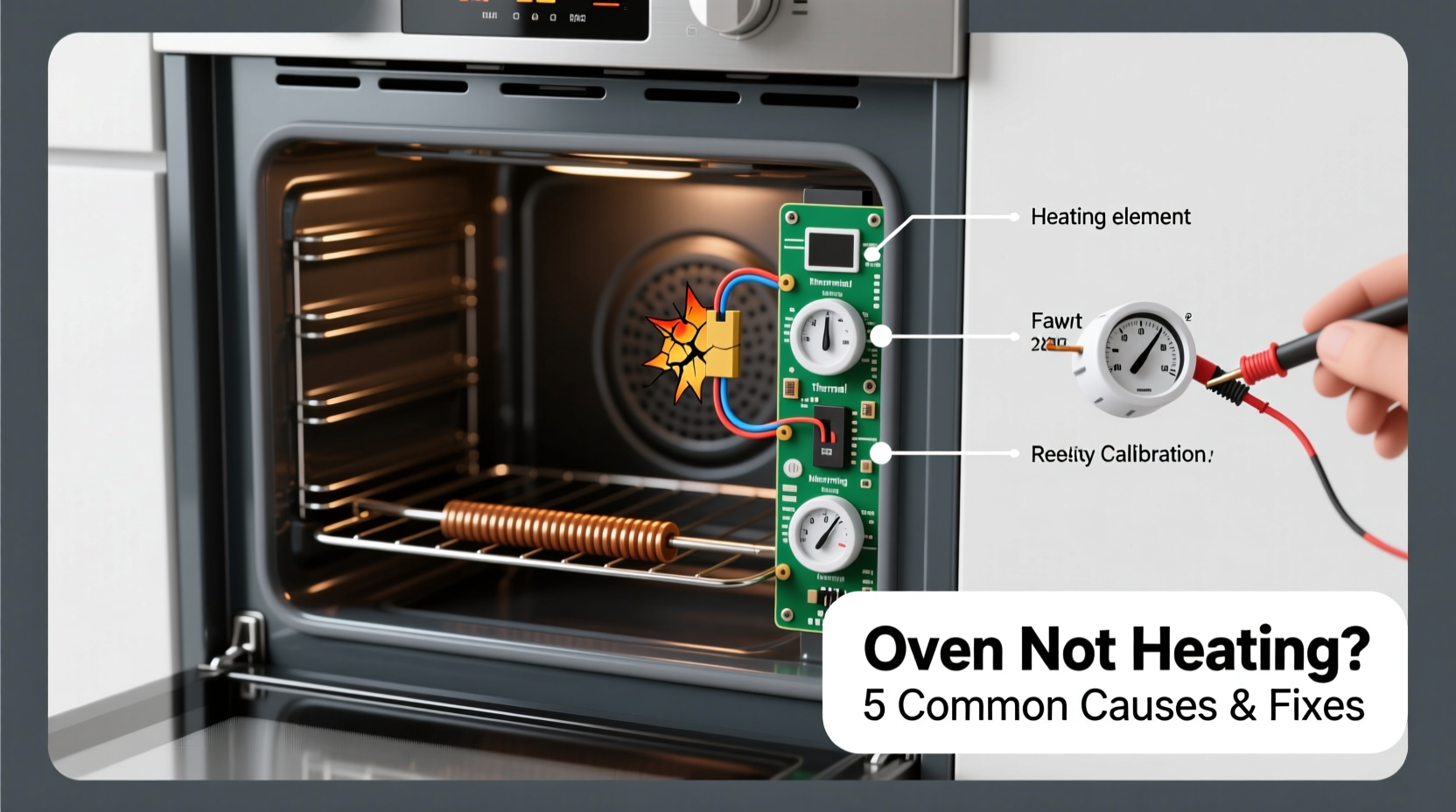
Before troubleshooting, it helps to understand how electric and gas ovens generate heat. Electric ovens use metal heating elements powered by electricity—one at the bottom for baking, another on top for broiling. Gas ovens rely on a gas line and an igniter that lights the flame when the oven is turned on. Both types depend on accurate temperature sensing and control via a thermostat or electronic control board.
When any part of this system fails—be it power supply, ignition, sensor, or switch—the oven may not heat at all or may struggle to maintain proper temperature. Recognizing which component is responsible is the first step toward a quick fix.
Common Causes and How to Diagnose Them
Most oven heating problems stem from a small set of recurring culprits. Here's a breakdown of the most likely causes, along with practical ways to test each one.
1. Faulty Heating Element (Electric Ovens)
The bake element, located at the bottom of electric ovens, is one of the most common failure points. Over time, repeated expansion and contraction can cause cracks or breaks in the element, preventing it from generating heat.
To confirm, turn off the power at the circuit breaker, remove the back panel inside the oven, and disconnect the element wires. Use a multimeter to check for continuity. No continuity means the element is dead and must be replaced.
2. Failed Igniter (Gas Ovens)
In gas ovens, the igniter draws electrical current to open the gas valve and ignite the burner. A weak or failed igniter won’t generate enough heat to trigger gas flow, leaving the oven cold.
Watch the igniter when you turn on the oven. It should glow bright orange within seconds. If it glows dimly or not at all, it may be failing. If it glows but the gas doesn’t ignite after 30–90 seconds, the igniter is likely too weak to open the valve and needs replacement.
“Over 60% of gas oven no-heat complaints I see are due to worn-out igniters. They’re inexpensive and easy to swap.” — Mark Reynolds, Appliance Repair Technician with 18 years of field experience
3. Malfunctioning Thermostat or Temperature Sensor
If your oven heats erratically or never reaches the set temperature, the issue might lie with the thermostat or temperature sensor. These components tell the oven when to cycle the heat on and off.
To test the sensor, use a multimeter to measure resistance at room temperature. Most sensors should read between 1,000 and 1,200 ohms. If readings are far outside this range, the sensor is faulty. Replacement is usually simple—just unscrew the old one and install the new.
4. Defective Oven Control Board or Selector Switch
The control board manages signals from the timer, thermostat, and user inputs. If it fails, it may not send power to the heating element or igniter. Similarly, a broken selector switch (the knob that chooses bake or broil) can interrupt the circuit.
Symptoms include no response when turning knobs, inconsistent heating, or only one function working (e.g., broiler works but not bake). Testing these components requires technical knowledge and a multimeter. If other causes are ruled out, consult a technician or consider replacing the board if you're experienced with appliance repair.
5. Power Supply Issues
Electric ovens require a dedicated 240-volt circuit. If the circuit breaker trips or the outlet fails, the oven won’t receive full power. Check your home’s electrical panel—if the oven’s breaker is tripped, reset it. If it trips again immediately, there’s likely a short circuit in the oven or wiring.
Also, older homes may have degraded outlets or loose connections behind the oven. Ensure the plug is fully seated and inspect for scorch marks or melting, which indicate dangerous overheating.
Step-by-Step Troubleshooting Guide
Follow this logical sequence to identify and resolve the problem efficiently:
- Verify the oven is receiving power. Check if indicator lights work or the clock displays. If not, inspect the circuit breaker.
- Observe heating behavior. Does the oven click but not heat? Does the igniter glow? Is the element visibly damaged?
- Test the heating element or igniter. Use visual inspection and a multimeter for continuity.
- Check the temperature sensor. Measure resistance and compare to manufacturer specs.
- Inspect control settings. Ensure the oven isn’t in self-clean mode or child lock, which disables heating.
- Call a professional if needed. If internal wiring, control boards, or gas lines are involved, safety comes first.
Tips and Best Practices for Prevention
Maintaining your oven reduces the likelihood of sudden failures. Simple habits go a long way in extending its lifespan and reliability.
- Wipe down the interior monthly with mild cleaner.
- Avoid using abrasive pads on heating elements.
- Don’t block oven vents—keep space around the unit for airflow.
- Listen for unusual sounds (clicking, buzzing) that may signal early failure.
Do’s and Don’ts When Fixing Oven Heating Issues
| Do’s | Don’ts |
|---|---|
| Turn off power before inspecting internal parts | Ignore repeated circuit breaker trips |
| Use manufacturer-recommended replacement parts | Attempt gas line repairs without certification |
| Clean the oven regularly to prevent sensor contamination | Force a stuck knob or switch |
| Test components with a multimeter for accuracy | Use the oven if you smell gas |
Real Example: Sarah’s Weekend Baking Crisis
Sarah planned a family brunch and preheated her electric oven, only to find it remained cold after 15 minutes. The light worked, but no heat. She checked the breaker—fine. Then she noticed the bottom element had a large blister and a gap in the coil. After watching a 5-minute YouTube tutorial, she turned off the power, removed two screws, disconnected the wires, and replaced the element with a $35 part ordered online. Within 40 minutes, the oven was heating normally, and her quiche went in on time.
Her story highlights how a basic understanding of oven components and a little confidence can solve what seems like a major malfunction.
Frequently Asked Questions
Why does my oven click but not heat up?
A clicking sound usually means the control board is sending a signal, but the heating element or igniter isn’t responding. In electric ovens, this often points to a failed element. In gas models, it could be a weak igniter unable to open the gas valve.
Can I still use the stovetop if the oven won’t heat?
Yes, in most ranges, the stovetop and oven operate on separate systems. If only the oven is affected, the burners should still work. However, if the issue is a tripped double-pole breaker, both may be disabled.
How much does it cost to fix an oven that won’t heat?
DIY fixes like replacing a heating element ($20–$50) or igniter ($30–$70) are affordable. Professional repairs typically range from $150 to $300, depending on labor and parts. If the control board needs replacement, costs can exceed $400.
Final Checklist: Oven Not Heating? Run This Diagnostic
- ✅ Power on? Check lights, display, and circuit breaker.
- ✅ Correct mode selected? Not in demo or lock mode.
- ✅ Visual inspection done? Look for damaged elements or igniters.
- ✅ Continuity tested? Use a multimeter on suspect parts.
- ✅ Gas smell present? If yes, shut off gas and ventilate—call a pro immediately.
- ✅ Recent cleaning? Spills near sensors or switches can interfere.
Take Action Today
An oven that won’t heat doesn’t always mean a costly repair or replacement. With careful observation and a few basic tools, most homeowners can identify and resolve the issue quickly. Start with the simplest explanations—power, settings, visible damage—before moving to component testing. Regular maintenance and prompt attention to warning signs will keep your oven reliable for years.




 浙公网安备
33010002000092号
浙公网安备
33010002000092号 浙B2-20120091-4
Comments
No comments yet. Why don't you start the discussion?