
When it comes to men’s outerwear, two staples dominate wardrobes across seasons: the overcoat and the casual jacket. Both serve essential roles, but their functions, aesthetics, and adaptability differ significantly. The overcoat, with its long lineage in formal dressing, projects authority and elegance. The casual jacket—be it a bomber, denim, or field style—offers relaxed utility and modern edge. But which one truly earns its keep across more occasions, climates, and personal styles?
Versatility isn’t just about how many outfits you can wear with a piece—it’s about longevity, context-switching ability, climate resilience, and alignment with your lifestyle. To determine which garment wins in this category, we need to examine construction, occasion range, layering potential, and cultural relevance.
The Overcoat: Structure, Sophistication, and Seasonal Limits
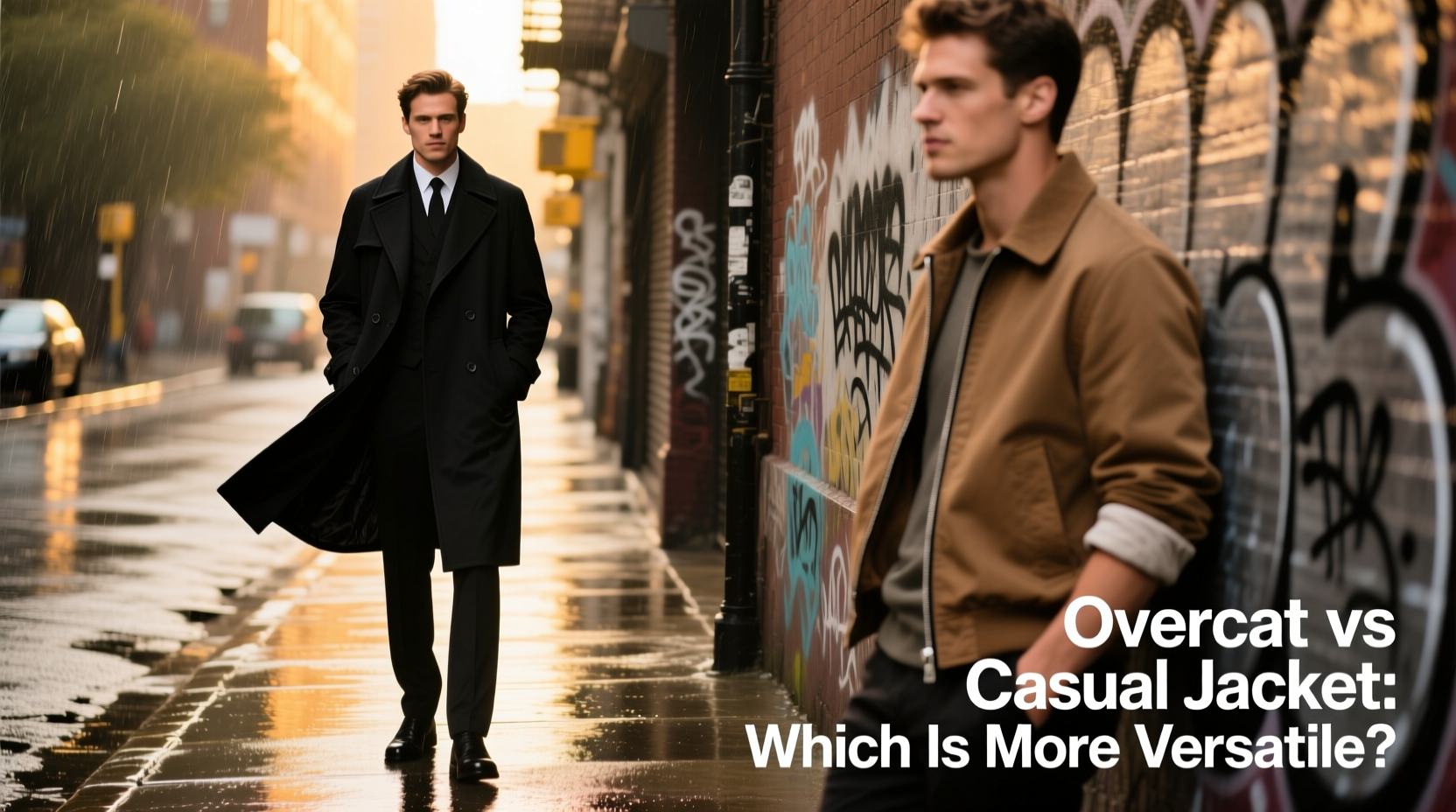
An overcoat is traditionally a long, double- or single-breasted coat made from heavy wool or cashmere blends, designed to be worn over suits. Originating in 19th-century Europe, it remains a hallmark of polished menswear. Most overcoats extend below the knee, feature wide lapels, and are built for insulation and formality.
They excel in cold winter months, especially in urban environments where professional dress codes persist. Their length provides superior warmth and wind protection, making them ideal for commuting or formal evening events. However, this same design limits flexibility. Wearing an overcoat with jeans and sneakers can look overly severe unless carefully styled. It also becomes impractical in transitional seasons like spring or fall when temperatures fluctuate.
“An overcoat is the punctuation mark at the end of a well-dressed sentence. It adds weight, clarity, and finality.” — Thomas Mahon, Bespoke Tailor & Style Educator
Casual Jackets: Adaptability Across Contexts
Casual jackets encompass a broad spectrum—from trucker and chore coats to bombers, Harringtons, and field jackets. Typically shorter, constructed from cotton, nylon, leather, or blends, they prioritize mobility and visual ease. Unlike overcoats, they’re not meant to be worn over full suits (though exceptions exist), but instead sit comfortably atop sweaters, hoodies, or shirts.
Their strength lies in context agility. A well-cut denim jacket transitions seamlessly from weekend errands to dinner dates. A suede bomber adds subtle flair to chinos and loafers. A water-resistant field jacket handles drizzle and outdoor activity without looking out of place in casual office settings. This functional neutrality makes casual jackets inherently more adaptable to daily life.
Moreover, casual jackets often allow for greater experimentation with texture, color, and layering. They don’t demand matching trousers or polished shoes, freeing the wearer from rigid sartorial rules. In cities where business-casual dominates, a quality casual jacket may see more frequent use than a formal overcoat.
Comparative Breakdown: Key Factors in Versatility
| Factor | Overcoat | Casual Jacket |
|---|---|---|
| Occasions Covered | Formal meetings, winter events, evening outings | Daily wear, casual offices, weekends, travel, informal gatherings |
| Seasonal Range | Limited to late fall, winter, early spring | All year (lightweight in summer, layered in winter) |
| Outfit Compatibility | Suits, over-trousers, dress shoes; limited with casual wear | T-shirts, jeans, chinos, boots, sneakers—nearly everything |
| Mobility & Comfort | Restrictive due to length and stiffness | High—designed for movement and ease |
| Style Longevity | Timeless but slow-evolving | Broad range; some styles trend, others remain classic |
Real-World Example: Two Men, Two Wards
Consider James, a corporate lawyer in Chicago. His winters are harsh, and he wears tailored suits four days a week. His navy wool overcoat sees heavy rotation from November through March. It’s indispensable—but only eight months of the year does he reach for it. During shoulder seasons, he relies on a waxed cotton field jacket that works equally well at the office, during lunch breaks, and at his son’s soccer games.
Now meet Diego, a freelance designer in Austin. He rarely wears a suit and values comfort and individuality. His go-to outerwear is a vintage-inspired olive bomber in lightweight suede. He wears it with jeans, tees, flannels, and even over hoodies in cooler evenings. It’s his most-used jacket year-round, thanks to Austin’s mild winters and indoor air conditioning that demands a layer indoors.
In both cases, the casual jacket proves more frequently useful—even for James, whose overcoat dominates winter but gathers dust otherwise.
Step-by-Step Guide to Maximizing Outerwear Versatility
To get the most out of either garment—or ideally, both—follow this practical timeline:
- Assess Your Lifestyle (Week 1): Track how many days a week you wear suits vs. casual attire. Note weather patterns in your region.
- Prioritize Based on Use (Week 2): If you wear suits fewer than three days a week, invest first in a high-quality casual jacket. Otherwise, split focus.
- Select Core Colors (Week 3): Choose neutrals—navy, grey, olive, black, or beige—that pair with multiple outfit types.
- Test Layering (Week 4): Try each jacket over different base layers: t-shirt, sweater, shirt + vest, suit. Evaluate fit and proportion.
- Rotate & Evaluate (Month 2+): After 30 days, count how often each jacket was worn. Let data guide future purchases.
Expert Insight: Function Meets Form
“The most versatile piece isn’t always the fanciest. It’s the one you actually wear. For most modern men, that’s not the overcoat—it’s the jacket that fits their life, not a dress code.” — Rachel Kim, Menswear Editor at *Urban Style Review*
This sentiment reflects a broader shift in menswear. As workplaces relax dress standards and lifestyles become more hybrid, garments that support fluidity win. The overcoat remains a symbol of refinement, but symbols don’t pay utility bills—function does.
FAQ
Can I wear an overcoat casually?
Yes, but with caution. Pair a charcoal overcoat with dark jeans, Chelsea boots, and a turtleneck for a balanced look. Avoid pairing it with athletic wear or loud graphics, as the contrast can appear jarring.
Is a casual jacket suitable for formal settings?
In most traditional offices, no. However, in creative industries or business-casual environments, a minimalist wool-blend bomber or tailored pea coat can pass as semi-formal if paired with chinos and oxfords.
Do I need both an overcoat and a casual jacket?
Ideal wardrobes include both. Think of the overcoat as a specialized tool for cold weather and formal needs, while the casual jacket serves as your everyday workhorse. Together, they cover nearly all scenarios.
Checklist: Choosing Your Most Versatile Outerwear
- ✅ Identify your top 3 daily activities (e.g., commute, meetings, leisure)
- ✅ Determine average temperature range in your city
- ✅ List your most-worn bottom-half items (jeans, chinos, suits)
- ✅ Select a jacket that layers easily over a sweater
- ✅ Opt for neutral colors with subtle texture (e.g., herringbone, brushed cotton)
- ✅ Test mobility: raise arms, sit down, walk—ensure no restriction
- ✅ Confirm care requirements match your habits (dry clean only vs. machine washable)
Conclusion: The Verdict on Versatility
If the question is strictly about versatility—the ability to perform across contexts, seasons, and styles—the casual jacket emerges as the more practical, frequently used garment for the majority of men today. It adapts to changing environments, supports diverse aesthetics, and aligns with contemporary lifestyles that value comfort and authenticity over rigid formality.
That said, dismissing the overcoat entirely would be a mistake. For those navigating colder climates or professional spheres where impression matters, it remains unmatched in presence and protection. The smart approach isn’t choosing one over the other, but understanding their roles: the overcoat as a seasonal specialist, the casual jacket as the daily driver.




 浙公网安备
33010002000092号
浙公网安备
33010002000092号 浙B2-20120091-4
Comments
No comments yet. Why don't you start the discussion?