
When shopping for affordable fine jewelry, terms like “overlay” and “plated” are thrown around frequently. At first glance, both promise the luxurious look of gold or silver without the high price tag. But beneath the surface, these two techniques differ significantly in construction, longevity, and overall value. While some brands market overlay rings as a premium alternative to plated ones, others treat them as interchangeable. So, does the difference actually matter, or is it just clever branding? The answer lies in understanding how each process works, how long each lasts, and what you're truly paying for.
What Are Overlay and Plated Rings?
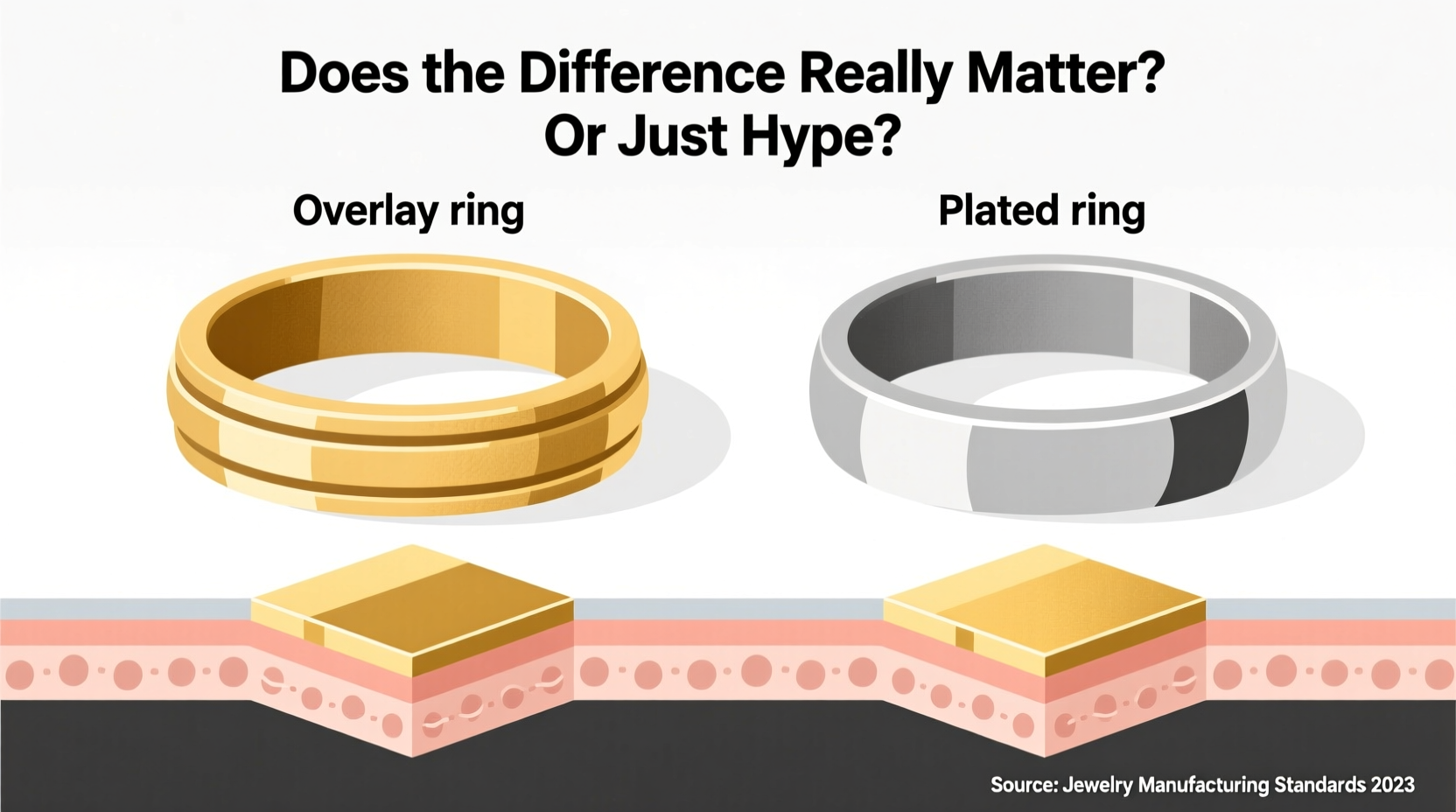
Both overlay and plating involve bonding a layer of precious metal—typically gold or silver—to a base metal core. However, the method, thickness, and durability of that bonded layer set them apart.
Plated rings use electroplating, a process where a thin layer of gold (or silver) is electrically deposited onto a base metal such as brass, copper, or stainless steel. The result is a shiny finish that mimics solid gold but wears off over time, especially with frequent use.
Overlay rings, on the other hand, involve a thicker application of precious metal. Instead of a micro-thin electrochemical layer, overlay uses mechanical bonding or heavy plating to apply a more substantial coating. In some cases, manufacturers fuse a sheet of gold directly onto the base metal, creating a much denser outer layer than traditional plating.
“Overlay isn’t just thicker plating—it’s a different standard of craftsmanship. You’re getting closer to vermeil-level quality, which makes a tangible difference in wear.” — Lena Patel, Jewelry Artisan & Material Specialist
Key Differences: Thickness, Durability, and Longevity
The most critical distinction between overlay and plated rings is the thickness of the precious metal layer. This directly impacts how long the ring maintains its appearance and resists tarnishing or flaking.
| Feature | Plated Ring | Overlay Ring |
|---|---|---|
| Metal Thickness | 0.5–2.5 microns | 3–10+ microns |
| Bonding Method | Electroplating | Mechanical fusion or heavy plating |
| Lifespan (with daily wear) | 6 months – 1 year | 2–5 years |
| Tarnish Resistance | Low to moderate | Moderate to high |
| Hypoallergenic Options | Rare; base metals may cause reactions | More common with nickel-free bases |
| Price Point | $15–$50 | $50–$150 |
As the table shows, overlay rings typically offer at least double the metal thickness of plated versions. This translates into slower fading, less chipping, and better resistance to sweat, moisture, and friction—all of which degrade thinner coatings quickly.
Real-World Example: Two Years of Wear Compared
Consider Sarah, who bought two nearly identical minimalist gold bands—one plated, one overlay—for everyday wear. She wore both rings during her workday as a nurse, exposing them to hand sanitizer, water, and constant movement.
Within four months, the plated ring began showing signs of wear: faint scratches revealed the brass underneath, and the shine dulled significantly. By month ten, the gold had worn off completely along the band’s inner edge.
In contrast, the overlay ring retained its luster for over 18 months. Minor fading appeared only after two years of continuous use, primarily on the underside where friction was highest. With occasional polishing, it still looks presentable today.
This example illustrates that while both rings started strong, the overlay version offered dramatically better endurance under real-life conditions.
Are Overlay Rings Worth the Extra Cost?
At first glance, overlay rings cost two to three times more than plated ones. But when evaluated over time, they often prove more cost-effective per year of use.
- A $40 plated ring lasting 10 months costs about $48/year in replacement value.
- A $120 overlay ring lasting 4 years costs just $30/year.
Additionally, higher-quality overlay pieces often feature better craftsmanship: smoother finishes, more consistent color, and sturdier base metals. Many reputable brands also use sterling silver or surgical-grade stainless steel as the foundation, reducing skin irritation risks.
That said, if you're buying a ring for occasional wear—a statement piece for events or photos—plated jewelry may be perfectly adequate. The key is matching the construction method to your intended usage.
How to Care for Overlay and Plated Rings
No matter the type, proper care extends a ring’s life. Here’s a step-by-step maintenance guide:
- Remove during chores: Take off rings before washing hands, cleaning, or swimming to avoid chemical exposure.
- Clean gently: Use a soft cloth dampened with mild soapy water. Never use abrasive cleaners or ultrasonic machines.
- Dry thoroughly: Moisture accelerates tarnishing and weakens metal bonds.
- Store separately: Keep rings in individual fabric-lined compartments to prevent scratching.
- Polish occasionally: Use a non-abrasive jewelry cloth to restore shine without removing metal.
Frequently Asked Questions
Can I get an overlay ring wet?
Occasional exposure to water is fine, but prolonged contact with chlorine, saltwater, or soap can degrade even thick overlays over time. Remove your ring before showering or swimming for best results.
Is gold overlay the same as vermeil?
Not exactly. Vermeil specifically refers to a thick layer of gold (at least 2.5 microns) over sterling silver. Gold overlay can be applied to various bases, including brass or stainless steel, and may exceed vermeil standards in thickness—but only qualifies as vermeil if the base is sterling silver.
Can I resize an overlay or plated ring?
Generally not recommended. Resizing involves cutting and stretching the metal, which can crack or peel the bonded layer. If resizing is necessary, consult a jeweler experienced with plated/overlay pieces to minimize damage.
Final Verdict: Hype or Real Difference?
The difference between overlay and plated rings is not hype—it's measurable and meaningful. Overlay rings offer superior thickness, durability, and value retention. For anyone planning to wear a ring daily or keep it long-term, the investment pays off in both appearance and lifespan.
Plated rings still have their place: as budget-friendly fashion accessories or short-term styling choices. But if you're seeking something that feels more substantial and lasts beyond a season, overlay is the smarter choice.
The jewelry market thrives on ambiguity, but informed buyers don’t need to rely on marketing jargon. By focusing on construction quality, metal thickness, and realistic usage patterns, you can cut through the noise and choose what truly suits your lifestyle.




 浙公网安备
33010002000092号
浙公网安备
33010002000092号 浙B2-20120091-4
Comments
No comments yet. Why don't you start the discussion?